
The “DS” mode in a Nissan Sentra stands for “Drive Sport” and enhances performance by adjusting shift patterns for quicker acceleration and responsiveness. It’s ideal for highway merging, passing, or driving on winding roads, offering a more engaging drive without sacrificing fuel efficiency when used wisely.
If you’ve ever driven a Nissan Sentra and noticed a “DS” marking next to the gear shifter, you might have wondered—what does DS mean? Is it a secret mode? A performance booster? Or just another confusing acronym in modern cars? You’re not alone. Many Sentra owners, especially new drivers or those upgrading from older models, find themselves puzzled by this seemingly mysterious setting.
Well, the good news is that “DS” isn’t a secret code or a hidden feature reserved for race car drivers. It’s actually a practical and useful driving mode designed to enhance your experience behind the wheel. In simple terms, DS stands for “Drive Sport,” and it’s available on most modern Nissan Sentras equipped with an automatic or continuously variable transmission (CVT). This mode changes how your car’s transmission behaves, giving you more control, quicker response, and a sportier feel—especially when you need that extra bit of power.
But here’s the thing: while DS mode sounds exciting (and it is!), it’s not meant to be used all the time. Think of it like a tool in your toolbox—great when you need it, but not something you’d use to hammer every nail. Understanding when and how to use DS mode can make a big difference in your driving comfort, performance, and even fuel economy. In this guide, we’ll break down everything you need to know about DS mode in the Nissan Sentra—what it does, how it works, when to use it, and why it matters.
In This Article
- 1 Key Takeaways
- 2 📑 Table of Contents
- 3 What Does DS Stand For in a Nissan Sentra?
- 4 How Does DS Mode Work in the Nissan Sentra?
- 5 When Should You Use DS Mode?
- 6 DS Mode vs. Regular Drive Mode: What’s the Difference?
- 7 Is DS Mode Safe to Use?
- 8 Tips for Getting the Most Out of DS Mode
- 9 Conclusion
- 10 Frequently Asked Questions
Key Takeaways
- DS stands for Drive Sport: It’s a transmission mode that modifies gear shifting for a sportier driving experience.
- Improved throttle response: DS mode makes the engine more responsive to acceleration inputs, ideal for quick maneuvers.
- Better for highway driving: Use DS when merging, passing, or driving on highways to maintain higher RPMs and power.
- Not for everyday city driving: Frequent use in stop-and-go traffic can reduce fuel efficiency and increase engine wear.
- Easy to activate: Simply move the gear shifter to the DS position—no buttons or screens required.
- Works with CVT transmissions: Even though the Sentra uses a Continuously Variable Transmission (CVT), DS simulates stepped gear shifts for a sportier feel.
- Safe and reversible: You can switch back to regular Drive (D) mode at any time with no risk to the vehicle.
📑 Table of Contents
What Does DS Stand For in a Nissan Sentra?
Let’s start with the basics: DS stands for “Drive Sport.” It’s a transmission mode that modifies how your Nissan Sentra’s automatic or CVT transmission shifts gears. When you shift into DS, the car’s computer adjusts the shift points to keep the engine running at higher revolutions per minute (RPMs). This means the engine stays in its power band longer, delivering quicker acceleration and a more responsive feel.
Now, you might be thinking, “But my Sentra has a CVT—doesn’t that mean it doesn’t have traditional gears?” Great question! Yes, most modern Nissan Sentras use a Continuously Variable Transmission (CVT), which doesn’t have fixed gear ratios like a traditional automatic. Instead, it uses a belt and pulley system to provide an infinite number of gear ratios. This makes for smoother acceleration and better fuel efficiency.
So how does DS mode work on a CVT? Even though there are no physical gears, the CVT can simulate stepped shifts—kind of like fake gears—to mimic the feel of a traditional automatic transmission. When you activate DS mode, the CVT holds these simulated “gears” longer before shifting up. This keeps the engine RPMs higher, which translates to more power and quicker response when you press the accelerator.
In essence, DS mode gives your Sentra a sportier personality. It’s not turning your compact sedan into a sports car, but it does make driving more engaging, especially when you need that extra burst of speed.
How Does DS Mode Work in the Nissan Sentra?
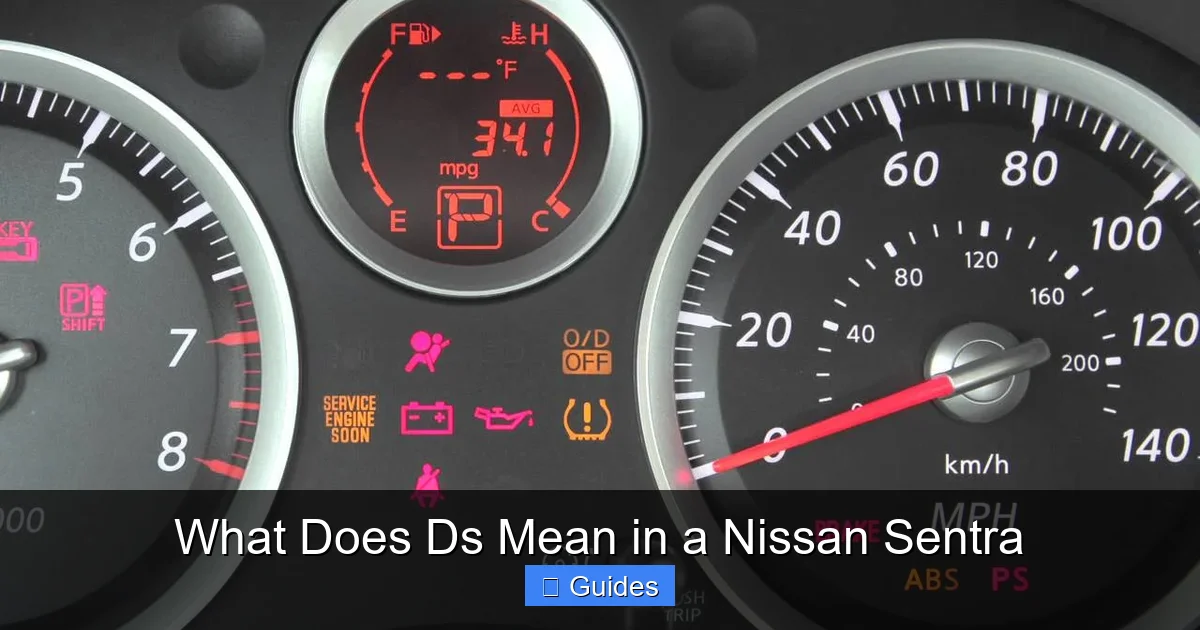
Visual guide about What Does Ds Mean in a Nissan Sentra
Image source: i.ytimg.com
To understand how DS mode works, it helps to know a little about how your Sentra’s transmission operates. Under normal driving conditions—when you’re in “D” (Drive) mode—the transmission prioritizes fuel efficiency and smoothness. It shifts up early to keep the engine RPMs low, which reduces fuel consumption and engine noise. This is perfect for daily commuting, city driving, and long highway cruises where you’re maintaining a steady speed.
But when you shift into DS mode, the transmission logic changes. The car’s engine control unit (ECU) tells the CVT to delay upshifts and hold lower “gears” longer. This keeps the engine spinning faster, which means more power is available when you need it. For example, if you’re merging onto a busy highway or trying to pass another vehicle, DS mode gives you that immediate surge of acceleration without hesitation.
Here’s a practical example: Imagine you’re driving on a two-lane road and want to pass a slow-moving truck. In regular Drive mode, the transmission might take a moment to downshift, causing a slight delay in acceleration. But in DS mode, the engine is already running at a higher RPM, so when you hit the gas, the car responds instantly. It’s like having a turbo boost button—except it’s built into your gear shifter.
Another way DS mode improves performance is through throttle response. In Drive mode, the throttle might feel a bit soft or delayed, especially at lower speeds. But in DS mode, the throttle becomes more sensitive. A light press on the accelerator results in quicker movement, making the car feel more agile and responsive.
It’s also worth noting that DS mode doesn’t change the physical mechanics of your transmission. The CVT still works the same way—it’s just being managed differently by the car’s software. This means you get the benefits of sportier driving without any added wear or risk to your vehicle, as long as you use it appropriately.
When Should You Use DS Mode?
Visual guide about What Does Ds Mean in a Nissan Sentra
Image source: rvandplaya.com
Now that you know what DS mode does, the next question is: when should you actually use it? The short answer is: whenever you need more power, responsiveness, or control. But let’s break that down into specific driving scenarios where DS mode really shines.
Highway Merging and Passing
One of the best times to use DS mode is when you’re on the highway and need to merge into fast-moving traffic or pass another vehicle. In these situations, quick acceleration is crucial for safety and efficiency. DS mode keeps the engine in its power band, so you can accelerate rapidly without waiting for the transmission to downshift.
For example, if you’re entering a highway from an on-ramp and traffic is moving at 70 mph, you’ll want to match that speed as quickly as possible. In regular Drive mode, your Sentra might take a few seconds to build up speed. But in DS mode, the car responds faster, helping you merge smoothly and safely.
Driving on Winding or Hilly Roads
If you live in an area with lots of curves, hills, or mountain roads, DS mode can make your drive more enjoyable and controlled. On uphill climbs, the engine stays in a lower “gear,” providing consistent power without lag. On downhill sections, you can use engine braking more effectively by keeping the RPMs high, which reduces wear on your brake pads.
Imagine driving through a scenic mountain pass. In Drive mode, the transmission might shift up too early on an incline, causing the car to feel sluggish. But in DS mode, the engine maintains higher RPMs, giving you steady power and better control.
Overtaking in Traffic
We’ve all been there—stuck behind a slow driver on a two-lane road with no passing zone in sight. When a safe opportunity finally appears, you want to pass quickly and confidently. DS mode gives you that extra burst of speed, allowing you to overtake safely and return to your lane without lingering in the oncoming traffic lane.
Sporty or Enthusiastic Driving
Even if you’re not racing or driving aggressively, some people just enjoy a more engaging driving experience. If you like the feeling of a responsive throttle and quicker acceleration, DS mode can make your daily drive more fun. It’s a great way to add a little excitement to your commute without modifying your car.
Avoiding Overuse in City Driving
While DS mode is useful in certain situations, it’s not ideal for everyday city driving—especially in stop-and-go traffic. Why? Because keeping the engine at higher RPMs increases fuel consumption and can lead to more engine heat and wear over time. In heavy traffic, where you’re constantly accelerating and braking, DS mode can make the car feel jerky and reduce overall efficiency.
So, the key is balance. Use DS mode when you need it—like on highways, hills, or when passing—but switch back to regular Drive mode for city driving, cruising, or when fuel economy is a priority.
DS Mode vs. Regular Drive Mode: What’s the Difference?
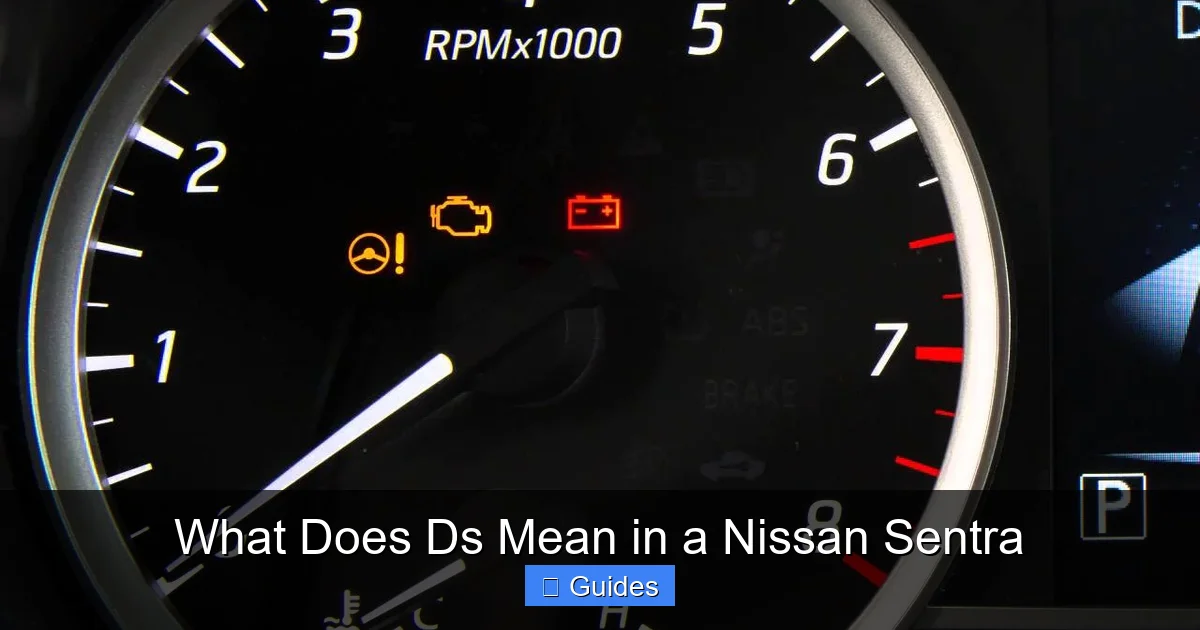
Visual guide about What Does Ds Mean in a Nissan Sentra
Image source: i.ytimg.com
To really appreciate DS mode, it helps to compare it side by side with regular Drive (D) mode. Both are essential driving modes, but they serve different purposes and deliver different experiences.
Shift Behavior
In Drive mode, the transmission shifts up early to keep engine RPMs low. This improves fuel efficiency and reduces engine noise. For example, at 50 mph, your Sentra might be running at around 1,500 RPM in Drive mode.
In DS mode, the transmission delays upshifts, keeping the engine at higher RPMs—say, 2,500 to 3,000 RPM at the same speed. This gives you more power on demand but uses more fuel.
Throttle Response
Drive mode has a softer throttle response, which is great for smooth, relaxed driving. DS mode, on the other hand, makes the throttle more sensitive. A small press on the accelerator results in quicker acceleration, making the car feel more alive.
Fuel Efficiency
This is where the trade-off comes in. DS mode improves performance but reduces fuel economy. If you drive in DS mode all the time, you might notice a drop in miles per gallon (MPG). That’s why it’s best used selectively.
Driving Feel
In Drive mode, the Sentra feels calm, quiet, and efficient—perfect for daily commuting. In DS mode, it feels more alert, responsive, and sporty. It’s like the difference between walking and jogging—both get you where you’re going, but one is more energetic.
When to Switch
You can switch between D and DS modes at any time, even while driving. There’s no need to stop or slow down. Just move the gear shifter to the DS position when you need more power, and back to D when you want to save fuel or drive more smoothly.
Is DS Mode Safe to Use?
Yes, DS mode is completely safe to use in your Nissan Sentra. It’s a factory-designed feature, not a hack or modification, so it won’t damage your transmission or engine when used properly. In fact, Nissan engineers have tested and optimized DS mode to work seamlessly with the CVT and engine systems.
That said, like any performance feature, it should be used responsibly. Here are a few safety tips to keep in mind:
Don’t Overuse It
Using DS mode constantly in city traffic or during short trips can lead to increased fuel consumption and unnecessary engine wear. Reserve it for situations where you actually need the extra performance.
Be Mindful of Speed
Because DS mode makes the car more responsive, it’s easy to accelerate quickly—sometimes faster than intended. Always stay aware of your speed and road conditions, especially in residential areas or school zones.
Use It on Dry, Stable Roads
While DS mode improves control, it doesn’t improve traction. Avoid using it aggressively on wet, icy, or slippery roads, where sudden acceleration could lead to loss of control.
Listen to Your Car
If you notice unusual noises, vibrations, or a drop in performance while using DS mode, switch back to Drive and have your vehicle inspected. While rare, transmission issues can occur if the system is stressed excessively.
Overall, DS mode is a safe and useful tool when used wisely. It’s designed to enhance your driving experience, not replace good judgment.
Tips for Getting the Most Out of DS Mode
Now that you understand what DS mode is and when to use it, here are some practical tips to help you get the most out of this feature:
Use It Strategically
Don’t just leave DS mode on all the time. Use it when you need it—like during highway merges, passing, or driving on hills—and switch back to Drive when you’re cruising or in traffic.
Combine with Manual Mode (If Available)
Some Nissan Sentra models come with a manual shift mode (often labeled “M” or with +/- symbols). When in DS mode, you can use the paddle shifters or gear lever to manually control the simulated gears. This gives you even more control over performance, especially on winding roads.
Monitor Your Fuel Economy
Keep an eye on your fuel gauge and MPG readings. If you notice a significant drop in efficiency, you might be using DS mode too often. Adjust your driving habits to balance performance and economy.
Practice in a Safe Environment
If you’re new to DS mode, try it out in a safe, open area—like an empty parking lot or quiet road—to get a feel for how the car responds. This will help you use it confidently in real-world situations.
Educate Passengers
If you share your car with family or friends, let them know what DS mode is and how it affects the driving experience. The sudden responsiveness might surprise first-time passengers!
Regular Maintenance Helps
To keep your transmission and engine in top shape, follow Nissan’s recommended maintenance schedule. This includes regular oil changes, transmission fluid checks, and inspections. A well-maintained car will respond better in DS mode and last longer.
Conclusion
So, what does DS mean in a Nissan Sentra? It stands for Drive Sport—a smart, responsive transmission mode that enhances performance, throttle response, and driving engagement. Whether you’re merging onto a highway, passing another vehicle, or just enjoying a spirited drive on a country road, DS mode gives your Sentra an extra edge.
It’s not a gimmick or a hidden trick. It’s a well-engineered feature designed to make your driving experience more dynamic and enjoyable. And the best part? It’s easy to use—just move the gear shifter to DS when you need it, and back to D when you don’t.
Remember, DS mode is a tool, not a toy. Use it wisely, and it will serve you well. Avoid overusing it in city traffic, and always prioritize safety and fuel efficiency. With the right balance, DS mode can make your Nissan Sentra feel more alive, responsive, and fun to drive.
So the next time you’re behind the wheel and see that “DS” marking, don’t ignore it. Give it a try. You might just discover a new favorite way to drive.
Frequently Asked Questions
What does DS mean in a Nissan Sentra?
DS stands for “Drive Sport.” It’s a transmission mode that modifies gear shifting to provide quicker acceleration and more responsive throttle response, giving your Sentra a sportier feel.
Can I use DS mode all the time?
It’s not recommended to use DS mode constantly. While it’s safe, frequent use in city driving can reduce fuel efficiency and increase engine wear. Use it selectively for highway driving, passing, or hills.
Does DS mode work on CVT transmissions?
Yes, DS mode works on Nissan Sentras with CVTs. The CVT simulates stepped gear shifts in DS mode, holding higher RPMs for better performance while maintaining smooth operation.
Is DS mode the same as Sport Mode?
Not exactly. DS mode focuses on transmission behavior, while some vehicles have a separate “Sport Mode” that may also adjust steering, suspension, and throttle. In the Sentra, DS is the primary sport-oriented setting.
Can I switch to DS mode while driving?
Yes, you can safely switch between Drive (D) and DS mode at any speed. Simply move the gear shifter to the DS position—no need to stop or slow down.
Does using DS mode damage the transmission?
No, DS mode is factory-designed and safe when used properly. However, excessive use in stop-and-go traffic may increase wear over time. Use it responsibly for best results.

At CarLegit, we believe information should be clear, factual, and genuinely helpful. That’s why every guide, review, and update on our website is created with care, research, and a strong focus on user experience.