
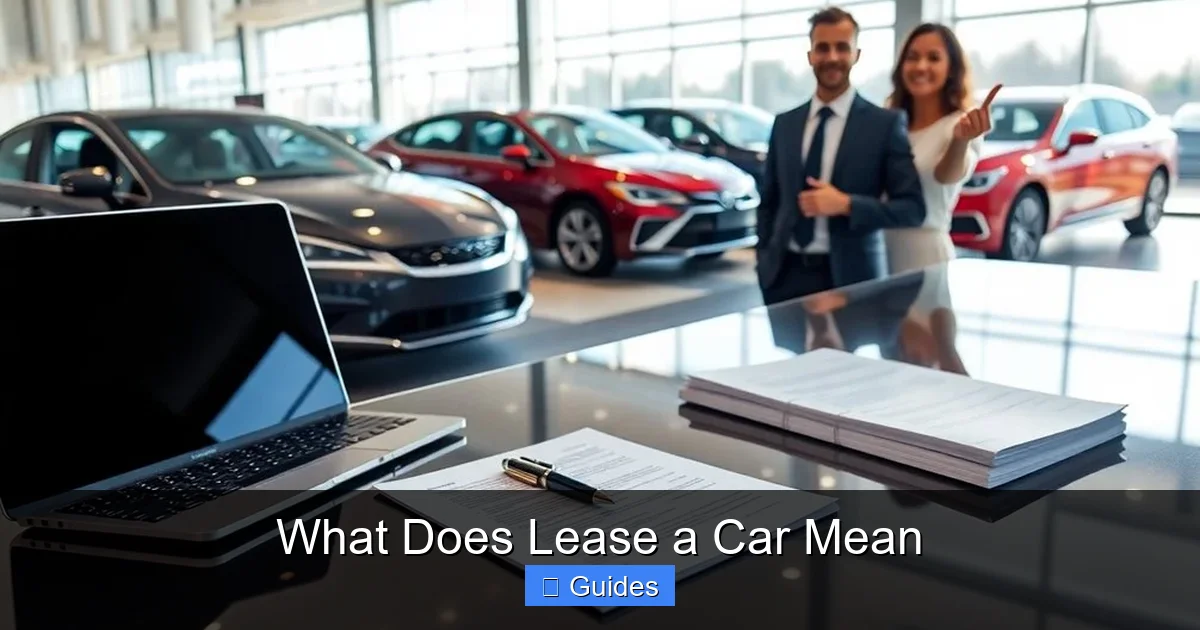
Leasing a car means paying to use a vehicle for a set period—typically 2–4 years—without owning it outright. You make monthly payments based on the car’s expected depreciation, plus fees, and return it at the end of the term, often with mileage and wear limits.
In This Article
- 1 Key Takeaways
- 2 📑 Table of Contents
- 3 What Does Lease a Car Mean? A Simple Explanation
- 4 How Car Leasing Works: The Basics
- 5 Pros and Cons of Leasing a Car
- 6 Who Should Lease a Car? Is It Right for You?
- 7 Tips for Getting the Best Car Lease Deal
- 8 Ending a Lease: What Happens Next?
- 9 Common Misconceptions About Leasing
- 10 Final Thoughts: Is Leasing Right for You?
- 11 Frequently Asked Questions
Key Takeaways
- Lease a car means temporary use: You’re essentially renting the vehicle for a fixed term, usually 24 to 36 months, and don’t own it at the end.
- Lower monthly payments than buying: Since you’re only paying for the car’s depreciation during the lease, monthly costs are often significantly lower than loan payments.
- Mileage and wear restrictions apply: Most leases limit how many miles you can drive annually and charge extra for excessive wear and tear.
- No equity buildup: Unlike buying, you don’t build ownership or resale value—you return the car when the lease ends.
- Early termination can be costly: Ending a lease early usually triggers penalties, so it’s best to commit for the full term.
- Great for tech and safety updates: Leasing lets you drive newer models with the latest features every few years.
- Insurance and maintenance matter: You’ll still need full coverage insurance, and some leases require prepaid maintenance plans.
📑 Table of Contents
- What Does Lease a Car Mean? A Simple Explanation
- How Car Leasing Works: The Basics
- Pros and Cons of Leasing a Car
- Who Should Lease a Car? Is It Right for You?
- Tips for Getting the Best Car Lease Deal
- Ending a Lease: What Happens Next?
- Common Misconceptions About Leasing
- Final Thoughts: Is Leasing Right for You?
What Does Lease a Car Mean? A Simple Explanation
So, you’re thinking about getting a new car—but instead of buying, you’ve heard people talk about “leasing.” What does lease a car mean, exactly? In simple terms, leasing a car is like renting it for a long period, usually two to four years. You pay to use the vehicle, but you don’t own it. At the end of the lease term, you return the car to the dealership (or leasing company), often with the option to buy it if you’ve fallen in love with it.
It’s a bit like subscribing to a streaming service. You pay monthly to access something you enjoy, but once you stop paying, you no longer have access. With a car lease, you’re paying for the right to drive the car during the agreed-upon time, based mostly on how much the car loses value—called depreciation—while you have it.
Leasing has become increasingly popular over the past decade, especially among people who want lower monthly payments, enjoy driving newer models, or don’t want the long-term commitment of ownership. But it’s not for everyone. Understanding what lease a car means goes beyond just the monthly payment—it involves knowing the terms, restrictions, and long-term financial implications.
How Car Leasing Works: The Basics

Visual guide about What Does Lease a Car Mean
Image source: leasesacar.com
To truly grasp what lease a car means, let’s break down how the process actually works. When you lease a vehicle, you’re entering into a contract with a leasing company (often the car manufacturer’s finance arm, like Toyota Financial Services or Ford Credit). This contract outlines how long you’ll have the car, how much you’ll pay each month, and what conditions you must follow.
Here’s a step-by-step look at how leasing typically unfolds:
First, you choose the car you want to lease. This could be a brand-new sedan, SUV, or even a luxury vehicle. Then, the leasing company calculates your monthly payment based on three main factors: the car’s sticker price (also called the capitalized cost), its expected value at the end of the lease (the residual value), and the money factor (which is like an interest rate).
For example, let’s say you want to lease a new Honda CR-V with a sticker price of $35,000. The leasing company estimates that after a 36-month lease, the car will be worth $20,000. That means you’re essentially paying for the $15,000 in depreciation over three years, plus fees and interest. Your monthly payment will reflect that $15,000 spread out, along with other charges.
You’ll also agree on a mileage limit—commonly 10,000, 12,000, or 15,000 miles per year. If you go over, you’ll be charged per mile (often $0.10 to $0.25). Additionally, you must maintain the car according to the manufacturer’s guidelines and return it in good condition, or face wear-and-tear fees.
At the end of the lease, you have a few options: return the car and walk away, lease a new one, or buy the car at its residual value. That’s the core of what lease a car means—a structured, time-limited use of a vehicle with clear rules and financial terms.
Key Components of a Car Lease
To better understand what lease a car means, it helps to know the key parts of a lease agreement:
- Capitalized Cost: This is the negotiated price of the car, similar to what you’d pay if buying. The lower this number, the lower your monthly payment.
- Residual Value: The estimated value of the car at the end of the lease. A higher residual means lower monthly payments because the car holds its value well.
- Money Factor: This is the lease’s interest rate, expressed as a decimal (e.g., 0.0025). Multiply it by 2,400 to get an approximate APR. A lower money factor means less interest.
- Lease Term: How long you’ll have the car—usually 24, 36, or 48 months. Shorter terms mean higher monthly payments but less risk of excess wear.
- Mileage Allowance: The number of miles you can drive per year without extra charges. Going over means per-mile fees.
- Down Payment (Cap Cost Reduction): An upfront payment that reduces your monthly cost. However, putting money down increases your risk if the car is totaled early.
- Disposition Fee: A charge (often $300–$500) when you return the car at the end of the lease.
Understanding these components helps you evaluate whether leasing makes sense for your budget and lifestyle.
Pros and Cons of Leasing a Car
Visual guide about What Does Lease a Car Mean
Image source: leasesacar.com
Now that you know what lease a car means and how it works, let’s look at the advantages and disadvantages. Like any financial decision, leasing has trade-offs. It’s not inherently “better” or “worse” than buying—it just suits different people in different situations.
Advantages of Leasing
One of the biggest benefits of leasing is lower monthly payments. Because you’re only paying for the car’s depreciation during the lease term (not the full value), your payments are typically 20% to 40% lower than if you were financing the same car with a loan. This can free up cash for other expenses or allow you to afford a more premium vehicle than you could otherwise.
For example, a $50,000 luxury SUV might cost $600/month to lease but $900/month to buy with a loan. That $300 difference can be significant for many budgets.
Another major perk is driving a new car every few years. Leasing lets you enjoy the latest technology, safety features, and styling without the hassle of selling or trading in an old vehicle. If you love having a modern infotainment system, adaptive cruise control, or a quiet, smooth ride, leasing keeps you up to date.
Leasing also often includes warranty coverage for the entire lease term. Most new cars come with a 3-year/36,000-mile bumper-to-bumper warranty, which aligns perfectly with a typical 36-month lease. That means major repairs are usually covered, reducing your out-of-pocket costs.
Additionally, there’s no need to worry about selling the car later. When you buy, you eventually have to deal with depreciation, finding a buyer, or trading it in. With a lease, you simply return the car and walk away (after paying any excess fees).
Disadvantages of Leasing
Of course, leasing isn’t perfect. One major downside is that you don’t build equity. Every monthly payment goes toward using the car, not owning it. When the lease ends, you have nothing to show for your payments—no asset, no trade-in value.
You’re also restricted by mileage limits. If you drive a lot for work or travel frequently, you could easily exceed the annual allowance and face steep overage charges. For instance, driving 18,000 miles in a year on a 12,000-mile lease could cost you $600–$1,500 in extra fees.
Wear and tear is another concern. Leasing companies inspect returned vehicles closely. Scratches, dents, stained upholstery, or damaged tires can result in charges. While normal use is expected, anything beyond that may cost you.
And if your life changes—like losing your job or needing a different type of vehicle—ending a lease early can be expensive. Early termination fees can run into the thousands, making it a rigid commitment.
Finally, you’ll always have a car payment. Unlike buying, where you eventually pay off the loan and drive payment-free, leasing means you’re always paying for a vehicle. This can be a drawback if you prefer the freedom of owning outright.
Who Should Lease a Car? Is It Right for You?
Visual guide about What Does Lease a Car Mean
Image source: leasesacar.com
So, what does lease a car mean in terms of personal fit? Leasing isn’t for everyone, but it can be a smart choice for certain drivers.
If you drive fewer than 12,000 miles per year and prefer to have a new car every two to four years, leasing might be ideal. It’s also great if you want lower monthly payments and don’t mind not owning the vehicle. Business professionals, tech enthusiasts, and people who value reliability and warranty coverage often lean toward leasing.
On the other hand, if you drive a lot, customize your cars, or plan to keep a vehicle for many years, buying is usually the better option. High-mileage drivers, families with growing needs, or those who like to personalize their cars (with aftermarket parts, for example) may find leasing too restrictive.
Let’s look at a real-world example: Sarah, a marketing manager, drives about 10,000 miles a year and loves having the latest safety and tech features. She leases a new Toyota RAV4 every three years. Her monthly payment is $320, and she enjoys peace of mind knowing repairs are covered. For her, leasing makes perfect sense.
Now consider Mike, a delivery driver who logs 25,000 miles annually. Leasing would cost him hundreds in overage fees each year. Instead, he buys a reliable used truck and plans to drive it for 10 years. For Mike, buying is the smarter financial move.
The key is aligning your driving habits, budget, and lifestyle with the structure of a lease. Ask yourself: Do I want lower payments and newer cars? Am I okay with mileage limits? Can I commit to a 2–4 year term? Your answers will help determine if leasing fits your needs.
Tips for Getting the Best Car Lease Deal
If you’ve decided that leasing is right for you, the next step is getting the best possible deal. Knowing what lease a car means is just the beginning—now it’s time to negotiate smartly and avoid common pitfalls.
Negotiate the Capitalized Cost
Just like when buying a car, you should negotiate the price of the vehicle before leasing. The lower the capitalized cost, the lower your monthly payment. Don’t focus only on the monthly amount—dealers can manipulate that by stretching the term or adjusting other factors. Instead, aim to get the best possible price on the car itself.
Research the invoice price (what the dealer paid) and use tools like Edmunds or Kelley Blue Book to find fair market values. Aim to lease at or below invoice for the best deal.
Watch the Money Factor
The money factor is the lease equivalent of an interest rate. A lower number means less interest paid over time. Ask the dealer to convert the money factor to an APR by multiplying it by 2,400. For example, a money factor of 0.0020 equals a 4.8% APR. Compare this to current auto loan rates—if it’s high, consider leasing elsewhere or improving your credit.
Choose the Right Mileage Limit
Estimate your annual mileage honestly. If you’re unsure, it’s better to go slightly higher (e.g., 15,000 miles) to avoid overage fees. Some leases allow you to prepay for extra miles at a discounted rate, which can save money if you know you’ll drive more.
Avoid Unnecessary Add-ons
Dealers may try to sell you extras like gap insurance, maintenance plans, or tire protection. While some of these can be useful, many are overpriced or redundant. For example, most new cars already include gap coverage, and maintenance plans may duplicate your warranty. Read the fine print and only buy what you truly need.
Consider a Walk-Away Lease
Some leases are “walk-away,” meaning you can return the car at the end with no obligation. Others may require you to pay the residual value if you want to keep it. Make sure you understand your options before signing.
Time Your Lease Right
End your current lease when the car is still under warranty and in good condition. Also, shop for a new lease at the end of the month, quarter, or year—dealers are often trying to meet sales quotas and may offer better deals.
Ending a Lease: What Happens Next?
Understanding what lease a car means also includes knowing what happens when the lease ends. After 24, 36, or 48 months, your contract is up, and you have several options.
Return the Car
The most common choice is to return the vehicle to the dealership. A lease-end inspection will check for excess wear and mileage. If everything is within limits, you pay any remaining fees (like the disposition fee) and walk away. You can then lease or buy a new car.
Buy the Car
If you love the car and want to keep it, you can purchase it at the residual value stated in your lease. This price is set at the beginning, so there are no surprises. You can pay cash, finance the purchase, or trade it in later.
Lease a New Car
Many people lease a new vehicle from the same brand. Dealers often offer incentives to keep you in their lineup, like waived disposition fees or loyalty bonuses.
Extend the Lease
If you’re not ready to return the car, some leases allow short-term extensions (usually month-to-month) for a fee. This gives you more time to decide.
No matter what you choose, plan ahead. Start shopping for your next vehicle a few months before your lease ends to avoid rushed decisions.
Common Misconceptions About Leasing
There are several myths about what lease a car means that can mislead consumers. Let’s clear them up.
“Leasing Is Just for Rich People”
Not true. While luxury brands often promote leasing, many affordable cars—like Honda, Toyota, and Hyundai—offer competitive lease deals. Leasing is about affordability and preference, not income level.
“You Can’t Negotiate a Lease”
False. Everything in a lease can be negotiated: the price, money factor, mileage, and fees. Treat it like a purchase—do your research and don’t accept the first offer.
“Leasing Always Costs More Than Buying”
It depends. Over the long term, buying usually costs less because you own the car outright. But in the short term, leasing can be cheaper due to lower payments and warranty coverage. It’s about timing and usage.
“You’re Throwing Money Away”
This is a common criticism, but it’s not entirely fair. You’re paying for convenience, lower payments, and the latest features. If those benefits matter to you, it’s not “wasted” money—it’s a lifestyle choice.
“Leasing Is Complicated”
It can seem that way, but once you understand the basics—capitalized cost, residual value, money factor—it becomes much clearer. Take your time, ask questions, and read the contract carefully.
Final Thoughts: Is Leasing Right for You?
So, what does lease a car mean? It means choosing a flexible, lower-cost way to drive a new vehicle for a set period, with clear rules and responsibilities. It’s not ownership, but it offers many of the benefits—without the long-term commitment.
Leasing can be a smart financial move if you drive moderately, want lower payments, and enjoy driving newer models. But it’s not ideal if you drive a lot, prefer to own your car, or want to avoid ongoing payments.
The key is to evaluate your needs, understand the terms, and negotiate wisely. Whether you lease or buy, the best decision is an informed one.
Frequently Asked Questions
What does it mean to lease a car?
Leasing a car means paying to use a vehicle for a fixed period, typically 2–4 years, without owning it. You make monthly payments based on the car’s depreciation, plus fees, and return it at the end of the term.
Is leasing a car cheaper than buying?
Leasing usually has lower monthly payments than buying because you’re only paying for the car’s depreciation during the lease term. However, you don’t build equity, so long-term costs may be higher.
Can you negotiate a car lease?
Yes, you can negotiate the capitalized cost, money factor, mileage allowance, and other terms. Just like buying, getting the best deal requires research and confidence at the dealership.
What happens if you go over the mileage limit?
If you exceed the annual mileage limit, you’ll be charged per mile—typically $0.10 to $0.25. To avoid fees, choose a higher mileage allowance or prepay for extra miles.
Can you end a car lease early?
Yes, but early termination usually results in significant penalties, often thousands of dollars. It’s best to commit to the full lease term unless your situation changes drastically.
Do you need full coverage insurance when leasing?
Yes, leasing companies require full coverage insurance (comprehensive and collision) to protect their asset. This is typically more expensive than minimum liability coverage.

At CarLegit, we believe information should be clear, factual, and genuinely helpful. That’s why every guide, review, and update on our website is created with care, research, and a strong focus on user experience.