
Smart Mode in a Kia automatically adjusts driving dynamics based on your behavior and road conditions, blending comfort, efficiency, and responsiveness. It uses real-time data to switch between Eco, Normal, and Sport modes, offering a seamless and personalized driving experience without manual input.
In This Article
Key Takeaways
- Smart Mode adapts automatically: It monitors your driving style and road conditions to switch between Eco, Normal, and Sport modes for optimal performance.
- Improves fuel efficiency: By favoring Eco mode during gentle driving, it helps reduce fuel consumption and emissions.
- Enhances driving comfort: The system ensures smooth transitions and appropriate power delivery for a relaxed ride.
- Boosts responsiveness when needed: Detects aggressive acceleration or spirited driving and shifts to Sport mode for quicker throttle response.
- Reduces driver workload: Eliminates the need to manually switch modes, letting you focus on the road.
- Works with advanced Kia tech: Integrates with features like adaptive cruise control and drive mode select for a smarter drive.
- Ideal for daily commuting: Perfect for city driving, highways, and mixed conditions where driving styles frequently change.
📑 Table of Contents
What Is Smart Mode in a Kia?
If you’ve ever driven a modern Kia—whether it’s a sleek Kia Sorento, a compact Kia Sportage, or an efficient Kia Niro—you’ve probably noticed a button or setting labeled “Smart Mode.” It might seem like just another fancy feature, but Smart Mode is actually one of the most intelligent and user-friendly systems Kia has introduced in recent years. At its core, Smart Mode is an adaptive driving system that automatically selects the best driving mode—Eco, Normal, or Sport—based on how you’re driving and the conditions around you.
Unlike traditional drive modes that require you to manually switch between settings, Smart Mode does the thinking for you. It uses a combination of sensors, software, and real-time data to analyze your driving behavior. For example, if you’re cruising gently on the highway, it might shift into Eco mode to save fuel. But the moment you press the accelerator harder or take a sharp turn, it can instantly switch to Sport mode for more responsive handling. This seamless adaptation makes driving smoother, more efficient, and far less complicated.
What makes Smart Mode especially appealing is its simplicity. You don’t need to be a car expert to benefit from it. Whether you’re a daily commuter, a weekend road-tripper, or someone who just wants a more relaxed drive, Smart Mode adjusts to your needs without you having to lift a finger. It’s like having a co-pilot who knows exactly when you want efficiency and when you crave a little more excitement behind the wheel.
How Does Smart Mode Work?
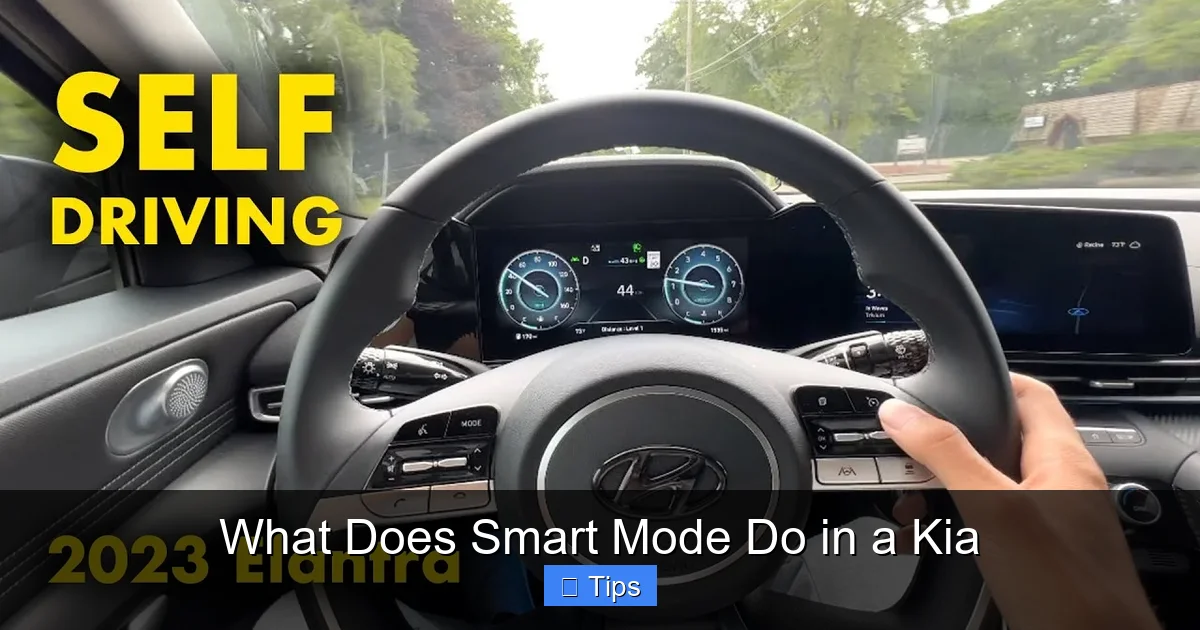
Visual guide about What Does Smart Mode Do in a Kia
Image source: i.ytimg.com
So, how exactly does Smart Mode know when to switch modes? It’s not magic—it’s smart engineering. The system relies on a network of inputs from various sensors and the vehicle’s onboard computer. These inputs include throttle position, steering angle, vehicle speed, acceleration rate, and even the terrain or road conditions detected through advanced driver assistance systems (ADAS).
When you start driving, Smart Mode begins monitoring your behavior. If you accelerate gently, maintain a steady speed, and make smooth steering inputs, the system interprets this as calm, fuel-efficient driving. In response, it activates Eco mode, which adjusts the engine and transmission to prioritize fuel economy. This might include reducing engine power slightly, optimizing shift points, and even limiting climate control usage to save energy.
On the other hand, if you suddenly press the accelerator hard—say, to merge onto a highway or overtake another vehicle—Smart Mode detects the aggressive input and switches to Sport mode. In this mode, the throttle becomes more responsive, the transmission holds gears longer, and the steering may feel tighter for better control. This gives you the performance you need exactly when you need it.
The system also considers external factors. For instance, if you’re driving on a winding mountain road with frequent turns, Smart Mode may stay in Sport or Normal mode longer to maintain stability and responsiveness. Conversely, in stop-and-go city traffic, it will likely favor Eco mode to reduce fuel consumption and emissions.
One of the most impressive aspects of Smart Mode is how quickly it adapts. The transition between modes is nearly instantaneous and completely seamless. You won’t feel jerky shifts or sudden changes in power—just a smooth, intuitive response that matches your driving style. This makes it ideal for unpredictable driving conditions, where your behavior might shift from relaxed to urgent in seconds.
Benefits of Using Smart Mode

Visual guide about What Does Smart Mode Do in a Kia
Image source: softwaretestinghelp.com
Smart Mode isn’t just a gimmick—it offers real, tangible benefits that enhance your overall driving experience. Whether you’re looking to save fuel, enjoy a smoother ride, or simply reduce the mental load of driving, Smart Mode delivers in several key areas.
One of the biggest advantages is improved fuel efficiency. By automatically selecting Eco mode during low-demand driving, Smart Mode helps reduce fuel consumption without requiring you to consciously drive more efficiently. Studies and real-world tests have shown that drivers using adaptive systems like Smart Mode can see a 5–10% improvement in fuel economy compared to those who drive in a fixed mode. That might not sound like much, but over time, it adds up to significant savings at the pump—especially for high-mileage drivers.
Another major benefit is enhanced comfort. Smart Mode eliminates the need to constantly switch between drive modes, which can be distracting and tedious. Instead, the car adjusts itself, creating a more relaxed and enjoyable ride. This is particularly helpful in mixed driving environments, like suburban areas where you might go from stop-and-go traffic to open highways in a matter of minutes. Smart Mode handles the transitions so you don’t have to.
Performance is also improved when needed. While Eco mode is great for saving gas, it can feel sluggish during sudden accelerations. Smart Mode solves this by instantly switching to Sport mode when you demand more power. This means you get the best of both worlds: efficiency when cruising and responsiveness when accelerating. It’s like having three cars in one, all working together seamlessly.
For new drivers or those less familiar with vehicle dynamics, Smart Mode acts as a helpful assistant. It reduces the learning curve by automatically optimizing the car’s behavior. You don’t need to know when to switch to Sport mode or how to drive efficiently—Smart Mode figures it out for you. This makes Kia vehicles more accessible and user-friendly for a wider range of drivers.
Finally, Smart Mode contributes to a safer driving experience. By maintaining optimal vehicle control and responsiveness, it helps you react more effectively to changing road conditions. For example, if you need to swerve to avoid an obstacle, Smart Mode ensures the car responds quickly and predictably. This kind of intelligent support can make a real difference in emergency situations.
Smart Mode vs. Other Drive Modes
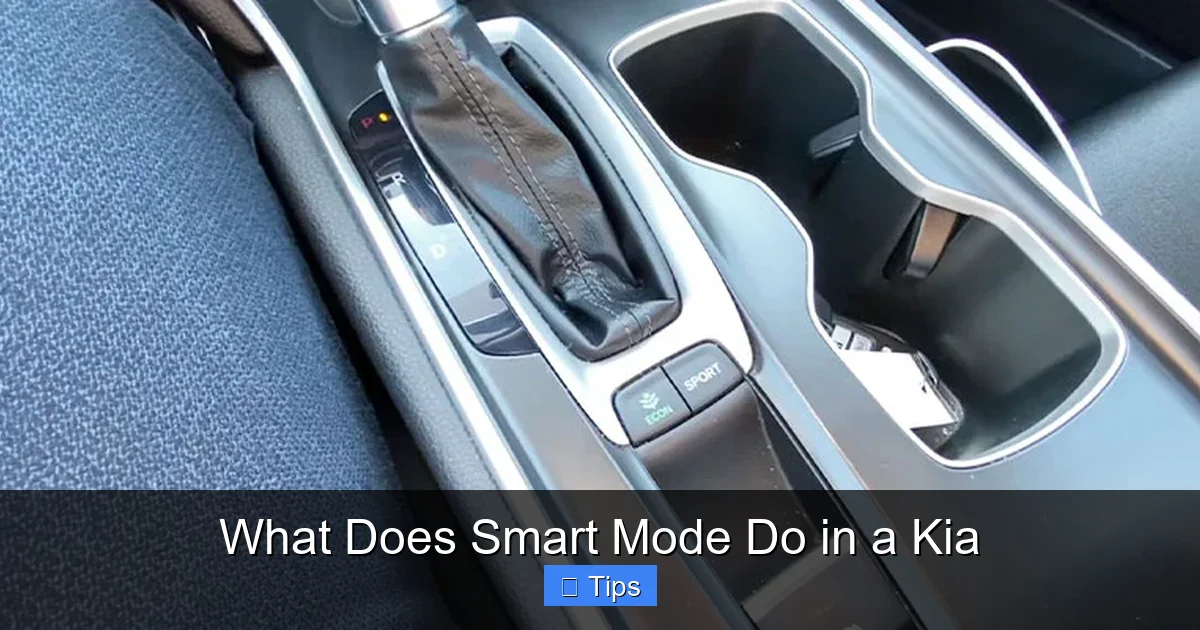
Visual guide about What Does Smart Mode Do in a Kia
Image source: hondatheotherside.com
To truly appreciate what Smart Mode does, it helps to compare it with the other drive modes available in Kia vehicles: Eco, Normal, and Sport. Each of these modes serves a specific purpose, but Smart Mode combines their strengths in a dynamic, adaptive way.
Eco mode is designed to maximize fuel efficiency. It reduces engine power, softens throttle response, and may even limit air conditioning usage to save energy. While great for city driving or long highway trips, Eco mode can feel underpowered during sudden accelerations or when climbing hills. It’s best used when you’re prioritizing economy over performance.
Normal mode offers a balanced experience. It provides adequate power and responsiveness without sacrificing too much fuel efficiency. This is the default setting for most drivers and works well for everyday commuting. However, it doesn’t adapt to your driving style—it stays the same whether you’re cruising or accelerating hard.
Sport mode, on the other hand, prioritizes performance. It sharpens throttle response, holds gears longer, and may adjust suspension settings (in models with adaptive suspension) for better handling. This mode is ideal for spirited driving, winding roads, or when you want a more engaging experience. The downside? It uses more fuel and can feel overly aggressive during relaxed driving.
Smart Mode bridges the gap between these modes. Instead of locking you into one setting, it dynamically shifts between them based on real-time conditions. For example, if you’re driving calmly on a Sunday morning, it stays in Eco. But if you hit the highway and start accelerating, it smoothly transitions to Sport. Then, when you slow down again, it returns to Eco. This intelligent switching ensures you always have the right balance of efficiency and performance—without any manual input.
Another advantage of Smart Mode is consistency. Manual mode selection can be inconsistent—some drivers forget to switch modes, while others switch too often. Smart Mode eliminates this variability by making decisions based on data, not habit. This leads to more predictable and optimized performance over time.
It’s also worth noting that Smart Mode works well with other Kia technologies. For instance, when paired with adaptive cruise control, it can adjust driving mode based on traffic flow. If the car detects stop-and-go traffic, it may favor Eco mode. If the road clears and you accelerate, it shifts to Sport. This level of integration makes the driving experience even more seamless.
When Should You Use Smart Mode?
Smart Mode is designed to be used in almost any driving situation, but there are certain scenarios where it truly shines. Understanding when to rely on it—and when you might want to take manual control—can help you get the most out of your Kia.
One of the best times to use Smart Mode is during daily commuting. Whether you’re navigating city traffic, cruising on the highway, or dealing with unpredictable weather, Smart Mode adapts to your needs. In heavy traffic, it will favor Eco mode to save fuel. On open roads, it can shift to Sport for smoother passing. This makes your commute more efficient and less stressful.
It’s also ideal for long road trips. When you’re driving for hours, fatigue can set in, and your driving style may change. Smart Mode compensates for these variations, ensuring the car responds appropriately whether you’re alert and aggressive or tired and cautious. This consistency helps maintain safety and comfort over long distances.
Smart Mode is particularly useful in mixed driving conditions. For example, if you drive from a rural area into a busy city, your route might include highways, back roads, and urban streets—all with different demands. Smart Mode handles these transitions automatically, so you don’t have to think about switching modes every few minutes.
Another great use case is for drivers who share a vehicle. If multiple people drive the same Kia—say, a family car used by parents and teens—Smart Mode ensures the car adapts to each driver’s style. A cautious parent might trigger more Eco mode usage, while a younger driver might see more Sport mode activation. This personalized experience benefits everyone.
That said, there are times when you might prefer manual mode selection. For example, if you’re driving on a track or participating in a spirited driving event, you may want full control over performance settings. In that case, switching to Sport mode manually gives you consistent, predictable behavior. Similarly, if you’re trying to maximize fuel economy on a long highway trip, locking into Eco mode might be more effective than relying on Smart Mode’s adaptive logic.
Ultimately, Smart Mode is best used as a default setting for everyday driving. It’s there to make your life easier, not harder. By handling the complexities of mode selection, it lets you focus on the road and enjoy the journey.
Tips for Getting the Most Out of Smart Mode
To maximize the benefits of Smart Mode, a few simple tips can go a long way. These strategies help ensure the system works optimally and delivers the best possible performance, efficiency, and comfort.
First, keep your vehicle well-maintained. Smart Mode relies on accurate sensor data, so issues like a dirty throttle body, low tire pressure, or faulty sensors can affect its performance. Regular maintenance—such as oil changes, tire rotations, and software updates—ensures the system has the information it needs to make smart decisions.
Second, drive naturally. Smart Mode learns from your behavior, so avoid overly aggressive or erratic driving unless necessary. Sudden, unpredictable inputs can confuse the system and lead to less efficient mode selections. Smooth, consistent driving helps Smart Mode adapt more accurately.
Third, use cruise control on highways. When combined with Smart Mode, cruise control helps maintain a steady speed, which the system interprets as calm driving. This often results in longer periods in Eco mode, boosting fuel efficiency. Just remember to stay alert and ready to take over if traffic conditions change.
Fourth, pay attention to feedback. While Smart Mode is designed to be seamless, it’s still helpful to notice how the car responds. If you feel the car is too slow to react or too eager to shift modes, you might consider switching to a manual mode temporarily. Over time, you’ll learn how Smart Mode behaves in different situations and can adjust your driving accordingly.
Finally, don’t be afraid to experiment. Try driving with Smart Mode enabled for a week, then switch to manual modes for comparison. You might be surprised by how much more relaxed and efficient your driving becomes with Smart Mode doing the work. It’s a great way to experience the full potential of your Kia’s technology.
Conclusion
Smart Mode in a Kia is more than just a convenience feature—it’s a smart, adaptive system that enhances every aspect of your driving experience. By automatically selecting the best drive mode based on your behavior and road conditions, it delivers the perfect balance of efficiency, comfort, and performance. Whether you’re commuting to work, taking a road trip, or just running errands around town, Smart Mode ensures your Kia responds intelligently to your needs.
What sets Smart Mode apart is its simplicity and effectiveness. You don’t need to be a car enthusiast to benefit from it. It works quietly in the background, making adjustments so you can focus on the road. And because it integrates seamlessly with other Kia technologies, it creates a cohesive, high-tech driving environment that feels both modern and intuitive.
In a world where driving conditions are constantly changing, Smart Mode offers a reliable solution. It reduces the mental load of driving, improves fuel economy, and enhances safety—all without requiring any extra effort from you. It’s no wonder that more and more Kia drivers are making Smart Mode their go-to setting.
So the next time you slide into your Kia, consider letting Smart Mode take the wheel—figuratively speaking. You might just discover a smoother, smarter, and more enjoyable way to drive.
Frequently Asked Questions
What does Smart Mode do in a Kia?
Smart Mode automatically selects the best driving mode—Eco, Normal, or Sport—based on your driving behavior and road conditions. It adjusts throttle response, transmission shifts, and other systems to optimize performance, comfort, and fuel efficiency.
Is Smart Mode better than manual drive modes?
Smart Mode is ideal for most drivers because it adapts dynamically without requiring manual input. However, manual modes may be preferred in specific situations, like track driving or when maximizing fuel economy on long trips.
Does Smart Mode save fuel?
Yes, Smart Mode can improve fuel efficiency by favoring Eco mode during gentle driving. Real-world tests show potential fuel savings of 5–10% compared to fixed-mode driving.
Can I turn off Smart Mode?
Yes, you can disable Smart Mode at any time using the drive mode selector. Simply choose Eco, Normal, or Sport mode manually if you prefer full control.
Does Smart Mode work in all Kia models?
Smart Mode is available on most modern Kia vehicles with drive mode select, including the Sorento, Sportage, Telluride, and Niro. Check your owner’s manual to confirm availability.
Does Smart Mode affect acceleration?
Yes, but in a positive way. Smart Mode enhances acceleration when needed by switching to Sport mode during aggressive driving, while maintaining smooth, efficient power delivery during normal driving.

At CarLegit, we believe information should be clear, factual, and genuinely helpful. That’s why every guide, review, and update on our website is created with care, research, and a strong focus on user experience.