
The CTS in Cadillac stands for “Catera Touring Sedan,” a name rooted in Cadillac’s strategy to blend European driving dynamics with American luxury. Introduced in 2002, the CTS redefined Cadillac’s image, marking a bold shift toward performance-oriented sedans that could compete with German rivals like BMW and Mercedes-Benz.
In This Article
- 1 Key Takeaways
- 2 📑 Table of Contents
- 3 What Does the CTS in Cadillac Stand For?
- 4 The Birth of the Cadillac CTS: A Turning Point for the Brand
- 5 The Evolution of the CTS: From Humble Beginnings to High-Performance Icon
- 6 Why the CTS Name Matters: Branding and Identity
- 7 The CTS-V: When Luxury Meets Raw Power
- 8 The CTS Today: Collector’s Item and Enthusiast Favorite
- 9 Conclusion: The CTS Legacy Lives On
- 10 Frequently Asked Questions
Key Takeaways
- CTS stands for “Catera Touring Sedan”: The name was inspired by the Cadillac Catera, serving as a nod to the brand’s evolution and European influence.
- Launched in 2002: The first-generation CTS marked Cadillac’s reentry into the competitive luxury sport sedan market after years of conservative designs.
- Designed to challenge German automakers: Cadillac aimed to rival BMW’s 3 Series and Mercedes’ C-Class with sharper handling and a driver-focused experience.
- Evolved through four generations: From a modest start to a high-performance V-Series model, the CTS grew into a flagship luxury performance sedan.
- Discontinued in 2019, replaced by the CT5: The CTS was phased out as Cadillac shifted focus to newer naming conventions and electric future models.
- Legacy of innovation: The CTS helped modernize Cadillac’s brand identity, emphasizing performance, technology, and bold design.
- Popular among enthusiasts: Especially the CTS-V models, known for supercharged V8 engines and track-ready capabilities.
📑 Table of Contents
- What Does the CTS in Cadillac Stand For?
- The Birth of the Cadillac CTS: A Turning Point for the Brand
- The Evolution of the CTS: From Humble Beginnings to High-Performance Icon
- Why the CTS Name Matters: Branding and Identity
- The CTS-V: When Luxury Meets Raw Power
- The CTS Today: Collector’s Item and Enthusiast Favorite
- Conclusion: The CTS Legacy Lives On
What Does the CTS in Cadillac Stand For?
If you’ve ever wondered what the “CTS” in Cadillac CTS actually means, you’re not alone. For years, car enthusiasts, buyers, and even some Cadillac dealers have debated the origin of this mysterious acronym. The answer isn’t just a random string of letters—it’s a deliberate branding choice that reflects Cadillac’s transformation into a modern, performance-driven luxury automaker.
The CTS stands for “Catera Touring Sedan.” Yes, it’s named after another Cadillac model—the Catera—which was produced from 1997 to 2001. The Catera itself was Cadillac’s first attempt at a European-style sport sedan, built on GM’s Opel Omega platform and marketed as an affordable luxury car with German engineering roots. While the Catera didn’t achieve major success, it laid the groundwork for something bigger: the CTS.
When Cadillac introduced the CTS in 2002, it was a bold statement. The brand had long been associated with large, cushy land yachts—think big V8 engines, plush interiors, and a smooth, floaty ride. But by the late 1990s and early 2000s, Cadillac realized it needed to change. Younger buyers were flocking to German brands like BMW, Mercedes-Benz, and Audi, which offered sportier handling, sharper styling, and a more dynamic driving experience. Cadillac needed a car that could compete—not just in comfort, but in performance and driving excitement.
That’s where the CTS came in. It wasn’t just a new model; it was a symbol of Cadillac’s reinvention. The name “Catera Touring Sedan” was a clever way to signal continuity—honoring the Catera’s legacy while signaling a step forward. It told the world: “We’re still building on that European-inspired idea, but now we’re doing it better.”
The Birth of the Cadillac CTS: A Turning Point for the Brand
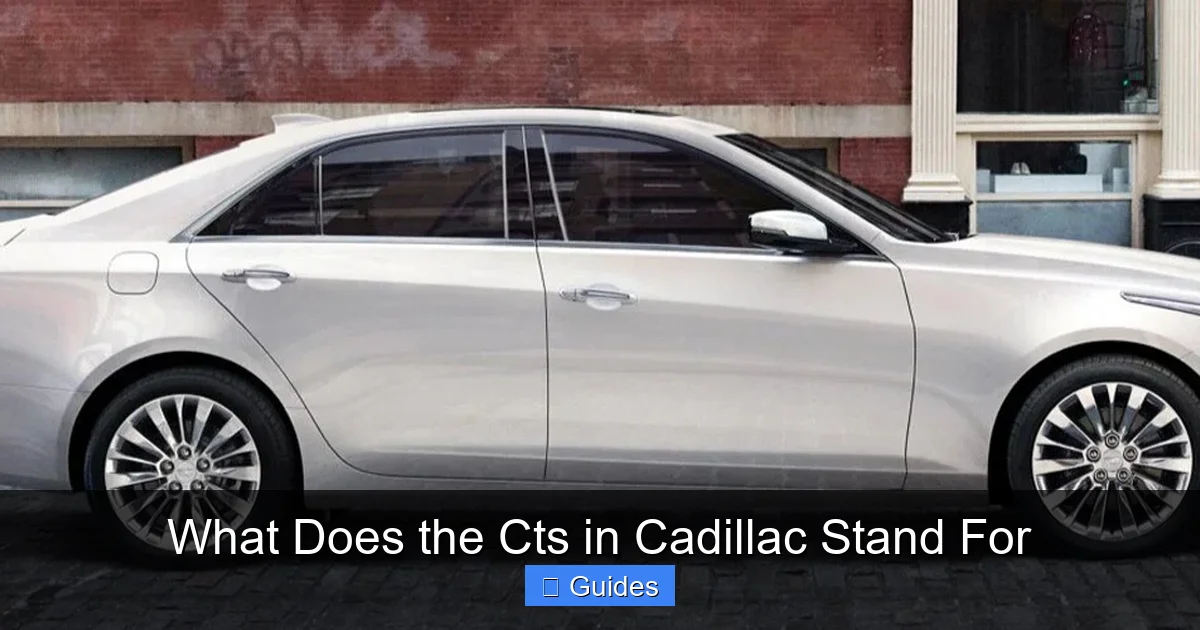
Visual guide about What Does the Cts in Cadillac Stand For
Image source: dealerinspire-image-library-prod.s3.us-east-1.amazonaws.com
To understand the significance of the CTS, you have to look at Cadillac’s history. For decades, Cadillac was the epitome of American luxury—big, bold, and brimming with chrome. Cars like the Eldorado, DeVille, and Fleetwood were icons of their time, but by the 1990s, they were starting to feel outdated. The brand was losing relevance among younger, more performance-minded buyers who wanted something that handled like a sports car but still offered luxury.
Enter the Catera in 1997. It was Cadillac’s first real attempt at a European-style sedan, built on the Opel Omega platform and marketed as the “European Cadillac.” It had a more agile chassis, a manual transmission option, and a sportier stance than anything Cadillac had offered before. But despite its promising design, the Catera struggled with reliability issues, a lack of brand identity, and limited performance. It was discontinued in 2001, but it left behind a valuable lesson: Cadillac could build a sport sedan—it just needed to do it right.
That’s where the CTS came in. Unveiled in 2002 as a 2003 model, the CTS was designed from the ground up to be everything the Catera wasn’t: more powerful, better built, and far more appealing to driving enthusiasts. It featured a rear-wheel-drive platform (a first for a Cadillac sedan in decades), a choice of inline-5 and V6 engines, and a bold, angular design inspired by Cadillac’s “Art and Science” styling language.
The CTS wasn’t just a new car—it was a declaration of intent. Cadillac was no longer content to be the brand your grandparents drove. They wanted to compete with BMW, Mercedes, and Audi on their own terms. And the name “Catera Touring Sedan” was a subtle but important part of that message. It acknowledged the past while pointing toward the future.
The Evolution of the CTS: From Humble Beginnings to High-Performance Icon
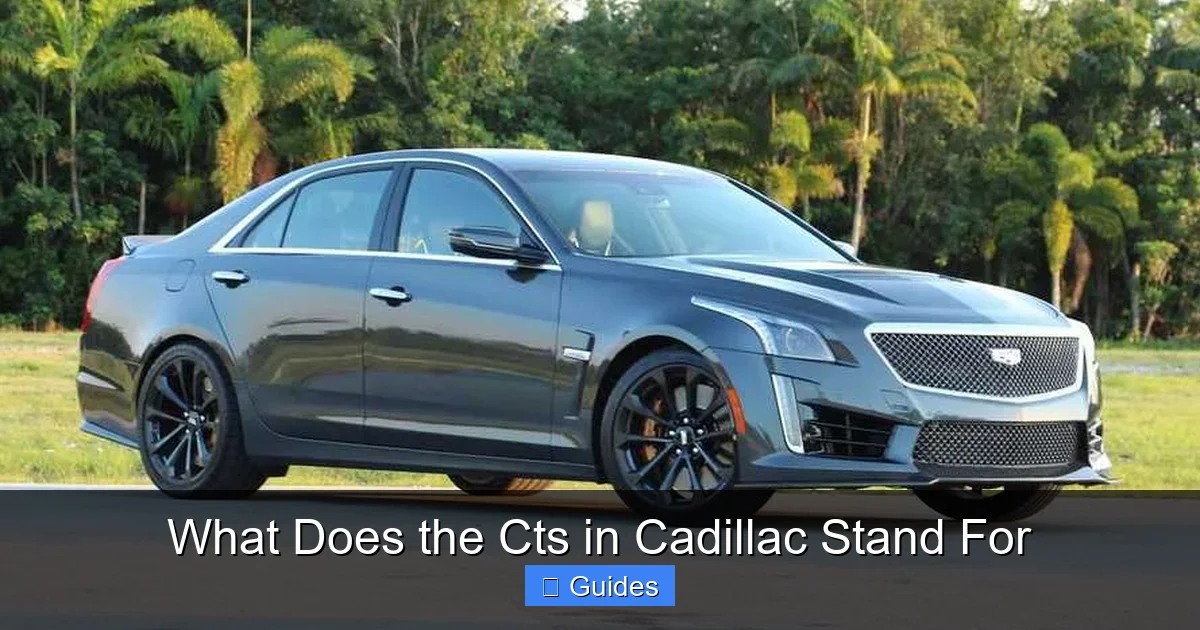
Visual guide about What Does the Cts in Cadillac Stand For
Image source: cdn.motor1.com
The Cadillac CTS didn’t become an overnight sensation, but it steadily gained respect—and sales—over the years. Let’s take a closer look at how it evolved through its four generations.
First Generation (2003–2007): Laying the Foundation
The first-generation CTS was a solid start, but it wasn’t perfect. It came with a 2.6L or 3.2L V6 engine, offering modest power—around 180 to 220 horsepower. While it had rear-wheel drive and a sport-tuned suspension, it was still a bit underpowered compared to rivals like the BMW 3 Series. Critics praised its bold styling and improved handling but noted that the interior materials and build quality lagged behind European competitors.
Still, the CTS was a hit with younger buyers and marked a clear shift in Cadillac’s direction. It proved that Cadillac could build a car that appealed to driving enthusiasts, not just luxury seekers.
Second Generation (2008–2014): Stepping Up the Game
The second-generation CTS, launched in 2008, was a major leap forward. It featured a completely redesigned body, a more refined interior, and a wider range of engines—including a 3.6L V6 with 304 horsepower and, later, a turbocharged 2.0L four-cylinder. But the real game-changer was the introduction of the CTS-V in 2009.
The CTS-V was Cadillac’s answer to the BMW M3 and Mercedes-AMG C-Class. It packed a 6.2L supercharged V8 engine (the same one used in the Corvette ZR1) producing 556 horsepower. With a 0-60 mph time of under 4 seconds, it wasn’t just a luxury sedan—it was a muscle car in a suit. The CTS-V became an instant legend among performance fans and helped cement the CTS name in automotive history.
Third Generation (2014–2019): Refinement and Technology
The third-generation CTS, introduced in 2014, focused on refinement, technology, and luxury. It grew in size, offering more interior space and a quieter ride. The base engine was a 2.0L turbocharged four-cylinder, but the real stars were the 3.6L V6 (335 hp) and the updated CTS-V, which now produced a staggering 640 horsepower.
This generation also introduced advanced features like Cadillac’s CUE infotainment system, magnetic ride control, and a host of driver-assistance technologies. It was more competitive than ever, appealing to buyers who wanted both performance and premium comfort.
The End of an Era: Discontinuation and Legacy
In 2019, Cadillac discontinued the CTS and replaced it with the CT5. The new naming convention—CT for “Cadillac Touring”—marked a fresh start for the brand. But the CTS left behind a powerful legacy. It helped redefine Cadillac as a performance-oriented luxury brand, paved the way for future models like the CT4 and CT5, and proved that American automakers could build world-class sport sedans.
Why the CTS Name Matters: Branding and Identity
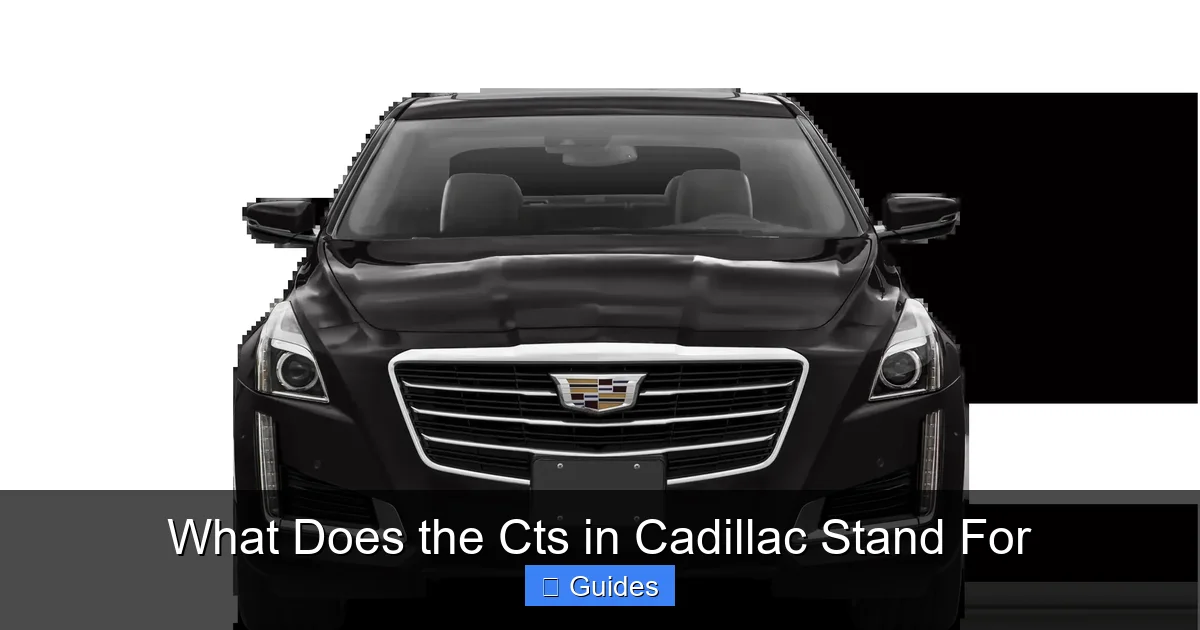
Visual guide about What Does the Cts in Cadillac Stand For
Image source: platform.cstatic-images.com
So why did Cadillac choose “Catera Touring Sedan” for the CTS name? It wasn’t just a random choice—it was a strategic branding decision.
First, it created a sense of continuity. By linking the CTS to the Catera, Cadillac acknowledged its past efforts to enter the sport sedan market. It told customers: “We’ve been working on this. We’ve learned from our mistakes. And now we’re ready.”
Second, it signaled evolution. The word “Touring” suggested a car designed for long-distance comfort and driving enjoyment—exactly what Cadillac wanted the CTS to be. It wasn’t just a commuter car; it was a driver’s car.
Third, it helped distance the CTS from Cadillac’s older, more conservative image. The Catera had already started the shift toward European styling and performance, and the CTS doubled down on that idea. The name subtly communicated that this was a new kind of Cadillac—one that valued handling, responsiveness, and driving dynamics.
Over time, the “Catera” part of the name faded from public awareness. Most people just called it the “CTS,” and the acronym became synonymous with Cadillac’s performance sedan lineup. But the origin story remains an important part of the car’s identity.
The CTS-V: When Luxury Meets Raw Power
No discussion of the CTS would be complete without mentioning the CTS-V. This high-performance variant took the CTS from a respectable luxury sedan to a track-ready beast.
The first CTS-V (2004–2007) used a 5.7L V8 from the Corvette, producing 400 horsepower. It was fast, but it was still based on the first-gen CTS platform, which had some limitations.
The second-generation CTS-V (2009–2014) was a completely different animal. With its supercharged 6.2L V8, magnetic ride control, Brembo brakes, and aggressive aerodynamics, it could hold its own against the best from Germany. It even set a lap record at the Nürburgring Nordschleife for production sedans at the time—a huge achievement for an American brand.
The third-generation CTS-V (2016–2019) pushed the envelope even further. With 640 horsepower, a top speed of 200 mph, and a 0-60 time of 3.7 seconds, it was one of the fastest sedans in the world. It wasn’t just a luxury car with a big engine—it was a true performance machine.
The CTS-V proved that Cadillac could build not just a sport sedan, but a super sedan. It attracted a loyal following of enthusiasts and helped elevate the entire CTS lineup.
The CTS Today: Collector’s Item and Enthusiast Favorite
Even though the CTS is no longer in production, it remains popular among car buyers and collectors. Used CTS models offer a lot of value—especially the later V6 and CTS-V versions. They’re reliable, well-equipped, and still look modern thanks to Cadillac’s bold design language.
Enthusiasts especially love the CTS-V. Its combination of American V8 power, European-inspired handling, and luxury features makes it a standout in the used car market. Well-maintained examples can still fetch strong prices, and many owners modify them for even more performance.
The CTS also holds a special place in automotive history. It was the car that helped Cadillac shed its “old person’s car” image and become a serious player in the luxury performance segment. Without the CTS, models like the CT4, CT5, and the upcoming electric Lyriq might not exist.
Conclusion: The CTS Legacy Lives On
So, what does the CTS in Cadillac stand for? It stands for “Catera Touring Sedan”—a name that honors the past while pointing toward the future. But more than that, the CTS stands for transformation. It was the car that redefined Cadillac, challenged the status quo, and proved that American luxury could be both powerful and precise.
From its humble beginnings as a modest sport sedan to its evolution into a high-performance icon, the CTS played a pivotal role in Cadillac’s modern era. It may be gone, but its legacy lives on in every Cadillac that prioritizes driving excitement, bold design, and cutting-edge technology.
Whether you’re a longtime fan or just discovering the CTS for the first time, one thing is clear: this wasn’t just a car. It was a revolution on four wheels.
Frequently Asked Questions
What does CTS stand for in Cadillac?
The CTS in Cadillac stands for “Catera Touring Sedan.” It was named after the Cadillac Catera, a previous model that introduced European-inspired design and handling to the brand.
When was the Cadillac CTS first introduced?
The Cadillac CTS was first introduced in 2002 as a 2003 model. It marked Cadillac’s return to the competitive luxury sport sedan market after years of focusing on larger, more traditional vehicles.
Why did Cadillac discontinue the CTS?
Cadillac discontinued the CTS in 2019 to make way for the newer CT5, part of a rebranding effort that uses “CT” for “Cadillac Touring.” The shift also aligned with Cadillac’s move toward electric and performance-focused models.
What makes the CTS-V special?
The CTS-V is a high-performance variant of the CTS, featuring supercharged V8 engines, track-tuned suspension, and Brembo brakes. It was designed to compete with German performance sedans like the BMW M3 and Mercedes-AMG C-Class.
Is the Cadillac CTS still in production?
No, the Cadillac CTS was discontinued in 2019. It has been replaced by the CT5, which continues the legacy of Cadillac’s luxury sport sedans with updated technology and design.
Was the CTS successful for Cadillac?
Yes, the CTS was a major success. It helped modernize Cadillac’s brand image, attracted younger buyers, and established the company as a serious competitor in the luxury performance sedan market.

At CarLegit, we believe information should be clear, factual, and genuinely helpful. That’s why every guide, review, and update on our website is created with care, research, and a strong focus on user experience.