
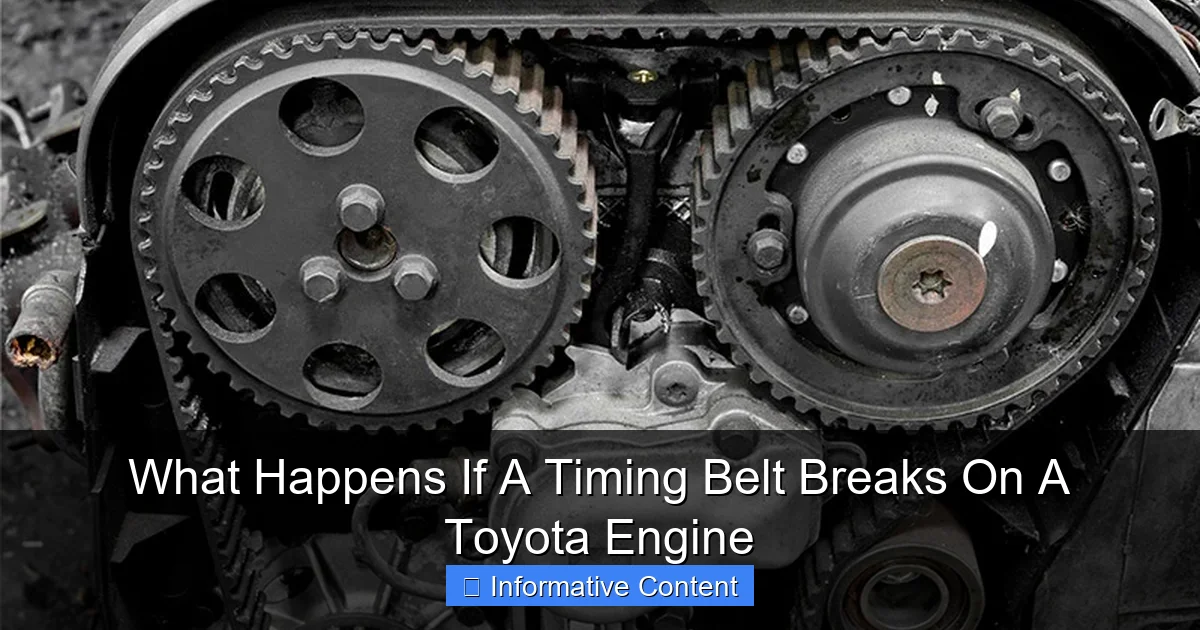
Featured image for What Happens If A Timing Belt Breaks On A Toyota
Image source: cdn.autoguru.com.au
If a timing belt breaks on a Toyota engine, it usually causes catastrophic and expensive internal damage because most are interference designs. The sudden loss of timing synchronization makes pistons strike valves, leading to bent valves, ruined pistons, or complete engine seizure. This severe outcome makes proactive replacement according to Toyota’s schedule absolutely critical.
In This Article
- 1 Key Takeaways
- 2 📑 Table of Contents
- 3 The Silent Guardian and the Sudden Heart Attack: Understanding Your Toyota’s Timing Belt
- 4 What Exactly Is a Timing Belt and What Does It Do?
- 5 The Moment of Catastrophe: What Happens If a Timing Belt Breaks On a Toyota?
- 6 The Aftermath: The Devastating Damage of a Broken Belt
- 7 Is Your Toyota at Risk? Models and Mileage Markers
- 8 Heeding the Whispers: Warning Signs of a Failing Timing Belt
- 9 The Peace of Mind Procedure: Timing Belt Replacement
- 10 Data at a Glance: Toyota Engine Types
- 11 Conclusion: Don’t Gamble With the Heart of Your Toyota
- 12 Frequently Asked Questions
- 12.1 What happens if a timing belt breaks on a Toyota engine?
- 12.2 Can a Toyota engine be saved after a timing belt breaks?
- 12.3 What is the repair cost for a Toyota when the timing belt breaks?
- 12.4 What are the warning signs before a timing belt breaks on a Toyota?
- 12.5 Is driving with an old timing belt risky for my Toyota?
- 12.6 How frequently should the timing belt be replaced on a Toyota to prevent a break?
Key Takeaways
- Timing belt failure causes catastrophic engine damage: In interference engines, pistons and valves collide.
- Regular replacement prevents expensive repairs: Strictly follow Toyota’s recommended maintenance schedule.
- Listen for warning signs like ticking noises: These indicate belt wear before it breaks.
- Immediate engine shutdown is necessary if it breaks: Stop driving to prevent further damage.
- Repair costs often exceed vehicle value: Engine replacement is far costlier than prevention.
- Check your owner’s manual for specific intervals: Replacement mileage varies by Toyota model.
📑 Table of Contents
- The Silent Guardian and the Sudden Heart Attack: Understanding Your Toyota’s Timing Belt
- What Exactly Is a Timing Belt and What Does It Do?
- The Moment of Catastrophe: What Happens If a Timing Belt Breaks On a Toyota?
- The Aftermath: The Devastating Damage of a Broken Belt
- Is Your Toyota at Risk? Models and Mileage Markers
- Heeding the Whispers: Warning Signs of a Failing Timing Belt
- The Peace of Mind Procedure: Timing Belt Replacement
- Data at a Glance: Toyota Engine Types
- Conclusion: Don’t Gamble With the Heart of Your Toyota
The Silent Guardian and the Sudden Heart Attack: Understanding Your Toyota’s Timing Belt
Let’s talk about one of those car maintenance items we all hear about but often push to the back of our minds. You’re driving your trusty Toyota, maybe listening to a podcast or singing along to the radio. The engine hums smoothly, a reliable companion on your daily commute or road trip adventure.
But deep inside that engine, a critical component is working tirelessly, a silent guardian synchronizing the entire mechanical ballet. This is the timing belt. And then, without much warning, it can snap. That smooth hum turns into a sudden, terrifying clatter, followed by silence as your car rolls to a stop. Your heart sinks. What just happened? And more importantly, what happens if a timing belt breaks on a Toyota engine?
If you’re like most people, you’ve probably heard this is a “bad” thing. But today, we’re going to move beyond the scary stories and get into the real, mechanical truth. I’ll walk you through exactly what goes down, why it’s so serious for many Toyotas, and how you can prevent this automotive nightmare from ever happening to you. Consider this a friendly chat from someone who’s seen the aftermath and wants to help you avoid it.
What Exactly Is a Timing Belt and What Does It Do?
Before we dive into the disaster, let’s understand the hero of our story. Your car’s engine is a masterpiece of precision. For it to run, four key events need to happen in perfect order: intake, compression, power, and exhaust. This is orchestrated by the movement of the pistons (inside the cylinders) and the opening/closing of the valves (in the cylinder head).
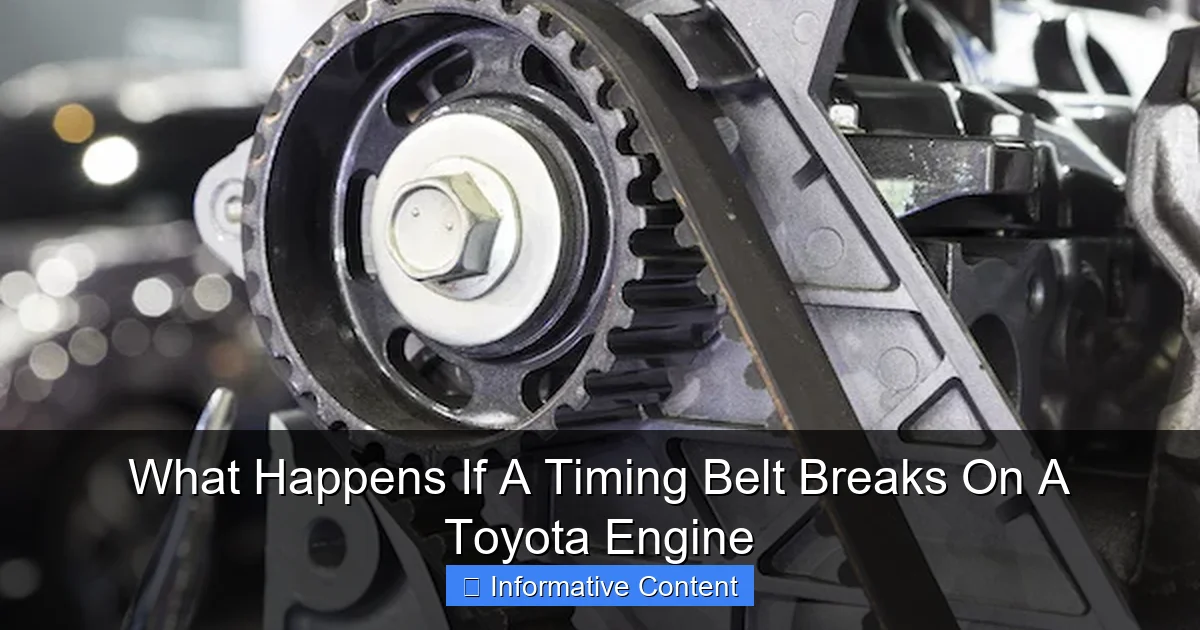
Visual guide about What Happens If A Timing Belt Breaks On A Toyota
Image source: kamsauto.com
The Conductor of the Engine’s Orchestra
Think of the timing belt as the conductor of this orchestra. It’s a reinforced rubber belt with teeth on the inside. This belt connects the crankshaft (which moves the pistons up and down) to the camshaft (which controls the opening and closing of the valves). Its sole job is to ensure that for every movement of a piston, the corresponding valve opens or closes at the exact millisecond it’s supposed to. This “timing” is where it gets its name. If this timing is off by even a little, the engine runs poorly. If the belt breaks, the timing is lost completely.
Why Can’t It Just Be a Chain?
You might have heard of timing chains. Some engines use chains, which are typically more durable and often last the life of the engine. Belts, however, are quieter, cheaper to manufacture, and require less engine space. The trade-off? They are made of rubber and composite materials that degrade over time. They must be replaced proactively, not when they break. Toyota has used timing belts extensively in many of its most reliable engines, like the 2AZ-FE (found in Camrys and RAV4s) or the 1MZ-FE (in older Camrys and Avalons).
The Moment of Catastrophe: What Happens If a Timing Belt Breaks On a Toyota?
So, the belt snaps while you’re driving. Here’s the play-by-play of the mechanical chaos that ensues in a matter of seconds.
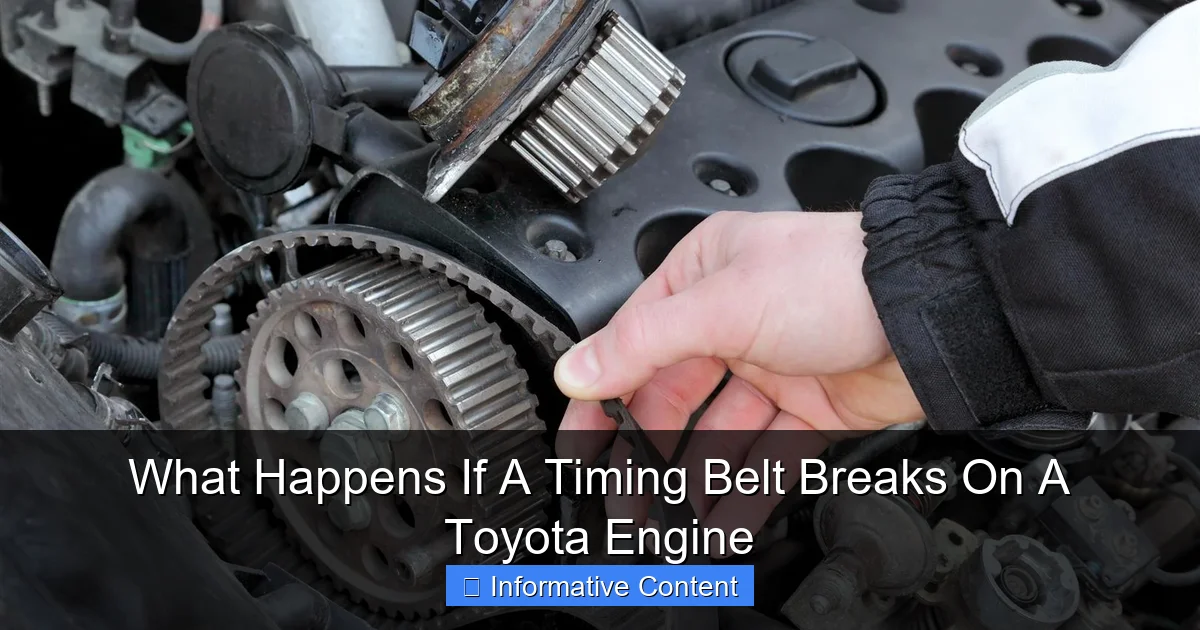
Visual guide about What Happens If A Timing Belt Breaks On A Toyota
Image source: foxrunauto.com
The Immediate Sequence of Events
First, you’ll likely hear a sudden, sharp slapping or snapping sound from the engine bay. The engine will stop producing power instantly because the camshaft stops turning. This means the valves freeze in whatever position they were in. However, the crankshaft and pistons, driven by the momentum of the car, may continue to try to move for a rotation or two. This is where the real trouble starts.
The Difference Between Interference and Non-Interference Engines
This is the most critical concept to understand. The severity of what happens if a timing belt breaks on a Toyota depends entirely on whether the engine is an “interference” or “non-interference” design.
- Non-Interference Engine: In this design, even at the top of their travel, the pistons and the valves never occupy the same space. If the belt breaks, they simply stop moving independently. The engine is dead, but it likely won’t have internal damage. You’ll need a tow and a new belt, but the repair is relatively straightforward.
- Interference Engine: Here, the pistons and valves do occupy the same space at different points in the cycle. They are carefully timed by the belt to never meet. When the belt breaks, that timing is gone. The pistons, still moving upward, can crash directly into the open valves.
The vast majority of modern Toyota gasoline engines are interference engines. This is done to achieve better efficiency and power. It also means a broken timing belt is almost always a catastrophic event.
The Aftermath: The Devastating Damage of a Broken Belt
In an interference engine Toyota, that piston-valve collision is just the beginning. It’s a high-speed, metal-on-metal impact inside a finely machined chamber. The resulting damage is extensive and incredibly expensive.
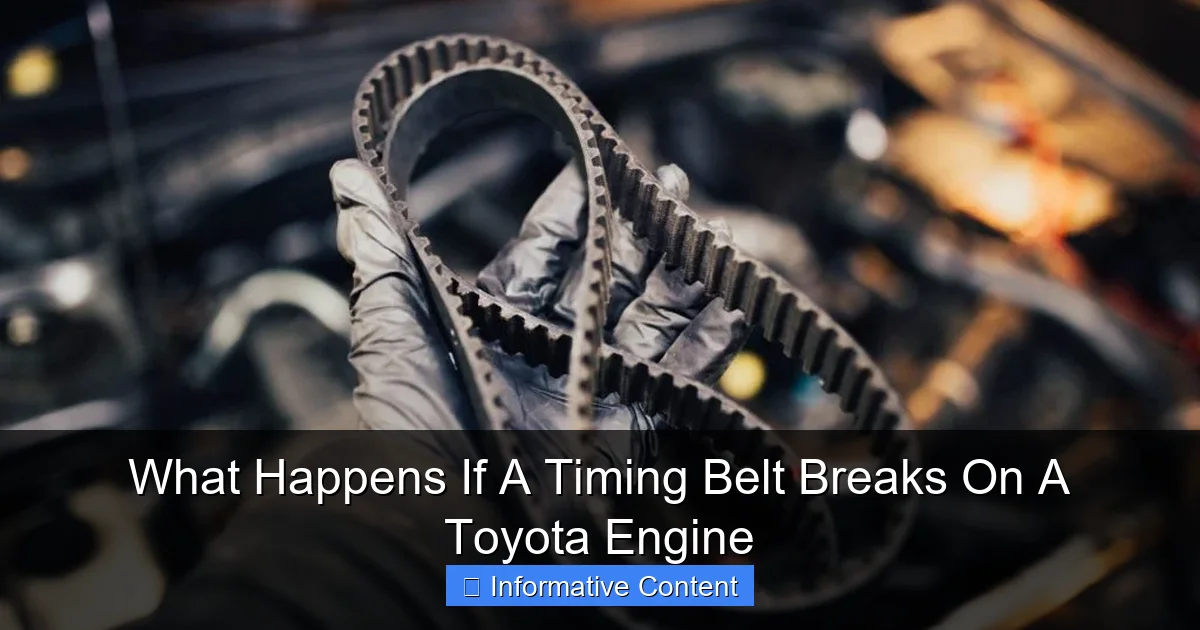
Visual guide about What Happens If A Timing Belt Breaks On A Toyota
Image source: rerev.com
A List of Likely Casualties
- Bent Valves: This is the minimum damage. The thin valve stems are no match for a rising piston. They bend, rendering the cylinder useless.
- Destroyed Pistons: The piston heads can be dented, cracked, or holed by the impact.
- Damaged Cylinder Head: The valve guides and seats in the cylinder head can be shattered or warped.
- Broken Camshaft: The sudden stop can cause the camshaft to snap or shear its gears.
- Cylinder Wall Scoring: Pieces of broken metal can score the smooth cylinder walls, leading to compression loss and oil burning.
The Cost Reality: Repair vs. Replace
Fixing this isn’t a simple belt swap. It requires a complete “engine tear-down.” The cylinder head has to be removed, inspected, and almost always rebuilt or replaced. Pistons and cylinders may need work. The labor hours are massive. In many cases, the repair bill can easily reach $3,000 to $5,000 or more. For an older Toyota, this cost often exceeds the car’s value, leading to a heartbreaking decision: a massive repair or sending a mechanically sound car to the scrapyard over one failed maintenance item.
Is Your Toyota at Risk? Models and Mileage Markers
Not all Toyotas use timing belts. Many newer models (post-2010s) have switched to chains. But if your Toyota is from the 1990s, 2000s, or even early 2010s, it’s crucial to check. Popular models with belt-driven interference engines include:
- Toyota Camry (4-cylinder models like the 2.4L up to around 2011)
- Toyota Corolla (various years, especially with the 1.8L engine)
- Toyota RAV4 (the 4-cylinder 2.4L and 2.5L engines in earlier generations)
- Toyota Avalon (V6 models like the 1MZ and 3MZ)
- Toyota Highlander (early V6 models)
- Toyota Sienna (older V6 models)
The golden rule is never to go by model year alone. Always, always check your owner’s manual or consult with a trusted mechanic for your specific Vehicle Identification Number (VIN).
The Critical Maintenance Schedule
Toyota is very specific about timing belt replacement. It’s not a “fix it when it breaks” item; it’s a “replace it before it breaks” item. The interval is usually between 60,000 and 100,000 miles, but it is also time-based—often every 6 to 10 years. Why the time limit? Rubber degrades. It dries out, cracks, and gets brittle, even if you haven’t driven the miles. A 15-year-old car with 70,000 miles is a prime candidate for a belt failure.
Heeding the Whispers: Warning Signs of a Failing Timing Belt
Sometimes, the belt gives you hints before it fully quits. Don’t ignore these whispers.
Visible and Audible Clues
- Ticking Noise from Engine: A rhythmic ticking coming from the front of the engine could be a sign the belt is loose or the teeth are wearing.
- Engine Misfires or Rough Running: If the belt has jumped a tooth (just one!), the timing will be slightly off, causing misfires, poor acceleration, and a check engine light.
- Oil Leak from Front of Engine: The timing belt is housed behind covers, but it often shares a space with the engine’s front main seal. A significant oil leak in this area can soak the belt, causing the rubber to swell and deteriorate rapidly.
- Visible Cracks or Damage: If you’re having other work done and a mechanic sees the belt (it’s behind covers, so you usually can’t just look), they might report back on its condition—severe cracking, missing teeth, or glazing.
The Most Dangerous Sign: No Sign at All
The most insidious aspect of timing belt failure is that it often happens with no warning whatsoever. The belt looks fine one day and snaps the next. This is why adhering to the manufacturer’s replacement interval is non-negotiable. Relying on symptoms is a game of Russian roulette with your engine.
The Peace of Mind Procedure: Timing Belt Replacement
Replacing the timing belt is a preventative maintenance triumph. It’s an investment in your car’s future.
What’s Involved in the Job?
A quality replacement is more than just swapping the belt. A complete “timing belt service” should include:
- New timing belt.
- New tensioner and idler pulleys (these wear out and can cause belt failure).
- New water pump (since it’s driven by the timing belt and requires the same labor to access).
- New front crankshaft and camshaft seals (to prevent future oil leaks onto your new belt).
- New coolant and possibly drive belts (serpentine belt).
While this “kit” approach costs more upfront, it saves you massive labor costs down the road. You don’t want to pay for the same 4-6 hours of labor twice because a $50 water pump failed a year later.
Finding a Trusted Mechanic
This is not a DIY job for most people. The precision required is extreme. One wrong mark or misaligned gear can lead to the same damage as a broken belt. Choose a mechanic who specializes in Japanese cars or your local dealership. Ask for OEM (Toyota Genuine Parts) or high-quality aftermarket kits from brands like Aisin (who actually makes many of Toyota’s original parts).
Data at a Glance: Toyota Engine Types
This table simplifies the critical distinction between engine types. Remember: This is a general guide. Always verify for your specific engine.
| Engine Type | What Happens If Belt Breaks? | Typical Repair Outcome | Common Toyota Examples |
|---|---|---|---|
| Interference | Pistons and valves collide, causing severe internal engine damage. | Major engine repair or complete replacement required. Very high cost. | 2AZ-FE (2.4L), 1MZ-FE (3.0L V6), 2GR-FE (3.5L V6 – in some applications with belt) |
| Non-Interference | Engine stops, but no internal collision occurs. | Install new timing belt and related components. Engine typically fine. | Some older 4A-FE engines, the 3S-FE, and many diesel engines. |
Conclusion: Don’t Gamble With the Heart of Your Toyota
So, what happens if a timing belt breaks on a Toyota engine? In a word: devastation. For the majority of Toyota owners, it’s a catastrophic financial and mechanical event that turns a reliable car into a massive paperweight. The contrast is stark: a $800-$1,200 preventative service versus a $4,000+ engine repair.
Treat your timing belt like a vital health check-up. You don’t wait for a heart attack to think about your cholesterol. Don’t wait for the snap, clatter, and tow truck to think about your timing belt. Dig out your owner’s manual today. Check the mileage and the date of the last change. If you’re near or past the interval, make the appointment. It’s the single most important maintenance item for preserving the legendary longevity of your Toyota. Drive smart, replace proactively, and enjoy the peace of mind that comes with knowing your engine’s silent guardian is strong and secure.
Frequently Asked Questions
What happens if a timing belt breaks on a Toyota engine?
When the timing belt breaks on a Toyota engine, it causes the camshaft and crankshaft to lose synchronization. This can lead to pistons colliding with valves, resulting in severe internal engine damage, often requiring expensive repairs or even engine replacement.
Can a Toyota engine be saved after a timing belt breaks?
It depends on the engine type. Most Toyota engines are interference engines, meaning a broken timing belt typically causes catastrophic damage, but some non-interference engines might survive with less damage, though this is rare in modern Toyotas.
What is the repair cost for a Toyota when the timing belt breaks?
The cost can vary widely, but repairing a Toyota engine after a timing belt break often ranges from $1,500 to $3,000 or more. This includes parts and labor for valve, piston, or even full engine replacement, depending on the extent of the damage.
What are the warning signs before a timing belt breaks on a Toyota?
Common symptoms include engine misfires, ticking noises from the engine, oil leaks near the timing cover, and difficulty starting. If you notice any of these, have your timing belt inspected immediately to prevent a break.
Is driving with an old timing belt risky for my Toyota?
Yes, driving with a worn timing belt is very risky. A worn belt can break at any time, leading to sudden engine failure and potentially leaving you stranded or causing an accident, so always replace it according to the manufacturer’s schedule.
How frequently should the timing belt be replaced on a Toyota to prevent a break?
Toyota typically recommends replacing the timing belt every 60,000 to 100,000 miles, but always refer to your owner’s manual for specific intervals. Regular replacement is crucial to avoid a break and subsequent engine damage.

At CarLegit, we believe information should be clear, factual, and genuinely helpful. That’s why every guide, review, and update on our website is created with care, research, and a strong focus on user experience.