

Stiffer rear springs change how your car behaves on the road. They can improve handling and reduce body roll, but may also make the ride harsher and affect traction. Understanding these trade-offs helps you decide if stiffer springs are right for your driving needs.
If you’ve ever driven a car that feels like it’s glued to the road through corners—responsive, planted, and eager to change direction—you’ve likely experienced the effect of a well-tuned suspension system. One of the key components in that system is the springs, and when it comes to modifying a car’s behavior, changing the rear springs can have a big impact. But what happens to a car with stiffer rear springs? Is it always an upgrade?
The short answer is: it depends. Stiffer rear springs aren’t inherently good or bad—they’re a tool. Like any modification, they come with trade-offs. They can make your car handle better in certain situations, but they might also make your daily commute less pleasant. Whether you’re a weekend track enthusiast, a daily driver, or someone who frequently carries heavy loads, understanding how stiffer rear springs affect your vehicle is crucial.
In this guide, we’ll break down exactly what happens when you install stiffer rear springs. We’ll explore how they influence handling, ride comfort, weight transfer, and even tire wear. You’ll learn when stiffer springs make sense, when they might cause problems, and how to balance them with other suspension components. By the end, you’ll have a clear picture of whether stiffer rear springs are the right choice for your car and your driving style.
In This Article
- 1 Key Takeaways
- 2 📑 Table of Contents
- 3 How Springs Work in a Car’s Suspension
- 4 Improved Handling and Reduced Body Roll
- 5 Harsher Ride Quality and Reduced Comfort
- 6 Impact on Weight Transfer and Traction
- 7 Potential for Oversteer and Handling Imbalance
- 8 Effects on Tire Wear and Grip
- 9 When Stiffer Rear Springs Make Sense
- 10 Tips for Installing Stiffer Rear Springs
- 11 Conclusion
- 12 Frequently Asked Questions
- 12.1 Do stiffer rear springs make the car faster?
- 12.2 Can stiffer rear springs cause the car to bottom out?
- 12.3 Will stiffer rear springs affect my car’s warranty?
- 12.4 Can I install stiffer rear springs myself?
- 12.5 Do stiffer rear springs wear out tires faster?
- 12.6 Are stiffer rear springs good for towing?
Key Takeaways
- Improved Handling and Cornering: Stiffer rear springs reduce body roll during turns, helping the car stay flatter and more stable.
- Harsher Ride Quality: The increased spring rate transmits more road bumps and vibrations to the cabin, making the ride less comfortable.
- Reduced Rear Suspension Travel: The rear wheels may not absorb bumps as effectively, leading to a choppier ride over uneven surfaces.
- Potential for Oversteer: If the rear becomes too stiff compared to the front, the car may rotate more sharply, increasing the risk of oversteer.
- Better Load Carrying Capacity: Stiffer springs support heavier loads in the trunk or rear seats without sagging.
- Impact on Tire Wear and Grip: Uneven weight transfer can cause irregular tire wear and reduce overall grip, especially on rough roads.
- Need for Balanced Suspension Tuning: Upgrading only the rear springs without adjusting other components can create imbalance and reduce performance.
📑 Table of Contents
- How Springs Work in a Car’s Suspension
- Improved Handling and Reduced Body Roll
- Harsher Ride Quality and Reduced Comfort
- Impact on Weight Transfer and Traction
- Potential for Oversteer and Handling Imbalance
- Effects on Tire Wear and Grip
- When Stiffer Rear Springs Make Sense
- Tips for Installing Stiffer Rear Springs
- Conclusion
How Springs Work in a Car’s Suspension
Before diving into the effects of stiffer rear springs, it’s important to understand what springs do in the first place. Springs are one of the most fundamental parts of a car’s suspension system. Their job is to support the vehicle’s weight and absorb bumps from the road. When you hit a pothole or go over a speed bump, the springs compress and then rebound, helping to keep the tires in contact with the road.
Springs work alongside shock absorbers (or dampers), which control how quickly the springs compress and extend. Without shocks, springs would keep bouncing up and down after every bump, making the ride unstable. Together, springs and shocks form the backbone of your car’s ride and handling characteristics.
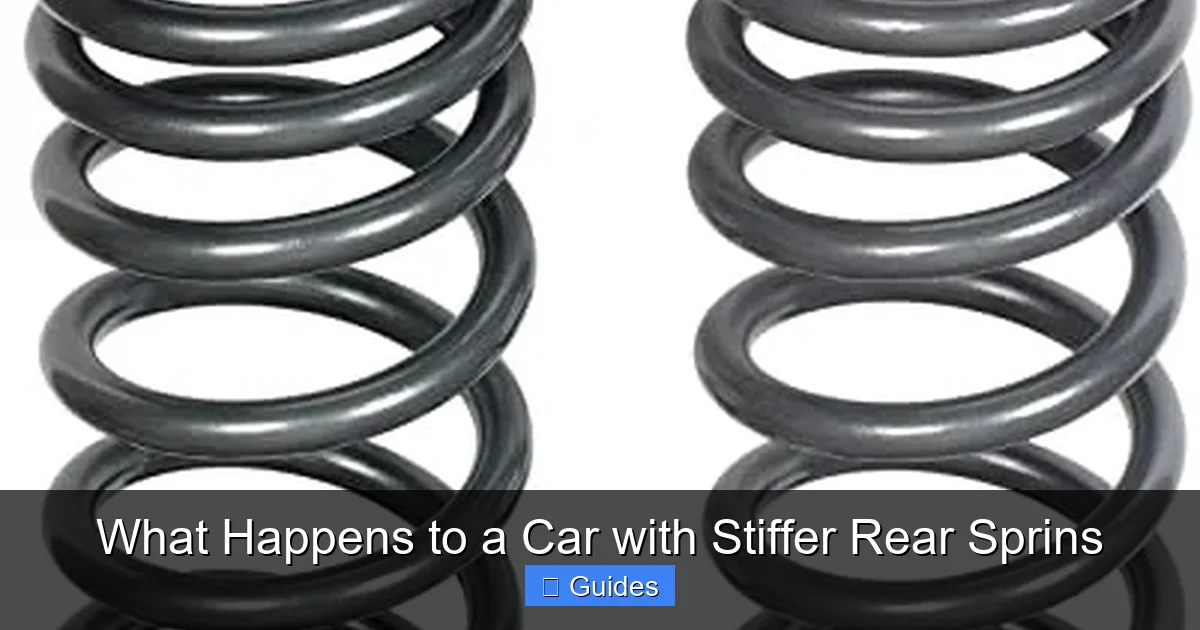
Springs are rated by their “spring rate,” which is measured in pounds per inch (lb/in) or newtons per millimeter (N/mm). This number tells you how much force is needed to compress the spring by a certain distance. A higher spring rate means the spring is stiffer—it takes more force to compress it. So, stiffer rear springs have a higher spring rate than the stock ones.
Now, why would someone want stiffer springs? In many cases, it’s about improving performance. Stiffer springs reduce how much the car’s body moves during acceleration, braking, and cornering. This is called “body control.” Less body movement means the car responds more predictably to driver inputs, which is especially useful on twisty roads or race tracks.
But here’s the catch: stiffer springs don’t just affect performance—they also change how the car feels on everyday roads. And because the rear of the car plays a different role than the front, changing only the rear springs can have unique and sometimes unexpected effects.
Improved Handling and Reduced Body Roll
Visual guide about What Happens to a Car with Stiffer Rear Sprins
Image source: m.media-amazon.com
One of the most noticeable benefits of stiffer rear springs is improved handling, especially during cornering. When you take a turn, the car’s body naturally leans to the outside due to centrifugal force. This is called body roll. Stiffer rear springs help resist this roll, keeping the car flatter and more stable through corners.
Imagine driving through a tight bend. With stock springs, the rear of the car might dip slightly, causing the inside rear wheel to lift or lose grip. But with stiffer rear springs, the rear end stays more level, distributing weight more evenly across both rear tires. This increases grip and allows the car to rotate more predictably.
This effect is especially helpful in rear-wheel-drive (RWD) cars, where the rear tires handle both steering and power delivery. Better rear grip means more confidence when accelerating out of corners. It also reduces the chance of the rear end stepping out unexpectedly—a common issue in cars with soft rear suspension.
Stiffer rear springs also improve weight transfer during braking and acceleration. When you brake hard, weight shifts forward, compressing the front springs and extending the rear ones. With stiffer rear springs, this rear extension is reduced, helping the car stay more balanced. Similarly, during acceleration (especially in RWD or all-wheel-drive vehicles), weight shifts to the rear. Stiffer springs help manage this shift, preventing the rear from sagging too much and maintaining better traction.
For performance drivers, this translates to faster lap times and more precise control. On a track, where every fraction of a second counts, stiffer rear springs can make a real difference. Even on winding mountain roads, the improved responsiveness can make driving more enjoyable and safer.
Harsher Ride Quality and Reduced Comfort
Visual guide about What Happens to a Car with Stiffer Rear Sprins
Image source: carxplorer.com
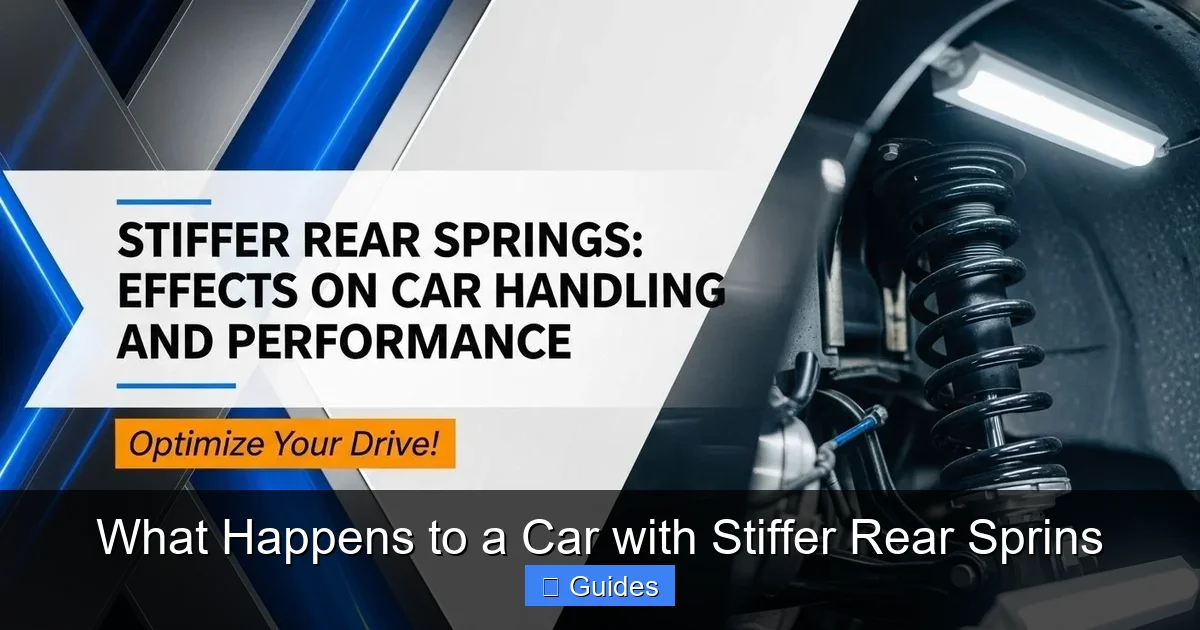
While stiffer rear springs offer performance benefits, they come at a cost: ride comfort. The same stiffness that helps control body roll also makes the suspension less able to absorb small bumps and road imperfections. This means more vibrations, jolts, and noise make their way into the cabin.
Think about driving over a series of small cracks or seams in the pavement. With stock springs, the suspension might absorb these smoothly, giving you a soft, cushioned feel. But with stiffer rear springs, each bump is felt more sharply. The rear end may “skip” or “hop” over uneven surfaces, especially at higher speeds.
This harshness is most noticeable on rough roads, potholes, or broken pavement. The stiffer springs don’t compress as easily, so the wheels can’t follow the road contour as well. Instead of absorbing the impact, the energy is transferred directly to the chassis and, ultimately, to your seat.
For daily drivers, this can be a major downside. If you spend a lot of time commuting or driving on less-than-perfect roads, the constant jolting can become tiring and uncomfortable. Passengers in the back seat often feel this effect the most, since they’re closer to the rear suspension and have less cushioning from the seats.
It’s also worth noting that ride quality isn’t just about comfort—it affects safety too. A harsh ride can make it harder to maintain control, especially on wet or slippery surfaces. If the rear wheels lose contact with the road due to excessive bouncing, traction decreases, increasing the risk of skidding or losing control.
So, while stiffer rear springs can make your car feel more “sporty,” they might not be ideal if comfort is a priority. It’s a classic performance vs. comfort trade-off.
Impact on Weight Transfer and Traction

Visual guide about What Happens to a Car with Stiffer Rear Sprins
Image source: surronshop.world
Weight transfer is a key concept in vehicle dynamics. As your car accelerates, brakes, or turns, weight shifts between the front and rear axles. Stiffer rear springs influence how this weight moves, which in turn affects traction, balance, and handling.
During hard braking, weight shifts forward. With stiffer rear springs, the rear suspension doesn’t extend as much, so the rear tires carry less load. This can reduce rear braking efficiency and increase stopping distances. In extreme cases, it might even cause the rear wheels to lock up more easily under heavy braking.
On the flip side, during acceleration—especially in rear-wheel-drive cars—weight shifts to the rear. Stiffer rear springs help manage this shift by preventing the rear from sagging too much. This keeps the rear tires firmly planted, improving traction and reducing wheel spin. For performance cars or those with high torque outputs, this can be a big advantage.
However, if the rear springs are too stiff compared to the front, the car can become “tail-happy” or prone to oversteer. Oversteer happens when the rear tires lose grip before the front ones, causing the car to rotate more than intended. This can make the car feel twitchy or unpredictable, especially in wet or slippery conditions.
For example, imagine taking a corner at speed. With balanced suspension, the car turns smoothly. But if the rear is too stiff, the rear tires may break loose suddenly, causing the car to spin. This is why suspension tuning is so important—it’s not just about making one end stiffer, but about achieving balance.
Stiffer rear springs can also affect how the car behaves under load. If you frequently carry heavy items in the trunk or have passengers in the back, stiffer springs help prevent the rear from sagging. This maintains proper ride height and ensures the suspension works as designed. Without this support, the car might sit too low, reducing ground clearance and altering handling.
Potential for Oversteer and Handling Imbalance
One of the biggest risks of installing stiffer rear springs without proper tuning is creating a handling imbalance. Cars are designed with a specific balance between front and rear suspension stiffness. When you change only the rear springs, you disrupt this balance, which can lead to oversteer.
Oversteer occurs when the rear of the car rotates more than the front during a turn. It’s often described as the “tail coming out.” While some drivers enjoy this behavior—especially in performance or drift cars—it can be dangerous for inexperienced drivers or in everyday driving conditions.
For example, imagine driving on a rainy road and taking a corner too fast. With stock suspension, the car might understeer (push wide) as the front tires lose grip. But with overly stiff rear springs, the rear tires might lose grip first, causing the car to spin. This sudden loss of control can be difficult to correct, especially if you’re not prepared.
Even on dry roads, excessive oversteer can make the car feel nervous or twitchy. Small steering inputs might cause the rear to step out, requiring constant corrections. This not only reduces confidence but also increases driver fatigue.
The key to avoiding this is balance. If you upgrade the rear springs, consider whether the front suspension can handle the change. In many cases, it’s better to upgrade both front and rear springs together, or at least adjust the shock absorbers and sway bars to match the new spring rates.
Some performance suspension kits are designed to work as a complete system, with matched front and rear components. These kits take the guesswork out of tuning and help maintain proper balance. If you’re modifying your car for track use, consulting a suspension specialist can help ensure your setup is safe and effective.
Effects on Tire Wear and Grip
Tire wear and grip are directly influenced by how the suspension manages weight and movement. Stiffer rear springs can change both, often in ways that aren’t immediately obvious.
When the rear suspension is too stiff, it can cause uneven weight distribution across the rear tires. During cornering, the outside rear tire may carry too much load, leading to increased wear on the outer edge. Over time, this can result in uneven tire wear, reducing tire life and performance.
Additionally, if the rear springs don’t allow enough suspension travel, the tires may lose contact with the road over bumps. This “tire skipping” reduces grip and can cause unpredictable handling. On rough roads, this effect is amplified, making the car feel unstable.
Stiffer springs can also affect how the tires interact with the road surface. Softer springs allow the tires to conform better to small irregularities, maintaining consistent contact. Stiffer springs, on the other hand, may cause the tires to “bounce” over bumps, reducing overall grip.
This is especially important in wet or slippery conditions. A tire that’s not in full contact with the road can’t generate as much traction, increasing the risk of hydroplaning or losing control.
Regular tire inspections are important if you’ve installed stiffer rear springs. Look for signs of uneven wear, such as excessive wear on the inside or outside edges, or cupping (scalloped dips in the tread). If you notice these patterns, it may be a sign that your suspension setup needs adjustment.
When Stiffer Rear Springs Make Sense
Despite the trade-offs, there are situations where stiffer rear springs are a great choice.
If you frequently carry heavy loads—like tools, luggage, or passengers—stiffer springs help prevent the rear from sagging. This maintains proper ride height, ensures the headlights point in the right direction, and keeps the suspension working correctly.
Performance drivers and track enthusiasts often benefit from stiffer rear springs, especially when paired with other upgrades like performance shocks, sway bars, and tires. On a race track, where smoothness is less important than precision, the improved handling can make a big difference.
Drift cars and rally vehicles also use stiffer rear springs to control weight transfer and improve rear grip during slides. In these applications, oversteer is often desired, and stiffer springs help achieve it.
Even for daily drivers, stiffer rear springs can be useful if you live in an area with poorly maintained roads and want to reduce bottoming out. However, in these cases, it’s often better to choose springs that are only slightly stiffer than stock, preserving some comfort while improving support.
Tips for Installing Stiffer Rear Springs
If you’re considering stiffer rear springs, here are some practical tips to get the best results:
– Match your springs to your driving style: Don’t go too stiff if you mainly drive on city streets. A moderate increase in spring rate is often enough.
– Upgrade shocks too: Stiffer springs work best with performance shocks that can control the increased movement.
– Check alignment after installation: Changing spring rates can alter suspension geometry, so a wheel alignment is recommended.
– Consider a complete suspension kit: These include matched springs, shocks, and sometimes sway bars for balanced performance.
– Test drive carefully: Take your car on a variety of roads to see how it handles. Pay attention to ride comfort, noise, and stability.
Conclusion
So, what happens to a car with stiffer rear springs? The answer is: a lot. You get better handling, reduced body roll, and improved load capacity. But you also face a harsher ride, potential oversteer, and possible tire wear issues.
The key is balance. Stiffer rear springs aren’t a one-size-fits-all solution. They work best when matched to your driving needs and paired with other suspension upgrades. For performance driving or heavy loads, they can be a great upgrade. For daily commuting on rough roads, they might do more harm than good.
Ultimately, the decision comes down to your priorities. If you value precision and control over comfort, stiffer rear springs could be worth it. But if you want a smooth, quiet ride, you might be better off with a more balanced setup.
Understanding the effects of stiffer rear springs helps you make an informed choice. Whether you’re modifying your car for fun, function, or performance, knowing how each change impacts the whole system is the first step toward a better driving experience.
Frequently Asked Questions
Do stiffer rear springs make the car faster?
Stiffer rear springs don’t directly increase engine power, but they can improve handling and cornering speed. This may result in faster lap times on a track, especially in rear-wheel-drive cars.
Can stiffer rear springs cause the car to bottom out?
Not usually. In fact, stiffer springs often reduce bottoming out by supporting more weight. However, if the springs are too stiff and the shocks aren’t matched, the suspension may not absorb large bumps effectively.
Will stiffer rear springs affect my car’s warranty?
Modifying suspension components like springs may void parts of your warranty, especially if the modification leads to damage. Check with your dealer or warranty provider before making changes.
Can I install stiffer rear springs myself?
Yes, but it requires mechanical skill and proper tools. Spring compressors are needed to safely remove and install springs. If you’re not experienced, it’s best to have a professional do the job.
Do stiffer rear springs wear out tires faster?
They can, especially if they cause uneven weight distribution or reduce tire contact with the road. Regular tire inspections and proper alignment help minimize wear.
Are stiffer rear springs good for towing?
Yes, stiffer rear springs help prevent sagging when towing or carrying heavy loads. They maintain proper ride height and improve stability under load.

At CarLegit, we believe information should be clear, factual, and genuinely helpful. That’s why every guide, review, and update on our website is created with care, research, and a strong focus on user experience.