
A track bar on a Jeep is a crucial suspension component that keeps the axle centered under the vehicle. It prevents side-to-side movement, improves handling, and ensures stability both on and off the road. Whether you’re driving on highways or tackling rocky trails, a properly functioning track bar is key to a safe and smooth ride.
If you’ve ever driven a Jeep—especially one with a lift kit or a history of off-roading—you’ve probably heard the term “track bar.” But what exactly is it? And why do Jeep owners talk about it like it’s one of the most important parts under their rig?
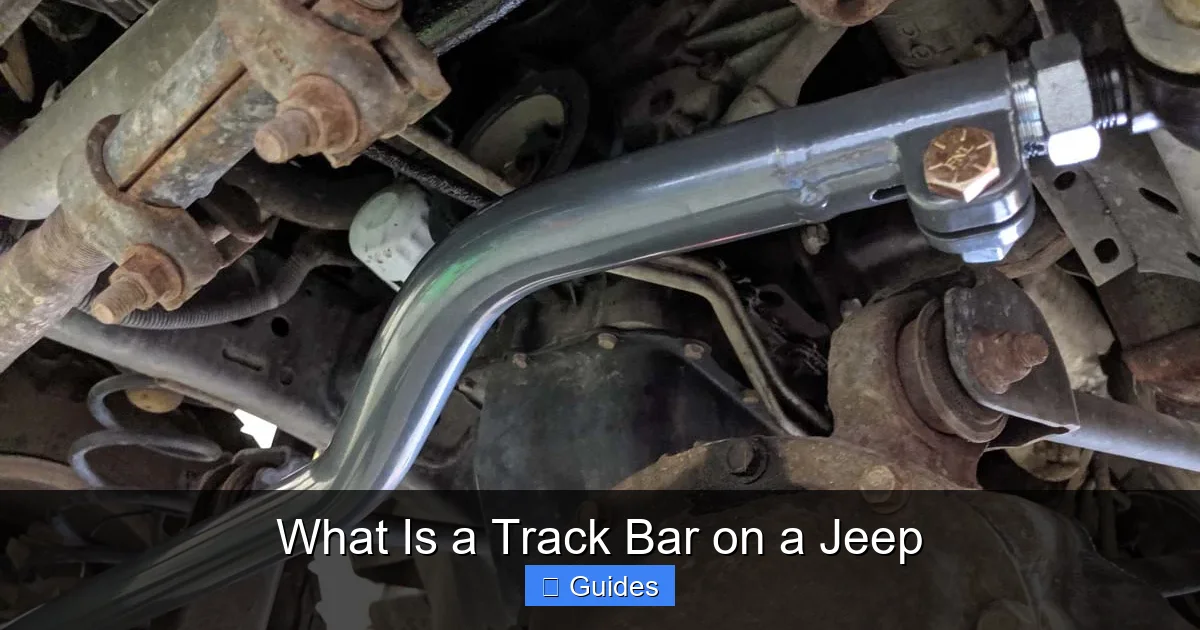
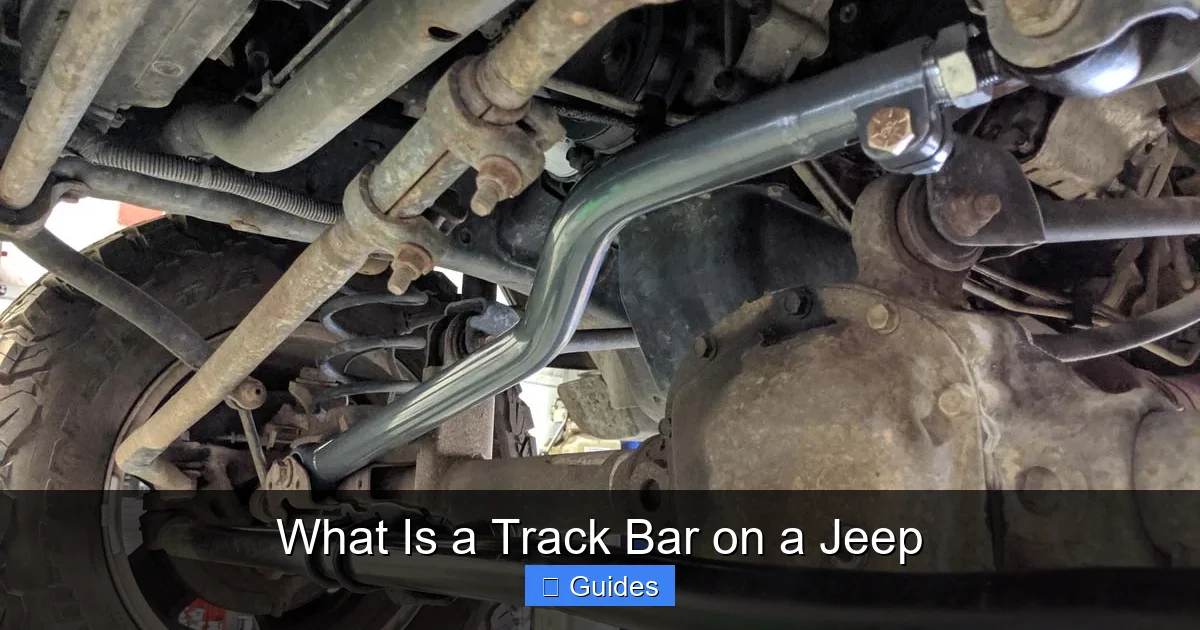
Let’s break it down in simple terms. The track bar, also known as a Panhard rod (especially on solid axle vehicles like Jeeps), is a suspension component that connects the axle to the chassis. Its main job? To keep the axle centered under the vehicle. Think of it like a tether that stops the axle from sliding side to side when you’re driving over bumps, turning corners, or crawling over rocks.
Now, you might be wondering: “Why does the axle need to be centered?” Great question. Without a track bar, the axle could shift left or right, especially during hard cornering or when one wheel hits a bump while the other doesn’t. This sideways movement can cause poor handling, uneven tire wear, and even dangerous situations like the infamous “death wobble”—a violent shaking of the front end that can scare even the most experienced off-roaders.
So, whether you’re cruising down the highway or navigating a muddy trail, the track bar plays a quiet but critical role in keeping your Jeep stable, predictable, and safe. In this guide, we’ll dive deep into what a track bar does, how it works, why it matters, and how to maintain or upgrade it for better performance.
In This Article
- 1 Key Takeaways
- 2 📑 Table of Contents
- 3 What Is a Track Bar and How Does It Work?
- 4 Why Is the Track Bar So Important for Jeep Owners?
- 5 Track Bars and Lift Kits: Why Upgrades Matter
- 6 Signs Your Track Bar Needs Attention
- 7 How to Maintain and Upgrade Your Track Bar
- 8 Conclusion: The Unsung Hero of Jeep Suspension
- 9 Frequently Asked Questions
Key Takeaways
- Stabilizes the Axle: The track bar prevents the axle from shifting sideways, keeping the Jeep aligned during driving.
- Improves Handling: A properly functioning track bar enhances steering response and reduces body roll.
- Essential for Lifted Jeeps: After a suspension lift, a track bar is often upgraded to maintain proper geometry and prevent death wobble.
- Reduces Wear and Tear: It minimizes stress on other suspension parts like control arms and steering components.
- Critical for Off-Roading: Off-road conditions demand a strong track bar to handle uneven terrain without losing control.
- Requires Regular Inspection: Check for wear, cracks, or loose bolts to avoid dangerous driving conditions.
- Can Be Upgraded: Heavy-duty or adjustable track bars offer better performance for modified Jeeps.
📑 Table of Contents
What Is a Track Bar and How Does It Work?
At its core, the track bar is a simple piece of metal—usually a steel rod or bar—that connects the axle housing to the vehicle’s frame or chassis. On most Jeeps, it’s mounted horizontally, running from the driver’s side of the axle to the passenger side of the frame (or vice versa, depending on the model). This lateral connection is what gives the track bar its unique function.
When your Jeep moves, especially over uneven terrain, the suspension compresses and extends. The track bar allows vertical movement (up and down) but restricts horizontal (side-to-side) movement. This keeps the axle centered under the body, ensuring that the wheels stay aligned with the direction of travel.
Imagine driving over a pothole on the driver’s side. The left wheel drops, and the suspension compresses. Without a track bar, the entire axle could shift to the right, pulling the steering wheel and causing the Jeep to pull in that direction. The track bar prevents this by acting like a pivot point—it lets the axle move up and down but keeps it from drifting sideways.
This centering effect is especially important during cornering. When you turn left, for example, the centrifugal force pushes the Jeep to the right. The track bar resists this lateral force, helping the vehicle maintain its intended path and reducing body roll.
In short, the track bar is like a referee in a game of tug-of-war between the axle and the chassis. It ensures neither side wins, keeping everything balanced and aligned.
Track Bar vs. Panhard Rod: Are They the Same?
You might hear the terms “track bar” and “Panhard rod” used interchangeably, and for good reason—they serve the same basic function. However, there’s a subtle difference in design and application.
The Panhard rod is a specific type of track bar that uses a single lateral link mounted off-center (usually on one side of the axle and the opposite side of the frame). This design introduces a slight arc in movement as the suspension travels, which can affect alignment over large suspension cycles. Because of this, Panhard rods are often used in vehicles with limited suspension travel or where space is tight.
The term “track bar” is more general and can refer to any lateral link that controls axle movement. Some modern Jeeps use a centered track bar design (like a Watts linkage), which eliminates the arc and provides more precise centering.
For most Jeep owners, especially those with Wranglers (TJ, JK, JL, etc.), the component under their rig is technically a Panhard rod, but it’s commonly called a track bar. So don’t worry—whether you call it a track bar or a Panhard rod, you’re talking about the same essential part.
Why Is the Track Bar So Important for Jeep Owners?
Visual guide about What Is a Track Bar on a Jeep
Image source: synergymfg.com
Now that we know what a track bar is and how it works, let’s talk about why it’s such a big deal for Jeep enthusiasts. The truth is, the track bar might not be the flashiest part under your Jeep, but it’s one of the most important for safety, performance, and longevity.
Prevents Death Wobble
One of the most dreaded experiences for a Jeep driver is the “death wobble.” This is a violent, rapid shaking of the front end that usually starts after hitting a bump or pothole. The steering wheel shakes side to side, and the whole vehicle feels like it’s trying to tear itself apart.
While death wobble can be caused by several factors—worn ball joints, loose steering components, unbalanced tires—a failing or improperly installed track bar is often a primary culprit. If the track bar is loose, worn, or not aligned correctly after a lift, it can allow the axle to shift unpredictably, triggering the wobble.
A properly functioning track bar keeps the axle centered and stable, reducing the risk of this dangerous phenomenon. In fact, many Jeep owners upgrade their track bars specifically to eliminate death wobble after installing a lift kit.
Maintains Proper Alignment
Your Jeep’s alignment—especially toe and caster—depends heavily on the position of the axle. If the axle shifts sideways, it can throw off the alignment, causing the wheels to point in slightly different directions. This leads to poor handling, uneven tire wear, and a pulling sensation when driving straight.
The track bar ensures the axle stays centered, which helps maintain consistent alignment. This is especially important after modifications like lift kits, which can change the suspension geometry and shift the axle position.
Improves Off-Road Performance
Off-roading puts extreme stress on your Jeep’s suspension. Rocks, ruts, and uneven terrain can cause one wheel to drop while the other stays high. Without a strong track bar, the axle could shift, causing the Jeep to lose traction or even tip over in extreme cases.
A high-quality track bar helps the axle stay centered, allowing all four wheels to maintain contact with the ground. This improves traction, stability, and control—key factors when crawling over boulders or navigating steep inclines.
Reduces Wear on Other Components
When the track bar is worn or missing, other suspension parts have to pick up the slack. Control arms, steering links, and even the steering box can experience increased stress, leading to premature wear and failure.
By keeping the axle centered, the track bar distributes forces more evenly across the suspension system. This reduces strain on individual components, helping them last longer and perform better.
Track Bars and Lift Kits: Why Upgrades Matter
Visual guide about What Is a Track Bar on a Jeep
Image source: synergymfg.com
If you’ve ever installed a suspension lift on your Jeep, you’ve probably been told—or read online—that you need to upgrade your track bar. But why?
When you lift a Jeep, you’re raising the body higher above the axle. This changes the angle and position of the suspension components, including the track bar. The stock track bar is designed for the factory ride height, so when you lift the Jeep, it can no longer keep the axle perfectly centered.
This misalignment can cause a host of problems:
– The axle shifts to one side, making the Jeep feel off-balance.
– Steering becomes less responsive or pulls to one side.
– The risk of death wobble increases significantly.
– Tire wear becomes uneven.
Adjustable vs. Fixed Track Bars
To fix this, many Jeep owners install an adjustable track bar. These allow you to fine-tune the length of the bar to recenter the axle after a lift. Most adjustable track bars use heim joints (spherical rod ends) instead of rubber bushings, which provide better articulation and durability off-road.
Fixed track bars, on the other hand, are set to a specific length and can’t be adjusted. These are typically used on stock-height Jeeps or when the lift is minimal (1.5 inches or less).
If you’re lifting your Jeep more than 2 inches, an adjustable track bar is highly recommended. It’s one of the most cost-effective upgrades you can make to improve handling and safety.
Heavy-Duty Track Bars for Serious Off-Roading
For hardcore off-roaders, a standard track bar—even an adjustable one—might not be enough. Heavy-duty track bars are built with thicker steel, reinforced mounts, and high-quality heim joints to handle extreme conditions.
These upgraded bars are less likely to bend or fail when crawling over rocks or hitting deep ruts. They also provide better articulation, allowing the suspension to flex more without binding.
Popular brands like Teraflex, RockJock, and Currie offer heavy-duty track bars designed specifically for lifted Jeeps. While they cost more than stock replacements, the added strength and performance are worth it for serious off-roaders.
Signs Your Track Bar Needs Attention
Visual guide about What Is a Track Bar on a Jeep
Image source: 1.cdn.lib.extremeterrain.com
Like any mechanical part, the track bar can wear out over time. Ignoring the signs of a failing track bar can lead to dangerous driving conditions and costly repairs. Here’s how to tell if yours needs attention.
Clunking or Rattling Noises
If you hear a clunking or rattling sound when going over bumps or turning, it could be a sign that the track bar bushings are worn or the bolts are loose. The track bar should be tight and quiet—any noise is a red flag.
Steering Wheel Shake or Pulling
A shaking steering wheel, especially after hitting a bump, could indicate a problem with the track bar. If your Jeep pulls to one side when driving straight, the axle may be off-center due to a misaligned or damaged track bar.
Uneven Tire Wear
Check your tires for uneven wear patterns, particularly on the front tires. If the inner or outer edges are wearing faster than the center, it could be due to misalignment caused by a shifted axle.
Visible Damage or Wear
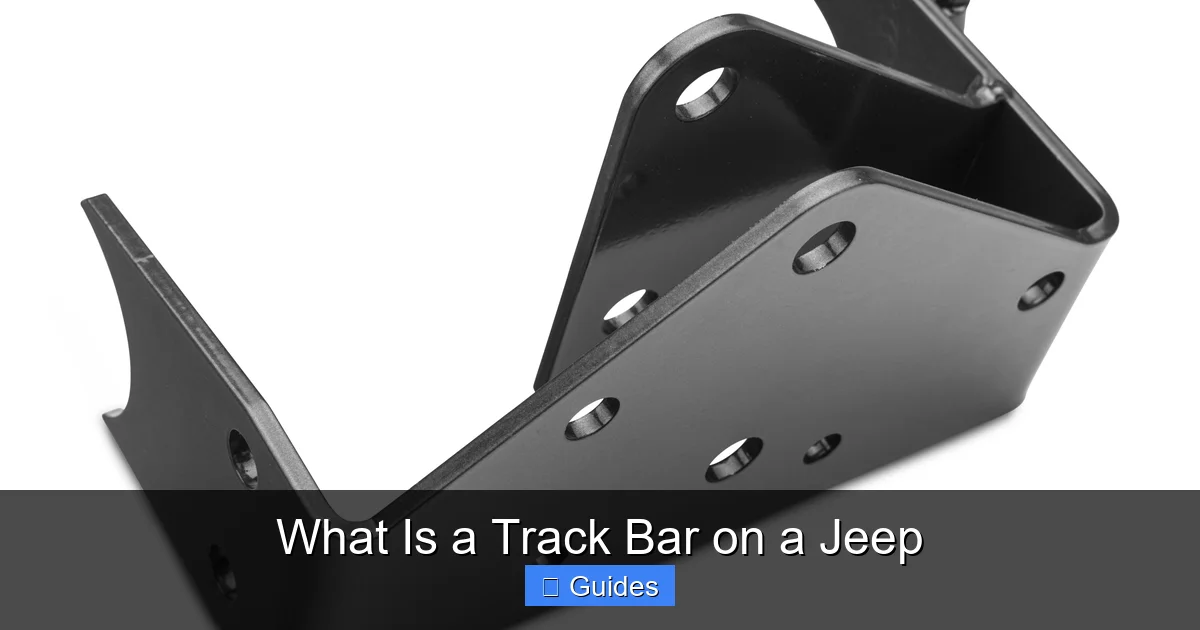
Inspect the track bar regularly. Look for cracks in the bar itself, worn or cracked bushings, or loose mounting bolts. If the heim joints (on adjustable bars) feel loose or have play, they may need to be replaced.
Death Wobble
If you experience death wobble, the track bar should be one of the first things you check. Even if it looks fine, it could be contributing to the problem—especially if it’s not properly aligned after a lift.
How to Maintain and Upgrade Your Track Bar
Keeping your track bar in good condition doesn’t require a mechanic’s degree—just regular inspection and basic maintenance.
Regular Inspections
Make it a habit to inspect your track bar during routine maintenance or before long off-road trips. Check for:
– Loose or missing bolts
– Cracks or bends in the bar
– Worn or cracked bushings
– Play in heim joints (if adjustable)
Use a pry bar to gently move the track bar side to side. If there’s excessive movement, the bushings or joints may be worn.
Tightening and Lubrication
Most track bars use rubber or polyurethane bushings that don’t require lubrication. However, if your track bar uses heim joints, check the manufacturer’s recommendations—some may need periodic greasing.
Always torque the mounting bolts to the manufacturer’s specifications. Over-tightening can damage bushings, while under-tightening can lead to loosening over time.
Upgrading Your Track Bar
If you’re lifting your Jeep or planning serious off-roading, consider upgrading to an adjustable or heavy-duty track bar. Here’s what to look for:
– **Adjustability:** Allows you to recenter the axle after a lift.
– **Heim Joints:** Provide better articulation and durability than rubber bushings.
– **Reinforced Mounts:** Prevent bending or breaking under stress.
– **Compatibility:** Make sure the track bar fits your Jeep model and lift height.
Popular options include the Teraflex Falcon Series, RockJock Johnny Joint Track Bar, and Currie Antirock Sway Bar (which also functions as a track bar in some setups).
Professional Installation
While some Jeep owners install track bars themselves, it’s often best to have a professional do it—especially if you’re adjusting for a lift. Improper installation can lead to misalignment, death wobble, or even failure of the component.
A qualified mechanic can ensure the track bar is the correct length, properly torqued, and aligned with the rest of the suspension.
Conclusion: The Unsung Hero of Jeep Suspension
The track bar might not get the same attention as big tires, lockers, or winches, but it’s one of the most important parts under your Jeep. It keeps the axle centered, improves handling, prevents death wobble, and ensures a safe, stable ride—whether you’re on the highway or deep in the backcountry.
For stock Jeeps, a well-maintained track bar is usually all you need. But if you’ve lifted your rig or plan to tackle serious off-road trails, upgrading to an adjustable or heavy-duty track bar is a smart investment.
Regular inspections, proper installation, and timely upgrades can make a huge difference in your Jeep’s performance and safety. So next time you’re under your Jeep, take a moment to appreciate the humble track bar—it’s working hard to keep you on the right track.
Frequently Asked Questions
What happens if you remove the track bar on a Jeep?
Removing the track bar allows the axle to shift side to side, causing poor handling, steering instability, and potentially dangerous conditions like death wobble. It’s not safe to drive without one.
Can a bad track bar cause death wobble?
Yes, a worn, loose, or misaligned track bar is a common cause of death wobble. It allows the axle to shift unpredictably, triggering violent shaking in the front end.
Do I need a new track bar after lifting my Jeep?
If you lift your Jeep more than 2 inches, an adjustable track bar is recommended to recenter the axle and maintain proper alignment and handling.
How often should I inspect my track bar?
Inspect your track bar during regular maintenance or before long trips. Look for wear, cracks, loose bolts, or play in the joints.
Can I drive with a broken track bar?
No, driving with a broken or missing track bar is extremely dangerous. It can cause loss of control, steering failure, or axle separation.
Are track bars the same on all Jeep models?
No, track bar design and mounting points vary by Jeep model and year. Always check compatibility before purchasing a replacement or upgrade.

At CarLegit, we believe information should be clear, factual, and genuinely helpful. That’s why every guide, review, and update on our website is created with care, research, and a strong focus on user experience.