
The Eco Heat Cool feature on the Toyota Corolla is an intelligent climate control system designed to optimize cabin comfort while minimizing fuel consumption. It adjusts heating and cooling based on driving conditions, outside temperature, and engine load, helping you drive smarter and greener.
In This Article
- 1 Key Takeaways
- 2 📑 Table of Contents
- 3 Understanding Eco Heat Cool on the Toyota Corolla
- 4 How Eco Heat Cool Works: The Science Behind the Comfort
- 5 Benefits of Using Eco Heat Cool
- 6 When and How to Use Eco Heat Cool
- 7 Eco Heat Cool vs. Traditional Climate Control
- 8 Common Misconceptions About Eco Heat Cool
- 9 Real-World Examples and Driver Experiences
- 10 Conclusion: Why Eco Heat Cool Matters
- 11 Frequently Asked Questions
- 11.1 What does the Eco button do on a Toyota Corolla?
- 11.2 Does Eco Heat Cool work in all Toyota Corolla models?
- 11.3 Can I use Eco Heat Cool in extreme cold or heat?
- 11.4 Will Eco Heat Cool make my car slower?
- 11.5 How much fuel can I save using Eco Heat Cool?
- 11.6 Can I turn off Eco Heat Cool if I want more heating or cooling?
Key Takeaways
- Eco Heat Cool improves fuel efficiency: By reducing unnecessary HVAC system strain, it helps lower fuel usage, especially in hybrid models.
- It enhances passenger comfort: The system intelligently balances heating and cooling to maintain a pleasant cabin environment without overworking the engine.
- Works best in moderate climates: Ideal for spring and fall driving, it reduces reliance on extreme heating or cooling.
- Integrates with hybrid technology: In Corolla Hybrid models, it uses electric power for climate control, preserving gasoline for propulsion.
- Easy to activate and use: Simply press the Eco button on the climate control panel to engage the feature.
- Supports eco-friendly driving habits: Encourages sustainable driving by reducing emissions and conserving energy.
- Complements other Toyota Eco systems: Works alongside features like Eco Drive Mode and regenerative braking for maximum efficiency.
📑 Table of Contents
- Understanding Eco Heat Cool on the Toyota Corolla
- How Eco Heat Cool Works: The Science Behind the Comfort
- Benefits of Using Eco Heat Cool
- When and How to Use Eco Heat Cool
- Eco Heat Cool vs. Traditional Climate Control
- Common Misconceptions About Eco Heat Cool
- Real-World Examples and Driver Experiences
- Conclusion: Why Eco Heat Cool Matters
Understanding Eco Heat Cool on the Toyota Corolla
If you’ve ever driven a Toyota Corolla—especially a newer model—you may have noticed a button labeled “Eco” near the climate controls. You might have pressed it, wondering what it actually does. One of the key functions tied to that button is the Eco Heat Cool feature, a smart innovation designed to make your drive more comfortable, efficient, and environmentally friendly.
At its core, Eco Heat Cool is part of Toyota’s broader commitment to sustainable driving. It’s not just about saving fuel—it’s about using energy wisely. Whether you’re cruising through city traffic or taking a weekend road trip, this feature quietly works in the background to balance your cabin’s temperature without overburdening your engine or battery. Think of it as your car’s way of saying, “I’ve got this,” so you don’t have to crank the heat or AC to extremes.
But how exactly does it work? And why should you care? Let’s break it down in simple terms. The Eco Heat Cool system uses sensors and intelligent software to monitor outside temperature, cabin conditions, engine load, and even your driving style. Based on this data, it adjusts the heating and cooling output to maintain comfort while using the least amount of energy possible. This is especially helpful in hybrid Corolla models, where preserving battery power is crucial for maximizing electric-only driving.
How Eco Heat Cool Works: The Science Behind the Comfort
Visual guide about What Is Eco Heat Cool on Toyota Corolla
Image source: i.ytimg.com
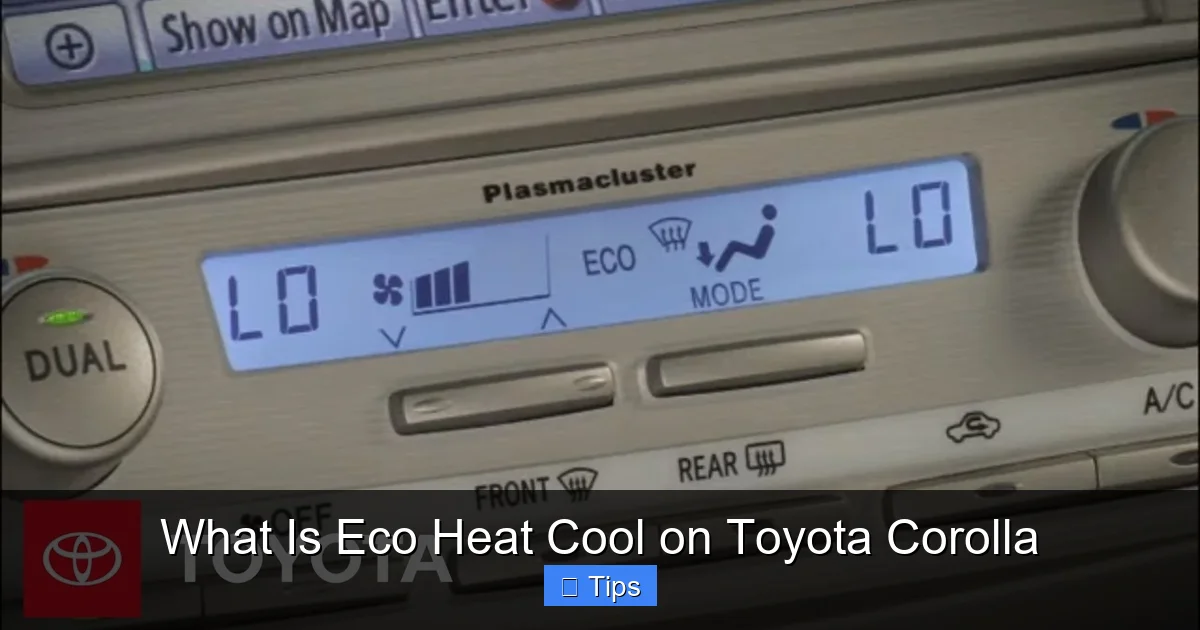
To truly appreciate Eco Heat Cool, it helps to understand the mechanics behind it. Unlike traditional climate control systems that run at full blast until the desired temperature is reached, Eco Heat Cool takes a more measured approach. It’s like the difference between turning a dial slowly versus slamming it to maximum.
Sensor-Driven Climate Management
The system relies on a network of sensors located throughout the vehicle. These include ambient temperature sensors outside the car, interior cabin sensors, and even sensors that monitor engine coolant temperature. When you activate Eco Heat Cool, the car’s computer analyzes all this data in real time. For example, if it’s a chilly 45°F (7°C) outside and you’ve just started the engine, the system won’t immediately blast hot air. Instead, it will gradually warm the cabin using waste heat from the engine, which is more efficient than using electric heaters.
In warmer weather, the system avoids overcooling. Instead of dropping the cabin temperature to 60°F (15°C) right away, it might start at 72°F (22°C) and slowly adjust based on passenger feedback and solar load (how much sun is hitting the car). This prevents the air conditioning compressor from working too hard, which can drain fuel or battery power.
Integration with Hybrid Systems
In the Toyota Corolla Hybrid, Eco Heat Cool plays an even more important role. Hybrid vehicles rely on both a gasoline engine and an electric motor. When the car is running on electric power—especially at low speeds or in stop-and-go traffic—the engine may be off. This means there’s no waste heat to warm the cabin, and the air conditioning compressor can’t run off the engine.
That’s where the hybrid-specific version of Eco Heat Cool shines. It uses the high-voltage battery to power electric heaters and electric compressors. But instead of running them at full power, it modulates their output based on need. For instance, if the cabin is already warm from the sun, the system might only use a small amount of electric heat to maintain comfort, preserving battery charge for driving.
This smart energy management is a big reason why the Corolla Hybrid can achieve over 50 miles per gallon in city driving. Every watt saved in the HVAC system translates to more electric range and less gasoline consumption.
Adaptive Learning and Driver Behavior
Another clever aspect of Eco Heat Cool is its ability to adapt to your habits. Over time, the system learns your preferences—like how warm you like it in the winter or how cool in the summer. It also considers your driving patterns. If you frequently drive short distances, it might prioritize quick warm-up times. If you take longer trips, it focuses on sustained efficiency.
For example, imagine you leave work at 5 p.m. every day in winter. The car might begin pre-conditioning the cabin a few minutes before you arrive, using grid power if plugged in (in plug-in hybrid models) or stored battery energy. This way, you step into a comfortable car without wasting fuel idling.
Benefits of Using Eco Heat Cool
Visual guide about What Is Eco Heat Cool on Toyota Corolla
Image source: images.caricos.com
Now that you know how it works, let’s talk about why you should use Eco Heat Cool every time you drive. The benefits go beyond just saving a few cents at the pump—they impact comfort, vehicle longevity, and the environment.
Improved Fuel Efficiency
One of the most compelling reasons to use Eco Heat Cool is fuel savings. Heating and cooling systems are among the biggest drains on a vehicle’s energy. In cold weather, traditional heaters can reduce fuel economy by up to 20%. In hot weather, air conditioning can cut efficiency by 10–15%, especially in stop-and-go traffic.
Eco Heat Cool minimizes these losses by optimizing energy use. Instead of running the heater or AC at full power, it delivers just enough to keep you comfortable. In a Toyota Corolla Hybrid, this can mean an extra 2–5 miles per gallon, which adds up over time. If you drive 12,000 miles a year, that could save you over $100 in fuel costs annually, depending on gas prices.
Enhanced Passenger Comfort
You might think that saving energy means sacrificing comfort—but that’s not true with Eco Heat Cool. In fact, many drivers report that the cabin feels more consistently comfortable when the feature is active. Why? Because the system avoids sudden temperature swings. Instead of blasting hot air that makes you sweat, then turning it off and leaving you chilly, it maintains a steady, pleasant temperature.
This is especially noticeable on long drives. Without Eco Heat Cool, you might find yourself constantly adjusting the temperature. With it, the car does the work for you. It’s like having a personal climate assistant that knows exactly what you need.
Reduced Wear and Tear on Components
Running your HVAC system at full power all the time puts extra strain on components like the compressor, blower motor, and heater core. Over time, this can lead to premature wear and costly repairs. Eco Heat Cool reduces this stress by operating more efficiently. The compressor cycles on and off less frequently, and the blower runs at lower speeds when possible.
This not only extends the life of your climate control system but also contributes to overall vehicle reliability. A well-maintained HVAC system means fewer surprises at the mechanic and lower maintenance costs down the road.
Environmental Impact
Every drop of fuel saved is a win for the planet. By using Eco Heat Cool, you’re reducing your carbon footprint. Less fuel consumption means fewer greenhouse gas emissions. In a hybrid Corolla, the impact is even greater because the system relies more on clean electric power.
Toyota estimates that drivers who consistently use Eco features—including Eco Heat Cool—can reduce their annual CO₂ emissions by up to 300 pounds. That’s equivalent to planting 15 trees or not driving 350 miles. It’s a small change with a big impact.
Quieter Cabin Experience
Another subtle benefit? A quieter ride. When the HVAC system isn’t working as hard, the blower fan runs more quietly. You’ll notice less noise from the vents, especially on cold mornings when traditional systems roar to life. This makes for a more peaceful driving experience, whether you’re listening to music, podcasts, or just enjoying the silence.
When and How to Use Eco Heat Cool
Visual guide about What Is Eco Heat Cool on Toyota Corolla
Image source: toyotapartsdeal.com
Now that you’re convinced of the benefits, let’s talk about practical usage. Eco Heat Cool isn’t just for extreme weather—it’s useful year-round. Here’s how to get the most out of it.
Best Conditions for Eco Heat Cool
This feature shines in moderate temperatures—think spring and fall, when it’s not freezing cold or scorching hot. During these seasons, the system can maintain comfort with minimal energy input. For example, on a 55°F (13°C) day, you might only need a gentle heat boost, which Eco Heat Cool delivers efficiently.
It’s also great for city driving, where frequent stops and starts make traditional HVAC systems work harder. In stop-and-go traffic, the engine may not generate enough waste heat, and the AC compressor may cycle on and off constantly. Eco Heat Cool smooths out these fluctuations, keeping the cabin stable.
How to Activate Eco Heat Cool
Activating the feature is simple. Look for the “Eco” button on your climate control panel—it’s usually near the temperature dials or touchscreen. Press it once, and you’ll see an “Eco” indicator light up on the display. That’s it! The system is now optimizing your climate control for efficiency.
Note: In some Corolla models, the Eco button may control multiple systems, including throttle response and climate. If you only want to activate Eco Heat Cool, check your owner’s manual to see if there’s a way to isolate the climate function.
Tips for Maximum Efficiency
To get the best results from Eco Heat Cool, follow these tips:
– Pre-condition your cabin: If your Corolla has a remote start or app connectivity, use it to warm or cool the car while it’s still plugged in. This uses grid or battery power instead of fuel.
– Use seat heaters instead of cabin heat: In mild cold, seat heaters use less energy than blowing hot air. Combine them with Eco Heat Cool for targeted warmth.
– Park in the shade or use a sunshade: Reducing solar load means the AC doesn’t have to work as hard. A cooler cabin is easier to maintain efficiently.
– Keep windows closed at high speeds: Open windows increase drag and make the HVAC system work harder. Use recirculated air instead.
– Regular maintenance: Replace cabin air filters and service the AC system as recommended. A clean system runs more efficiently.
Eco Heat Cool vs. Traditional Climate Control
You might be wondering: how does Eco Heat Cool compare to just using the regular heat and AC? Let’s break it down side by side.
Energy Use
Traditional systems often run at full power until the set temperature is reached. This “bang-bang” control is simple but inefficient. Eco Heat Cool uses proportional control—adjusting output gradually. This reduces energy spikes and saves fuel.
Comfort Level
Older systems can create hot or cold spots, especially in larger cabins. Eco Heat Cool uses multiple sensors to ensure even temperature distribution. You’re less likely to feel too hot on one side and too cold on the other.
Environmental Impact
Traditional HVAC systems contribute more to emissions, especially in hybrids where the engine may need to restart just to run the compressor. Eco Heat Cool minimizes this by using electric power when possible and reducing overall demand.
User Experience
With traditional systems, you’re constantly adjusting the temperature. Eco Heat Cool automates much of this, learning your preferences and adapting to conditions. It’s a more hands-off, stress-free experience.
Common Misconceptions About Eco Heat Cool
Despite its benefits, there are some myths about Eco Heat Cool that deserve clarification.
“It Makes the Car Colder or Warmer Than I Want”
Some drivers worry that Eco mode will make the cabin uncomfortable. But the system is designed to maintain your preferred temperature—just more efficiently. If you feel too cold, you can always override it by turning up the heat manually. The Eco mode will still try to optimize within your new settings.
“It Only Works in Hybrid Models”
While Eco Heat Cool is most advanced in the Corolla Hybrid, many gasoline models also have a version of the feature. It may not be as sophisticated, but it still helps reduce fuel consumption by managing HVAC load.
“It Slows Down the Car”
Eco Heat Cool only affects the climate system—not the engine’s power. You won’t notice any difference in acceleration or performance. The car drives exactly the same.
“It’s Just a Marketing Gimmick”
Far from it. Toyota has invested heavily in eco-friendly technology, and Eco Heat Cool is backed by real engineering. Independent tests have shown measurable improvements in fuel economy and emissions when the feature is used.
Real-World Examples and Driver Experiences
Let’s look at how Eco Heat Cool performs in everyday situations.
Winter Morning Commute
Sarah, a Corolla Hybrid owner in Michigan, starts her car at 7 a.m. in January. It’s 28°F (-2°C) outside. Instead of blasting the heater, she presses the Eco button. The system uses engine waste heat and a small electric heater to warm the cabin gradually. Within 10 minutes, she’s comfortable—and her fuel economy for the trip is 52 mpg, compared to 45 mpg without Eco mode.
Summer Road Trip
James drives his Corolla from Phoenix to Sedona in July. Temperatures reach 105°F (40°C). He activates Eco Heat Cool and sets the temperature to 72°F (22°C). The system uses solar sensors to detect intense sunlight and increases cooling slightly, but avoids overworking the compressor. He arrives with a cabin that’s cool and consistent—and his AC hasn’t drained the battery.
City Driving in Spring
Maria uses her Corolla for daily errands in Portland. It’s 60°F (15°C) and drizzly. She turns on Eco Heat Cool and enjoys a lightly warmed cabin with minimal fan noise. Her fuel economy stays steady at 48 mpg, even with frequent stops.
Conclusion: Why Eco Heat Cool Matters
The Eco Heat Cool feature on the Toyota Corolla is more than just a button—it’s a smart, sustainable approach to in-car comfort. By intelligently managing heating and cooling, it saves fuel, reduces emissions, and enhances your driving experience. Whether you drive a hybrid or a gasoline model, using this feature is a simple way to drive greener and smarter.
It’s not about sacrificing comfort for efficiency. It’s about getting the best of both worlds. With Eco Heat Cool, your Corolla becomes a more responsive, eco-friendly companion on every journey. So the next time you start your car, don’t forget to press that Eco button. Your wallet, your passengers, and the planet will thank you.
Frequently Asked Questions
The Eco button activates energy-saving features, including Eco Heat Cool, which optimizes the climate control system to reduce fuel or battery consumption while maintaining cabin comfort.
Does Eco Heat Cool work in all Toyota Corolla models?
Yes, most modern Corolla models—both gasoline and hybrid—include a version of Eco Heat Cool, though hybrid models offer more advanced electric-powered climate control.
Can I use Eco Heat Cool in extreme cold or heat?
Yes, but it’s most effective in moderate temperatures. In extreme conditions, the system may need to work harder, but it still operates more efficiently than traditional HVAC modes.
Will Eco Heat Cool make my car slower?
No, Eco Heat Cool only affects the climate system. It does not reduce engine power or impact acceleration and performance.
How much fuel can I save using Eco Heat Cool?
Depending on driving conditions, you can save 2–5 mpg, especially in hybrid models. Over a year, this can add up to significant fuel and cost savings.
Can I turn off Eco Heat Cool if I want more heating or cooling?
Yes, you can manually override the system at any time by adjusting the temperature or fan speed. The Eco mode will continue to optimize within your new settings.

At CarLegit, we believe information should be clear, factual, and genuinely helpful. That’s why every guide, review, and update on our website is created with care, research, and a strong focus on user experience.