
The best battery for your Ford F-150 is an AGM (Absorbent Glass Mat) battery, renowned for its superior vibration resistance, deep-cycle capability, and maintenance-free design. For optimal performance and longevity, select a battery with at least 650 cold cranking amps (CCA) and a group size 65 or H6 fitment to ensure perfect compatibility and reliable starts in all conditions.
In This Article
- 1 Key Takeaways
- 2 📑 Table of Contents
- 3 Find the Best Battery for Your Ford F-150
- 4 Understanding Your Ford F-150’s Battery Needs
- 5 Types of Batteries: Pros, Cons, and Best Uses
- 6 Top Battery Brands and Models for the Ford F-150
- 7 Choosing Based on Your Driving Conditions and Habits
- 8 Installation Tips and Battery Maintenance
- 9 Comparison of Common Battery Types for Ford F-150
- 10 Final Thoughts on Powering Your Pickup
- 11 Frequently Asked Questions
- 11.1 What is the best battery for a Ford F-150?
- 11.2 How do I find the best battery for my Ford F-150?
- 11.3 Is an AGM battery worth it for an F-150?
- 11.4 What battery group size does a Ford F-150 use?
- 11.5 How many cold cranking amps (CCA) does my F-150 battery need?
- 11.6 Can I install the best battery for a Ford F-150 myself?
Key Takeaways
- Match Group Size: Use the BCI group size specified in your owner’s manual.
- Prioritize CCA: Choose a battery with sufficient Cold Cranking Amps for your climate.
- Check Reserve Capacity: Higher RC is critical for trucks with many electronic accessories.
- Consider AGM Technology: AGM batteries offer superior durability and vibration resistance.
- Verify Warranty Length: A longer full-replacement warranty indicates better quality and value.
- Test Your Electrical System: Ensure your alternator and charging system are functioning properly.
📑 Table of Contents
- Find the Best Battery for Your Ford F-150
- Understanding Your Ford F-150’s Battery Needs
- Types of Batteries: Pros, Cons, and Best Uses
- Top Battery Brands and Models for the Ford F-150
- Choosing Based on Your Driving Conditions and Habits
- Installation Tips and Battery Maintenance
- Comparison of Common Battery Types for Ford F-150
- Final Thoughts on Powering Your Pickup
Find the Best Battery for Your Ford F-150
Picture this: it’s a cold Monday morning, you’re already running late, and you hop into your Ford F-150, ready to tackle the day. You turn the key, and instead of the powerful roar of that V6 or V8, you’re met with a dreaded, slow clicking sound. Or worse, complete silence. We’ve all been there, and if you own a truck, you know that a dead battery isn’t just an inconvenience—it can bring your entire workday or weekend plans to a grinding halt.
Your F-150 is more than a vehicle; it’s a tool, an adventure companion, and a reliable workhorse. Its battery is the unsung hero, the silent partner that starts every journey and powers everything from your radio to your winch. Choosing the right one isn’t about picking the first box off the shelf. It’s about matching power, technology, and durability to your specific truck and how you use it. Whether you’re hauling a trailer through the mountains, navigating city streets, or letting it sit for weeks at a job site, the “best” battery is the one you never have to think about.
This guide is here to cut through the confusion. We’ll walk through everything you need to know—from understanding those cryptic numbers on the label to comparing different battery technologies. By the end, you’ll feel confident choosing the perfect battery to keep your Ford F-150 starting strong, mile after mile and year after year.
Understanding Your Ford F-150’s Battery Needs
Not all F-150s are created equal, and neither are their batteries. A battery that’s perfect for a base model might struggle in a high-trim truck packed with electronics. The first step to finding the best battery is understanding what your specific truck demands from its power source.

Visual guide about best battery for Ford F150
Image source: drivingandstyle.com
The Critical Specs: CCA, CA, RC, and Amp-Hours
Battery shopping involves a mini-alphabet soup of acronyms. Let’s decode them simply:
- Cold Cranking Amps (CCA): This is the most important number for most truck owners. It measures the battery’s ability to start your engine in cold weather (specifically at 0°F). A higher CCA rating means more starting power. For most F-150s, you’ll want a battery with at least 650-750 CCA, and more if you live in a very cold climate or have a larger engine.
- Cranking Amps (CA): Similar to CCA, but measured at 32°F. It’s usually a higher number but is less critical than the cold-weather performance indicated by CCA.
- Reserve Capacity (RC): This tells you how long the battery can run your truck’s essential electronics if the alternator fails. It’s measured in minutes. A higher RC is a great safety net and is crucial if you use accessories with the engine off.
- Amp-Hours (Ah): A measure of the battery’s total energy storage capacity. Think of it as the size of the fuel tank, while CCA is the horsepower.
Group Size and Fitment
This is about physical compatibility. The “Group Size” (like 65, H6, or 48) specifies the battery’s dimensions, terminal placement, and type. Using the wrong group size can lead to a battery that doesn’t fit in the tray or connect properly. For most modern F-150s, common group sizes are 65, 48 (for EcoBoost models with start-stop technology), and H6. Always check your owner’s manual or the label on your old battery to be sure.
Types of Batteries: Pros, Cons, and Best Uses
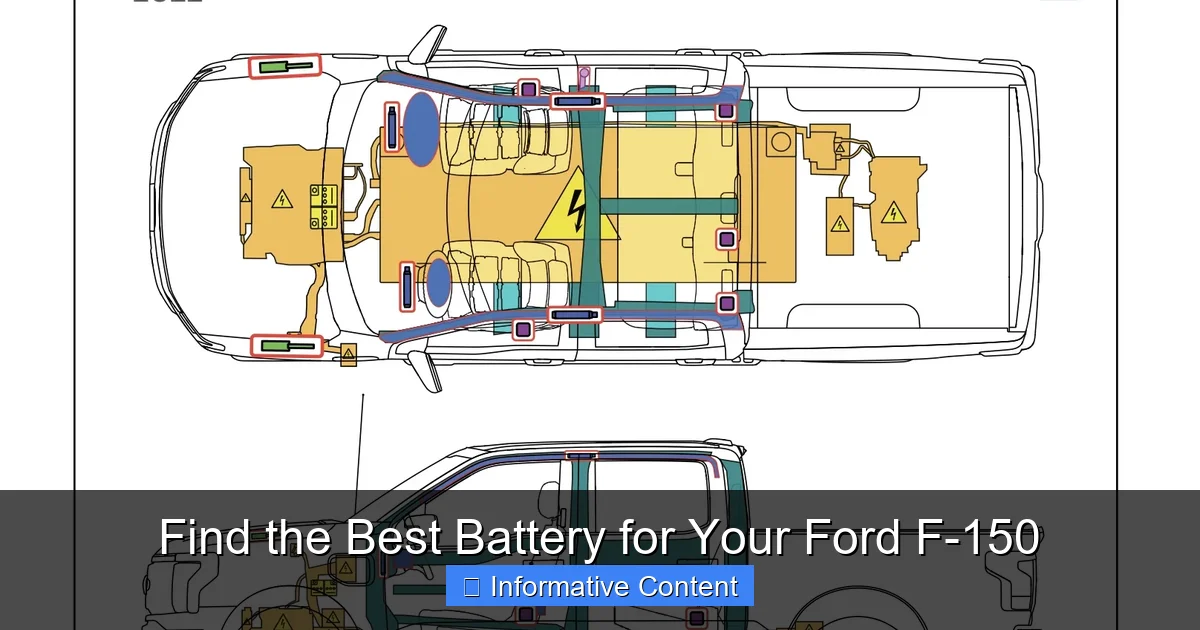
Battery technology has evolved. You’re no longer limited to the standard flooded lead-acid battery. Each type has its place, depending on your budget and how you use your truck.
Visual guide about best battery for Ford F150
Image source: f150lightningforum.com
Flooded Lead-Acid (Standard)
These are the traditional, most affordable batteries. They require occasional maintenance (checking and topping off water levels) and can vent gases, so they must be mounted upright. They offer good power for the price but have a shorter average lifespan and are more susceptible to vibration damage. A solid, budget-friendly choice for a basic work truck.
Absorbent Glass Mat (AGM)
AGM batteries are a major upgrade. The electrolyte is suspended in a fiberglass mat, making them completely sealed, spill-proof, and maintenance-free. They charge faster, last significantly longer (often 2-3 times longer than standard batteries), handle vibration and deep discharges much better, and provide more consistent power. They are the best battery for most Ford F-150 owners, especially those with lots of electronics or who use their truck in extreme conditions. They are standard in trucks with start-stop systems.
Enhanced Flooded Battery (EFB)
EFB technology sits between standard and AGM. It’s an improved version of the flooded battery, offering better cycle life (handling discharge/recharge) and durability than a standard battery, but at a lower cost than AGM. It’s a good middle-ground option, often found as an OEM upgrade.
Lithium-Ion
Extremely lightweight and powerful with a very long life, lithium batteries are the high-performance option. They excel in extreme temperatures and can sit unused for long periods without discharging. However, they are very expensive and often require special charging equipment. For the average F-150 owner, this is overkill unless you have a dedicated performance or overlanding rig with massive power demands.
Top Battery Brands and Models for the Ford F-150
With the types in mind, let’s look at some of the most trusted brands and specific models that consistently perform well in the F-150. Remember, the best battery for your Ford F-150 is one that matches your truck’s group size and CCA requirements from a reputable brand.
Visual guide about best battery for Ford F150
Image source: wonderfulengineering.com
Odyssey Performance Series (AGM)
Often considered the gold standard in AGM batteries, Odyssey batteries are known for extreme durability and massive reserve power. They use pure lead plates for a longer life and higher cycle count. An Odyssey battery is an investment, but for an F-150 used for towing, off-roading, or powering a lot of accessories, it’s hard to beat. Their Group 65 model is a legendary fit for many F-150s.
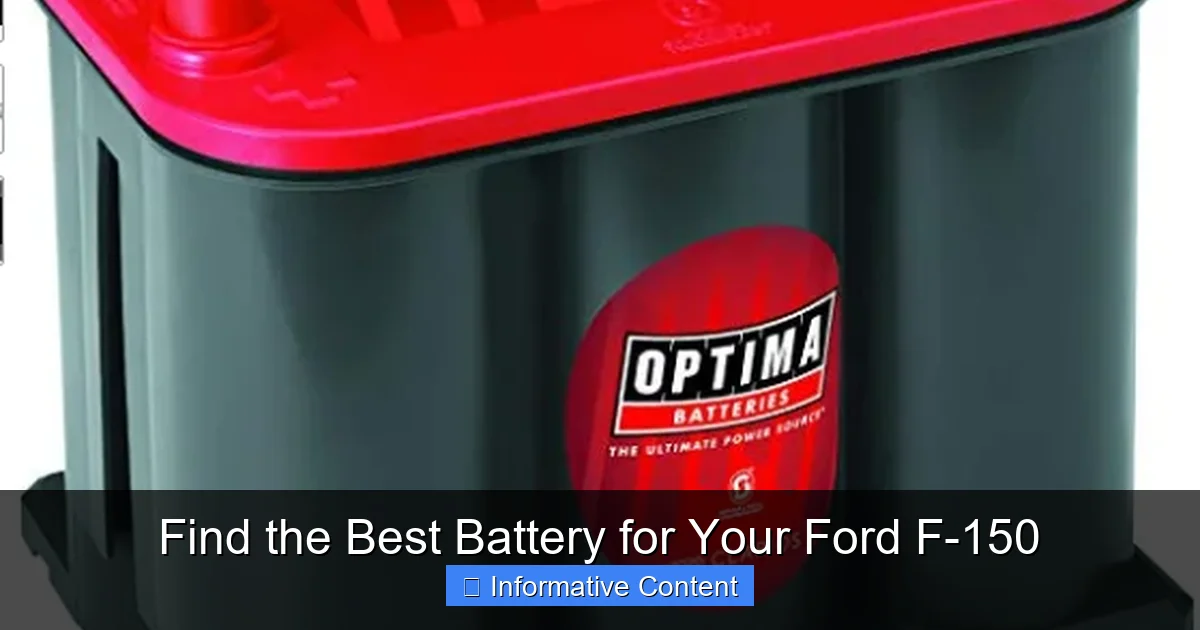
Optima Batteries (AGM)
Optima’s signature SpiralCell design (looking like a six-pack of cylinders) makes them incredibly resistant to vibration and allows them to be mounted in almost any position. The RedTop is geared for strong starting power, while the YellowTop is designed for deep-cycle applications, perfect if you have a winch, high-power stereo, or camp with your truck. They are a premium, highly reliable choice.
Interstate Batteries
A powerhouse in the battery world, Interstate offers a wide range for every need and budget. Their MTZ series is a top-tier AGM option comparable to Odyssey and Optima. Their MT series is a robust flooded battery that offers excellent value. The wide availability and strong warranty support make Interstate a very practical and reliable choice for your Ford F-150.
ACDelco Professional (AGM)
As a major OEM supplier, ACDelco makes batteries that meet strict General Motors specifications, which translates to high quality. Their Professional AGM line is robust, reliable, and often comes at a more accessible price point than some premium brands. It’s a fantastic “no-nonsense” AGM upgrade for your F-150.
Motorcraft (Ford OEM)
The battery installed at the factory is a Motorcraft. They are made by Johnson Controls (who also makes many other brands) to Ford’s specifications. They are reliable and guarantee a perfect fit. However, you are often paying for the Ford name, and you can frequently find AGM batteries from other brands with better specifications (higher CCA, RC) for a similar price. It’s a safe, but not always optimal, choice.
Choosing Based on Your Driving Conditions and Habits
Your local climate and how you drive are just as important as the specs on the label. The best battery for a Ford F-150 in Arizona is different from the best battery for one in Minnesota.
Extreme Cold Climates
Cold is a battery’s worst enemy. It thickens engine oil and slows the chemical reactions inside the battery. Here, CCA is king. Prioritize the highest Cold Cranking Amps rating that fits your budget and your truck’s group size. An AGM battery is highly recommended because it holds a charge better in the cold and delivers more reliable starting power. A battery warmer or blanket can also be a wise investment.
Extreme Heat Climates
Heat accelerates a battery’s internal corrosion and evaporates the electrolyte in flooded batteries. Here, longevity and heat resistance are key. AGM batteries excel again because they are sealed and less susceptible to heat-induced degradation. Ensure your battery is securely mounted, as excessive vibration in the heat will kill any battery faster.
The Stop-Start System Factor
If your F-150 has automatic start-stop technology (turns the engine off at stoplights), it puts unique stress on the battery. These systems require an AGM or EFB battery designed to handle hundreds of micro-cycles per day. Putting a standard flooded battery in a truck with this system will lead to very rapid failure. Always replace it with the correct AGM/EFB type.
Accessory and Towing Use
Do you run a light bar, a powerful stereo, a winch, or a refrigerator in your truck? Do you tow often, which puts extra strain on the charging system? For these uses, look beyond just CCA. Prioritize a battery with a high Reserve Capacity (RC) and one rated for deep-cycle use (like an Optima YellowTop or an Odyssey). This ensures you have plenty of juice for accessories without compromising your ability to start the engine.
Installation Tips and Battery Maintenance
You’ve chosen the perfect battery. Now, let’s get it in your truck correctly and keep it healthy for years to come.
Safe Installation Steps
- Safety First: Wear safety glasses and gloves. Batteries contain sulfuric acid.
- Disconnect in Order: Always disconnect the NEGATIVE (black, “-“) terminal first, then the POSITIVE (red, “+”). This prevents accidental short circuits.
- Clean the Tray and Terminals: Use a baking soda and water solution to neutralize acid corrosion on the tray and a wire brush to clean the cable terminals until they are shiny.
- Secure the New Battery: Place the new battery in the tray, connect the POSITIVE terminal first, then the NEGATIVE. Tighten securely. Apply a thin coat of petroleum jelly or dedicated terminal protector to prevent future corrosion.
- Check the Hold-Down: Ensure the battery hold-down clamp is tight. A loose battery will vibrate and fail prematurely.
Maximizing Battery Life
Even the best battery needs a little care. For a standard flooded battery, check the electrolyte level every few months and top it off with distilled water if needed. For all batteries, keep the top clean and dry. If you don’t drive your truck often, consider using a battery maintainer or trickle charger—this is the single best thing you can do to extend battery life. It keeps the battery at a full, healthy charge without overcharging it.
Comparison of Common Battery Types for Ford F-150
This table provides a quick, at-a-glance comparison to help summarize your options.
| Battery Type | Best For | Average Lifespan | Maintenance | Relative Cost | Key Advantage |
|---|---|---|---|---|---|
| Flooded Lead-Acid | Budget-conscious owners; basic use | 3-5 years | Required (water checks) | $ | Lowest upfront cost |
| Enhanced Flooded (EFB) | Moderate accessory use; better durability | 4-6 years | Low/None | $$ | Better cycle life than standard |
| AGM (Absorbent Glass Mat) | Most F-150 owners; extreme temps; accessories; start-stop systems | 6-8+ years | None | $$$ | Long life, vibration-resistant, powerful |
| Lithium-Ion | Specialized high-performance/overlanding rigs | 10+ years | None (but needs specific charger) | $$$$ | Extremely light, long shelf life |
Final Thoughts on Powering Your Pickup
Choosing the best battery for your Ford F-150 isn’t about finding a single “winner.” It’s about making an informed match between a critical component and your unique truck, climate, and lifestyle. While the array of choices can seem overwhelming, the process becomes simple when you break it down: know your required group size and a good CCA target, understand the superior benefits of AGM technology for most modern trucks, and select a reputable brand that fits your budget.
For the vast majority of F-150 drivers, investing in a quality AGM battery from brands like Odyssey, Optima, or Interstate is the smartest long-term decision. The higher upfront cost is paid back in reliability, longevity, and peace of mind—whether you’re facing a sub-zero morning or relying on your truck to power your gear off the grid. Your F-150 is built tough. Make sure its heart—the battery—is just as capable. Take the time to choose wisely, install it carefully, and you can confidently turn the key for thousands of miles to come.
Frequently Asked Questions
What is the best battery for a Ford F-150?
The best battery for your Ford F-150 depends on your specific model year, engine, and climate, but a top-rated AGM (Absorbent Glass Mat) battery is often the best choice. AGM batteries offer superior vibration resistance, longer life, and better performance in extreme temperatures compared to traditional flooded batteries, making them ideal for trucks.
How do I find the best battery for my Ford F-150?
To find the best battery, first check your owner’s manual for the recommended group size (like H6 or H7) and cold cranking amps (CCA). Then, consider reputable brands like Motorcraft, Optima, or DieHard, prioritizing an AGM type for its durability and maintenance-free operation in your truck’s demanding environment.
Is an AGM battery worth it for an F-150?
Yes, an AGM battery is typically worth the investment for an F-150. It handles the electrical demands of modern trucks better, is more resistant to vibration from off-road or rough terrain, and provides reliable starts in both very hot and very cold weather, reducing the risk of being stranded.
What battery group size does a Ford F-150 use?
Most modern Ford F-150s use either Group Size H6 (approx. 75Ah) or H7 (approx. 85Ah). The exact size depends on your engine and model year; for example, EcoBoost engines often require the larger H7. Always verify the correct group size in your owner’s manual or the label on your current battery before purchasing.
How many cold cranking amps (CCA) does my F-150 battery need?
Your Ford F-150 typically needs a battery with 650 to 850 CCA, depending on the engine size and climate. Trucks in colder regions should be at the higher end of this range for reliable winter starts. Exceeding the recommended CCA is fine and can provide a safety margin.
Can I install the best battery for a Ford F-150 myself?
Yes, installing a battery in an F-150 is generally a straightforward DIY task. Ensure the truck is off, disconnect the negative terminal first, then the positive, remove the hold-down clamp, and swap the batteries. Remember to reset any electronic memory features (like windows or radio presets) after installation.

At CarLegit, we believe information should be clear, factual, and genuinely helpful. That’s why every guide, review, and update on our website is created with care, research, and a strong focus on user experience.