
The bolt pattern on a Toyota 4Runner is a critical specification for wheel compatibility, and it has remained remarkably consistent over the years. Most models from 1989 to the present use a 6×139.7mm (6×5.5 inches) bolt pattern, making it easier to find aftermarket wheels. Understanding this measurement ensures safe, proper fitment and enhances your 4Runner’s performance and style.
If you’re a Toyota 4Runner owner—or thinking about becoming one—you’ve probably heard the term “bolt pattern” thrown around when discussing wheels, tires, or off-road upgrades. But what exactly does it mean, and why is it so important? Whether you’re shopping for new rims, planning a lift kit installation, or just curious about your vehicle’s specs, understanding the bolt pattern on your Toyota 4Runner is essential.
The bolt pattern, also known as the lug pattern or PCD (Pitch Circle Diameter), refers to the number of lug nuts (or bolts) on your wheel hub and the diameter of the imaginary circle they form. This measurement determines which wheels will physically fit your vehicle. Get it wrong, and you could end up with wheels that don’t mount properly, cause vibrations, or even become unsafe at high speeds. For the Toyota 4Runner, this spec has been largely consistent over the decades, which is great news for owners looking to customize their ride.
In this guide, we’ll break down everything you need to know about the Toyota 4Runner bolt pattern—from how to measure it yourself, to why it matters for performance and safety, and how to choose the right wheels for your specific model year. Whether you drive a rugged first-gen 4Runner from the ’80s or a modern TRD Pro, this information will help you make smart, confident decisions about your vehicle’s setup.
In This Article
- 1 Key Takeaways
- 2 📑 Table of Contents
- 3 Understanding Bolt Patterns: The Basics
- 4 Toyota 4Runner Bolt Pattern by Model Year
- 5 Aftermarket Wheels and the 4Runner Bolt Pattern
- 6 Using Wheel Adapters and Spacers
- 7 Common Mistakes to Avoid
- 8 Conclusion
- 9 Frequently Asked Questions
- 9.1 What is the bolt pattern on a Toyota 4Runner?
- 9.2 Do all Toyota 4Runners have the same bolt pattern?
- 9.3 Can I use wheels from a Toyota Tacoma on my 4Runner?
- 9.4 How do I measure my 4Runner’s bolt pattern?
- 9.5 What is the center bore on a Toyota 4Runner?
- 9.6 Can I use wheel adapters to change the bolt pattern?
Key Takeaways
- Standard Bolt Pattern: The vast majority of Toyota 4Runners, from 1989 onward, feature a 6×139.7mm (6×5.5″) bolt pattern.
- Early Models Exception: First-generation 4Runners (1984–1988) used a 6×139.7mm pattern but with different hub centering, so wheel compatibility requires caution.
- Hub-Centric vs. Lug-Centric: 4Runners are hub-centric, meaning wheels must match the center bore (typically 106.1mm) for optimal safety and vibration control.
- Aftermarket Wheel Compatibility: The 6×5.5″ pattern is common among trucks and SUVs, offering a wide range of off-road and performance wheel options.
- Proper Measurement Matters: Always verify bolt pattern using a bolt pattern gauge or caliper to avoid fitment issues.
- Adapters and Spacers: Wheel adapters can change bolt patterns, but they should be used cautiously and only with high-quality, vehicle-specific products.
- Year and Trim Matter: While rare, some special editions or international models may vary—always double-check your specific vehicle’s specs.
📑 Table of Contents
Understanding Bolt Patterns: The Basics
Before diving into the specifics of the Toyota 4Runner, it’s helpful to understand what a bolt pattern actually is and why it’s such a critical part of your vehicle’s wheel system. Think of the bolt pattern as the “fingerprint” of your wheel hub—it’s a unique combination of two key measurements that must match exactly between your vehicle and any wheel you install.
The first part of the bolt pattern is the number of lug nuts or bolts. Most trucks and SUVs, including the 4Runner, use either 5, 6, or 8 lugs. The Toyota 4Runner has consistently used six lugs since its second generation, which began in 1989. The second part is the diameter of the circle that passes through the center of each lug hole. This is measured in millimeters (mm) or inches, depending on the region. For example, a 6×139.7mm pattern means there are six lug holes arranged in a circle with a diameter of 139.7 millimeters.
You might also see this written as 6×5.5″, since 139.7mm converts to approximately 5.5 inches. Both notations refer to the same pattern and are used interchangeably in the automotive world. It’s important to note that even a small difference—like 139.7mm vs. 140mm—can prevent a wheel from fitting properly. That’s why precision matters.
How to Measure a Bolt Pattern
If you’re unsure about your 4Runner’s bolt pattern or want to double-check before buying wheels, you can measure it yourself with a few simple tools. Here’s how:
For a 6-lug pattern like the 4Runner’s, the easiest method is to measure from the center of one lug hole to the center of the lug hole directly across from it. This gives you the diameter of the bolt circle. Use a digital caliper or a bolt pattern gauge for accuracy. If you don’t have these tools, a ruler or tape measure can work in a pinch—just make sure you’re measuring from center to center, not edge to edge.
For example, if you measure from the center of one lug hole to the center of the opposite one and get 139.7mm (or 5.5 inches), you’ve confirmed the 6×139.7mm pattern. This method works because on a 6-lug wheel, the distance across the circle passes through two opposite lugs, giving you the full diameter.
Why Bolt Pattern Matters for Safety and Performance
You might be thinking, “Can’t I just force the wheel on if it’s close enough?” The short answer is no—and here’s why. A mismatched bolt pattern can lead to serious safety issues. If the lug holes don’t align properly, the wheel won’t seat correctly on the hub. This can cause uneven pressure on the lug nuts, leading to loosening over time, wheel wobble, or even detachment while driving.
Additionally, the bolt pattern works in tandem with other wheel specs like offset, backspacing, and center bore. Even if a wheel has the right bolt pattern, it might not fit if these other dimensions are off. That’s why it’s crucial to match all wheel specifications to your vehicle, not just the bolt pattern.
For off-road enthusiasts, getting the right bolt pattern is especially important. The 4Runner is built for adventure, and many owners upgrade to larger, more aggressive tires and wheels. But if those wheels don’t match the bolt pattern, you risk damaging your hub, suspension, or braking system. Proper fitment ensures that your wheels spin smoothly, your tires wear evenly, and your vehicle handles as intended—whether you’re cruising the highway or tackling a rocky trail.
Toyota 4Runner Bolt Pattern by Model Year
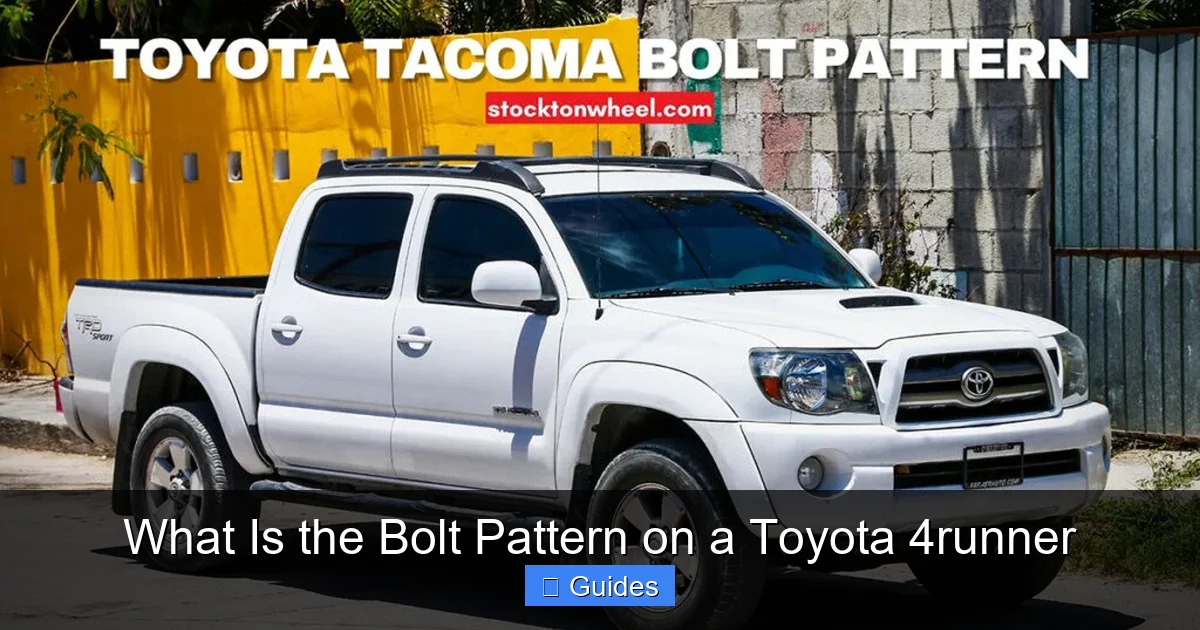
Visual guide about What Is the Bolt Pattern on a Toyota 4runner
Image source: stocktonwheel.com
One of the most appealing aspects of the Toyota 4Runner for wheel enthusiasts is the consistency of its bolt pattern across multiple generations. Unlike some vehicles that change specs frequently, the 4Runner has maintained a reliable standard, making it easier to find compatible wheels and upgrades.
Let’s break it down by generation:
First Generation (1984–1988)
The original Toyota 4Runner, based on the compact Hilux pickup, used a 6×139.7mm bolt pattern. However, there’s an important caveat: early models had a smaller center bore (around 100mm) compared to later versions. This means that while the bolt pattern matches, wheels designed for newer 4Runners may not fit properly due to hub centering issues. If you own a first-gen 4Runner, it’s essential to check both the bolt pattern and the center bore diameter before purchasing wheels.
Second Generation (1989–1995)
This generation marked a shift toward a more SUV-like design, and Toyota standardized the 6×139.7mm bolt pattern with a 106.1mm center bore. This setup became the foundation for all future 4Runners. The second-gen 4Runner also introduced more robust suspension and drivetrain components, making it a favorite among off-roaders. Wheels from this era are widely available and compatible with later models, provided the center bore and offset are correct.
Third Generation (1996–2002)
The third-gen 4Runner continued with the 6×139.7mm bolt pattern and 106.1mm center bore. This generation featured a more refined interior and improved ride quality, but retained the rugged capability that defined the 4Runner. Many owners of this era upgraded to larger wheels and tires, taking advantage of the common bolt pattern to explore a wide range of aftermarket options.
Fourth Generation (2003–2009)
Toyota made significant changes to the 4Runner’s platform in 2003, including a new frame and suspension. Despite these updates, the bolt pattern remained unchanged at 6×139.7mm. The center bore stayed at 106.1mm, ensuring continued compatibility with wheels from previous generations. This consistency made it easy for owners to swap wheels between model years, a big plus for those building custom setups.
Fifth Generation (2010–Present)
The current generation of the Toyota 4Runner continues the tradition of the 6×139.7mm bolt pattern. Whether you drive a base SR5, a Trail Premium, or a high-performance TRD Pro, the bolt pattern is the same. This uniformity across trims and model years simplifies the process of finding wheels, tires, and accessories. It also means that wheels from a 2010 4Runner will fit a 2023 model, as long as other specs like offset and load rating are compatible.
Special Editions and International Models
While the vast majority of 4Runners use the 6×139.7mm pattern, there are rare exceptions. Some special editions or vehicles sold in specific markets (like Australia or the Middle East) may have slight variations. For example, certain export models might use different hub designs or bolt patterns. If you’re unsure about your specific vehicle, consult your owner’s manual or use a bolt pattern gauge to verify.
Aftermarket Wheels and the 4Runner Bolt Pattern
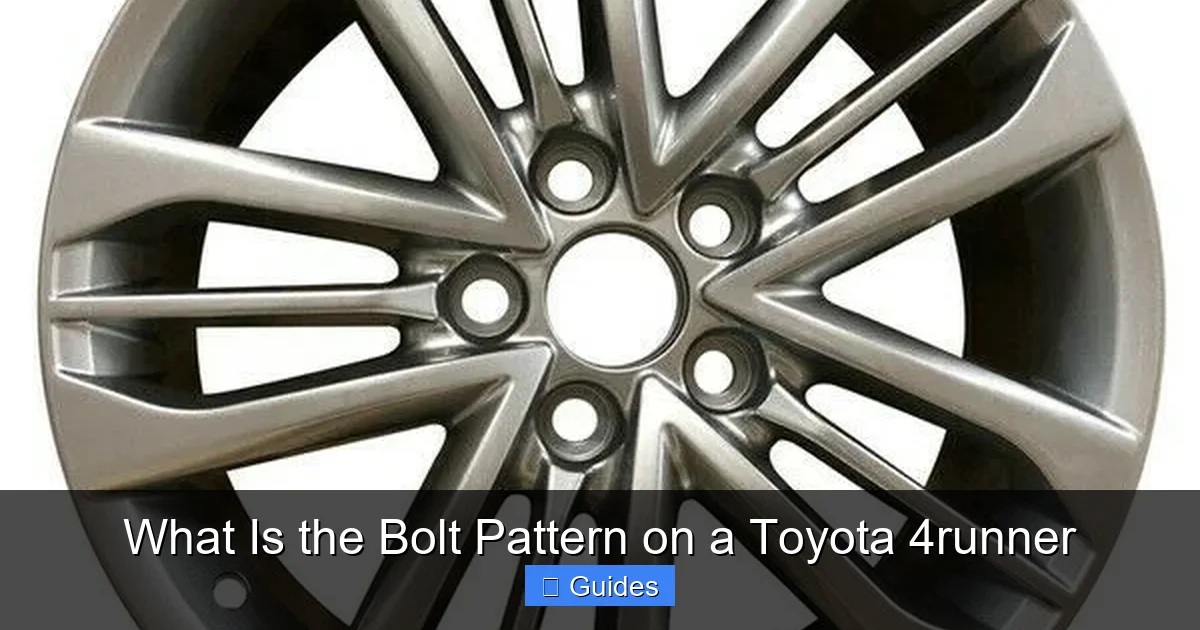
Visual guide about What Is the Bolt Pattern on a Toyota 4runner
Image source: i.pinimg.com
Thanks to its popular 6×5.5″ bolt pattern, the Toyota 4Runner enjoys a huge selection of aftermarket wheels. This pattern is shared with many other Toyota trucks and SUVs—including the Tacoma, Tundra, and FJ Cruiser—as well as vehicles from brands like Nissan, Ford, and Chevrolet. This cross-compatibility means more choices, better prices, and greater flexibility when upgrading your ride.
Popular Wheel Styles for the 4Runner
Off-road enthusiasts love the 4Runner for its capability, and the right wheels can enhance both performance and appearance. Here are some popular styles:
– **All-Terrain Wheels:** Designed for mixed driving, these wheels offer a balance of on-road comfort and off-road durability. Brands like Method, Fuel, and Black Rhino offer aggressive designs that complement the 4Runner’s rugged look.
– **Beadlock Wheels:** For serious off-roading, beadlock wheels secure the tire to the rim, preventing it from slipping during low-pressure driving. These are ideal for rock crawling or extreme terrain.
– **Classic Steel Wheels:** Some owners prefer the timeless look and durability of steel wheels. They’re heavier than alloys but offer excellent strength and are often more affordable.
– **Custom Forged Wheels:** For those who want a unique look and maximum performance, forged wheels are lightweight and strong. They’re more expensive but offer superior strength-to-weight ratios.
Important Considerations When Choosing Wheels
While the bolt pattern is a great starting point, it’s not the only factor to consider. Here are a few other specs that matter:
– **Offset and Backspacing:** These determine how far the wheel sits in or out from the hub. A positive offset pushes the wheel outward, while a negative offset pulls it in. Too much offset can cause rubbing or stress on suspension components.
– **Center Bore:** The 4Runner uses a 106.1mm center bore. Wheels with a larger bore can be used with hub-centric rings, which fill the gap and ensure proper centering. Never use wheels with a smaller center bore—they won’t fit.
– **Load Rating:** Make sure your new wheels can handle the weight of your 4Runner, especially if you’re carrying gear or towing.
– **Tire Size Compatibility:** Larger wheels often require larger tires, which can affect speedometer accuracy, fuel economy, and clearance. Always check for rubbing issues after installation.
Hub-Centric vs. Lug-Centric Wheels
The Toyota 4Runner is a hub-centric vehicle, meaning the wheel is centered on the hub by the center bore, not just the lug nuts. This design reduces vibration and ensures even load distribution. When buying aftermarket wheels, look for hub-centric designs or use hub-centric rings if the wheel’s center bore is larger than 106.1mm.
Lug-centric wheels, which rely solely on the lug nuts for centering, are less ideal for the 4Runner and can lead to wobbling or uneven wear. Always prioritize hub-centric fitment for the best performance and safety.
Using Wheel Adapters and Spacers
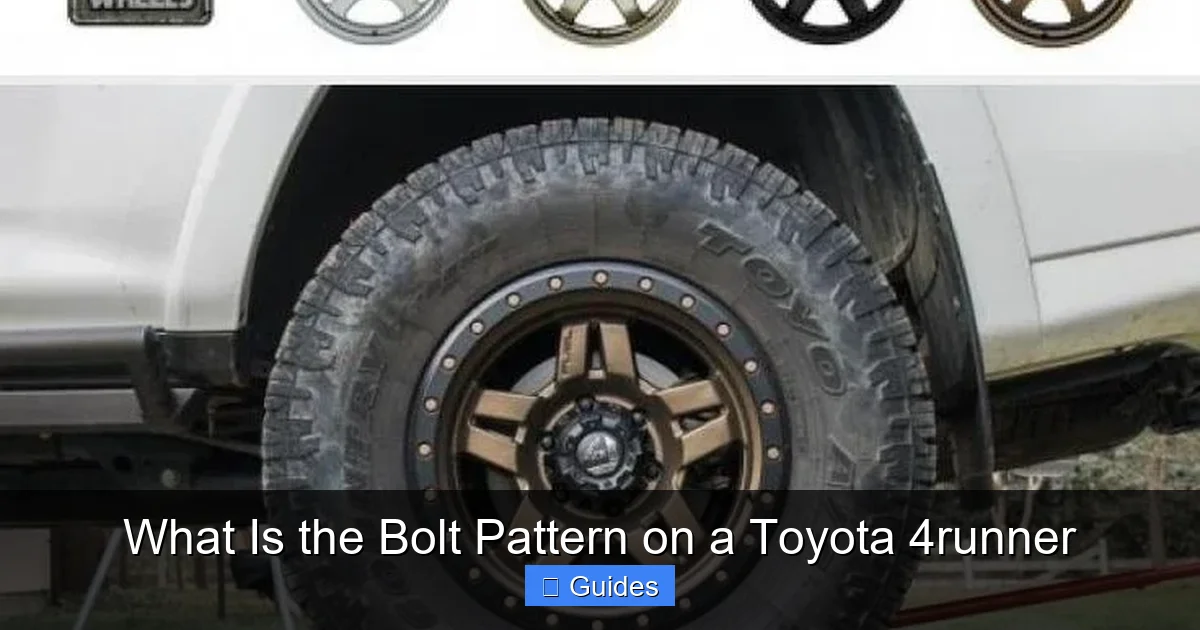
Visual guide about What Is the Bolt Pattern on a Toyota 4runner
Image source: i.pinimg.com
Sometimes, you might want to use wheels that don’t match your 4Runner’s bolt pattern—maybe you found a great deal on a set of wheels from another vehicle, or you’re building a custom setup. In these cases, wheel adapters or spacers can help.
What Are Wheel Adapters?
Wheel adapters are metal plates that bolt onto your existing hub and provide a new mounting surface with a different bolt pattern. For example, you could use a 6×139.7mm to 5×120 adapter to mount BMW wheels on your 4Runner. Adapters change both the bolt pattern and the offset, so they can significantly alter how your wheels sit.
What Are Wheel Spacers?
Spacers, on the other hand, don’t change the bolt pattern—they simply push the wheel outward to increase track width. This can improve stability and give your 4Runner a more aggressive stance. Spacers are available in various thicknesses, from 10mm to 50mm or more.
Are Adapters and Spacers Safe?
When used correctly, high-quality adapters and spacers can be safe. However, there are risks:
– **Increased Stress:** Adapters and spacers add leverage to the hub, which can increase stress on wheel bearings and suspension components.
– **Improper Installation:** If not torqued correctly or if the wrong grade of bolts is used, adapters can fail, leading to wheel separation.
– **Warranty and Insurance Issues:** Some manufacturers and insurers may void coverage if aftermarket adapters are involved in an accident.
If you choose to use adapters or spacers, buy from reputable brands, follow torque specifications, and have them installed by a professional. Avoid cheap, low-quality products—your safety is worth the investment.
Common Mistakes to Avoid
Even with all this information, it’s easy to make mistakes when dealing with bolt patterns and wheels. Here are some common pitfalls and how to avoid them:
Assuming All 6×5.5″ Wheels Fit
Just because a wheel has a 6×139.7mm bolt pattern doesn’t mean it will fit your 4Runner. Always check the center bore, offset, and backspacing. A wheel that’s too wide or has the wrong offset can rub against the fender or suspension.
Ignoring the Center Bore
The 106.1mm center bore is critical for hub-centric fitment. If your wheel has a larger bore, use hub-centric rings. Never force a wheel onto a hub that’s too small—it won’t center properly and can cause vibration.
Overlooking Load Rating
Not all wheels are created equal. Make sure your new wheels have a load rating that meets or exceeds your 4Runner’s requirements. This is especially important if you carry heavy loads or tow frequently.
Skipping Professional Installation
Even if you’re handy with tools, wheel installation is best left to professionals. They have the right torque wrenches, alignment tools, and experience to ensure everything is done safely and correctly.
Not Checking for Clearance
After installing new wheels and tires, always test for clearance. Turn the steering wheel lock to lock and check for rubbing on the fender, suspension, or brake lines. If you hear scraping or see wear marks, you may need to adjust your setup.
Conclusion
The bolt pattern on a Toyota 4Runner is more than just a technical specification—it’s a key factor in your vehicle’s safety, performance, and customization potential. With a consistent 6×139.7mm (6×5.5″) pattern across most model years, the 4Runner offers excellent compatibility with a wide range of aftermarket wheels, making it a favorite among off-roaders and enthusiasts.
Understanding how to measure, verify, and match this bolt pattern ensures that your wheels fit properly, your ride remains smooth, and your adventures stay safe. Whether you’re upgrading for style, performance, or capability, always double-check your specs, prioritize hub-centric fitment, and consult professionals when in doubt.
The Toyota 4Runner is built to go the distance—make sure your wheels are too.
Frequently Asked Questions
What is the bolt pattern on a Toyota 4Runner?
The bolt pattern on most Toyota 4Runners is 6×139.7mm, also known as 6×5.5 inches. This pattern has been used consistently from 1989 to the present across all generations and trims.
Do all Toyota 4Runners have the same bolt pattern?
Almost all 4Runners from 1989 onward use the 6×139.7mm bolt pattern. The first-generation models (1984–1988) also used this pattern but had a smaller center bore, so wheel compatibility requires extra attention.
Can I use wheels from a Toyota Tacoma on my 4Runner?
Yes, in most cases. The Toyota Tacoma also uses a 6×139.7mm bolt pattern and a similar center bore, making many Tacoma wheels compatible with the 4Runner. Always verify offset and backspacing to avoid clearance issues.
How do I measure my 4Runner’s bolt pattern?
For a 6-lug wheel, measure from the center of one lug hole to the center of the lug hole directly across from it. This gives you the diameter—139.7mm (5.5 inches) confirms the 6×139.7mm pattern.
What is the center bore on a Toyota 4Runner?
The center bore on most 4Runners is 106.1mm. This hub-centric design ensures the wheel is properly centered on the hub for smooth, vibration-free operation.
Can I use wheel adapters to change the bolt pattern?
Yes, but with caution. Wheel adapters can allow you to mount wheels with different bolt patterns, but they increase stress on the hub and should only be used with high-quality, vehicle-specific products and professional installation.

At CarLegit, we believe information should be clear, factual, and genuinely helpful. That’s why every guide, review, and update on our website is created with care, research, and a strong focus on user experience.