
Choosing between the BMW X3 and X5 depends on your needs for space, performance, and budget. The X3 is a compact luxury SUV ideal for city driving and daily commutes, while the X5 offers more room, power, and premium features for families and long trips.
If you’re in the market for a luxury SUV, chances are you’ve come across two of BMW’s most popular models: the X3 and the X5. Both are stylish, performance-oriented, and packed with cutting-edge technology. But how do you decide which one is right for you? The truth is, while they share the BMW badge and many design cues, the X3 and X5 are built for different lifestyles and needs.
The BMW X3 is a compact luxury SUV that strikes a great balance between practicality and performance. It’s perfect for individuals, couples, or small families who want a premium driving experience without the bulk of a larger vehicle. On the other hand, the BMW X5 is a midsize SUV that leans more toward space, power, and presence. It’s ideal for growing families, frequent road trippers, or anyone who values extra room and a more commanding driving position.
So, what really sets them apart? In this guide, we’ll break down the key differences between the BMW X3 and X5 across several important categories—size, performance, interior space, technology, fuel economy, pricing, and driving experience. By the end, you’ll have a clear picture of which BMW SUV fits your lifestyle, budget, and driving preferences.
In This Article
Key Takeaways
- Size and Seating: The X3 is a compact SUV with seating for five, while the X5 is a midsize SUV that can seat up to seven with an optional third row.
- Performance and Power: The X5 generally offers more powerful engine options, including a V8 in the M50i and M models, compared to the X3’s four- and six-cylinder engines.
- Interior Space and Cargo: The X5 provides significantly more cargo space and rear legroom, making it better for families or frequent travelers.
- Technology and Features: Both models come well-equipped, but the X5 often includes more advanced tech and luxury options as standard or available upgrades.
- Fuel Efficiency: The X3 is more fuel-efficient, especially with its base four-cylinder engine, making it a better choice for daily commuters.
- Pricing and Value: The X3 starts at a lower price point, offering strong value for a luxury SUV, while the X5 commands a higher price due to its size and capabilities.
- Driving Dynamics: The X3 feels more agile and nimble, ideal for urban environments, while the X5 delivers a smoother, more commanding ride on highways and long drives.
📑 Table of Contents
Size and Exterior Design
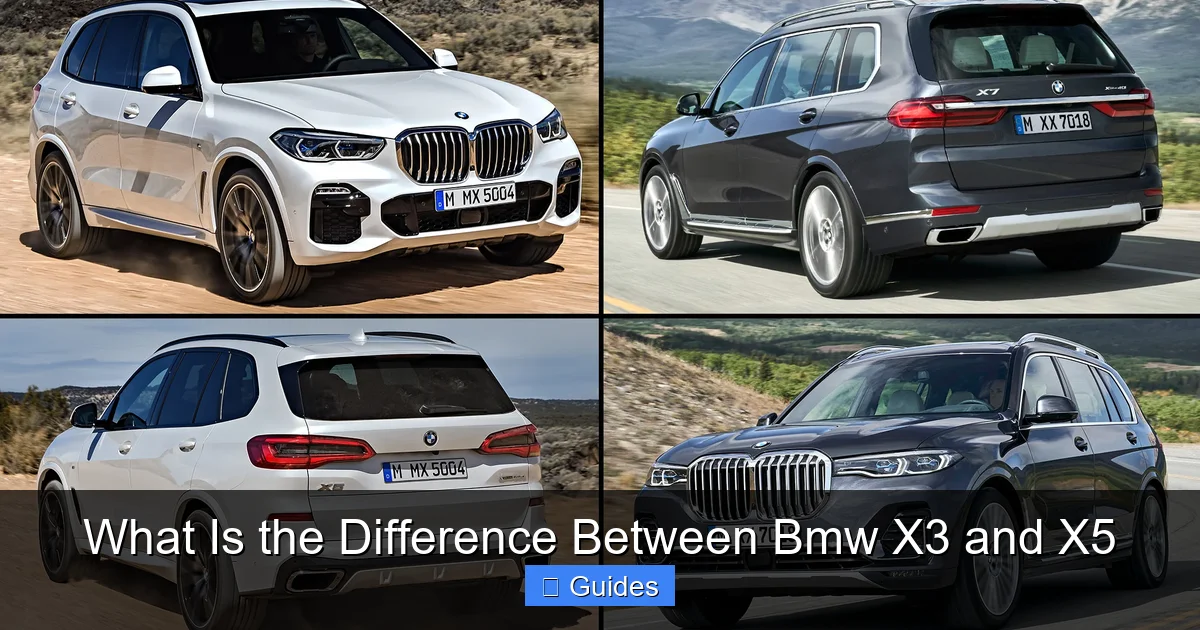
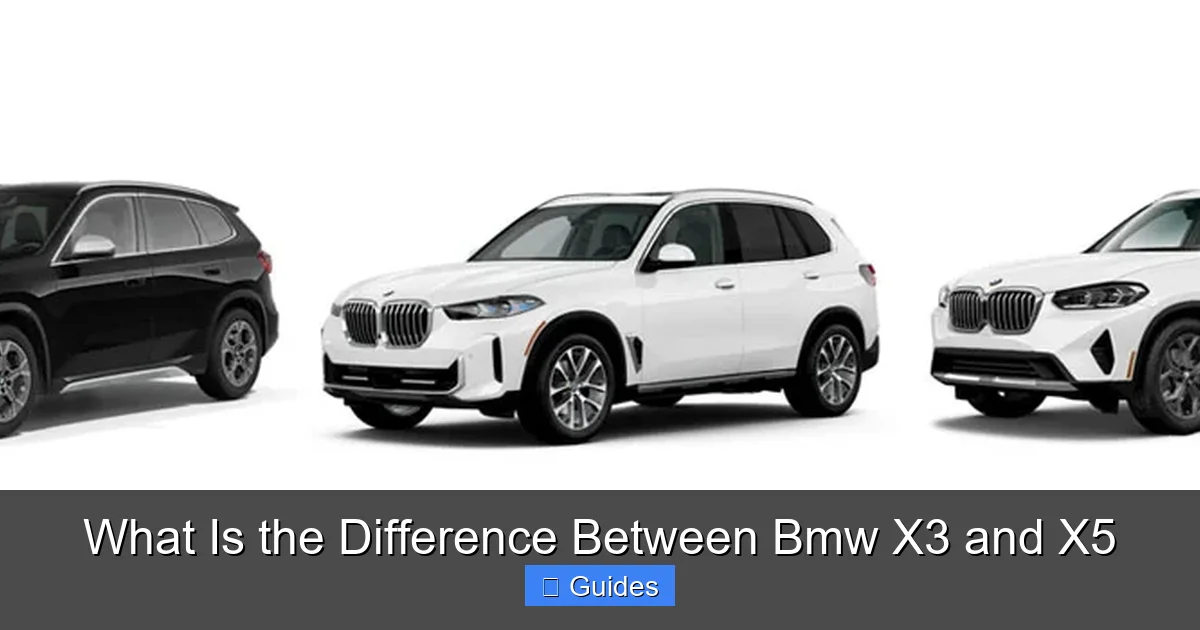
When it comes to size, the difference between the BMW X3 and X5 is immediately noticeable. The X3 measures about 185.9 inches in length, 74.4 inches in width, and 66.0 inches in height. It has a wheelbase of 110.6 inches, which gives it a compact yet confident stance on the road. This size makes the X3 highly maneuverable, especially in tight city streets or crowded parking lots. Its proportions are sporty and athletic, with a low roofline and aggressive front grille that screams BMW DNA.
In contrast, the BMW X5 is significantly larger. It stretches to 194.3 inches in length, 78.9 inches in width, and 69.5 inches in height, with a wheelbase of 117.1 inches. This extra length and width translate into a more imposing presence. The X5 looks more like a traditional SUV—taller, wider, and more substantial. It’s the kind of vehicle that turns heads not just for its design, but for its sheer size and presence.
The exterior styling of both models follows BMW’s latest design language, with sharp lines, LED lighting, and the iconic kidney grille. However, the X5’s larger dimensions allow for more dramatic styling cues, such as wider fenders, larger air intakes, and optional 22-inch wheels. The X3, while still stylish, feels more compact and agile in its design.
One practical implication of the size difference is parking and maneuverability. The X3 is easier to park in tight spots and navigate through narrow streets. If you live in a city or frequently drive in urban areas, the X3’s smaller footprint can be a real advantage. The X5, while still manageable, requires more space and awareness, especially when parallel parking or driving in congested areas.
Another factor to consider is visibility. The X5’s higher seating position and larger windows offer better outward visibility, which can enhance safety and confidence, especially on highways or in traffic. The X3, while still offering good visibility, sits lower to the ground, which some drivers may find less commanding.
Interior Space and Comfort

Visual guide about What Is the Difference Between Bmw X3 and X5
Image source: razaoautomovel.com
Step inside the BMW X3, and you’re greeted by a well-crafted cabin that feels premium and driver-focused. The materials are high-quality, with soft-touch surfaces, real wood or aluminum trim, and supportive seats. The front seats offer excellent comfort and adjustability, making long drives enjoyable. Rear passengers get decent legroom—about 36.4 inches—which is adequate for most adults, though taller passengers might find it a bit tight on longer trips.
Cargo space in the X3 is respectable for a compact SUV. With the rear seats up, you get 28.7 cubic feet of storage. Fold the rear seats down, and that expands to 62.7 cubic feet. That’s enough for groceries, luggage, or weekend gear, but it may fall short if you frequently transport large items or travel with multiple passengers and their luggage.
Now, step into the BMW X5, and the difference in space becomes immediately apparent. The X5 offers a more spacious and luxurious interior. Front seat comfort is top-notch, with more cushioning and support, especially in higher trims. Rear legroom jumps to 39.1 inches—nearly three inches more than the X3—making it much more comfortable for adult passengers. Headroom and shoulder room are also more generous, giving everyone a sense of openness.
Cargo capacity is where the X5 really shines. With the rear seats up, you get 33.9 cubic feet of space—already more than the X3. Fold the rear seats, and that number skyrockets to 72.3 cubic feet. That’s a massive increase, making the X5 a true cargo hauler. Whether you’re loading up for a family vacation, moving furniture, or hauling sports equipment, the X5 handles it with ease.
Another key difference is seating capacity. The X3 is strictly a five-seater. The X5, however, offers an optional third row, bringing total seating to seven. While the third row is best suited for children or short trips, it adds flexibility for families or those who occasionally need extra seats. Keep in mind that the third row reduces cargo space significantly when in use, so it’s a trade-off.
Performance and Engine Options
Visual guide about What Is the Difference Between Bmw X3 and X5
Image source: motortrend.com
Performance is a core part of the BMW experience, and both the X3 and X5 deliver in this area—but in different ways. The X3 offers a range of efficient and capable engines, starting with a 2.0-liter turbocharged four-cylinder in the sDrive30i and xDrive30i models. This engine produces 248 horsepower and 258 lb-ft of torque, which is more than enough for daily driving, highway merging, and light towing. It’s paired with an eight-speed automatic transmission and standard rear-wheel drive (sDrive) or optional all-wheel drive (xDrive).
For those who want more power, the X3 M40i steps up with a 3.0-liter turbocharged inline-six engine that delivers 382 horsepower and 369 lb-ft of torque. This transforms the X3 into a true performance SUV, capable of 0-60 mph in just 4.4 seconds. It’s a thrilling drive, especially on winding roads or open highways.
The BMW X5, on the other hand, starts with more power under the hood. The base X5 xDrive40i comes with a 3.0-liter turbocharged inline-six that produces 335 horsepower and 330 lb-ft of torque—already more than the X3’s base engine. This engine provides strong acceleration and a smooth, refined driving experience. It’s also available with mild-hybrid technology, which improves efficiency and responsiveness.
For serious performance enthusiasts, the X5 M50i takes things to another level. It features a 4.4-liter twin-turbo V8 engine that churns out 523 horsepower and 553 lb-ft of torque. This beast can rocket from 0 to 60 mph in just 4.1 seconds, making it one of the fastest SUVs in its class. There’s also the high-performance X5 M, which pushes output to over 600 horsepower in its standard form and even more in the Competition version.
Both models offer adaptive suspension, dynamic handling systems, and multiple driving modes (Comfort, Sport, Eco Pro, etc.), allowing drivers to tailor the ride to their preferences. However, the X5’s larger size and heavier weight mean it doesn’t feel as nimble as the X3 in tight corners or quick maneuvers. The X3, with its lighter build and lower center of gravity, feels more agile and responsive, especially in city driving or on twisty back roads.
Technology and Infotainment
Visual guide about What Is the Difference Between Bmw X3 and X5
Image source: newboldbmw.com
BMW is known for its advanced technology, and both the X3 and X5 come well-equipped with the latest infotainment and driver-assistance features. The standard setup in both models includes a 12.3-inch digital instrument cluster and a 12.3-inch central touchscreen running BMW’s iDrive 7.0 system. This system is intuitive, responsive, and supports Apple CarPlay, Android Auto, navigation, and voice commands.
The X3 offers a solid tech package, with available upgrades like a head-up display, wireless charging, and a premium Harman Kardon sound system. Higher trims add features like gesture control, which lets you adjust volume or answer calls with hand motions, and a 360-degree camera system for easier parking.
The X5, being a larger and more premium model, often includes more advanced tech as standard or available options. For example, the X5 offers an optional 16-speaker Bowers & Wilkins Diamond surround sound system, which delivers an immersive audio experience. It also features more comprehensive driver-assistance packages, including adaptive cruise control with stop-and-go, lane-keeping assist, blind-spot monitoring, and traffic jam assist.
One standout feature in the X5 is the optional rear-seat entertainment system, which includes dual 10.2-inch screens mounted on the front seatbacks. This is perfect for keeping kids entertained on long drives. The X3 does not offer this option, focusing more on front-seat tech and connectivity.
Both models support over-the-air software updates, ensuring your vehicle stays up to date with the latest features and improvements. However, the X5’s larger cabin allows for more seamless integration of tech features, such as larger screens, more speakers, and better sound insulation for a quieter, more refined experience.
Fuel Efficiency and Environmental Impact
Fuel economy is an important consideration, especially for daily commuters or those looking to reduce their environmental footprint. The BMW X3 has a clear advantage here. The base xDrive30i model achieves an EPA-estimated 23 mpg in the city and 29 mpg on the highway, with a combined rating of 25 mpg. The more powerful M40i, while still efficient for its performance level, drops to 21 mpg city and 26 mpg highway.
The X5, due to its larger size and more powerful engines, consumes more fuel. The xDrive40i gets an estimated 21 mpg city and 25 mpg highway, with a combined 23 mpg. The M50i, with its V8 engine, is even thirstier at 16 mpg city and 22 mpg highway. While these numbers are typical for a midsize luxury SUV with strong performance, they’re noticeably lower than the X3.
For those concerned about emissions, BMW offers plug-in hybrid versions of both models. The X3 xDrive30e combines a four-cylinder engine with an electric motor for a total of 288 horsepower and an all-electric range of about 17 miles. The X5 xDrive45e offers even more power—389 horsepower—and an electric range of around 30 miles. These hybrids provide a great balance of performance and efficiency, especially for short commutes.
Pricing and Value
Price is often a deciding factor, and there’s a noticeable gap between the X3 and X5. The 2024 BMW X3 starts at around $48,000 for the sDrive30i model. The xDrive30i with all-wheel drive starts at about $50,000, while the performance-oriented M40i begins at roughly $60,000. These prices include a solid list of standard features, but options and packages can quickly increase the total.
The 2024 BMW X5 starts at approximately $62,000 for the xDrive40i. The M50i jumps to around $85,000, and the high-performance X5 M starts at over $108,000. The optional third-row seating adds about $2,000, and premium packages can push the price even higher.
While the X5 is more expensive, it offers more space, power, and luxury. The X3, on the other hand, provides excellent value for a luxury SUV, especially for buyers who don’t need the extra size or power. It’s a great entry point into the BMW SUV lineup.
Driving Experience and Practicality
Ultimately, the choice between the X3 and X5 comes down to how you plan to use your vehicle. The X3 excels in urban environments, offering agility, efficiency, and a sporty driving feel. It’s perfect for daily commutes, weekend getaways, and small families. The X5, with its larger size, stronger engines, and more luxurious interior, is better suited for long road trips, larger families, and those who want a more commanding presence on the road.
Both models deliver the BMW driving experience—responsive steering, balanced handling, and a focus on driver engagement. But the X3 feels more like a sport sedan on stilts, while the X5 leans toward a refined, comfortable cruiser.
In conclusion, the BMW X3 and X5 are both excellent SUVs, but they serve different needs. If you prioritize efficiency, agility, and value, the X3 is the way to go. If you need more space, power, and luxury, the X5 is the better choice. Test driving both is the best way to decide which one fits your lifestyle.
Frequently Asked Questions
Which is bigger, the BMW X3 or X5?
The BMW X5 is significantly larger than the X3. It offers more interior space, cargo capacity, and an optional third row of seating, making it better suited for families or those who need extra room.
Is the BMW X5 faster than the X3?
Yes, especially in higher trims. The X5 M50i and X5 M models with V8 engines are faster than any X3 variant, though the X3 M40i is still a high-performance compact SUV.
Can the BMW X3 seat seven people?
No, the X3 is strictly a five-seater. The X5 offers an optional third row, allowing it to seat up to seven passengers.
Which BMW SUV is more fuel-efficient?
The BMW X3 is more fuel-efficient, especially with its base four-cylinder engine. The X5 consumes more fuel due to its larger size and more powerful engines.
Is the BMW X5 worth the extra cost?
It depends on your needs. If you require more space, power, and luxury features, the X5 is worth the investment. For daily driving and tighter budgets, the X3 offers excellent value.
Do both the X3 and X5 offer all-wheel drive?
Yes, both models offer all-wheel drive (xDrive) as an option or standard, depending on the trim level and market.

At CarLegit, we believe information should be clear, factual, and genuinely helpful. That’s why every guide, review, and update on our website is created with care, research, and a strong focus on user experience.