
The Dodge Charger and Challenger are both iconic American muscle cars, but they serve different purposes. While the Charger is a four-door sedan built for daily driving and family use, the Challenger is a two-door coupe focused on raw performance and retro style.
In This Article
- 1 Key Takeaways
- 2 📑 Table of Contents
- 3 Introduction: Two Icons, One Legacy
- 4 Body Style and Design: Sedan vs. Coupe
- 5 Performance and Powertrains: Shared DNA, Different Flavors
- 6 Interior and Technology: Comfort Meets Character
- 7 Driving Dynamics: Handling and Ride Quality
- 8 Target Audience and Use Cases
- 9 Conclusion: Which One Is Right for You?
- 10 Frequently Asked Questions
- 10.1 Is the Dodge Charger faster than the Challenger?
- 10.2 Can you fit four people in a Dodge Challenger?
- 10.3 Does the Dodge Charger have all-wheel drive?
- 10.4 Which car has better gas mileage: Charger or Challenger?
- 10.5 Are the Charger and Challenger built on the same platform?
- 10.6 Can you daily drive a Dodge Challenger?
Key Takeaways
- Body Style: The Charger is a four-door sedan; the Challenger is a two-door coupe, affecting passenger and cargo space.
- Daily Usability: The Charger offers better practicality with rear doors and a larger trunk, making it more suitable for everyday driving.
- Performance Options: Both share powerful engines like the 6.2L Supercharged HEMI V8, but the Challenger SRT Demon is the ultimate drag strip machine.
- Driving Dynamics: The Challenger has a lower center of gravity and tighter handling, ideal for spirited driving and track use.
- Interior and Tech: The Charger features a more modern, driver-focused cabin with better rear-seat access; the Challenger leans into retro charm with classic styling cues.
- Target Audience: The Charger appeals to those wanting muscle with practicality; the Challenger targets purists who want style and speed.
- Price and Value: Base models are similarly priced, but high-performance variants like the Charger SRT Hellcat and Challenger SRT Demon differ significantly in cost and capability.
📑 Table of Contents
Introduction: Two Icons, One Legacy
When it comes to American muscle, few names carry as much weight as Dodge. For decades, the brand has been synonymous with raw power, bold styling, and unapologetic performance. Among its most celebrated models, the Dodge Charger and Dodge Challenger stand out as two of the most iconic vehicles ever to roll off the assembly line. Both are steeped in racing heritage, have starred in blockbuster films, and continue to dominate the streets with their thunderous engines and aggressive designs.
But despite their shared DNA, the Charger and Challenger are not the same car. In fact, they cater to very different kinds of drivers. One is built for the daily commute, the other for the weekend warrior. One prioritizes space and comfort, the other leans into nostalgia and track-ready performance. Understanding the difference between the Dodge Charger and Challenger isn’t just about comparing specs—it’s about matching the right car to your lifestyle, driving habits, and personal taste.
Whether you’re a first-time buyer, a longtime muscle car enthusiast, or just curious about what sets these two legends apart, this guide will break down everything you need to know. From design and performance to interior comfort and real-world usability, we’ll explore how these two models differ—and help you decide which one deserves a spot in your garage.
Body Style and Design: Sedan vs. Coupe
Visual guide about What Is the Difference Between Dodge Charger and Challenger
Image source: pictures.dealer.com
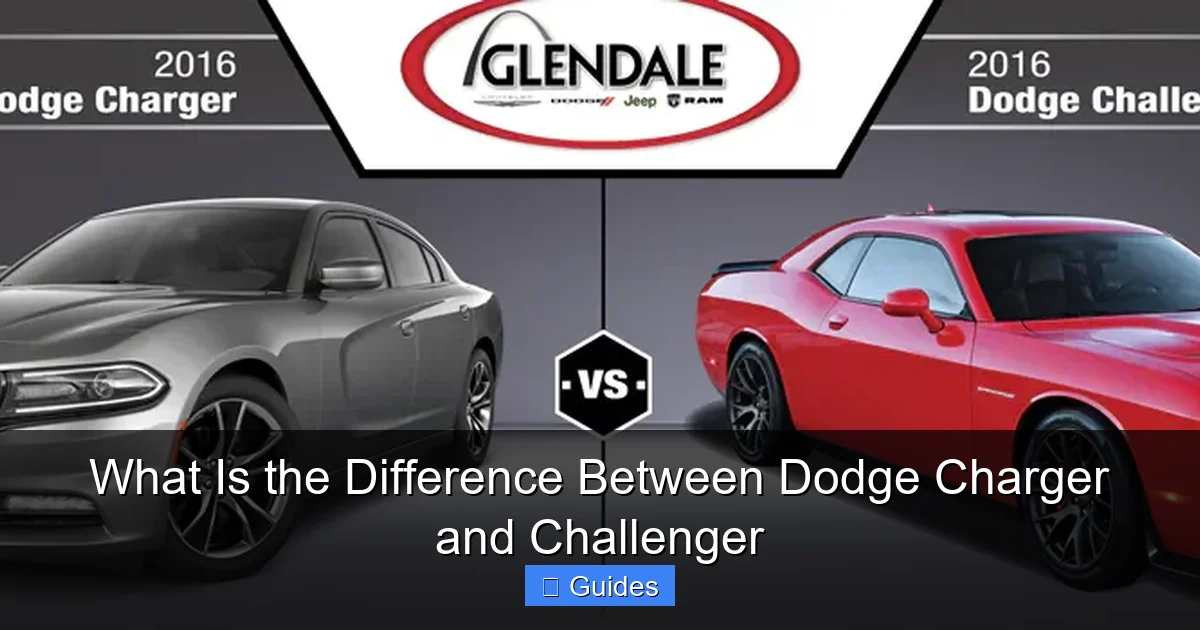
One of the most obvious differences between the Dodge Charger and Challenger is their body style. The Charger is a four-door sedan, while the Challenger is a two-door coupe. This fundamental distinction shapes nearly every aspect of their design, functionality, and appeal.
Exterior Styling and Presence
Both cars draw inspiration from classic American muscle, but they interpret that legacy in different ways. The Charger features a long hood, wide stance, and aggressive front grille that screams power. Its four-door layout gives it a more modern, almost sport-sedan look, blending performance with practicality. It’s the kind of car that turns heads at a red light but won’t raise eyebrows in a school pickup line.
The Challenger, on the other hand, is a love letter to the 1970s. Its long, low profile, wide fenders, and retro-inspired lines pay homage to the original 1970 Challenger. The two-door design emphasizes style and drama, with a roofline that slopes dramatically toward the rear. It looks like it belongs on a drag strip or in a movie chase scene—because it often does.
In terms of dimensions, the Challenger is slightly shorter and lower than the Charger, which contributes to its more aggressive, crouched appearance. The Charger, while still muscular, has a more upright and spacious silhouette thanks to its sedan configuration.
Practicality and Everyday Use
Here’s where the body style really makes a difference. The Charger’s four doors and larger trunk make it far more practical for daily use. Need to pick up groceries? No problem. Transporting kids or friends? Easy. The rear seats are accessible, and while not limo-like, they offer enough space for average-sized adults to ride comfortably for short to medium trips.
The Challenger, with its two doors and sloping roofline, sacrifices some rear-seat headroom and legroom. Getting in and out of the back is more of a challenge—literally. It’s doable, but not ideal for frequent use. The trunk is also smaller, which can be a limitation if you’re hauling gear or luggage regularly.
So if you’re looking for a muscle car that can double as a family hauler or daily driver, the Charger has a clear advantage. But if you’re after a weekend cruiser or a showpiece that turns heads, the Challenger’s coupe design delivers unmatched style.

Visual guide about What Is the Difference Between Dodge Charger and Challenger
Image source: whatisthedifferencebetween.org
Under the hood, the Dodge Charger and Challenger share many of the same engines, but how they deliver that power—and how they’re tuned—can vary significantly. Both models offer a range of powertrains, from efficient V6s to earth-shaking supercharged V8s.
Engine Options Compared
Let’s start with the base engines. Both the Charger and Challenger offer a 3.6L Pentastar V6 as the entry-level option. This engine produces around 300 horsepower and 260 lb-ft of torque, which is more than enough for daily driving. It’s smooth, reliable, and relatively fuel-efficient for a muscle car. If you’re looking for a sporty sedan or coupe that doesn’t guzzle gas, this is a solid choice.
Step up to the V8s, and things get serious. Both models offer the legendary 5.7L HEMI V8, delivering about 370 horsepower. This engine brings a deeper exhaust note, quicker acceleration, and that unmistakable muscle car feel. It’s available in the Charger R/T and Challenger R/T trims.
For those craving even more power, the 6.4L HEMI V8 (also known as the 392) is available in both the Charger Scat Pack and Challenger Scat Pack. This engine cranks out 485 horsepower and 475 lb-ft of torque. It’s a beast—capable of 0-60 mph in under 4.5 seconds. Whether you’re on a highway on-ramp or a backroad twist, this engine delivers thrilling performance.
The Hellcat and Demon: Peak Performance
Now, let’s talk about the top dogs: the SRT Hellcat and SRT Demon variants. Both the Charger and Challenger offer the 6.2L Supercharged HEMI V8, producing a staggering 717 horsepower in the Hellcat trim. That’s enough to launch either car from 0 to 60 mph in just over 3 seconds. The Hellcat models are street-legal rockets, capable of top speeds over 200 mph.
But the Challenger takes it a step further with the SRT Demon—a limited-production drag monster that produces 840 horsepower on race fuel. The Demon is purpose-built for the quarter-mile, with features like launch control, drag radials, and a transbrake system. It’s the fastest production car ever made in a straight line, and it’s only available in the Challenger body style.
The Charger Hellcat is no slouch, but it’s tuned more for street performance and daily usability. The Challenger Demon is a track-focused weapon that sacrifices comfort and practicality for pure speed.
Transmission and Drivetrain
Both models come standard with an 8-speed automatic transmission, which is smooth, responsive, and well-suited for both city driving and high-performance runs. Manual transmissions are no longer offered on either model, which may disappoint purists but reflects the shift toward automatic efficiency and performance.
All-wheel drive is available on the Charger (except on SRT models), making it a better choice for drivers in snowy or wet climates. The Challenger is rear-wheel drive only, which enhances its performance character but limits its all-weather capability.
Interior and Technology: Comfort Meets Character
Visual guide about What Is the Difference Between Dodge Charger and Challenger
Image source: cdn-ds.com
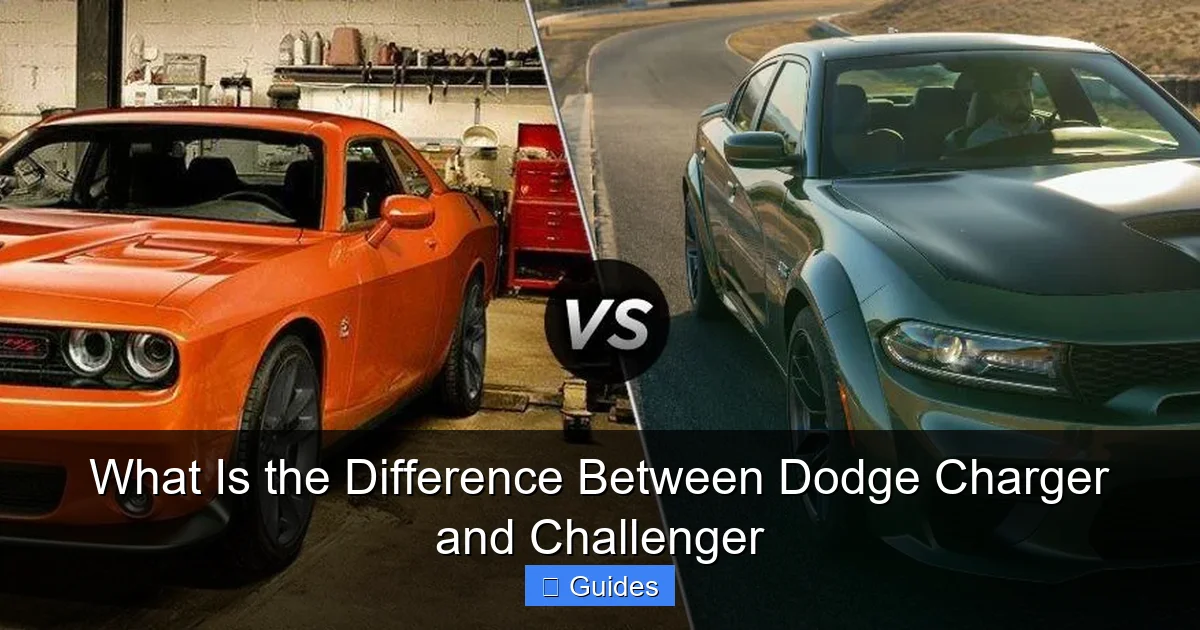
While performance is a major draw, the interior experience can make or break a car’s daily usability. The Charger and Challenger take different approaches to cabin design, technology, and comfort.
Seating and Space
The Charger’s four-door layout gives it a clear edge in passenger space. The front seats are supportive and comfortable, with plenty of legroom and headroom. The rear seats are usable for adults, especially for shorter trips. The trunk is spacious, offering over 16 cubic feet of cargo space—more than many midsize sedans.
The Challenger, with its two-door design, has a more intimate cabin. The front seats are sporty and well-bolstered, ideal for spirited driving. But the rear seats are best suited for occasional use or smaller passengers. Headroom is tight due to the sloping roofline, and getting in and out requires some maneuvering. The trunk is smaller, around 12 cubic feet, which is adequate for a weekend trip but not much more.
Technology and Infotainment
Both models come equipped with Dodge’s Uconnect infotainment system, which is one of the best in the industry. The standard system includes an 8.4-inch touchscreen, Apple CarPlay, Android Auto, Bluetooth, and a premium audio system. Higher trims add navigation, larger screens, and upgraded sound systems like the Harman Kardon or Alpine setups.
The Charger tends to have a more modern and driver-focused layout, with better-placed controls and a more intuitive interface. The Challenger’s interior leans into retro styling, with classic gauges, round vents, and a more nostalgic feel. It’s charming, but some drivers may find it less user-friendly than the Charger’s setup.
Both offer advanced safety features like adaptive cruise control, blind-spot monitoring, and forward collision warning, especially in higher trims. However, the Charger’s larger size and better visibility give it a slight edge in real-world safety and convenience.
Materials and Build Quality
In base trims, both cars use a mix of soft-touch plastics and durable materials. As you move up the trim ladder, you’ll find more premium touches like leather upholstery, heated and ventilated seats, and real aluminum or carbon fiber trim.
The Charger’s interior feels more contemporary and refined, especially in the SRT or GT trims. The Challenger’s cabin is more about character—think classic muscle car vibes with modern tech tucked inside. It’s not as luxurious, but it’s undeniably cool.
Driving Dynamics: Handling and Ride Quality
How a car feels on the road is just as important as how fast it goes. The Charger and Challenger differ in their driving dynamics, reflecting their different purposes.
Chassis and Suspension
The Charger is built on a longer wheelbase and heavier frame, which contributes to a more stable and composed ride. It handles well for a large sedan, with responsive steering and good balance. The suspension is tuned for comfort without sacrificing performance, making it suitable for long drives and daily commuting.
The Challenger, with its shorter wheelbase and lower center of gravity, feels more agile and planted. It corners with confidence and responds quickly to steering inputs. The suspension is stiffer, especially in SRT trims, which enhances track performance but can make the ride harsher on rough roads.
Steering and Braking
Both models offer precise steering, but the Challenger’s setup feels more direct and sporty. The Charger’s steering is slightly heavier, which some drivers prefer for highway stability.
Braking performance is excellent on both, with large Brembo brakes available on higher trims. The Challenger SRT models come with even larger rotors and multi-piston calipers, designed to handle repeated high-speed stops.
Real-World Driving Experience
If you’re driving in the city or on the highway, the Charger feels more at home. It’s easier to park, has better visibility, and offers a smoother ride. The Challenger shines on winding roads or at the track, where its lower profile and sport-tuned suspension come into play.
For example, imagine driving on a scenic mountain road. The Challenger would feel more connected to the pavement, with sharper turn-in and better feedback. The Charger would still be fun, but it would feel more like a grand tourer—comfortable, powerful, but not as nimble.
Target Audience and Use Cases
So who should buy the Charger, and who should go for the Challenger? The answer depends on your lifestyle and priorities.
The Charger: The Practical Muscle Car
The Dodge Charger is ideal for drivers who want muscle car performance without sacrificing daily usability. It’s perfect for:
– Families who need rear-seat space
– Commuters who drive long distances
– Drivers in areas with harsh weather (thanks to available AWD)
– Anyone who wants a powerful sedan that can handle school runs, road trips, and weekend fun
The Charger is also a great choice for first-time muscle car buyers. It’s more approachable, easier to live with, and still delivers thrilling performance.
The Challenger: The Purist’s Dream
The Dodge Challenger is for enthusiasts who value style, sound, and straight-line speed. It’s best suited for:
– Weekend drivers who want a showpiece
– Track-day enthusiasts
– Fans of classic muscle car design
– Buyers who don’t need rear-seat space or all-weather capability
The Challenger is a statement car. It’s not the most practical, but it’s one of the most exciting cars on the road.
Resale Value and Ownership Costs
Both cars hold their value well, especially high-performance trims. The Challenger SRT Demon, for example, has become a collector’s item, with prices skyrocketing on the used market. The Charger Hellcat also retains strong resale value, though not quite at Demon levels.
Insurance and maintenance costs are similar, though high-horsepower models will be more expensive to insure. Fuel economy is another consideration—expect 15-20 mpg combined for V8 models, with Hellcat variants dropping to around 13-15 mpg.
Conclusion: Which One Is Right for You?
The difference between the Dodge Charger and Challenger comes down to purpose. The Charger is a four-door muscle sedan that blends power, space, and daily usability. It’s the car you can drive to work, pick up the kids, and still enjoy on a weekend cruise. The Challenger is a two-door coupe built for style, sound, and speed. It’s the car you take to car shows, drag strips, and backroad adventures.
If you need a car that can do it all—performance, practicality, and presence—the Charger is the clear winner. But if you’re after pure muscle car magic, with a side of nostalgia and head-turning style, the Challenger is hard to beat.
Ultimately, both are exceptional vehicles that honor Dodge’s legacy of American performance. The choice isn’t about which is better—it’s about which one fits your life. So take a test drive, listen to that HEMI rumble, and let your heart decide.
Frequently Asked Questions
Is the Dodge Charger faster than the Challenger?
Not necessarily. Both share the same engines, including the 717-horsepower Hellcat V8. However, the Challenger SRT Demon (840 hp) is faster in a straight line, making it the quicker car overall.
Can you fit four people in a Dodge Challenger?
Yes, the Challenger has rear seats, but they’re best for occasional use or smaller passengers due to limited headroom and legroom.
Does the Dodge Charger have all-wheel drive?
Yes, all-wheel drive is available on most Charger trims (except SRT models), making it a better choice for snowy or wet conditions.
Which car has better gas mileage: Charger or Challenger?
Both are similar, but the Charger’s slightly better aerodynamics and available AWD can lead to marginally better fuel economy in real-world driving.
Are the Charger and Challenger built on the same platform?
Yes, both are based on the Chrysler LX platform, which they share with the Chrysler 300 and previous-generation Jeep Grand Cherokee SRT.
Can you daily drive a Dodge Challenger?
Yes, but it’s less practical than the Charger due to limited rear-seat space, smaller trunk, and stiffer ride. It’s better suited for weekend or enthusiast driving.

At CarLegit, we believe information should be clear, factual, and genuinely helpful. That’s why every guide, review, and update on our website is created with care, research, and a strong focus on user experience.