
The Jeep Wrangler lineup offers a range of models designed for different adventures, from daily driving to extreme off-roading. Understanding the differences between trims like Sport, Sahara, and Rubicon helps you pick the right Wrangler for your lifestyle and terrain.
In This Article
- 1 Key Takeaways
- 2 📑 Table of Contents
- 3 Introduction: Why the Jeep Wrangler Lineup Can Be Confusing
- 4 Understanding Jeep Wrangler Trim Levels
- 5 Engine Options Across Wrangler Models
- 6 Off-Road Capabilities: What Sets the Rubicon Apart
- 7 Interior and Technology: Comfort Across the Lineup
- 8 Two-Door vs. Four-Door: Choosing the Right Size
- 9 Pricing and Value: Which Model Offers the Best Deal?
- 10 Conclusion: Finding Your Perfect Wrangler
- 11 Frequently Asked Questions
Key Takeaways
- Trim Levels Define Capability: Each Wrangler model—Sport, Willys, Sahara, Rubicon, and High Altitude—offers unique features tailored to specific driving needs.
- Engine Options Vary by Model: From the standard 2.0L turbo to the powerful 3.6L V6 and optional 2.0L eTorque, engine choices impact performance and fuel economy.
- Off-Road Features Are Key Differentiators: Rubicon models include locking differentials, disconnecting sway bars, and heavy-duty axles for serious trail use.
- Interior Comfort Increases with Higher Trims: Sahara and High Altitude offer more luxury features like leather seats, advanced infotainment, and climate control.
- Two-Door vs. Four-Door Matters: The Wrangler (2-door) is more agile off-road, while the Wrangler Unlimited (4-door) offers more space and practicality.
- Safety and Tech Features Scale Up: Higher trims include adaptive cruise control, blind-spot monitoring, and larger touchscreens.
- Price Reflects Features and Capability: Entry-level Sport starts under $35K, while loaded Rubicon or High Altitude models can exceed $60K.
📑 Table of Contents
- Introduction: Why the Jeep Wrangler Lineup Can Be Confusing
- Understanding Jeep Wrangler Trim Levels
- Engine Options Across Wrangler Models
- Off-Road Capabilities: What Sets the Rubicon Apart
- Interior and Technology: Comfort Across the Lineup
- Two-Door vs. Four-Door: Choosing the Right Size
- Pricing and Value: Which Model Offers the Best Deal?
- Conclusion: Finding Your Perfect Wrangler
Introduction: Why the Jeep Wrangler Lineup Can Be Confusing
If you’re in the market for a new Jeep Wrangler, you might feel like you’re decoding a secret language. With names like Sport, Willys, Sahara, Rubicon, and High Altitude, it’s easy to get lost in the details. Each model promises something different—some focus on rugged capability, others on comfort and tech. But what really sets them apart?
The Jeep Wrangler has been an American off-road icon since the 1940s, evolving from military vehicle to lifestyle symbol. Today’s Wrangler lineup blends that legendary toughness with modern features, but not every model is built the same. Whether you’re planning weekend trail runs, daily city commutes, or cross-country road trips, choosing the right Wrangler model can make all the difference.
In this guide, we’ll break down the key differences between Jeep Wrangler models so you can make an informed decision. We’ll cover trim levels, engine options, off-road gear, interior features, and more—all in plain English. By the end, you’ll know exactly which Wrangler fits your needs, budget, and sense of adventure.
Understanding Jeep Wrangler Trim Levels
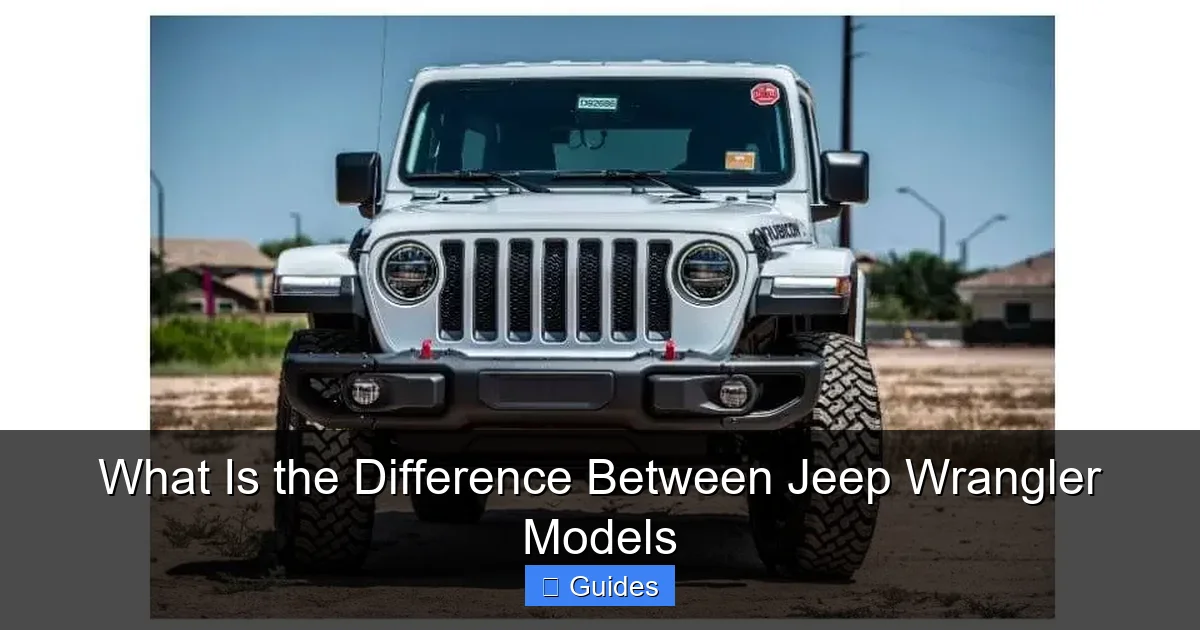
Visual guide about What Is the Difference Between Jeep Wrangler Models
Image source: jeepmodified.com
The first step in choosing a Wrangler is understanding the trim levels. Jeep offers several distinct models, each with its own personality and purpose. These trims build on each other, adding features as you move up the ladder. Let’s walk through the main ones.
Sport: The No-Frills Workhorse
The Sport is the entry-level Wrangler—simple, rugged, and affordable. It’s the closest thing to a “base model” and is perfect for buyers who want the classic Wrangler experience without extra bells and whistles.
The Sport comes with a 2.0L turbocharged four-cylinder engine (standard) or an optional 3.6L Pentastar V6. It features a basic infotainment system with a 7-inch touchscreen, cloth seats, and manual windows and locks. There’s no fancy suspension or off-road tech—just solid Dana axles and a part-time 4×4 system.
This model is ideal for off-road purists or budget-conscious buyers who plan to customize their Wrangler later. It’s also a great choice if you want to keep things simple and focus on capability over comfort.
Willys: A Nod to Heritage with a Modern Edge
Named after the original Willys MB military jeep, the Willys trim adds a few key upgrades over the Sport. It includes all-terrain tires, skid plates, and a limited-slip rear differential. You also get upgraded LED lighting and optional Rock Rails for extra protection.
The Willys is a sweet spot for many buyers—offering better off-road readiness than the Sport without the high price of a Rubicon. It’s perfect for weekend warriors who want to hit moderate trails but don’t need extreme rock-crawling gear.
Sahara: Comfort Meets Capability
The Sahara is where the Wrangler starts to feel like a real daily driver. It adds a host of comfort and convenience features, including power windows and locks, dual-zone automatic climate control, and available leather-trimmed seats.
Under the hood, you can choose between the 2.0L turbo, 3.6L V6, or the 2.0L eTorque mild hybrid system. The Sahara also includes a more advanced Uconnect infotainment system with an 8.4-inch touchscreen, Apple CarPlay, and Android Auto.
While the Sahara isn’t built for hardcore off-roading, it’s excellent for those who want a capable 4×4 that’s still comfortable on the highway. It’s a favorite among families and commuters who occasionally venture off the beaten path.
Rubicon: The Off-Road King
If you’re serious about off-roading, the Rubicon is the Wrangler to beat. It’s packed with specialized gear designed for extreme terrain, including rock crawling, mud, and sand.
Key Rubicon features include:
– Heavy-duty Dana 44 front and rear axles
– Electronic front sway bar disconnect
– Tru-Lok electronic locking front and rear differentials
– Rock-Trac 4×4 system with a 4:1 low-range gear ratio
– 33-inch all-terrain tires (or optional 35s)
The Rubicon also comes with upgraded suspension, skid plates, and a reinforced frame. It’s available with the 2.0L turbo or 3.6L V6 engine, and you can even opt for the 2.0L eTorque for better low-end torque.
This model is built for adventurers who want to conquer trails that would stop other SUVs in their tracks. It’s more expensive and less refined on-road, but unmatched off-road.
High Altitude: Luxury Meets the Outdoors
The High Altitude trim is Jeep’s answer to buyers who want a premium Wrangler experience. It blends off-road capability with upscale features like Nappa leather seats, a premium audio system, and a heated steering wheel.
It includes many Sahara features but adds unique styling cues, such as body-color fender flares and 20-inch wheels. The High Altitude also comes with advanced safety tech like adaptive cruise control and blind-spot monitoring.
This model is perfect for those who want a Wrangler that looks sharp at the country club but can still handle a dirt road. It’s the most luxurious Wrangler you can buy, though it sacrifices some off-road prowess compared to the Rubicon.
Engine Options Across Wrangler Models
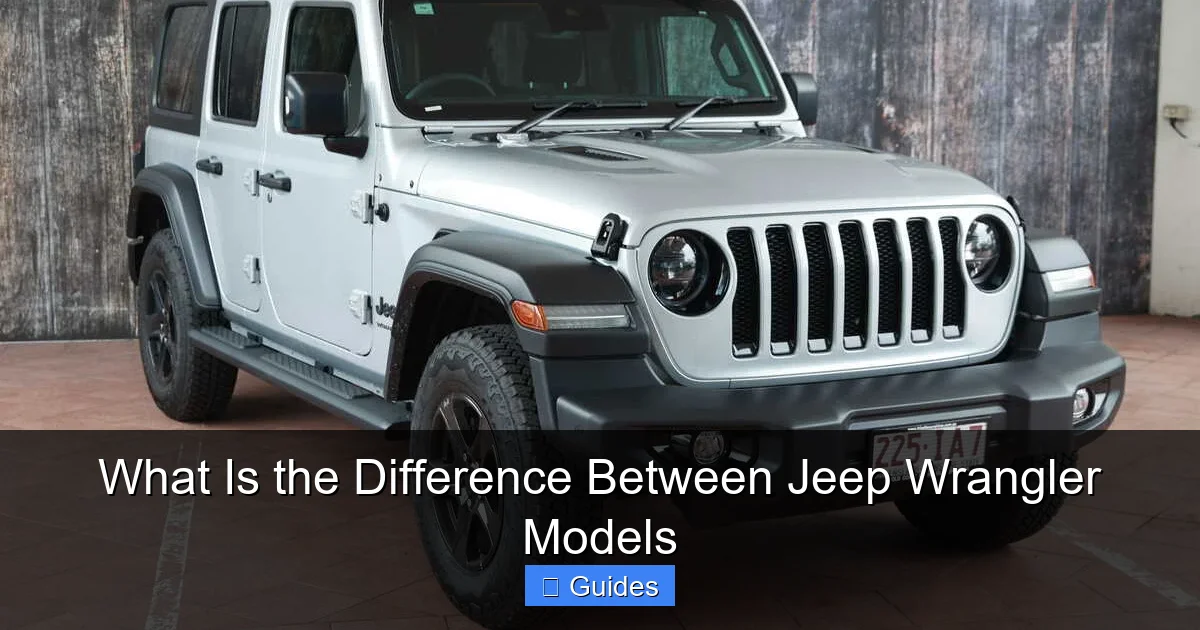
Visual guide about What Is the Difference Between Jeep Wrangler Models
Image source: jeepknowledge.com
Engine choice plays a big role in how your Wrangler performs—both on and off the road. Jeep offers several powertrains, and not all are available on every model.
The 2.0L Turbocharged Four-Cylinder
This is the standard engine on most Wrangler models, including Sport, Willys, and Sahara. It produces 270 horsepower and 295 lb-ft of torque—more than enough for daily driving and light off-roading.
The turbocharged design gives it strong low-end torque, which is great for crawling over rocks or accelerating from a stop. It’s also relatively fuel-efficient, averaging around 23 mpg combined.
One downside? It can feel a bit buzzy under hard acceleration, and some purists miss the sound of a V6.
The 3.6L Pentastar V6
The 3.6L V6 is a fan favorite for its smooth power delivery and classic engine note. It delivers 285 horsepower and 260 lb-ft of torque. While it has slightly less torque than the 2.0L turbo, many drivers prefer its linear power curve.
This engine is available on all trims, including Rubicon and High Altitude. It’s a great all-around choice for towing, highway driving, and moderate off-roading.
The 2.0L eTorque Mild Hybrid
The eTorque system adds a small electric motor to the 2.0L turbo engine, improving fuel economy and low-end torque. It’s available on Sahara, Rubicon, and High Altitude models.
The electric motor helps during start-stop driving and provides extra torque when needed. It also enables features like a hands-free power tailgate and improved engine stop-start functionality.
While not a full hybrid, eTorque gives the Wrangler a modern edge without sacrificing capability.
Fuel Economy Comparison
Here’s how the engines stack up in real-world fuel economy:
– 2.0L Turbo: ~23 mpg combined
– 3.6L V6: ~19 mpg combined
– 2.0L eTorque: ~22 mpg combined
The turbo and eTorque engines are more efficient, making them better choices for daily drivers. The V6 uses more gas but offers a more traditional driving feel.
Off-Road Capabilities: What Sets the Rubicon Apart
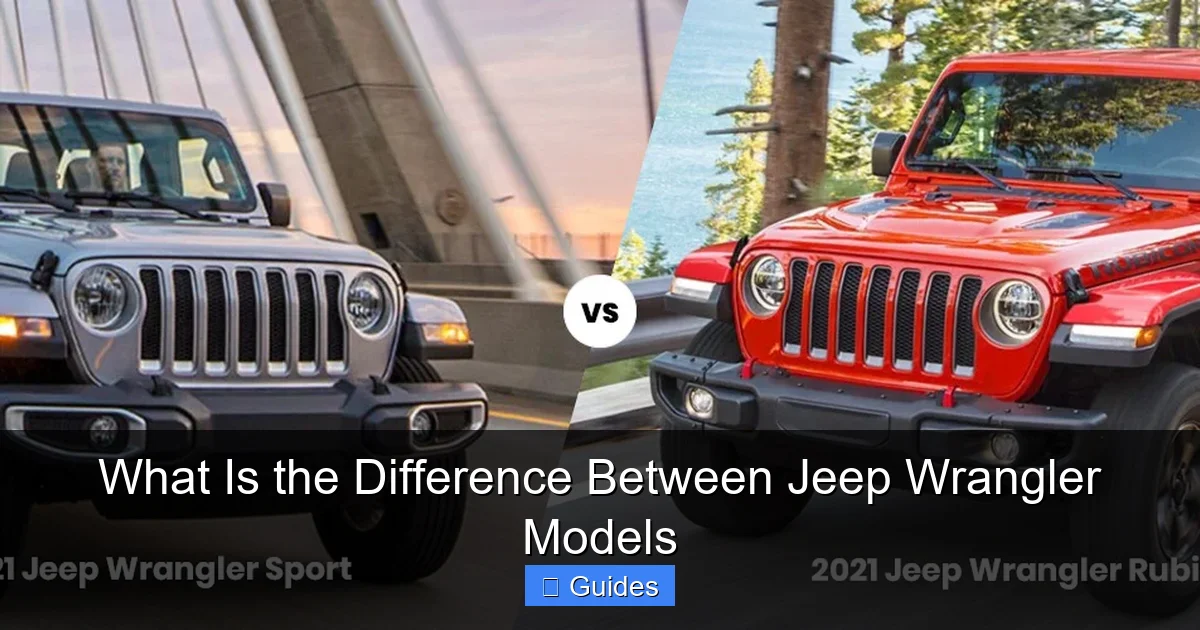
Visual guide about What Is the Difference Between Jeep Wrangler Models
Image source: dealerinspire-image-library-prod.s3.us-east-1.amazonaws.com
If you’re buying a Wrangler for off-roading, you’ll want to understand the mechanical differences between models. Not all Wranglers are created equal when it comes to trail performance.
Suspension and Axles
All Wranglers come with solid front and rear axles—a key feature for durability off-road. But the Rubicon takes it further with heavy-duty Dana 44 axles, which are stronger and better suited for extreme use.
The Rubicon also features a reinforced frame and upgraded suspension with longer travel. This allows the wheels to stay in contact with the ground over rough terrain, improving traction.
4×4 Systems and Differentials
The base Wrangler uses the Command-Trac 4×4 system, which is reliable but basic. It’s great for snow, mud, and light trails.
The Rubicon, however, comes with the Rock-Trac system—a true off-road beast. It features a 4:1 low-range gear ratio (vs. 2.72:1 on other models), giving it incredible crawling ability.
Rubicon also includes Tru-Lok electronic locking differentials. These lock the front and rear axles, ensuring power goes to the wheels with traction—even if one wheel is in the air.
Sway Bar Disconnect
One of the Rubicon’s most unique features is the electronic front sway bar disconnect. When you’re on a trail, you can disconnect the sway bar with the push of a button. This allows the front wheels to move more independently, improving articulation and grip.
On smoother roads, you reconnect it for better handling and stability. No other Wrangler trim offers this feature.
Tires and Ground Clearance
Rubicon models come standard with 33-inch all-terrain tires and high-clearance fender flares. Some versions can be equipped with 35-inch tires for even more ground clearance.
Higher trims like Sahara and High Altitude often come with larger wheels (up to 20 inches), which can reduce off-road performance due to lower-profile tires. If you plan to go off-road, consider upgrading to all-terrain or mud-terrain tires.
Interior and Technology: Comfort Across the Lineup
The Wrangler’s interior has come a long way from its utilitarian roots. Today’s models offer a range of tech and comfort features—depending on the trim.
Infotainment Systems
All Wranglers come with the Uconnect system, but screen size and features vary:
– Sport: 7-inch touchscreen, basic audio, Bluetooth
– Sahara and above: 8.4-inch touchscreen, Apple CarPlay, Android Auto, navigation
– High Altitude: Premium audio (Alpine or McIntosh), wireless charging
The larger screens are easier to use and support smartphone integration, making long drives more enjoyable.
Seating and Materials
Sport models have cloth seats and manual adjustments. As you move up, you get power seats, heated and ventilated front seats, and leather upholstery.
The High Altitude offers the most luxurious cabin, with Nappa leather, contrast stitching, and ambient lighting. It feels more like a luxury SUV than a rugged off-roader.
Climate Control and Convenience
Dual-zone automatic climate control is standard on Sahara and above. The Rubicon and High Altitude also include heated rear seats and a heated steering wheel—great for cold mornings.
Other convenience features include keyless entry, push-button start, and a hands-free power tailgate (on select models).
Safety and Driver Assistance
Higher trims offer advanced safety tech, including:
– Adaptive cruise control
– Blind-spot monitoring
– Rear cross-traffic alert
– Forward collision warning
– Automatic emergency braking
These features are rare on base models but increasingly common on Sahara, Rubicon, and High Altitude trims.
Two-Door vs. Four-Door: Choosing the Right Size
Another major decision is whether to go with the two-door Wrangler or the four-door Wrangler Unlimited. Both have pros and cons.
Two-Door Wrangler: Agile and Classic
The two-door model is the original Wrangler design. It’s shorter, lighter, and more maneuverable—ideal for tight trails and rock crawling.
Pros:
– Better off-road geometry (shorter wheelbase)
– Lower starting price
– More authentic Wrangler feel
Cons:
– Limited rear seat space
– Smaller cargo area
– Less practical for families
Four-Door Wrangler Unlimited: Space and Versatility
The Unlimited adds two full-size rear doors and a longer wheelbase. It offers more passenger and cargo space, making it better for daily use.
Pros:
– Spacious rear seats
– Larger cargo area (31.7 cu ft behind rear seats)
– Better highway stability
– Available with more engine and trim options
Cons:
– Less agile off-road
– Higher price
– Longer turning radius
Most buyers choose the Unlimited for its practicality. But if you’re a serious off-roader who values agility, the two-door might be the better pick.
Pricing and Value: Which Model Offers the Best Deal?
Wrangler prices vary widely based on trim, engine, and options. Here’s a general breakdown (as of 2024):
– Sport (2-door): Starting around $33,000
– Willys: Starting around $38,000
– Sahara: Starting around $42,000
– Rubicon: Starting around $48,000
– High Altitude: Starting around $58,000
Higher trims can easily exceed $60,000 with options like leather, advanced tech, and larger wheels.
Best Value for Off-Roading: Rubicon
If you’re serious about off-roading, the Rubicon offers the most capability per dollar. You get locking differentials, sway bar disconnect, and heavy-duty axles—features you can’t easily add later.
Best Value for Daily Driving: Sahara
The Sahara strikes a great balance between comfort, features, and price. It’s more refined than the Sport but doesn’t cost as much as a Rubicon.
Best Value for Luxury: High Altitude
If you want a premium Wrangler, the High Altitude delivers luxury features without sacrificing too much capability. It’s the most upscale option, but you pay for it.
Conclusion: Finding Your Perfect Wrangler
Choosing the right Jeep Wrangler model comes down to your priorities. Are you a weekend adventurer, a daily commuter, or a luxury seeker? Each trim serves a different purpose.
The Sport is for purists who want simplicity and low cost. The Willys adds off-road readiness without breaking the bank. The Sahara blends comfort and capability for everyday use. The Rubicon is built for extreme trails. And the High Altitude offers a premium experience for those who want style and substance.
Consider your driving needs, budget, and how you’ll use your Wrangler. Test drive a few models if you can. And remember: the best Wrangler is the one that matches your lifestyle.
No matter which model you choose, you’re getting a vehicle with legendary capability, timeless design, and a community of passionate owners. That’s what makes the Wrangler more than just a car—it’s a way of life.
Frequently Asked Questions
What is the most off-road capable Wrangler model?
The Rubicon is the most off-road capable Wrangler, featuring locking differentials, a disconnecting sway bar, heavy-duty axles, and the Rock-Trac 4×4 system. It’s designed for serious trail use and rock crawling.
Can I add Rubicon features to a lower trim?
Some features like skid plates and all-terrain tires can be added, but key Rubicon components—like locking differentials and sway bar disconnect—are not available as aftermarket upgrades and are only factory-installed.
Is the Wrangler Unlimited better for families?
Yes, the four-door Wrangler Unlimited offers more rear seat space, easier access, and a larger cargo area, making it a better choice for families or frequent passengers.
Which engine is best for towing?
The 3.6L V6 is the best choice for towing, with a maximum capacity of up to 3,500 pounds. The 2.0L turbo can also tow, but the V6 offers smoother power delivery under load.
Do all Wranglers have removable doors and roofs?
Yes, all Wrangler models offer removable doors and fold-down windshields (on some). Hardtop and soft-top options vary by trim, but the open-air experience is a core Wrangler feature across the lineup.
Is the High Altitude worth the extra cost?
The High Altitude is worth it if you want a luxurious interior, premium materials, and advanced tech. However, it sacrifices some off-road capability due to larger wheels and lower-profile tires, so it’s best for on-road comfort.

At CarLegit, we believe information should be clear, factual, and genuinely helpful. That’s why every guide, review, and update on our website is created with care, research, and a strong focus on user experience.