
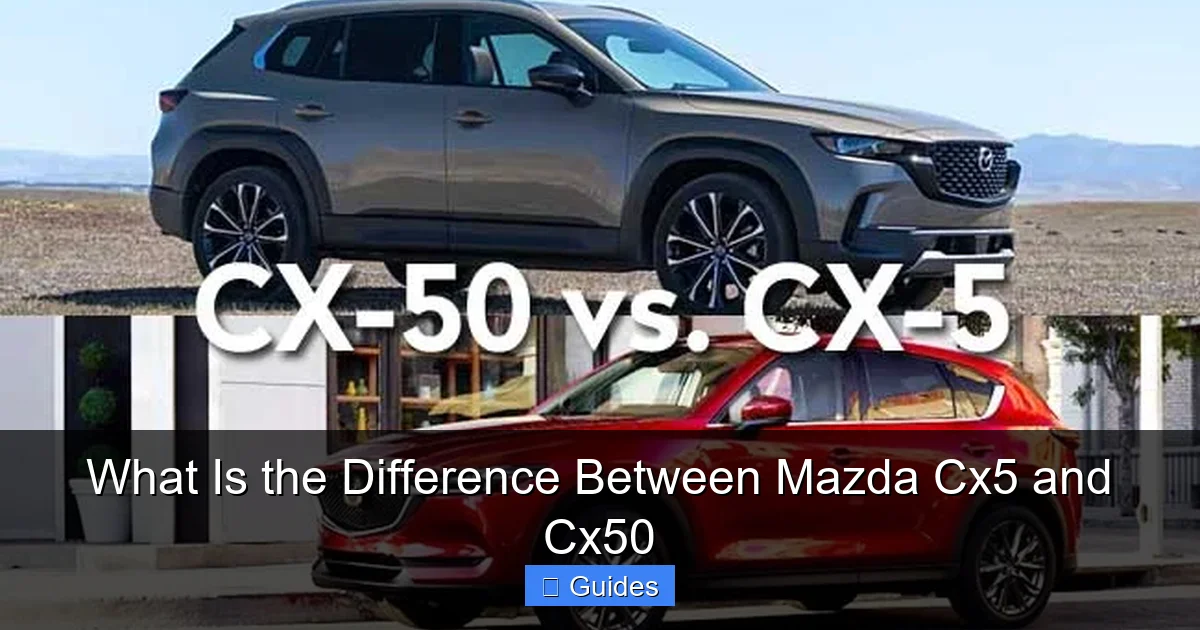
The Mazda CX-5 and CX-50 may look similar, but they’re built for different lifestyles. The CX-5 is a refined, city-friendly compact SUV, while the CX-50 is a rugged, adventure-ready crossover with more ground clearance and off-road features. Choosing between them depends on your driving needs, space requirements, and sense of style.
If you’re in the market for a stylish, reliable SUV from Mazda, you’ve probably come across two popular models: the Mazda CX-5 and the Mazda CX-50. At first glance, they might seem like siblings—similar names, familiar Mazda design language, and both built on the brand’s reputation for driving enjoyment. But dig a little deeper, and you’ll find that these two crossovers are designed with very different drivers in mind.
The Mazda CX-5 has long been a favorite among compact SUV buyers who want a blend of upscale styling, smooth handling, and everyday practicality. It’s the go-to choice for urban commuters, small families, and anyone who values a quiet, comfortable ride with a touch of luxury. On the other hand, the Mazda CX-50 is a newer addition to the lineup, introduced in 2022 as a more rugged, adventure-focused alternative. It’s built to handle rougher terrain, offer more ground clearance, and appeal to outdoor enthusiasts who still want the refinement Mazda is known for.
So, how do you decide which one is right for you? Are you better off with the CX-5’s polished city manners, or does the CX-50’s off-road readiness and bolder design speak to your lifestyle? In this guide, we’ll break down the key differences between the Mazda CX-5 and CX-50 across design, performance, interior comfort, technology, fuel economy, and real-world usability. By the end, you’ll have a clear picture of which Mazda SUV fits your needs—whether you’re navigating downtown streets or exploring mountain trails.
In This Article
Key Takeaways
- Design & Styling: The CX-5 has a sleek, urban look with premium finishes, while the CX-50 features a bold, rugged exterior with black cladding and a more aggressive stance.
- Performance & Drivetrain: Both offer turbocharged engines, but the CX-50 comes standard with all-wheel drive and has a more capable off-road tuning, including a dedicated off-road mode.
- Interior & Comfort: The CX-5 focuses on luxury and quiet refinement, while the CX-50 offers a more utilitarian cabin with durable materials suited for outdoor adventures.
- Cargo & Space: The CX-50 provides slightly more rear legroom and a higher seating position, making it better for taller passengers and longer trips.
- Technology & Features: Both come well-equipped, but the CX-50 includes more standard safety and driver-assist tech, especially in higher trims.
- Fuel Efficiency: The CX-5 is slightly more fuel-efficient, especially in its base engine configuration, making it ideal for daily commuting.
- Target Audience: Choose the CX-5 for city driving and comfort; go for the CX-50 if you love weekend getaways, light off-roading, or need a more versatile SUV.
📑 Table of Contents
Exterior Design and Styling
When it comes to looks, both the CX-5 and CX-50 wear Mazda’s signature Kodo design language—characterized by flowing lines, minimalist surfaces, and a strong emphasis on elegance. But while they share a family resemblance, their styling philosophies diverge in meaningful ways.
The CX-5: Sleek and Sophisticated
The Mazda CX-5 leans heavily into refinement. Its exterior is clean, modern, and almost sedan-like in its proportions. The front grille is wide and sculpted, flanked by sharp LED headlights that give the SUV a confident, alert expression. The body sides are smooth and uncluttered, with subtle character lines that enhance its aerodynamic profile. Overall, the CX-5 looks like it belongs in a premium showroom—because it does. Mazda markets it as a “luxury SUV without the luxury price tag,” and the design backs that up.
One of the CX-5’s standout features is its available Soul Red Crystal Metallic paint—a deep, lustrous finish that changes tone depending on the light. It’s a color that screams sophistication and is often associated with higher-end vehicles. The CX-5 also offers 17- or 19-inch alloy wheels, depending on the trim, with designs that emphasize style over function.
The CX-50: Rugged and Ready
In contrast, the Mazda CX-50 takes a more utilitarian approach. It’s taller, wider, and sits higher off the ground, giving it a more commanding presence. The front end features a bold black grille with a mesh pattern, flanked by angular LED headlights that look more aggressive than the CX-5’s. The fenders are flared, and the body is wrapped in black plastic cladding—especially around the wheel wells and lower doors—which not only adds visual toughness but also protects against rocks and debris.
The CX-50’s roof rails are standard, and higher trims come with a roof rack, making it easy to strap on bikes, kayaks, or cargo boxes. Available 17- or 18-inch wheels are designed with off-road durability in mind, and some trims feature all-terrain tires. The overall impression is one of capability: this SUV looks like it’s ready to leave the pavement behind.
Which Design Suits You?
If you prioritize style, elegance, and a vehicle that turns heads in the city, the CX-5 is the clear winner. But if you want something that looks like it can handle a dirt road or a snowy trail, the CX-50’s rugged aesthetic is hard to beat. It’s not just about looks—these design choices reflect the intended use of each vehicle.
Performance and Drivetrain
Visual guide about What Is the Difference Between Mazda Cx5 and Cx50
Image source: carlogos.org
Under the hood, both the CX-5 and CX-50 offer a range of engine options, but their tuning and standard features differ in ways that affect real-world performance.
Engine Options and Power
Both SUVs come with a standard 2.5-liter four-cylinder engine, but the CX-5 offers it in two states of tune. The base engine produces 187 horsepower and 186 lb-ft of torque, which is adequate for daily driving but not particularly thrilling. The available turbocharged version bumps output to 250 horsepower and 320 lb-ft of torque—a significant jump that makes the CX-5 feel much more responsive, especially during highway merges or uphill climbs.
The CX-50 also starts with the same 2.5-liter engine (187 hp), but the turbocharged version is more readily available, especially in higher trims. In fact, the CX-50 Turbo and Turbo Premium trims come standard with the 250-horsepower engine, making it a more performance-oriented choice out of the gate.
All-Wheel Drive: Standard vs. Optional
Here’s a major difference: all-wheel drive (AWD) is standard on every CX-50, no matter the trim. That’s a big deal if you live in an area with snow, rain, or unpaved roads. On the CX-5, AWD is optional on most trims and standard only on the top-level Signature model. For many buyers, that means paying extra to get the traction and stability that comes standard on the CX-50.
Mazda’s i-Activ AWD system is intelligent and proactive, using sensors to monitor road conditions and adjust power distribution between the front and rear wheels. In the CX-50, this system is tuned for off-road use, with a dedicated “Off-Road Mode” that adjusts throttle response, braking, and torque delivery to help maintain traction on loose or uneven surfaces.
Transmission and Handling
Both models use a smooth-shifting six-speed automatic transmission. Mazda has stuck with this proven gearbox instead of switching to a CVT or dual-clutch system, which helps preserve the brand’s reputation for driver engagement. The transmission responds well to throttle input and downshifts quickly when needed.
In terms of handling, the CX-5 feels more car-like—light and nimble, with precise steering that makes it easy to maneuver in tight city spaces. The CX-50, while still enjoyable to drive, has a slightly heavier feel due to its taller stance and off-road suspension tuning. It’s not as quick on its feet, but it’s more stable on rough terrain.
Real-World Driving Experience
Imagine driving both SUVs on a weekend trip. In the CX-5, you’ll enjoy a quiet, composed ride on the highway, with minimal wind or road noise. It’s perfect for long stretches of pavement. But if your route includes gravel roads or a muddy trailhead, the CX-5 might feel out of its depth.
The CX-50, on the other hand, handles those same conditions with confidence. The higher ground clearance (8.3 inches vs. the CX-5’s 7.5 inches) means you’re less likely to scrape the undercarriage. The standard AWD and off-road mode give you peace of mind when the pavement ends.
Interior Comfort and Quality

Visual guide about What Is the Difference Between Mazda Cx5 and Cx50
Image source: tagvault.org
Mazda has long been praised for its interiors, which often rival those of luxury brands. Both the CX-5 and CX-50 continue this tradition, but with different priorities.
CX-5: Luxury Meets Practicality
Step inside the CX-5, and you’re greeted by a cabin that feels premium from the start. Soft-touch materials, real wood or aluminum trim (depending on the trim), and stitched leather on the dashboard and door panels create a warm, inviting atmosphere. The seats are supportive and comfortable, with available heating and ventilation in higher trims.
The center console is clean and uncluttered, with a 10.25-inch infotainment screen that’s controlled via a rotary knob—a nod to driver focus and reduced distraction. The overall layout is intuitive, and the cabin is remarkably quiet, thanks to extensive sound insulation.
One area where the CX-5 shines is rear-seat comfort. While it’s a compact SUV, the rear seats offer decent legroom and a nearly flat floor, making it comfortable for three passengers on short trips. The trunk holds 30.9 cubic feet of cargo, which expands to 59.6 cubic feet with the rear seats folded—ample space for groceries, luggage, or sports gear.
CX-50: Rugged Refinement
The CX-50’s interior takes a slightly different approach. It’s still high-quality, with soft materials and thoughtful design, but it leans more toward durability than luxury. The dashboard features a simpler layout, with more hard plastic in areas that might get scuffed during outdoor adventures. That said, higher trims like the Turbo Premium still offer leather upholstery, heated and ventilated seats, and premium audio.
One advantage the CX-50 has is rear legroom. It offers 39.4 inches compared to the CX-5’s 38.7 inches—a small but noticeable difference, especially for taller passengers. The seating position is also higher, giving rear passengers a better view of the road (or trail) ahead.
Cargo space is similar: 31.4 cubic feet behind the rear seats and 65.7 cubic feet with the seats down. The CX-50 also includes under-floor storage, which is handy for stashing dirty gear or valuables out of sight.
Which Interior Is Right for You?
If you want a cabin that feels like a luxury car, the CX-5 is the better choice. But if you need something that can handle muddy boots, dog hair, and weekend gear without sacrificing comfort, the CX-50’s more rugged interior might be the way to go.
Technology and Infotainment

Visual guide about What Is the Difference Between Mazda Cx5 and Cx50
Image source: carsized.com
Both the CX-5 and CX-50 come well-equipped with modern tech, but there are some differences in standard features and user experience.
Infotainment System
Both SUVs feature Mazda’s 10.25-inch infotainment display, which is crisp and responsive. The system runs Mazda Connect software, which includes Apple CarPlay and Android Auto (wireless on most trims), Bluetooth, navigation, and a premium Bose audio system on higher trims.
One thing Mazda does differently from many competitors is avoid touchscreen controls while driving. Instead, you use a rotary knob and buttons on the center console. This reduces distraction and keeps your hands on the wheel—a smart safety feature, though it takes a little getting used to if you’re accustomed to touchscreens.
Safety and Driver-Assist Features
Mazda’s i-Activsense suite of safety features is standard on both models. This includes adaptive cruise control, lane-keeping assist, automatic emergency braking, blind-spot monitoring, and rear cross-traffic alert.
However, the CX-50 tends to include more advanced features as standard, especially in higher trims. For example, the CX-50 Turbo Premium comes with a 360-degree camera, traffic sign recognition, and driver attention monitoring—features that are either optional or unavailable on the CX-5.
Both vehicles have earned top safety ratings from the IIHS and NHTSA, so you’re in good hands no matter which one you choose.
Connectivity and Convenience
Wireless charging, multiple USB ports, and a head-up display (on select trims) are available on both models. The CX-50 adds a few extra conveniences, like a power liftgate and rear-seat climate vents, which are helpful for families or long trips.
Fuel Economy and Efficiency
Fuel efficiency is an important factor for many SUV buyers, and here the CX-5 has a slight edge.
EPA Ratings
The base CX-5 with the 2.5-liter engine and front-wheel drive gets an EPA-estimated 26 mpg city / 31 mpg highway / 28 mpg combined. With AWD, those numbers drop slightly to 25/30/27 mpg.
The CX-50, due to its heavier build and standard AWD, is a bit thirstier. The base engine with AWD gets 24/30/26 mpg. The turbocharged versions are even less efficient, with the CX-5 Turbo AWD rated at 22/27/24 mpg and the CX-50 Turbo at 23/29/25 mpg.
Real-World Considerations
If you do a lot of city driving or long highway commutes, the CX-5 will save you money at the pump. But if you’re frequently driving in rough conditions or carrying heavy loads, the CX-50’s performance and capability may outweigh the fuel cost difference.
Price and Value
Both SUVs are competitively priced, but the CX-50 generally costs more due to its standard AWD and off-road features.
Starting Prices
As of 2024, the Mazda CX-5 starts around $28,000 for the base S model. The CX-50 starts at about $31,000 for the base S model—nearly $3,000 more, but remember, AWD is standard.
Higher trims can push both vehicles into the $40,000 range, especially with the turbo engine and premium packages. The CX-50 Turbo Premium can exceed $45,000, but it comes with nearly every feature Mazda offers.
Which Offers Better Value?
If you want a stylish, efficient, and comfortable SUV for daily driving, the CX-5 delivers excellent value. But if you need AWD, more ground clearance, and off-road capability without stepping into a full-size SUV, the CX-50 is worth the extra cost.
Conclusion: Which Mazda SUV Is Right for You?
Choosing between the Mazda CX-5 and CX-50 comes down to your lifestyle and priorities. The CX-5 is ideal if you want a refined, fuel-efficient SUV that looks great in the city and handles daily commutes with ease. It’s perfect for urban dwellers, small families, and anyone who values comfort and style.
The CX-50, on the other hand, is built for adventure. With standard AWD, higher ground clearance, and a more rugged design, it’s the better choice if you frequently drive on unpaved roads, live in a snowy climate, or enjoy outdoor activities. It’s also a great option if you want more rear-seat space and a higher driving position.
Both SUVs offer Mazda’s signature driving dynamics, high-quality interiors, and strong safety ratings. So, whether you’re cruising downtown or exploring the backcountry, there’s a Mazda SUV that fits your journey.
Frequently Asked Questions
Which is bigger, the CX-5 or CX-50?
The CX-50 is slightly larger overall. It has more ground clearance (8.3 inches vs. 7.5 inches), a higher seating position, and a bit more rear legroom. The CX-50 also has a wider track, giving it a more stable stance.
Is the CX-50 more expensive than the CX-5?
Yes, the CX-50 starts about $3,000 higher than the CX-5 due to standard all-wheel drive and off-road features. However, when you add AWD to the CX-5, the price difference narrows significantly.
Can the CX-50 go off-road?
Yes, the CX-50 is designed for light off-roading. It has standard AWD, higher ground clearance, and an off-road mode that adjusts traction and throttle response for rough terrain.
Which has better fuel economy, the CX-5 or CX-50?
The CX-5 is slightly more fuel-efficient, especially in its base front-wheel-drive configuration. The CX-50’s standard AWD and heavier build reduce its fuel economy by about 1–2 mpg on average.
Do both models have Apple CarPlay and Android Auto?
Yes, both the CX-5 and CX-50 come standard with Apple CarPlay and Android Auto. Wireless connectivity is available on most trims.
Which Mazda SUV is better for families?
The CX-50 offers slightly more rear legroom and a higher seating position, making it more comfortable for taller passengers. However, the CX-5’s quieter cabin and smoother ride may appeal more to families prioritizing comfort over space.

At CarLegit, we believe information should be clear, factual, and genuinely helpful. That’s why every guide, review, and update on our website is created with care, research, and a strong focus on user experience.