
The top speed of a Dodge Charger varies by model and engine, ranging from 130 mph to an impressive 204 mph for high-performance variants like the SRT Hellcat Redeye. Factors such as aerodynamics, weight, and transmission play a key role in achieving these speeds.
If you’ve ever watched a Dodge Charger roar down the highway or tear up a drag strip, you’ve probably wondered: just how fast can this beast really go? The Dodge Charger isn’t just a stylish sedan with muscle car DNA—it’s a high-performance machine built for speed, power, and adrenaline. Whether you’re a car enthusiast, a potential buyer, or just curious about American muscle, understanding the top speed of a Dodge Charger gives you insight into what makes this vehicle so iconic.
The answer isn’t as simple as one number. The top speed of a Dodge Charger depends on several factors, including the model year, engine configuration, trim level, and even optional performance packages. From the fuel-efficient V6 to the fire-breathing supercharged V8s, each version of the Charger is engineered with different goals in mind. Some prioritize daily drivability, while others are built to dominate the track. But no matter the trim, one thing remains constant: the Charger delivers thrilling performance that turns heads and raises heart rates.
In this guide, we’ll dive deep into the world of Dodge Charger top speeds. We’ll break down the different models, explore the engineering behind their performance, and explain what limits—or unlocks—their full potential. You’ll learn how aerodynamics, weight distribution, and electronic controls all play a role in how fast a Charger can go. Plus, we’ll share practical tips for getting the most out of your ride, whether you’re cruising on the freeway or pushing the limits at a track day. So buckle up—this is your complete guide to the speed of the Dodge Charger.
In This Article
- 1 Key Takeaways
- 2 📑 Table of Contents
- 3 Understanding the Dodge Charger Lineup
- 4 Top Speed by Model: A Breakdown
- 5 What Determines a Charger’s Top Speed?
- 6 Real-World vs. Manufacturer Top Speeds
- 7 How to Safely Maximize Your Charger’s Performance
- 8 The Future of Dodge Charger Performance
- 9 Conclusion
- 10 Frequently Asked Questions
- 10.1 What is the top speed of a Dodge Charger SRT Hellcat?
- 10.2 Can a base Dodge Charger go 150 mph?
- 10.3 Is the top speed of a Charger electronically limited?
- 10.4 What affects the top speed of a Dodge Charger?
- 10.5 Can you drive a Charger at its top speed on public roads?
- 10.6 Will future Dodge Chargers be electric?
Key Takeaways
- Top speed varies by trim: Base models reach around 130–140 mph, while high-performance SRT versions can hit over 200 mph.
- Engine power is key: The supercharged 6.2L HEMI V8 in the Hellcat and Redeye models delivers over 700 horsepower, enabling extreme speeds.
- Aerodynamics matter: The Charger’s design balances downforce and drag, helping it maintain stability at high velocities.
- Electronic limiters are common: Most Chargers have speed governors to protect the engine and tires, but some can be removed with tuning.
- Real-world conditions affect speed: Road surface, weather, and altitude impact how fast a Charger can safely go.
- Track vs. street performance: While top speed is impressive, handling and braking are equally important for safe high-speed driving.
- Maintenance is crucial: Regular servicing ensures peak performance and longevity, especially for high-output engines.
📑 Table of Contents
Understanding the Dodge Charger Lineup
Before we get into the nitty-gritty of top speeds, it’s important to understand the different versions of the Dodge Charger. Since its modern revival in 2006, the Charger has evolved into a diverse family of performance sedans, each catering to different driving styles and power preferences. The lineup ranges from practical family sedans to track-ready monsters, all wearing the Charger badge with pride.
At the base level, you’ll find the Charger SXT and GT models, which come equipped with a 3.6-liter Pentastar V6 engine. This engine produces around 292 to 300 horsepower, depending on the model year and drivetrain (RWD or AWD). These versions are designed for everyday driving, offering a smooth ride, good fuel economy, and plenty of interior space. While they’re not built for speed demons, they still offer a respectable amount of power for merging onto highways or passing slower traffic.
Moving up the ladder, the Charger R/T introduces the legendary 5.7-liter HEMI V8 engine. With 370 horsepower and 395 lb-ft of torque, the R/T delivers a noticeable jump in performance. It’s the first real taste of muscle car power in the Charger lineup, with a throaty exhaust note and quicker acceleration. The R/T is a great middle ground for drivers who want more excitement without stepping into extreme performance territory.
Then come the SRT (Street and Racing Technology) models—the true high-performance variants of the Charger. These include the SRT 392, the SRT Hellcat, and the SRT Hellcat Redeye. Each of these models features a supercharged 6.2-liter HEMI V8 engine, but with increasing levels of power. The SRT 392 produces 485 horsepower, the Hellcat bumps that up to 717 horsepower, and the Redeye takes it even further with a staggering 797 horsepower. These cars are built for speed, with reinforced drivetrains, upgraded cooling systems, and performance-tuned suspensions.
There’s also the limited-edition Charger SRT Demon, which was produced for the 2018 model year. With 840 horsepower on race fuel, the Demon was designed specifically for drag racing and holds the title of the most powerful production sedan ever made. While it’s no longer in production, it remains a legend among muscle car fans and a benchmark for extreme performance.
Each of these models has a different top speed, influenced by engine output, aerodynamics, weight, and electronic controls. Understanding where your Charger fits in this lineup is the first step to knowing how fast it can go.
Top Speed by Model: A Breakdown
Visual guide about What Is the Top Speed of a Dodge Charger
Image source: i.ytimg.com
Now that we’ve covered the different Charger models, let’s get into the numbers. The top speed of a Dodge Charger isn’t a one-size-fits-all figure—it varies significantly depending on the engine and trim. Here’s a detailed breakdown of the top speeds for each major Charger variant, based on manufacturer specifications and real-world testing.
Starting with the base models, the Charger SXT and GT with the 3.6L V6 engine have a top speed of around 130 to 140 mph. These cars are electronically limited to protect the engine and ensure longevity, especially since they’re designed for daily driving rather than high-speed runs. While 140 mph might not sound impressive compared to sports cars, it’s more than enough for legal highway speeds and occasional bursts of acceleration.
The Charger R/T with the 5.7L HEMI V8 steps things up considerably. With 370 horsepower on tap, this model can reach a top speed of approximately 155 mph. Again, this is electronically governed, but it’s a significant improvement over the V6 models. The R/T feels much more responsive, with quicker throttle response and a deeper exhaust growl that hints at its muscle car roots.
Now we enter the realm of serious performance with the SRT models. The Charger SRT 392, equipped with the naturally aspirated 6.4L HEMI V8, produces 485 horsepower and can reach a top speed of around 170 mph. This model is a favorite among enthusiasts who want track-capable performance without the complexity of forced induction. It’s fast, loud, and handles surprisingly well for a full-size sedan.
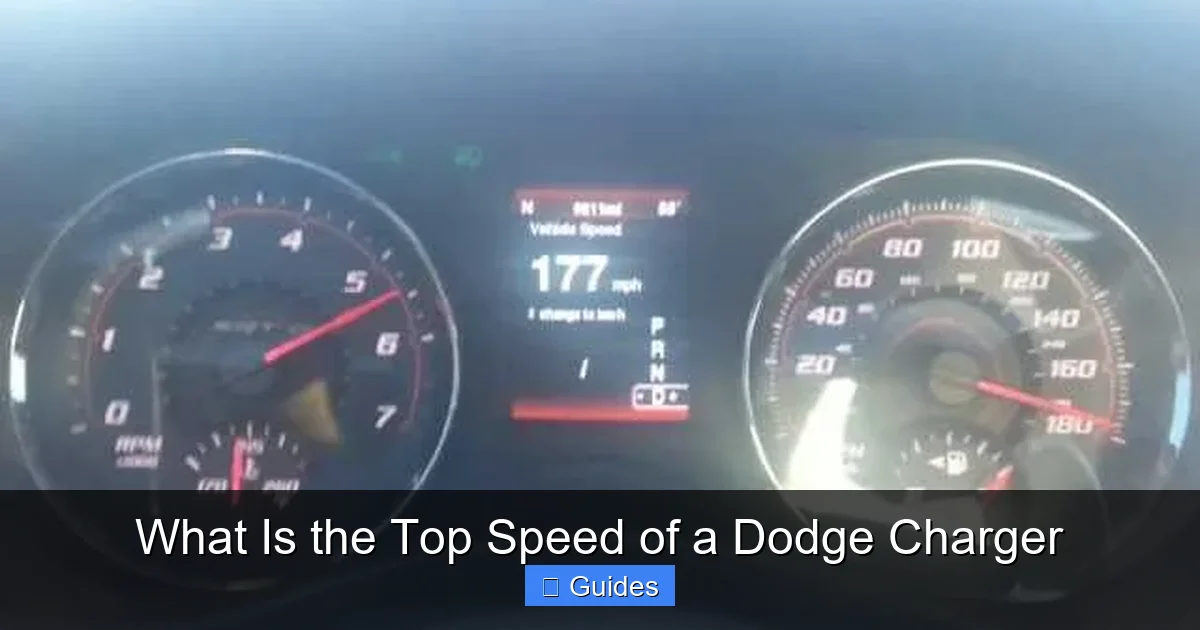
The real stars of the show are the supercharged SRT Hellcat and Hellcat Redeye models. The standard Hellcat, with its 717-horsepower supercharged V8, has an official top speed of 203 mph. That’s right—over 200 miles per hour in a four-door sedan. The Hellcat Redeye takes it even further, with 797 horsepower and a top speed of 204 mph. These speeds are achieved with specialized high-speed tires and aerodynamic tuning, and they represent the absolute peak of production sedan performance.
It’s worth noting that these top speeds are typically measured on closed courses under ideal conditions. On public roads, factors like traffic, road conditions, and legal limits make it impractical—and illegal—to reach these velocities. But for track days or private testing, the Charger SRT models are more than capable of hitting their advertised limits.
What Determines a Charger’s Top Speed?

Visual guide about What Is the Top Speed of a Dodge Charger
Image source: static.cargurus.com
So what exactly decides how fast a Dodge Charger can go? It’s not just about horsepower—though that’s a big part of it. Several engineering and design factors come together to determine a vehicle’s top speed. Let’s break down the key elements that influence how fast a Charger can travel.
First and foremost is engine power. Horsepower and torque are the foundation of speed. The more power an engine can produce, the faster it can push the car forward, especially at higher velocities where air resistance becomes a major factor. That’s why the supercharged V8s in the Hellcat models can reach speeds over 200 mph—they generate massive amounts of power consistently.
But power alone isn’t enough. Aerodynamics play a crucial role. At high speeds, air resistance increases exponentially, creating drag that slows the car down. The Charger’s design strikes a balance between aggressive styling and functional aerodynamics. Features like a front splitter, rear spoiler, and underbody panels help manage airflow, reducing lift and increasing downforce. This keeps the car stable at high speeds and improves traction.
Weight is another critical factor. Heavier cars require more power to accelerate and maintain speed. The Charger is a large sedan, weighing between 4,000 and 4,500 pounds depending on the model. While that’s not light, Dodge engineers have worked to optimize weight distribution, placing the engine low and centered to improve balance. Performance models also use lightweight materials where possible, such as aluminum suspension components.
Transmission and gearing also affect top speed. The Charger uses an 8-speed automatic transmission across most models, which is optimized for both performance and efficiency. The gear ratios are carefully chosen to allow the engine to stay in its power band while maximizing speed. In the SRT models, the transmission can handle the extreme torque output and includes performance modes for quicker shifts.
Tires are often the limiting factor. Even the most powerful engine can’t overcome inadequate grip. High-performance Chargers come with wide, sticky tires designed for high-speed stability. The Hellcat and Redeye models use Pirelli P Zero or Michelin Pilot Sport tires rated for speeds up to 200+ mph. Without these specialized tires, the car simply couldn’t safely reach its top speed.
Finally, electronic controls play a big role. Most modern cars, including the Charger, have speed limiters—software that caps the maximum speed to protect the engine, transmission, and tires. These limiters can sometimes be removed or adjusted with aftermarket tuning, but doing so may void the warranty and increase wear on components.
Real-World vs. Manufacturer Top Speeds
Visual guide about What Is the Top Speed of a Dodge Charger
Image source: dodgeabout.net
When you read that a Dodge Charger SRT Hellcat has a top speed of 203 mph, it’s easy to assume you can hit that number on the highway. But in reality, there’s a big difference between manufacturer claims and real-world performance. Let’s explore what affects how fast a Charger can actually go outside of a controlled test environment.
Manufacturer top speeds are typically measured on long, flat tracks under ideal conditions: perfect weather, smooth pavement, and a fully warmed-up engine. These tests are conducted by professionals who know how to extract every bit of performance from the vehicle. In the real world, you’re unlikely to replicate those conditions.
One major factor is road surface. Even on highways, potholes, cracks, and uneven pavement can make high-speed driving dangerous. At 200 mph, a small bump can send a car airborne or cause loss of control. That’s why top speed runs are almost always done on closed courses or airstrips.
Weather plays a role too. Wind, rain, and temperature all affect performance. Headwinds increase drag, reducing top speed, while tailwinds can give a slight boost. Cold air is denser, which can improve engine performance, but icy or wet roads reduce traction and make high speeds risky.
Altitude is another consideration. At higher elevations, the air is thinner, which reduces engine power. A Charger driven in Denver (at 5,000 feet above sea level) won’t make as much horsepower as one in Miami at sea level. This can result in a lower top speed, especially for naturally aspirated engines.
Driver skill and vehicle condition also matter. A well-maintained Charger with fresh fluids, proper tire pressure, and a tuned engine will perform better than one that’s been neglected. Similarly, an experienced driver who knows how to manage throttle input and braking will get more out of the car.
Finally, legal and safety concerns limit real-world top speed attempts. Most public roads have speed limits well below 100 mph, and driving at extreme speeds is illegal and extremely dangerous. Even on private property, high-speed driving requires proper safety equipment, medical support, and insurance.
That said, many owners do take their Chargers to tracks or closed courses to experience their full potential. Events like drag races, autocross, or high-speed testing days offer a safe and legal way to push the limits.
How to Safely Maximize Your Charger’s Performance
If you own a Dodge Charger—especially a high-performance model—you might be eager to see what it can do. But pushing a car to its limits requires preparation, knowledge, and respect for safety. Here are some practical tips for getting the most out of your Charger while staying safe.
First, always maintain your vehicle. Regular oil changes, brake inspections, and tire rotations are essential for performance and safety. High-speed driving puts extra stress on the engine, transmission, and brakes, so keeping everything in top condition is crucial. Use high-quality synthetic oil and performance brake fluid, especially if you plan to drive aggressively.
Next, check your tires. Make sure they’re properly inflated and have sufficient tread. High-speed driving generates a lot of heat, which can cause tire failure if the rubber isn’t up to the task. If you have a Hellcat or Redeye, consider upgrading to track-focused tires if you plan to do serious performance driving.
Use the right fuel. High-performance Chargers require premium gasoline (91 octane or higher) to prevent knocking and ensure optimal power output. Using lower-octane fuel can reduce performance and potentially damage the engine over time.
Learn how to use the performance modes. Most Chargers come with driving modes like Sport, Track, and Snow. Sport mode sharpens throttle response and shifts more aggressively, while Track mode optimizes the suspension, steering, and transmission for maximum performance. Use these modes wisely—Track mode is best reserved for closed courses.
Consider professional tuning. If you want to unlock more speed, a reputable tuner can adjust the engine’s software to increase horsepower and remove electronic limiters. However, this may void your warranty and increase wear on components, so proceed with caution.
Finally, practice safe driving. Never attempt high-speed runs on public roads. Instead, look for track days, driving schools, or private events where you can safely explore your Charger’s capabilities. Wear a helmet, use a harness, and make sure the venue has medical and safety support.
The Future of Dodge Charger Performance
As we look ahead, the future of the Dodge Charger is evolving. With increasing pressure to reduce emissions and adopt electric powertrains, Dodge has announced plans to transition the Charger lineup to electric and hybrid platforms. The upcoming Charger Daytona SRT Concept, for example, is an all-electric muscle car that promises over 600 horsepower and a top speed of 170+ mph—all without a drop of gasoline.
While purists may mourn the loss of the iconic HEMI V8, the shift to electrification opens new possibilities for performance. Electric motors deliver instant torque, meaning lightning-fast acceleration from a standstill. The Daytona SRT is expected to hit 60 mph in under 3.3 seconds, rivaling many supercars.
Even with these changes, the spirit of the Charger—power, presence, and performance—will live on. Whether powered by gasoline or electricity, the Charger will continue to be a symbol of American muscle and a favorite among speed enthusiasts.
Conclusion
The top speed of a Dodge Charger depends on the model, but it ranges from a respectable 130 mph for base V6 versions to an astonishing 204 mph for the SRT Hellcat Redeye. This impressive range showcases the Charger’s versatility—from practical family sedan to track-dominating beast. Factors like engine power, aerodynamics, weight, and electronic controls all influence how fast a Charger can go. While real-world conditions and safety concerns limit everyday top speed attempts, the Charger’s performance capabilities remain a testament to American engineering. Whether you’re cruising down the highway or hitting the track, the Dodge Charger delivers an unforgettable driving experience.
Frequently Asked Questions
What is the top speed of a Dodge Charger SRT Hellcat?
The Dodge Charger SRT Hellcat has an official top speed of 203 mph, making it one of the fastest production sedans in the world. This speed is achieved with its supercharged 6.2L HEMI V8 engine producing 717 horsepower.
Can a base Dodge Charger go 150 mph?
The base Charger with the 3.6L V6 engine has a top speed of around 130–140 mph, so it cannot safely or legally reach 150 mph. The R/T model with the 5.7L V8 can reach about 155 mph.
Is the top speed of a Charger electronically limited?
Yes, most Dodge Chargers have electronic speed limiters to protect the engine, transmission, and tires. These can sometimes be removed with aftermarket tuning, but it may void the warranty.
What affects the top speed of a Dodge Charger?
Top speed is influenced by engine power, aerodynamics, weight, tire grip, transmission, and electronic controls. Real-world factors like weather, altitude, and road conditions also play a role.
Can you drive a Charger at its top speed on public roads?
No, driving at top speed on public roads is illegal and extremely dangerous. High-speed testing should only be done on closed tracks or private courses with proper safety measures.
Will future Dodge Chargers be electric?
Yes, Dodge has announced plans to transition the Charger lineup to electric powertrains, starting with the Charger Daytona SRT Concept, which will offer high performance with zero emissions.

At CarLegit, we believe information should be clear, factual, and genuinely helpful. That’s why every guide, review, and update on our website is created with care, research, and a strong focus on user experience.