
Choosing the right oil for your Toyota Tacoma is essential for engine protection, fuel efficiency, and long-term reliability. This guide covers everything you need to know—from oil viscosity and types to manufacturer recommendations and maintenance tips—so your Tacoma runs smoothly for years to come.
If you own a Toyota Tacoma, you already know it’s one of the most dependable trucks on the road. Whether you’re hauling gear to the job site, towing a trailer up a mountain pass, or cruising down the highway, your Tacoma is built to handle it all. But like any hardworking vehicle, it needs the right kind of care—and that starts with using the correct engine oil.
Engine oil is the lifeblood of your Tacoma’s engine. It lubricates moving parts, reduces friction, prevents overheating, and helps keep the engine clean. Using the wrong oil—or neglecting oil changes—can lead to increased wear, reduced fuel economy, and even costly engine repairs down the line. That’s why knowing what kind of oil your Toyota Tacoma takes isn’t just a good idea—it’s essential.
In this guide, we’ll walk you through everything you need to know about choosing the right oil for your Tacoma. From understanding oil viscosity to decoding manufacturer recommendations, we’ll break it down in simple, easy-to-follow terms. Whether you’re a seasoned DIY mechanic or a first-time truck owner, this article will help you keep your Tacoma running like new for years to come.
In This Article
Key Takeaways
- Use 0W-20 synthetic oil for most modern Toyota Tacomas: This is the factory-recommended viscosity for optimal performance in a wide range of temperatures.
- Check your owner’s manual for model-specific recommendations: Oil requirements can vary slightly depending on the year, engine type, and driving conditions.
- Synthetic oil offers superior protection and longevity: It resists breakdown better than conventional oil, especially under high heat and heavy loads.
- Change your oil every 5,000 to 10,000 miles: Follow Toyota’s maintenance schedule, but adjust based on driving habits like towing or off-roading.
- Use only API-certified oils with the “Starburst” symbol: This ensures the oil meets Toyota’s performance and emissions standards.
- Avoid mixing oil types unless absolutely necessary: Stick to one type (synthetic or conventional) to maintain consistent engine protection.
- Monitor oil level and condition regularly: Check the dipstick monthly and top off if needed to prevent engine damage.
📑 Table of Contents
Understanding Engine Oil Basics
Before diving into the specifics for your Toyota Tacoma, it helps to understand the basics of engine oil. Not all oils are created equal, and different engines have different needs. Let’s start with the fundamentals.
Engine oil serves several critical functions. First, it lubricates the engine’s internal components—like pistons, crankshafts, and camshafts—reducing metal-to-metal contact and preventing wear. Second, it helps cool the engine by carrying heat away from hot spots. Third, it cleans the engine by trapping dirt, sludge, and combustion byproducts, keeping them from building up. Finally, it forms a seal between piston rings and cylinder walls, improving compression and efficiency.
Oil is rated by two main characteristics: viscosity and performance level. Viscosity refers to how thick or thin the oil is. Thinner oils flow more easily, especially in cold weather, while thicker oils provide better protection at high temperatures. The Society of Automotive Engineers (SAE) uses a numbering system to classify viscosity. For example, 0W-20 oil is thin when cold (the “0W” part) and stays relatively thin when hot (the “20” part).
The “W” stands for “winter,” indicating how the oil performs in cold temperatures. The lower the number before the “W,” the better the oil flows in the cold. The number after the “W” tells you the oil’s viscosity at operating temperature. A lower number means thinner oil, which can improve fuel economy but may not offer as much protection under heavy loads.
Performance level is determined by organizations like the American Petroleum Institute (API). Oils that meet current standards will have a “Starburst” symbol on the label, indicating they’re suitable for gasoline engines and meet emissions requirements. Always look for this symbol when choosing oil for your Tacoma.
Why Viscosity Matters for Your Tacoma
Viscosity is one of the most important factors when selecting oil for your Toyota Tacoma. Using the wrong viscosity can lead to poor engine performance, increased wear, and even engine damage.
For most modern Tacomas (2012 and newer), Toyota recommends 0W-20 synthetic oil. This viscosity is ideal because it flows easily during cold starts—important in winter or early morning drives—while still providing adequate protection when the engine heats up. The “0W” part ensures quick lubrication at startup, reducing wear during the critical first few seconds when most engine damage occurs. The “20” part means the oil maintains a thin but effective film at operating temperature, helping with fuel efficiency and emissions control.
Older Tacomas (especially those from the early 2000s) may use 5W-30 or 10W-30 oil, depending on the engine and climate. Always check your owner’s manual to confirm the correct viscosity for your specific model year.
Using a thicker oil than recommended—like 10W-40—might seem like a good idea for extra protection, but it can actually harm your engine. Thicker oil doesn’t flow as quickly, especially in cold weather, which means parts aren’t lubricated as fast. This can lead to increased wear and reduced fuel economy. On the flip side, using a thinner oil than recommended might not provide enough protection under heavy loads or high temperatures.
Conventional vs. Synthetic Oil: What’s the Difference?
When it comes to oil types, you’ll typically choose between conventional, synthetic, and synthetic blend. Each has its pros and cons, but for the Toyota Tacoma, synthetic oil is the clear winner.
Conventional oil is refined from crude oil and has been the standard for decades. It’s affordable and works fine for older vehicles with simple engine designs. However, it breaks down faster under high heat and stress, requiring more frequent changes.
Synthetic oil, on the other hand, is engineered in a lab to have more consistent molecular structures. This gives it several advantages: better flow in cold weather, greater resistance to thermal breakdown, improved engine cleanliness, and longer service life. Because of these benefits, Toyota recommends synthetic oil for all modern Tacomas.
Synthetic blend oil is a mix of conventional and synthetic oils. It offers some of the benefits of full synthetic at a lower cost, but it’s not as durable or effective. While it might be acceptable for older models or light-duty use, it’s not ideal for newer Tacomas, especially if you drive in extreme conditions.
For example, if you frequently tow a trailer, drive in hot climates, or take your Tacoma off-road, synthetic oil is a must. It handles high temperatures and heavy loads much better than conventional oil, protecting your engine when it matters most.
Toyota’s Official Oil Recommendations
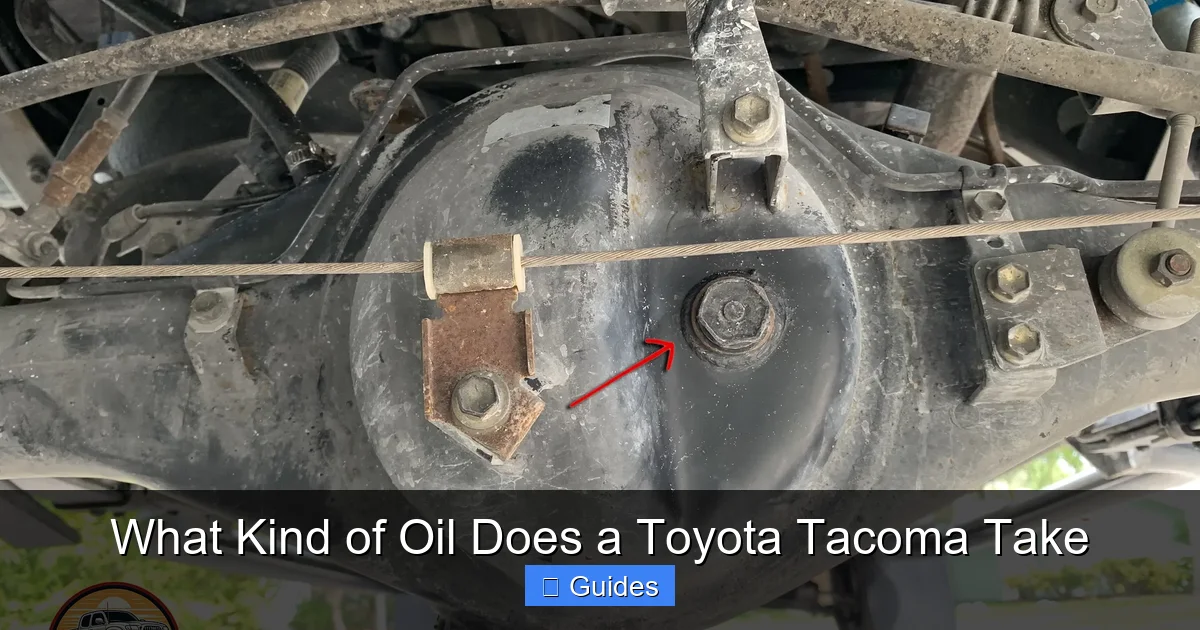
Visual guide about What Kind of Oil Does a Toyota Tacoma Take
Image source: thetacomaguy.com
Toyota takes engine protection seriously, and that’s why they provide specific oil recommendations for every vehicle—including the Tacoma. Following these guidelines ensures your truck runs efficiently and maintains its warranty coverage.
For most Toyota Tacomas built from 2012 onward, the manufacturer recommends using 0W-20 synthetic oil that meets the API (American Petroleum Institute) “Starburst” certification. This means the oil has been tested and approved for use in gasoline engines and meets current emissions standards. You’ll find this symbol on the front of the oil container.
Toyota also emphasizes using oil that meets the ILSAC GF-6 standard, which is the latest specification for fuel-efficient engine oils. This standard ensures the oil helps reduce engine wear, prevents sludge buildup, and improves fuel economy—all important for modern direct-injection engines like those in the Tacoma.
If you’re unsure about your model year or engine type, the best place to check is your owner’s manual. It will list the exact oil viscosity and performance requirements. You can also find this information on Toyota’s official website by entering your VIN (Vehicle Identification Number).
Model Year and Engine-Specific Guidelines
While 0W-20 synthetic oil is the standard for most modern Tacomas, there are some exceptions based on model year and engine type.
For example:
– 2005–2011 Toyota Tacomas with the 2.7L 4-cylinder engine typically use 5W-30 conventional or synthetic oil.
– 2005–2011 models with the 4.0L V6 engine may use 5W-30 or 10W-30, depending on climate and driving conditions.
– 2012–2023 Tacomas with the 3.5L V6 or 2.7L 4-cylinder engines almost universally require 0W-20 synthetic oil.
Always double-check your owner’s manual, as Toyota may update recommendations based on real-world performance data.
If you drive in extreme conditions—such as very hot or cold climates, frequent towing, or stop-and-go city driving—Toyota may recommend more frequent oil changes, even if you’re using the correct oil. For instance, if you tow a camper regularly, you might need to change your oil every 5,000 miles instead of the standard 10,000.
Why Toyota Recommends Synthetic Oil
You might be wondering why Toyota switched to recommending synthetic oil for the Tacoma. The answer lies in advances in engine technology and the need for better performance and efficiency.
Modern Tacomas feature advanced engines with tighter tolerances, turbocharging (in some models), and direct fuel injection. These designs generate more heat and place greater demands on engine oil. Synthetic oil is better equipped to handle these conditions because it resists oxidation and thermal breakdown far better than conventional oil.
Additionally, synthetic oil improves fuel economy. Its lower viscosity reduces internal engine friction, allowing the engine to operate more efficiently. Over time, this can save you money at the pump—especially if you drive a lot.
Another benefit is longer oil life. Synthetic oil can last up to 10,000 miles between changes under normal driving conditions, compared to 3,000–5,000 miles for conventional oil. This means fewer oil changes, less waste, and lower maintenance costs.
Finally, synthetic oil helps protect against sludge and deposits. Over time, conventional oil can break down and form sludge, which clogs oil passages and reduces lubrication. Synthetic oil stays cleaner longer, keeping your engine in top condition.
How Often Should You Change the Oil in a Toyota Tacoma?

Visual guide about What Kind of Oil Does a Toyota Tacoma Take
Image source: i.ytimg.com
Oil change intervals have evolved significantly over the years. While older vehicles needed oil changes every 3,000 miles, modern engines—especially those using synthetic oil—can go much longer between services.
For most Toyota Tacomas, the recommended oil change interval is every 10,000 miles or 12 months, whichever comes first. This is based on normal driving conditions, such as highway driving in moderate climates with minimal towing or idling.
However, if you frequently drive in “severe” conditions, Toyota recommends changing the oil every 5,000 miles. Severe conditions include:
– Frequent short trips (less than 10 miles) in cold weather
– Driving in dusty or dirty environments (like construction sites or off-road trails)
– Towing a trailer or hauling heavy loads
– Stop-and-go traffic or idling for long periods
– Driving in extreme temperatures (below 10°F or above 90°F)
These conditions cause the oil to degrade faster, so more frequent changes are necessary to protect your engine.
Using the Maintenance Reminder System
Many newer Tacomas come equipped with a Maintenance Reminder System (MRS) that tracks your driving habits and alerts you when it’s time for an oil change. This system uses sensors and algorithms to estimate oil life based on factors like engine temperature, mileage, and driving style.
When the MRS light comes on, it’s time to schedule an oil change. Don’t ignore it—even if you’ve only driven 5,000 miles, the system may have detected severe driving conditions that require earlier service.
You can reset the MRS after an oil change by following the steps in your owner’s manual. This ensures the system continues to monitor oil life accurately.
DIY vs. Professional Oil Changes
Changing your own oil can save money and give you peace of mind knowing exactly what’s going into your engine. However, it requires the right tools, space, and knowledge.
If you’re comfortable doing it yourself, make sure to:
– Use the correct oil and filter (Toyota recommends Genuine Toyota oil filters)
– Dispose of used oil responsibly (most auto parts stores accept it for recycling)
– Torque the drain plug to the correct specification to avoid leaks
If you prefer professional service, choose a reputable mechanic or Toyota dealership. They’ll use the correct oil and filter, reset the MRS, and often perform a multi-point inspection at no extra cost.
Choosing the Right Oil Brand and Filter

Visual guide about What Kind of Oil Does a Toyota Tacoma Take
Image source: i.pinimg.com
Not all oils are created equal, even if they meet the same specifications. Choosing a high-quality brand ensures consistent performance and protection.
Some top-rated oil brands for the Toyota Tacoma include:
– **Mobil 1 Extended Performance 0W-20**: Known for excellent wear protection and long oil life.
– **Pennzoil Platinum 0W-20**: Made from natural gas, it offers superior cleanliness and engine protection.
– **Valvoline Advanced Full Synthetic 0W-20**: Affordable and reliable, with strong performance in extreme conditions.
– **Toyota Genuine Motor Oil 0W-20**: Specifically formulated for Toyota engines, it’s a safe choice if you want OEM quality.
Always pair your oil with a high-quality oil filter. The filter removes contaminants from the oil, so a cheap or low-quality filter can reduce engine protection. Toyota recommends using Genuine Toyota oil filters, which are designed to work perfectly with your engine.
Can You Mix Oil Brands or Types?
In a pinch, mixing oil brands or types (like synthetic and conventional) won’t immediately damage your engine. However, it’s not recommended for long-term use.
Different oils have different additive packages, and mixing them can reduce effectiveness. For example, synthetic oil has more advanced additives than conventional oil, so mixing them dilutes those benefits.
If you must top off your oil and don’t have the exact same brand, use the same viscosity and type (e.g., 0W-20 synthetic). Avoid mixing conventional and synthetic unless absolutely necessary.
Signs You Need an Oil Change Sooner
Even with a maintenance schedule, it’s important to watch for signs that your oil needs changing sooner than expected.
Common warning signs include:
– **Dark, dirty oil**: Fresh oil is amber-colored. If it’s black or gritty, it’s time for a change.
– **Low oil level**: Check the dipstick regularly. If the level is below the “Add” mark, top it off and consider an early change.
– **Engine noise**: Knocking or ticking sounds can indicate poor lubrication.
– **Oil smell or smoke**: Burning oil smell inside the cabin or smoke from the exhaust may signal an oil leak or breakdown.
– **Check Engine or Oil Change Light**: Don’t ignore dashboard warnings.
Regular oil checks—once a month—can help you catch problems early and keep your Tacoma running smoothly.
Conclusion
Choosing the right oil for your Toyota Tacoma is one of the simplest yet most important steps you can take to protect your investment. For most models, that means using 0W-20 synthetic oil that meets API and ILSAC standards. Follow Toyota’s recommendations, change the oil on schedule, and use a quality filter to ensure optimal performance and longevity.
Whether you’re a weekend warrior or a daily commuter, your Tacoma deserves the best care. By understanding your oil needs and staying on top of maintenance, you’ll enjoy reliable performance, better fuel economy, and peace of mind for years to come.
Frequently Asked Questions
What oil does a 2020 Toyota Tacoma take?
A 2020 Toyota Tacoma requires 0W-20 synthetic oil that meets API “Starburst” certification. This is the factory-recommended oil for optimal engine protection and fuel efficiency.
Can I use 5W-30 in my Toyota Tacoma?
Only if your owner’s manual specifies it. Most modern Tacomas (2012 and newer) require 0W-20. Using 5W-30 in these models may reduce fuel economy and void warranty coverage.
How often should I change the oil in my Tacoma?
Under normal conditions, every 10,000 miles or 12 months. In severe conditions—like towing or dusty driving—change it every 5,000 miles.
Is synthetic oil worth the extra cost for a Tacoma?
Yes. Synthetic oil offers better protection, longer life, and improved fuel economy, making it a smart investment for your Tacoma’s engine.
Can I use conventional oil in my Tacoma?
Only in older models (pre-2012) if specified. Modern Tacomas are designed for synthetic oil, and using conventional oil may reduce performance and void warranty.
What happens if I use the wrong oil in my Tacoma?
Using the wrong viscosity or type can lead to poor lubrication, increased wear, reduced fuel economy, and potential engine damage over time.

At CarLegit, we believe information should be clear, factual, and genuinely helpful. That’s why every guide, review, and update on our website is created with care, research, and a strong focus on user experience.