
Wondering what seats will fit in a Nissan Hardbody? Whether you’re restoring, upgrading, or customizing your truck, knowing your seating options is key. From factory replacements to sporty aftermarket seats, this guide covers everything you need to know for a comfortable and stylish ride.
If you own a Nissan Hardbody—whether it’s a 1990s D21 or an early 2000s D40 Frontier—you know these trucks are built tough. They’ve earned a reputation for reliability, simplicity, and off-road capability. But let’s be honest: the factory seats? Not exactly known for long-haul comfort or modern style. Whether you’re restoring a classic, upgrading for daily driving, or prepping your rig for weekend adventures, one of the most common questions is: what seats will fit in a Nissan Hardbody?
The good news is, you’ve got options. From direct OEM replacements to high-performance racing buckets, there’s a seat out there that can transform your driving experience. But it’s not just about picking something that looks cool—fitment, safety, and practicality all play a role. In this guide, we’ll walk you through everything you need to know about seat compatibility, installation tips, and the best choices for your Nissan Hardbody.
Whether you’re swapping in a set of plush leather buckets from a newer truck or going full race-spec with harness-ready seats, we’ve got you covered. Let’s dive in and figure out what seats will fit in your Nissan Hardbody—and how to make them work.
In This Article
- 1 Key Takeaways
- 2 📑 Table of Contents
- 3 Understanding Your Nissan Hardbody’s Seat Setup
- 4 OEM Seat Swaps: The Safe and Simple Option
- 5 Aftermarket Seats: Style, Comfort, and Performance
- 6 Budget-Friendly Seat Swaps and DIY Options
- 7 Custom and Racing Seats for Performance Builds
- 8 Tips for a Successful Seat Swap
- 9 Conclusion
- 10 Frequently Asked Questions
- 10.1 Can I put 2005+ Frontier seats in a 1995 Hardbody?
- 10.2 Do aftermarket seats require special seat belts?
- 10.3 Will power seats from a newer truck work in my Hardbody?
- 10.4 Are heated seats compatible with older Hardbodies?
- 10.5 Can I install rear seats in a regular cab Hardbody?
- 10.6 Do I need to disable the airbag light when swapping seats?
Key Takeaways
- Factory seats are the easiest fit: Original equipment manufacturer (OEM) seats from the same model year and trim are guaranteed to bolt in without modification.
- Aftermarket seats offer more comfort and style: Brands like Corbeau, Sparco, and PRP make universal and semi-custom seats that can be adapted to the Hardbody with proper brackets.
- Seat mounting requires attention to detail: You’ll likely need custom seat brackets or adapters, especially when swapping from a different vehicle or upgrading to racing seats.
- Interior dimensions matter: The Nissan Hardbody’s cabin space limits seat width and depth—measure carefully before buying.
- Wiring and airbag compatibility: Modern seats with airbags or power adjustments may require additional wiring or disabling safety systems.
- Budget-friendly swaps exist: You can find used seats from junkyards or online marketplaces that fit with minor modifications.
- Professional installation is recommended for complex swaps: If you’re adding harness bars, racing seats, or power seats, consult a mechanic or fabricator.
📑 Table of Contents
Understanding Your Nissan Hardbody’s Seat Setup
Before you start shopping for new seats, it’s important to understand the original setup in your Nissan Hardbody. These trucks were produced from 1986 to 2004, with the D21 (1986–1997) and D40 Frontier (1998–2004) being the most common. While they share many mechanical components, seat mounting and interior dimensions can vary slightly between generations and cab styles.
Factory Seat Types
Nissan offered several seat configurations depending on the model year, trim level, and cab type (regular, extended, or crew cab). Most Hardbodies came with:
– Bench seats: Common in base models, especially in regular cab trucks. These are wide, flat, and simple—great for work but not ideal for comfort or support.
– Bucket seats: Found in higher trims like the SE or LE. These offer better lateral support and often include adjustable features like lumbar support and tilt.
– High-back vs. low-back seats: Early models often had high-back buckets, while later models transitioned to lower-profile designs.
The mounting system typically uses four bolts—two in the front and two in the rear—anchored to the floor pan. The bolt pattern is relatively standard, but the exact spacing and rail design can differ between years.
Cab Style Considerations
The type of cab you have plays a big role in seat selection:
– Regular cab: Limited space means you’ll want seats that don’t protrude too far back or wide. Bucket seats are ideal here.
– Extended cab (King Cab): Offers a bit more room behind the front seats, but still tight. Some owners install rear-facing jump seats, but most focus on upgrading the front.
– Crew cab: The most spacious option. You have more flexibility with wider or deeper seats, and even the option to install rear buckets if desired.
Knowing your cab type helps narrow down your options and avoid buying seats that are too big or awkwardly positioned.
Electrical and Safety Features
Older Hardbodies had minimal electrical components in the seats—maybe just a manual recliner and slide. But later models, especially 2000–2004 Frontiers, may have included:
– Power seat motors
– Heated seats
– Airbag sensors (in the seat base or side bolsters)
If you’re swapping in a modern seat with these features, you’ll need to consider wiring, fuse compatibility, and whether your truck’s airbag system can support it. In many cases, it’s easier to disable airbags in aftermarket seats unless you’re doing a full harness and ECU integration.
OEM Seat Swaps: The Safe and Simple Option
Visual guide about What Seats Will Fit in a Nissan Hardbody
Image source: psychoautos.com
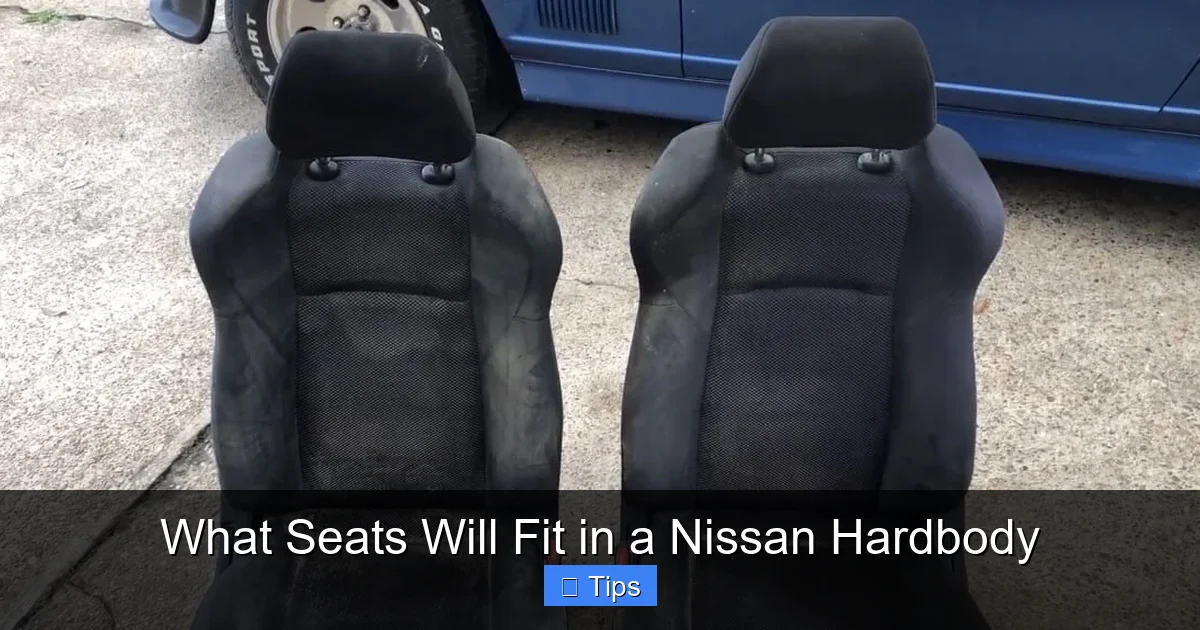
If you’re looking for a straightforward upgrade without major modifications, swapping in OEM seats from another Nissan or Infiniti model is a smart move. These seats are designed to bolt in with minimal hassle and maintain factory safety standards.
Direct Bolt-In Options
The easiest swaps come from vehicles with similar floor pans and mounting points. Here are some proven OEM seat swaps for the Nissan Hardbody:
– Nissan Frontier (1998–2004): Seats from later model Frontiers often fit with little to no modification. The bolt pattern is nearly identical, and the seat rails align well.
– Nissan Xterra (1999–2004): Built on the same platform as the Frontier, Xterra seats are a popular upgrade. They offer better bolstering, more adjustability, and often come in nicer materials like leather or upgraded cloth.
– Infiniti QX4 (1997–2003): As the luxury version of the Xterra, QX4 seats are even more plush and may include power adjustments and heating. These are a favorite among resto-mod enthusiasts.
These swaps typically require only minor trimming of the floor pan or seat brackets, and in many cases, the original bolts work perfectly.
What to Watch For
Even with compatible models, there are a few things to keep in mind:
– Seat height: Some later model seats sit higher, which can affect headroom, especially in regular cabs.
– Seat width: Wider seats may rub against the center console or door panels. Measure your cabin width before buying.
– Wiring harnesses: If you’re installing power or heated seats, you’ll need to source the correct harness or adapt the existing one.
Real-World Example: Xterra Seat Swap
One of the most popular OEM swaps is installing 2002–2004 Nissan Xterra bucket seats into a 1995 Hardbody. Owners report excellent fitment, improved comfort, and a more modern look. The only modification needed is slightly elongating the rear bolt holes in the floor pan to align with the Xterra seat rails. No welding required—just a drill and some patience.
This swap also allows you to retain the factory seat belts and airbag system, maintaining safety compliance.
Aftermarket Seats: Style, Comfort, and Performance

Visual guide about What Seats Will Fit in a Nissan Hardbody
Image source: psychoautos.com
If you’re looking for something beyond factory specs—whether it’s better support for off-roading, a sportier look, or just more comfort on long drives—aftermarket seats are the way to go. Brands like Corbeau, Sparco, PRP, and MasterCraft offer a wide range of options designed for trucks and off-road vehicles.
Popular Aftermarket Seat Brands
Here’s a quick rundown of top brands and what they offer:
– Corbeau: Known for aggressive styling and excellent support. Their Baja RS and GTS seats are popular in the off-road community. They come in various widths and materials, including vinyl, cloth, and leather.
– Sparco: A favorite in motorsports, Sparco seats like the R330 or QRF offer racing-level support and lightweight construction. Ideal for performance builds.
– PRP: Specializes in off-road and UTV seats. Their seats are durable, water-resistant, and designed for harsh environments. Great for overlanding or rock crawling.
– MasterCraft: Offers a balance of comfort and performance. Their Avenger and Safety Series seats are DOT-approved and widely used in lifted trucks.
These seats are typically “universal” or “semi-custom,” meaning they’re designed to fit a range of vehicles with the right brackets.
Mounting Aftermarket Seats
This is where things get tricky. Unlike OEM swaps, aftermarket seats don’t come with vehicle-specific rails. You’ll need to:
1. Source or fabricate seat brackets: Companies like UPR, Rugged Ridge, or even local fabricators can make custom brackets that bolt into your Hardbody’s floor pan and attach to the seat base.
2. Ensure proper height and angle: Racing seats sit lower and more reclined. Make sure you have enough headroom and that the seat doesn’t interfere with the steering wheel or pedals.
3. Secure the seat properly: Use grade-8 bolts and lock washers. Never rely on just two bolts—always use all four mounting points.
Example: Installing Corbeau Baja RS Seats
Let’s say you want to install Corbeau Baja RS seats in your 1998 Hardbody. Here’s how it might go:
– Purchase the seats and a set of custom brackets from a vendor that specializes in Nissan applications.
– Remove the old seats and clean the floor pan.
– Bolt the new brackets into place using the original mounting holes (may require slight modification).
– Attach the seats to the brackets and test for stability.
– Reconnect seat belts (you may need to extend the bolts or use adapter brackets).
The result? A rugged, supportive seat that looks great and handles off-road abuse.
Budget-Friendly Seat Swaps and DIY Options
Visual guide about What Seats Will Fit in a Nissan Hardbody
Image source: psychoautos.com
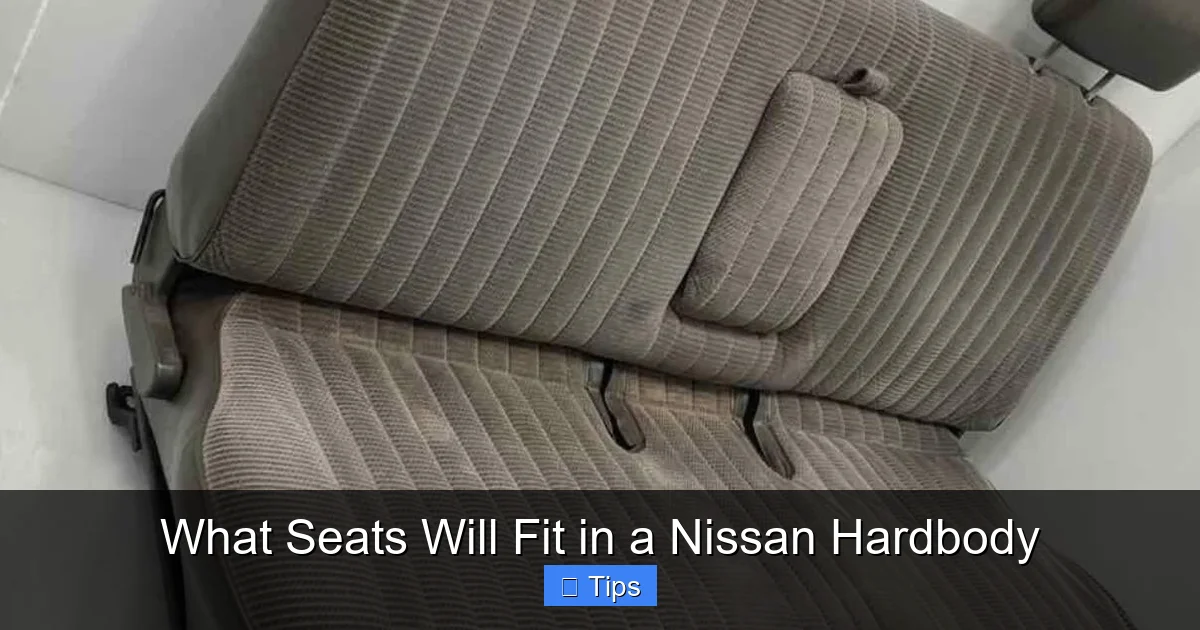
Not everyone wants to spend hundreds on new seats. Fortunately, there are plenty of budget-friendly ways to upgrade your Hardbody’s seating without breaking the bank.
Junkyard and Salvage Yard Finds
One of the most cost-effective methods is pulling seats from a junkyard. Look for:
– Late-model Frontiers or Xterras: As mentioned earlier, these are direct-fit candidates.
– Other Nissan trucks: Pathfinders, Titan cabs, or even older D21s can yield usable seats.
– Non-Nissan vehicles: With some creativity, seats from Toyota Tacomas, Ford Rangers, or even SUVs can be adapted.
When shopping, inspect the seats for:
– Torn upholstery or broken frames
– Stuck motors (if power seats)
– Rust on the rails or brackets
A little cleaning and reupholstering can go a long way.
DIY Seat Restoration
If your original seats are still in decent shape, consider restoring them instead of replacing. This can include:
– Reupholstering: Use seat covers or have them professionally recovered in leather or custom fabric.
– Foam replacement: Sagging cushions can be fixed with new high-density foam.
– Frame repair: Weld cracked frames or reinforce weak spots.
This approach keeps the original look while improving comfort—and it’s often cheaper than buying new.
Online Marketplaces
Check sites like eBay, Craigslist, or Facebook Marketplace for used seats. Many people sell take-outs from upgrades, so you can find nearly new seats at a fraction of the cost. Just be sure to ask for detailed photos and measurements before buying.
Custom and Racing Seats for Performance Builds
If you’re building a dedicated off-road rig, race truck, or show vehicle, standard seats might not cut it. That’s where custom and racing seats come in.
Harness-Ready and Lightweight Designs
Racing seats are built for safety and performance. Key features include:
– Integrated harness bars: Allow you to use 4-, 5-, or 6-point harnesses for better restraint.
– Fiberglass or carbon fiber shells: Lightweight and strong, ideal for reducing overall vehicle weight.
– Aggressive bolstering: Keeps you locked in during hard cornering or off-road articulation.
Seats like the Sparco Circuit or PRP Enduro are excellent choices for serious builds.
Installation Considerations
Installing racing seats isn’t just about bolting them in. You’ll also need to:
– Mount a harness bar: This usually bolts to the rear seat mounts or is welded to the roll cage.
– Disable airbags: Most racing seats don’t have airbag compatibility, so you’ll need to bypass the system (check local laws).
– Ensure proper seat belt routing: Harnesses must be anchored correctly to the floor or cage.
This type of installation is best left to professionals or experienced fabricators.
Example: Full Race Seat Setup
Imagine you’re building a rock crawler based on a 1996 Hardbody. You install PRP Enduro seats with custom aluminum brackets, a welded harness bar, and 5-point harnesses. The seats are mounted low and reclined for better weight distribution. The result? A cockpit that feels like a race car, with maximum safety and control on extreme terrain.
Tips for a Successful Seat Swap
No matter which route you take, a successful seat swap comes down to planning and attention to detail. Here are some pro tips to ensure your project goes smoothly.
Measure Twice, Buy Once
Before purchasing any seat, measure:
– Width at the widest point (usually the bolsters)
– Depth from front to back
– Height from floor to top of headrest
– Distance between mounting holes
Compare these to your Hardbody’s interior dimensions. A seat that’s even an inch too wide can cause rubbing or clearance issues.
Test Fit Before Final Installation
If possible, do a dry fit before bolting anything down. Sit in the seat, check pedal reach, steering wheel clearance, and headroom. Make sure you can fasten the seat belt comfortably.
Don’t Forget the Seat Belts
Your seat belts must still function properly. If the new seat changes the belt anchor point, you may need to:
– Extend the belt bolts
– Install new anchor plates
– Use seat belt extenders (check legality in your area)
Safety first—never compromise on restraint systems.
Consider the Overall Aesthetic
New seats should complement your truck’s interior. A set of bright red racing seats might look out of place in a stock-looking work truck. Think about color, material, and style to maintain a cohesive look.
Document Your Work
Take photos and notes during the swap. This helps if you ever need to troubleshoot or sell the truck. Plus, it’s satisfying to look back at your progress.
Conclusion
So, what seats will fit in a Nissan Hardbody? The answer is: plenty. Whether you’re sticking with OEM swaps for simplicity, upgrading to aftermarket seats for comfort and style, or going full custom for performance, there’s a solution that fits your needs, budget, and skill level.
The key is understanding your truck’s setup, measuring carefully, and choosing seats that balance form, function, and safety. With the right planning and a little elbow grease, you can transform your Hardbody’s interior from basic to brilliant.
Remember, this isn’t just about comfort—it’s about making your truck truly yours. Whether you’re cruising down the highway, tackling a trail, or just running errands, the right seat makes all the difference. So go ahead, upgrade those seats, and enjoy the ride.
Frequently Asked Questions
Can I put 2005+ Frontier seats in a 1995 Hardbody?
It’s possible, but not a direct bolt-in. The 2005+ Frontier uses a different platform (D40 vs. D21), so the floor pan and seat rails don’t align perfectly. You’ll likely need custom brackets or significant modification.
Do aftermarket seats require special seat belts?
Not necessarily, but if you’re using racing seats with harnesses, you’ll need to install a harness bar and use 4-, 5-, or 6-point harnesses. Standard seat belts can still be used with most aftermarket seats if properly anchored.
Will power seats from a newer truck work in my Hardbody?
They can, but you’ll need to wire in the power supply, switches, and possibly a relay. If your truck doesn’t have a power seat harness, it’s often easier to convert to manual or use an aftermarket wiring kit.
Are heated seats compatible with older Hardbodies?
Yes, but you’ll need to add a 12V power source and a switch. Most heated seats draw 10–20 amps, so use an appropriate fuse and relay. Avoid overloading the factory wiring.
Can I install rear seats in a regular cab Hardbody?
It’s not practical due to limited space. Regular cabs are designed for two passengers. Some owners install small jump seats, but they’re uncomfortable and unsafe for regular use.
Do I need to disable the airbag light when swapping seats?
If the new seat doesn’t have an airbag sensor, yes—the light will stay on. You can use an airbag simulator or disable the system via the ECU, but check local laws first, as this may affect inspection compliance.

At CarLegit, we believe information should be clear, factual, and genuinely helpful. That’s why every guide, review, and update on our website is created with care, research, and a strong focus on user experience.