
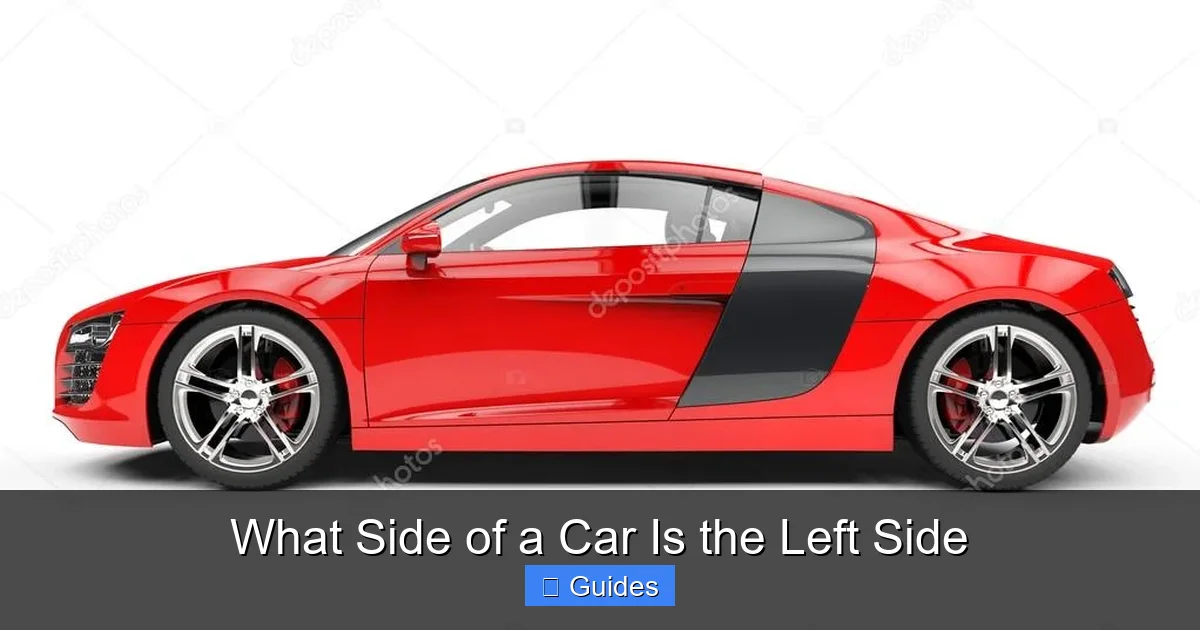
Understanding what side of a car is the left side is essential for safe driving, proper vehicle maintenance, and clear communication. This guide explains how to identify the left side from both driver and passenger perspectives, explores global differences, and highlights real-world applications.
Have you ever stood next to a car and wondered, “Wait—which side is the left side?” You’re not alone. It might seem obvious, but the answer isn’t always straightforward, especially when you’re dealing with different countries, vehicle types, or even rental cars. Whether you’re a new driver, a frequent traveler, or just curious about how cars are designed, understanding what side of a car is the left side is more important than you might think.
At first glance, it sounds simple: the left side is the one on your left when you face the front of the car. But here’s the catch—perspective matters. Are you looking at the car from the outside? Are you sitting in the driver’s seat? Are you in a country where people drive on the left side of the road? All of these factors can change how you interpret “left.” This guide will walk you through everything you need to know about identifying the left side of a car, why it matters, and how it affects your daily driving experience.
From fueling up at a gas station to parallel parking on a busy street, knowing your car’s left side can make a big difference. It’s not just about orientation—it’s about safety, efficiency, and clear communication. Whether you’re instructing a mechanic, reading a car manual, or renting a vehicle abroad, getting the sides right avoids confusion and potential errors. So let’s dive in and clear up the mystery once and for all.
In This Article
- 1 Key Takeaways
- 2 📑 Table of Contents
- 3 Understanding Car Orientation: Driver’s Perspective Matters
- 4 Left-Hand Drive vs. Right-Hand Drive: Global Differences
- 5 Why the Left Side Matters: Safety, Design, and Functionality
- 6 Real-World Applications: When Knowing the Left Side Is Crucial
- 7 Common Misconceptions and How to Avoid Them
- 8 Conclusion: Clarity Leads to Confidence
- 9 Frequently Asked Questions
- 9.1 How do I know which side is the left side of a car?
- 9.2 Is the left side always the passenger side?
- 9.3 Why does the left side matter for safety?
- 9.4 Are fuel caps always on the left side?
- 9.5 Can I use the car’s logo to identify the left side?
- 9.6 What if I’m renting a car in a country with opposite driving rules?
Key Takeaways
- The left side of a car is determined from the driver’s perspective when seated inside the vehicle. This means the left side is on your left hand when you’re behind the wheel, regardless of the country’s driving orientation.
- In left-hand drive (LHD) countries like the U.S., the driver sits on the left side of the car. In right-hand drive (RHD) countries like the U.K., the driver sits on the right, but the left side of the car remains the same when viewed from inside.
- The left side is often the “passenger side” in LHD vehicles. This side typically houses the front passenger door, rear left doors, and windows.
- Knowing the left side helps with parking, fueling, and emergency procedures. For example, gas caps are often on the left side in LHD countries, and emergency exits are labeled accordingly.
- Vehicle design and safety features differ between left and right sides. Airbags, door reinforcements, and mirror placements are often asymmetrical and tailored to the driver’s side.
- Global traffic rules affect how the left side is used on the road. In countries where drivers stay on the left, the left side of the car faces oncoming traffic, which impacts visibility and safety.
- Misidentifying the left side can lead to confusion during repairs or rentals. Mechanics, valets, and travelers must be clear on side identification to avoid mistakes.
📑 Table of Contents
- Understanding Car Orientation: Driver’s Perspective Matters
- Left-Hand Drive vs. Right-Hand Drive: Global Differences
- Why the Left Side Matters: Safety, Design, and Functionality
- Real-World Applications: When Knowing the Left Side Is Crucial
- Common Misconceptions and How to Avoid Them
- Conclusion: Clarity Leads to Confidence
Understanding Car Orientation: Driver’s Perspective Matters
When it comes to identifying what side of a car is the left side, the most reliable method is to use the driver’s perspective. That means sitting in the driver’s seat and determining left and right based on your own body position. This approach works universally, whether you’re in a left-hand drive (LHD) or right-hand drive (RHD) country.
In left-hand drive countries—like the United States, Canada, and most of Europe—the driver sits on the left side of the car. From this position, your left hand naturally points toward the left side of the vehicle. That side includes the front left door (often the driver’s door), the rear left doors, the left-side windows, mirrors, and lights. Even if you’re standing outside the car, imagining yourself in the driver’s seat can help you correctly identify the left side.
But what if you’re in a right-hand drive country like the United Kingdom, Japan, or Australia? Here, the driver sits on the right side of the car. Does that mean the left side of the car is now on the right? No. The left side is still determined from the driver’s viewpoint. So when the driver is seated, their left hand points to the same side of the car—now the side facing the center of the road. This consistency is crucial for global standards in vehicle design, safety regulations, and international driving.
Using the driver’s perspective eliminates confusion. It’s the standard used by automakers, traffic engineers, and safety organizations worldwide. For example, when a car manual refers to the “left headlight” or “left door sensor,” it’s always referencing the side that’s on the driver’s left when seated—regardless of where the driver is positioned in the vehicle.
This method also helps when you’re not behind the wheel. If you’re a passenger, a mechanic, or a valet, imagining the driver’s position can help you quickly and accurately identify the left side. It’s a simple mental trick that works every time.
Why Perspective Is Everything
Perspective is key because cars are not symmetrical in function, even if they look balanced. The driver’s side often has more controls, enhanced safety features, and different design elements compared to the passenger side. For instance, the steering wheel, pedals, and dashboard are all optimized for the driver’s reach and visibility. The left side (from the driver’s view) may also have additional airbags, reinforced door beams, or special mirror adjustments.
If you rely solely on external observation—like standing in front of the car and picking the left side—you might get it wrong in RHD countries. Imagine renting a car in Japan and trying to find the fuel cap. If you assume the left side is the same as in the U.S., you might walk to the wrong side and waste time. But if you remember to use the driver’s perspective, you’ll quickly realize that the fuel cap is on the side opposite the driver—still the “left side” of the car, but now on the right when viewed from the front.
This principle also applies to emergency situations. If you’re helping someone after an accident, knowing which side is the left can help you locate emergency exits, airbags, or structural weak points. Rescue teams are trained to identify vehicle sides based on the driver’s position, ensuring faster and safer responses.
Left-Hand Drive vs. Right-Hand Drive: Global Differences
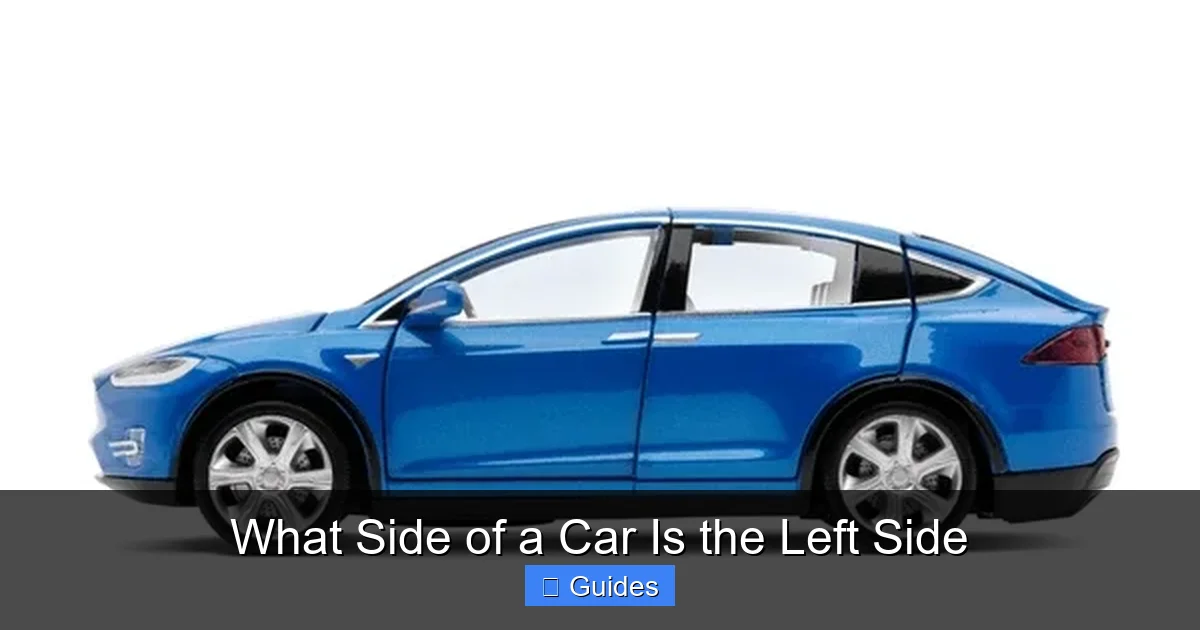
Visual guide about What Side of a Car Is the Left Side
Image source: shutterstock.com
One of the biggest factors affecting how we identify the left side of a car is whether the vehicle is left-hand drive (LHD) or right-hand drive (RHD). These terms refer to the position of the steering wheel and driver’s seat, and they vary by country based on historical, cultural, and traffic-related reasons.
In LHD countries—such as the United States, Germany, France, and China—the driver sits on the left side of the car. This means the left side of the vehicle (from the driver’s perspective) is closest to the center of the road when driving on the right-hand side of the street. Most of the world drives this way, with over 60% of countries using LHD vehicles and right-side traffic.
In contrast, RHD countries—including the United Kingdom, India, Japan, and South Africa—have the driver seated on the right side of the car. Here, traffic flows on the left side of the road, and the driver’s left side faces oncoming traffic. Despite this difference, the left side of the car is still defined from the driver’s viewpoint. So when a British driver sits in their car, their left hand points to the side facing the road’s center—still the “left side” of the vehicle.
This distinction is important for several reasons. First, it affects how vehicles are designed and manufactured. Car companies must produce different models for LHD and RHD markets, with mirrored layouts for controls, pedals, and even exhaust systems. Second, it influences driving behavior. In RHD countries, the left side of the car is more exposed to oncoming traffic, which can impact visibility, passing maneuvers, and accident risk.
For travelers, understanding LHD vs. RHD is essential when renting or driving abroad. If you’re used to driving in the U.S. and suddenly find yourself in a rental car in Thailand, you’ll need to adjust quickly. The pedals are the same, but their position relative to the doors and mirrors will feel reversed. Knowing that the left side of the car is still determined by the driver’s left hand—even if the driver is on the right—helps you adapt faster and avoid mistakes.
Practical Example: Fueling Up Abroad
Let’s say you’re traveling in Australia, an RHD country. You rent a car and need to fill it with gas. In the U.S., most gas caps are on the left side of the car—convenient for drivers who pull up to pumps on the right side of the island. But in Australia, the fuel cap is often on the right side of the car, because the driver is on the right and the pump is typically on the left side of the island.
If you try to use your U.S. experience and look for the fuel cap on the left, you’ll be confused. But if you remember that the left side is defined from the driver’s perspective, you’ll realize that the fuel cap is actually on the driver’s right—meaning it’s on the right side of the car when viewed from the outside. This small insight can save you time and frustration.
Why the Left Side Matters: Safety, Design, and Functionality
Visual guide about What Side of a Car Is the Left Side
Image source: shutterstock.com
You might be thinking, “So what? It’s just a side of the car.” But the left side plays a critical role in vehicle safety, design, and everyday functionality. From airbag placement to door strength, many features are optimized for the driver’s side—which is often the left side in LHD vehicles.
One of the most important reasons to identify the left side correctly is safety. Modern cars are designed with asymmetrical safety features. For example, the driver’s side airbag is larger and more complex than the passenger side airbag because it must account for the steering wheel and closer proximity to the dashboard. Side-impact airbags are also often stronger on the driver’s side, especially in LHD cars where the driver is closer to the door in a collision.
Structural reinforcements also differ. The B-pillar (the vertical support between the front and rear doors) and door beams are often stronger on the driver’s side to protect the person most likely to be operating the vehicle. In some models, the left-side door has additional crumple zones or energy-absorbing materials.
Visibility is another key factor. The driver’s side mirror is usually larger and more adjustable than the passenger side mirror. In many cars, the left-side mirror has a wider field of view to reduce blind spots. Some vehicles even have blind-spot monitoring systems that prioritize the driver’s side.
Functional Differences You Might Not Notice
Beyond safety, the left side of the car often has unique functional elements. For instance, in many LHD vehicles, the fuel door is on the left side. This design allows drivers to pull up to gas pumps on the right side of the island, making fueling quicker and safer. Similarly, in drive-through lanes at banks or fast-food restaurants, the left side is typically the service side, so having controls and windows optimized for that side improves convenience.
Even something as simple as window controls can differ. In some cars, the driver’s door has master controls for all windows, while the passenger doors only control their own windows. This centralized system is almost always on the left side in LHD vehicles.
Maintenance and repairs also depend on correct side identification. If a mechanic needs to replace the left-side door handle or check the left headlight, they must know which side is which. Miscommunication can lead to wasted time, incorrect parts orders, or even safety issues.
Real-World Applications: When Knowing the Left Side Is Crucial
Visual guide about What Side of a Car Is the Left Side
Image source: c8.alamy.com
Understanding what side of a car is the left side isn’t just theoretical—it has practical applications in everyday life. Whether you’re parking, fueling, or responding to an emergency, knowing your car’s left side can make a big difference.
One common scenario is parallel parking. When you’re trying to squeeze into a tight spot, you need to know which side of your car is closest to the curb. In LHD countries, the left side is usually closer to the curb when parking on the right side of the street. This helps you judge distances and avoid scraping the wheels or hitting the curb.
Fueling is another example. As mentioned earlier, gas caps are often on the left side in LHD vehicles. If you’re in a hurry or unfamiliar with the car, knowing this can save you from walking around the vehicle or holding up the line at the pump.
Emergency situations also highlight the importance of side identification. If you’re involved in a crash, rescue teams need to know which side is the left to assess damage, deploy airbags, or cut through doors safely. In some accidents, the left side may be more damaged due to its exposure to oncoming traffic in RHD countries.
Travel and Rental Cars
For frequent travelers, knowing how to identify the left side is especially useful when renting cars abroad. Imagine landing in Ireland, an RHD country, and picking up a rental car. The pedals are in the same order (clutch, brake, accelerator from left to right), but their position relative to the doors is reversed. The left side of the car—from the driver’s view—is now on the right when you stand in front of it.
If you’re not prepared, you might accidentally try to open the driver’s door on the left side, only to find it locked or nonexistent. Or you might struggle to find the fuel cap because you’re looking on the wrong side. But by remembering that the left side is always determined from the driver’s perspective, you can adapt quickly and drive confidently.
Common Misconceptions and How to Avoid Them
Despite its importance, many people misunderstand how to identify the left side of a car. One common mistake is assuming that the left side is always the same when viewed from the front of the vehicle. This works in LHD countries but fails in RHD countries, where the driver’s left side is actually on the right when viewed externally.
Another misconception is that “left side” refers to the passenger side. While this is often true in LHD vehicles—where the front left door is for the passenger—it’s not always the case. In some cars, especially two-seaters or performance models, the driver’s door is the only front door, and the left side is still the driver’s side.
Some people also think that the left side is determined by the car’s branding or logo. But manufacturers don’t use logos to indicate sides—this can lead to confusion, especially with symmetrical designs.
To avoid these mistakes, always use the driver’s perspective. Sit in the driver’s seat—or imagine doing so—and determine left and right based on your own body position. This method is reliable, consistent, and used by professionals worldwide.
Tip: Use the Steering Wheel as a Guide
A quick way to identify the left side is to look for the steering wheel. In LHD cars, it’s on the left; in RHD cars, it’s on the right. Once you know where the driver sits, you can easily determine which side is left from their viewpoint. This trick works even if you’re looking at a photo or diagram of a car.
Conclusion: Clarity Leads to Confidence
So, what side of a car is the left side? The answer is simple: it’s the side on your left when you’re sitting in the driver’s seat. This perspective-based approach works in every country, every vehicle, and every situation. Whether you’re driving in downtown Tokyo or filling up in rural Texas, knowing how to identify the left side keeps you safe, efficient, and confident.
This knowledge isn’t just for mechanics or engineers—it’s for every driver, passenger, and traveler. It helps you park correctly, fuel efficiently, and respond to emergencies. It prevents confusion when renting cars abroad or following repair instructions. And it deepens your understanding of how vehicles are designed with human behavior and safety in mind.
The next time you approach a car, take a moment to consider perspective. Ask yourself: Where is the driver? What’s on their left? That’s the left side of the car. With this simple mental check, you’ll never be unsure again.
Frequently Asked Questions
How do I know which side is the left side of a car?
The left side of a car is determined from the driver’s perspective when seated inside the vehicle. This means the side on your left hand when you’re behind the wheel, regardless of whether the car is left-hand or right-hand drive.
Is the left side always the passenger side?
Not always. In left-hand drive countries, the left side often includes the front passenger door, but in some vehicles—like two-seaters—the left side may be the driver’s side only. Always use the driver’s perspective to be sure.
Why does the left side matter for safety?
The left side often has enhanced safety features like stronger door beams, larger airbags, and better visibility mirrors because it’s typically the driver’s side in most countries. These features are designed to protect the person most likely to be operating the vehicle.
Are fuel caps always on the left side?
In most left-hand drive countries, yes—fuel caps are usually on the left side for convenience when fueling. However, in right-hand drive countries, they’re often on the right side. Always check or ask if you’re unsure.
Can I use the car’s logo to identify the left side?
No, logos are not reliable indicators of left or right sides. Car designs are often symmetrical, and branding doesn’t follow a standard orientation. Always rely on the driver’s perspective instead.
What if I’m renting a car in a country with opposite driving rules?
Use the driver’s perspective to identify the left side. Even if the steering wheel is on the right, the left side of the car is still the one on the driver’s left when seated. This method works universally and prevents confusion.

At CarLegit, we believe information should be clear, factual, and genuinely helpful. That’s why every guide, review, and update on our website is created with care, research, and a strong focus on user experience.