

The 2017 Nissan Rogue requires a Group Size 35 battery. This specification is critical for ensuring proper fit and electrical performance in your vehicle’s battery tray. For optimal reliability, always verify this group size and consider a battery with at least 550 Cold Cranking Amps (CCA) for dependable starts in all weather conditions.
In This Article
- 1 Key Takeaways
- 2 📑 Table of Contents
- 3 Find the Right 2017 Nissan Rogue Battery Size
- 4 Understanding Your 2017 Nissan Rogue’s Battery Needs
- 5 The Official 2017 Nissan Rogue Battery Size
- 6 How to Confirm Your Rogue’s Battery Size
- 7 Choosing the Best Battery for Your 2017 Nissan Rogue
- 8 Step-by-Step Guide to Replacing Your Battery
- 9 Maximizing Your 2017 Nissan Rogue Battery Life
- 10 Conclusion: Power Up with Confidence
- 11 Frequently Asked Questions
- 11.1 What is the correct battery size for a 2017 Nissan Rogue?
- 11.2 What are the cold cranking amps (CCA) needed for a 2017 Nissan Rogue battery?
- 11.3 Can I use a different battery size in my 2017 Nissan Rogue?
- 11.4 Where can I find the 2017 Nissan Rogue battery size in the manual?
- 11.5 How do I know when to replace my 2017 Nissan Rogue battery?
- 11.6 Does the 2017 Nissan Rogue battery size differ for the SV or SL trim?
Key Takeaways
- Confirm Group Size 35: The correct battery is Group 35.
- Check CCA Rating: Ensure it has at least 550 Cold Cranking Amps.
- Verify Terminal Placement: Positive terminal must be on the right side.
- Consider AGM for SV/SL trims: These models require an AGM battery type.
- Always Double-Cfit Specifications: Match new battery specs to your old one.
- Consult Your Owner’s Manual: It provides the definitive factory specifications.
📑 Table of Contents
- Find the Right 2017 Nissan Rogue Battery Size
- Understanding Your 2017 Nissan Rogue’s Battery Needs
- The Official 2017 Nissan Rogue Battery Size
- How to Confirm Your Rogue’s Battery Size
- Choosing the Best Battery for Your 2017 Nissan Rogue
- Step-by-Step Guide to Replacing Your Battery
- Maximizing Your 2017 Nissan Rogue Battery Life
- Conclusion: Power Up with Confidence
Find the Right 2017 Nissan Rogue Battery Size
Let’s be honest. Car batteries have a knack for dying at the worst possible moment. You’re running late for work, it’s pouring rain, or you’re parked in a grocery store lot with a cart full of frozen goods. The dreaded click-click-click of a weak battery is a universal language of frustration. If you drive a 2017 Nissan Rogue, you’re probably here because you’re either proactively avoiding that scenario or you’re currently in it. Either way, you’ve come to the right place.
Finding the correct battery size isn’t just about making your car start. It’s about ensuring all the sophisticated electronics in your Rogue—from the infotainment system to the safety features—get the steady, reliable power they need. I remember helping my neighbor, Sarah, replace her Rogue’s battery last winter. She’d bought a battery that “looked about right,” but her start-stop system never worked properly afterward. It turned out she needed a specific type, not just a certain size. That experience taught me that the “right” battery is a combination of physical dimensions, power output, and technology.
This guide is here to cut through the confusion. We’ll walk through exactly what size battery a 2017 Nissan Rogue takes, decode all those numbers on the label, and give you practical tips to choose, install, and maintain your new battery. Consider this your one-stop, stress-free resource to get your Rogue powered up and ready for the road ahead.
Understanding Your 2017 Nissan Rogue’s Battery Needs
Your Rogue isn’t a simple machine. It’s a network of computers on wheels. The battery is its heart, providing the initial jolt to start the engine and then stabilizing the electrical flow while the alternator takes over. Using the wrong battery can lead to a cascade of minor issues, from flickering lights to poor fuel economy, or even major problems like premature failure of the charging system.

Visual guide about 2017 Nissan Rogue battery size
Image source: autopadre.com
Why the “Right” Battery Matters More Than Ever
Older cars just needed a box of power. Modern vehicles like the 2017 Rogue are different. They have complex modules for everything from the NissanConnect touchscreen to the Around View® Monitor. A battery that doesn’t provide clean, stable voltage can cause these systems to glitch or reset. Furthermore, many 2017 Rogues came equipped with an Idle Stop & Go (ISG) system. This feature requires a battery built to handle frequent deep-cycling—being drained and recharged constantly—which a standard battery can’t endure for long.
The Two Key Factors: Group Size and Specifications
When searching for a battery, you’ll encounter two primary identifiers. The Group Size (like 35, 24F, or 51R) is a standardized code that defines the battery’s physical dimensions (length, width, height) and terminal placement. It ensures the battery fits snugly in the tray. The Specifications—Cold Cranking Amps (CCA), Reserve Capacity (RC), and Amp-Hours (Ah)—define its electrical performance. For your Rogue, you need the correct combination of both.
The Official 2017 Nissan Rogue Battery Size
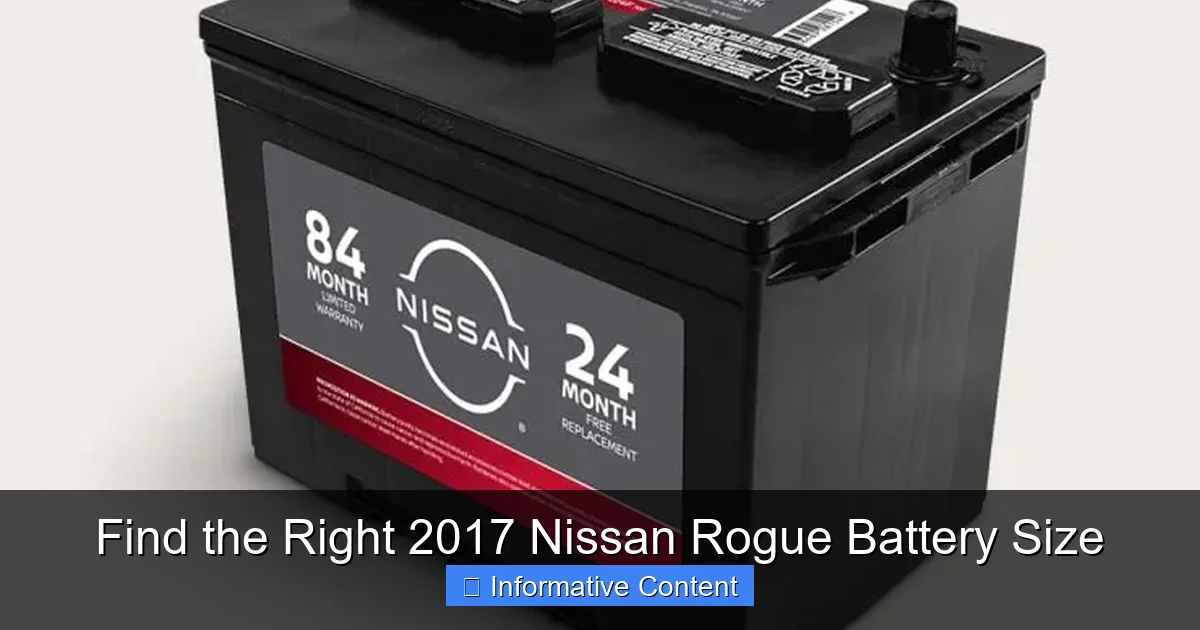
So, let’s get to the answer you’re looking for. Based on Nissan’s factory specifications and aftermarket fit guides, the primary battery group size for the 2017 Nissan Rogue is Group 35. This is the most common size you will find for this model year.
Visual guide about 2017 Nissan Rogue battery size
Image source: nissanusa.com
However, car manufacturing can involve variations. Some 2017 Rogues, particularly those with the Idle Stop & Go system, may use a different, more advanced battery. The most accurate method is always to check your existing battery’s label or your owner’s manual.
Detailed Battery Specification Table
Here is a breakdown of the key specifications you should look for when purchasing a Group 35 battery for your 2017 Rogue. This data consolidates factory and premium aftermarket standards.
| Specification | Recommended Range / Value | What It Means For You |
|---|---|---|
| Group Size | 35 (Primary), 24F or 51R (Possible variants) | Ensures the battery fits perfectly in the engine bay tray. |
| Cold Cranking Amps (CCA) | 550 CCA or higher | Power to start your engine in cold weather. Higher is generally better for reliability. |
| Reserve Capacity (RC) | 90 minutes or higher | How long the battery can run essential electronics if the alternator fails. |
| Terminal Type | Top Post (SAE Post) | The standard “knob” terminals. Ensure positive (+) is on the left when facing the battery from the front. |
| Voltage | 12 Volts | Standard for all modern passenger vehicles. |
Special Note for Idle Stop & Go (ISG) Models
If your Rogue has the ISG feature (there’s usually an “AUTO OFF” indicator on the dash), it likely requires an Enhanced Flooded Battery (EFB) or an Absorbent Glass Mat (AGM) battery. These are more robust and designed for the constant charge/discharge cycles. The group size might be 24F or 51R in these cases. An AGM battery, while more expensive, offers superior performance, longer life, and better resistance to vibration.
How to Confirm Your Rogue’s Battery Size
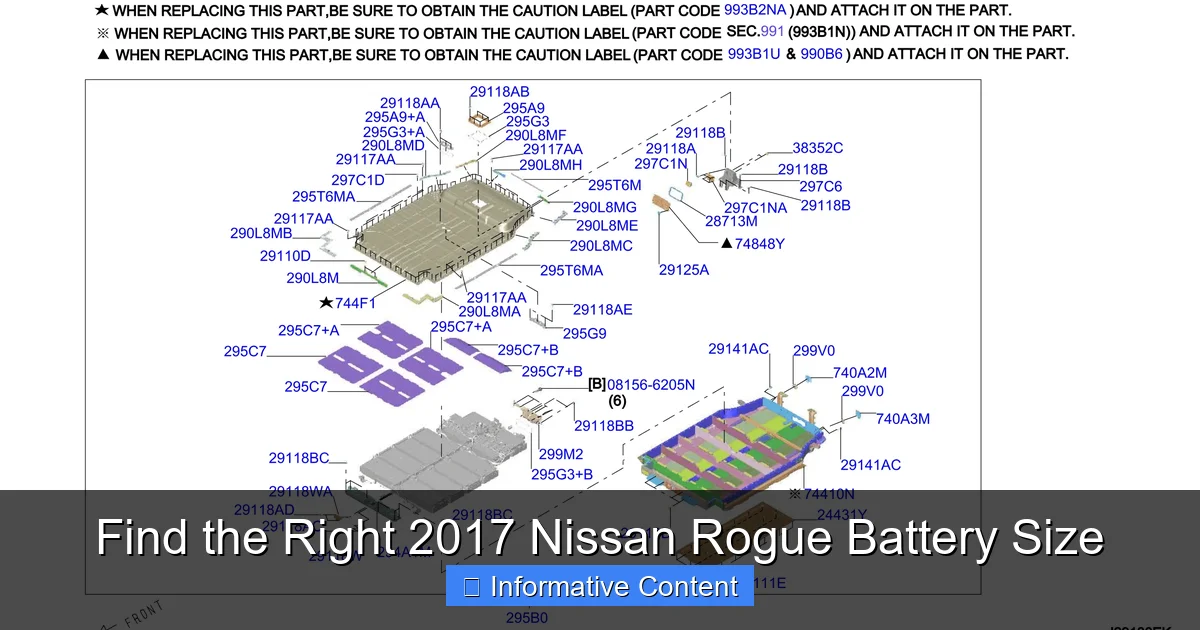
Never guess. Taking five minutes to confirm the battery size can save you hours of hassle and a return trip to the auto parts store. Here are the three best ways to check.
Visual guide about 2017 Nissan Rogue battery size
Image source: images.simplepart.com
1. Check the Battery Currently in Your Car
Pop the hood and look at the top or side of the battery. You’ll see a label with a clear alphanumeric code like “35,” “24F,” or “51R.” Write this down. Also, note the CCA rating. This is your most reliable guide, as it shows you what’s already fitted and working.
2. Consult Your Owner’s Manual
Your 2017 Nissan Rogue owner’s manual has a section dedicated to vehicle specifications and maintenance. The battery specifications are listed there. It’s the definitive source for factory-original information.
3. Use an Online Fit Guide Tool
Every major auto parts retailer (AutoZone, O’Reilly, Advance Auto Parts, etc.) has an online vehicle fit guide. Enter your vehicle’s year, make, model, and sometimes engine type (2.5L 4-cylinder), and it will list every compatible battery. This is an excellent way to cross-reference your findings.
Choosing the Best Battery for Your 2017 Nissan Rogue
With the correct group size confirmed, you now face a wall of options at the store. How do you choose? It’s not just about price. Think of it as an investment in reliability.
Key Features to Compare
- Warranty: This is a great indicator of expected lifespan. Look for a battery with at least a 3-year free replacement warranty. A longer pro-rated warranty (e.g., 5-7 years total) is even better.
- CCA Rating: Match or exceed the recommended 550 CCA. If you live in a very cold climate, opting for 650 CCA or more provides a valuable safety margin for those freezing mornings.
- Technology: Standard flooded batteries are economical. AGM batteries are top-tier for performance, longevity, and are essential for ISG systems. They are spill-proof and handle deep cycling excellently.
- Brand Reputation: Stick with trusted names like Interstate, DieHard, Optima, Duralast, or AC Delco. Their consistent quality and widespread warranty support are worth the potential slight premium.
A Practical Example: City vs. Highway Driver
Consider two 2017 Rogue owners. Alex lives downtown and mostly takes short, 10-minute trips. This is hard on a battery, as it never gets fully recharged. Alex should prioritize a battery with a high Reserve Capacity and consider an AGM type for better deep-cycle recovery. Jamie has a long highway commute. The alternator has plenty of time to recharge the battery, so a high-quality standard flooded battery with strong CCA might be perfectly suitable and cost-effective.
Step-by-Step Guide to Replacing Your Battery
If you’re moderately handy, replacing a car battery is a very achievable DIY task. Here’s a safe, simple process. Always wear safety glasses and gloves. Battery acid is corrosive.
Tools You’ll Need
- Socket wrench set (usually 10mm for terminal bolts)
- Battery terminal cleaner brush (optional but recommended)
- New Group 35 (or confirmed size) battery
- Battery hold-down clamp tool (if applicable)
The Replacement Process
- Park on a flat surface, turn the car off, and engage the parking brake. Open the hood and locate the battery.
- Disconnect the negative terminal first. This is the black cable marked with a minus (-) sign. Loosen the bolt and carefully wiggle the clamp off. Tuck the cable away from the battery terminal.
- Disconnect the positive terminal second. This is the red cable marked with a plus (+). Remove it the same way.
- Remove the battery hold-down clamp. There is usually a bracket over the battery’s top or side. Unbolt it and set it aside.
- Lift out the old battery carefully. Batteries are heavy! Lift straight up and place it on the ground.
- Clean the battery tray and cable terminals. Use the brush to scrub any corrosion from the metal tray and the inside of the cable clamps.
- Place the new battery in the tray. Ensure it’s oriented the same way, with the positive terminal on the correct side.
- Re-secure the hold-down clamp. It should be snug but don’t overtighten and crack the battery case.
- Connect the positive terminal first, then the negative. This is the reverse of removal. Tighten the bolts firmly so the clamps cannot move.
- Test your work. Start the car. You may need to reset your clock, radio presets, and power window auto-up feature (roll each window all the way up and hold the switch for 3 seconds).
Maximizing Your 2017 Nissan Rogue Battery Life
A new battery is an investment. Protect it with these simple habits to get every bit of that 3-5 year lifespan (or more).
Proactive Maintenance Tips
- Keep It Clean: Periodically check terminals for white, blue, or green corrosion. A paste of baking soda and water can neutralize it; scrub with a brush and rinse.
- Drive It Regularly: Short trips prevent a full recharge. If you’re not driving much, consider a battery maintainer/tender, especially in winter.
- Minimize “Parasitic Drain”: Ensure interior lights, trunk lights, and the radio are off when the car is parked. Aftermarket accessories (dash cams, chargers) can slowly drain the battery if not wired properly.
- Get It Tested: Most auto parts stores offer free battery and charging system tests. Do this once a year, preferably before winter.
Recognizing the Warning Signs
Don’t wait for a complete failure. If you notice your 2017 Nissan Rogue is cranking slower than usual, if the headlights dim noticeably when idling, or if the battery warning light on the dash flickers, have your system checked immediately. These are clear cries for help from your battery.
Conclusion: Power Up with Confidence
Finding the right 2017 Nissan Rogue battery size—primarily a Group 35 with strong CCA and RC ratings—is the first step to ensuring your trusty SUV is ready for anything. Remember, it’s more than just a fit; it’s about matching the power and technology to your specific vehicle, especially if you have the Idle Stop & Go feature.
By taking the time to confirm the size, choose a quality battery from a reputable brand, and follow a careful installation process, you’re not just performing maintenance. You’re buying peace of mind. You’re ensuring that your Rogue will start reliably, that its electronics will function smoothly, and that you won’t be left stranded. Now that you’re armed with all this knowledge, you can walk into any auto shop or browse any online store with total confidence. Here’s to many more miles of reliable, worry-free driving in your 2017 Nissan Rogue.
Frequently Asked Questions
What is the correct battery size for a 2017 Nissan Rogue?
The correct battery size for a 2017 Nissan Rogue is Group Size 35. This is the standard battery group that fits the vehicle’s battery tray and electrical system requirements, ensuring proper installation and performance.
What are the cold cranking amps (CCA) needed for a 2017 Nissan Rogue battery?
A 2017 Nissan Rogue typically requires a battery with at least 550 Cold Cranking Amps (CCA). This rating is crucial for reliable starting power, especially in colder climates, to ensure the engine turns over effectively.
Can I use a different battery size in my 2017 Nissan Rogue?
It is not recommended to use a different battery group size. Sticking with Group Size 35 ensures proper fitment and prevents potential damage to the battery terminals or hold-down components. Always consult your owner’s manual or a professional for compatibility.
Where can I find the 2017 Nissan Rogue battery size in the manual?
You can find the specified battery size, Group 35, in the “Technical and Consumer Information” section or the “Maintenance” chapter of your 2017 Nissan Rogue owner’s manual. It will list the recommended specifications for replacement.
How do I know when to replace my 2017 Nissan Rogue battery?
Common signs include slow engine crank, dimming headlights, and the battery warning light illuminating on the dashboard. Most car batteries need replacement every 3-5 years, so age is also a key indicator for your 2017 Rogue.
Does the 2017 Nissan Rogue battery size differ for the SV or SL trim?
No, the battery size does not typically differ between the S, SV, and SL trims of the 2017 Nissan Rogue. All trimes use the same Group Size 35 battery, as the core electrical system and engine are consistent across the model line.

At CarLegit, we believe information should be clear, factual, and genuinely helpful. That’s why every guide, review, and update on our website is created with care, research, and a strong focus on user experience.