
Knowing the right tire size for your Mazda CX-9 is essential for safety, performance, and fuel efficiency. This guide breaks down tire sizes by year and trim, explains how to read tire codes, and offers tips for choosing the best replacement tires.
In This Article
- 1 Key Takeaways
- 2 📑 Table of Contents
- 3 What Size Tires Are on a Mazda CX-9?
- 4 Tire Sizes by Model Year and Trim
- 5 How to Read Mazda CX-9 Tire Size Codes
- 6 Can You Change Tire Sizes on a Mazda CX-9?
- 7 Best Tire Types for the Mazda CX-9
- 8 Tire Maintenance Tips for Your Mazda CX-9
- 9 Upgrading Your CX-9 Tires: What to Consider
- 10 Conclusion
- 11 Frequently Asked Questions
- 11.1 What is the standard tire size for a 2023 Mazda CX-9?
- 11.2 Can I put 20-inch tires on my 2018 Mazda CX-9?
- 11.3 How do I find the correct tire size for my Mazda CX-9?
- 11.4 Are all-season tires good for the Mazda CX-9?
- 11.5 What happens if I use the wrong tire size on my CX-9?
- 11.6 How often should I rotate the tires on my Mazda CX-9?
Key Takeaways
- Tire sizes vary by model year and trim level: The Mazda CX-9 has used different tire sizes from 2007 to 2023, ranging from 225/65R17 to 255/45R20.
- Original equipment (OE) sizes are critical: Always check your owner’s manual or door jamb sticker for the factory-recommended tire size before replacing.
- Understanding tire markings is essential: Learn how to decode numbers like 255/45R20 to understand width, aspect ratio, construction, and wheel diameter.
- Plus-sizing is possible with caution: You can upgrade to larger wheels and tires, but you must maintain the overall diameter to avoid speedometer errors.
- All-season tires are standard: Most CX-9 trims come with all-season tires, but winter or performance options are available for specific needs.
- Proper inflation and rotation matter: Regular maintenance extends tire life and ensures optimal handling and fuel economy.
- Tire pressure monitoring system (TPMS): The CX-9 is equipped with TPMS, so any tire change must be compatible to avoid warning lights.
📑 Table of Contents
What Size Tires Are on a Mazda CX-9?
If you’re the proud owner of a Mazda CX-9—or considering buying one—you’ve probably asked yourself: “What size tires are on a Mazda CX-9?” It’s a great question, and one that matters more than you might think. Tires are the only part of your vehicle that touches the road, so getting the right size isn’t just about looks—it’s about safety, performance, comfort, and even fuel efficiency.
The Mazda CX-9 has been a popular three-row SUV since its debut in 2007, and over the years, it’s evolved significantly. From its early days as a rugged, truck-based SUV to its current status as a sleek, car-based family hauler, the CX-9 has seen changes in design, technology, and yes—tire size. Depending on the model year and trim level, your CX-9 could be rolling on anything from 17-inch wheels with modest all-season tires to 20-inch performance-oriented rubber.
In this guide, we’ll walk you through everything you need to know about Mazda CX-9 tire sizes. We’ll break down the specs by year and trim, explain how to read tire codes, explore upgrade options, and share practical tips for maintaining your tires. Whether you’re replacing a flat, upgrading for better performance, or just curious, this guide has you covered.
Tire Sizes by Model Year and Trim

Visual guide about What Size Tires Are on a Mazda Cx 9
Image source: discounttire.scene7.com
One of the most common questions we get is: “What size tires does my Mazda CX-9 have?” The answer depends heavily on when your vehicle was made and which trim level you own. Mazda has offered several trims over the years—like Sport, Touring, Grand Touring, and Signature—and each often came with different wheel and tire combinations.
Let’s take a closer look at the tire sizes used across different generations of the CX-9.
First Generation (2007–2015)
The original Mazda CX-9, produced from 2007 to 2015, was built on a larger platform and had a more traditional SUV feel. During this time, Mazda used a few different tire sizes depending on the trim and optional packages.
– **Base and Sport trims (2007–2015):** Typically came with 17-inch wheels and tires sized **225/65R17**. This size offers a good balance of comfort and durability, ideal for daily driving and light off-roading.
– **Touring and Grand Touring trims (2007–2015):** Often upgraded to 18-inch wheels with **235/60R18** tires. These provide a slightly sportier look and improved handling, especially on highways.
– **Optional 19-inch wheels (2013–2015):** Some higher-end models offered 19-inch wheels with **245/50R19** tires as an option. These were less common but gave the CX-9 a more aggressive stance.
For example, a 2014 Mazda CX-9 Grand Touring with the optional 19-inch wheel package would have 245/50R19 tires. These are wider and have a lower profile, which improves cornering but can make the ride a bit firmer.
Second Generation (2016–2023)
In 2016, Mazda completely redesigned the CX-9, shifting to a more car-like unibody platform and a sharper, more modern design. With this redesign came updated wheel and tire options.
– **Base and Sport trims (2016–2023):** Came standard with 18-inch wheels and **235/60R18** tires. This size is a great all-around choice—comfortable for long drives and capable enough for most weather conditions.
– **Touring and Grand Touring trims (2016–2023):** Typically equipped with 18-inch or 19-inch wheels. The 19-inch setup uses **245/50R19** tires, offering better grip and a sportier appearance.
– **Signature trim (2016–2023):** The top-of-the-line Signature model often came with 20-inch wheels and **255/45R20** tires. These are the largest and most performance-oriented tires on the CX-9, giving it a premium, athletic look.
For instance, a 2022 Mazda CX-9 Signature with 20-inch wheels will have 255/45R20 tires. These tires are wider and have a lower aspect ratio, which means they respond more quickly to steering inputs—great for drivers who enjoy a more engaging drive.
It’s important to note that even within the same model year, tire size can vary based on optional packages or regional specifications. Always double-check your vehicle’s door jamb sticker or owner’s manual to confirm the exact size.
How to Read Mazda CX-9 Tire Size Codes

Visual guide about What Size Tires Are on a Mazda Cx 9
Image source: wonderfulengineering.com
Now that you know the common tire sizes, let’s decode what those numbers actually mean. Understanding tire markings is crucial when shopping for replacements or upgrades.
Let’s take a common CX-9 tire size: **255/45R20**.
Breaking Down the Numbers
– **255:** This is the tire’s width in millimeters. A 255 means the tire is 255 mm wide from sidewall to sidewall. Wider tires generally offer better grip and stability, especially during cornering.
– **45:** This is the aspect ratio, or the height of the sidewall as a percentage of the width. In this case, the sidewall is 45% of 255 mm, which is about 115 mm tall. A lower number means a shorter, “lower profile” sidewall, which improves handling but can reduce ride comfort.
– **R:** This stands for “Radial,” which refers to the internal construction of the tire. Almost all modern tires are radial, meaning the layers (plies) run radially across the tire.
– **20:** This is the wheel diameter in inches. So, this tire fits a 20-inch wheel.
Put it all together, and 255/45R20 means: a 255 mm wide radial tire with a 45% aspect ratio, designed for a 20-inch wheel.
Why the Numbers Matter
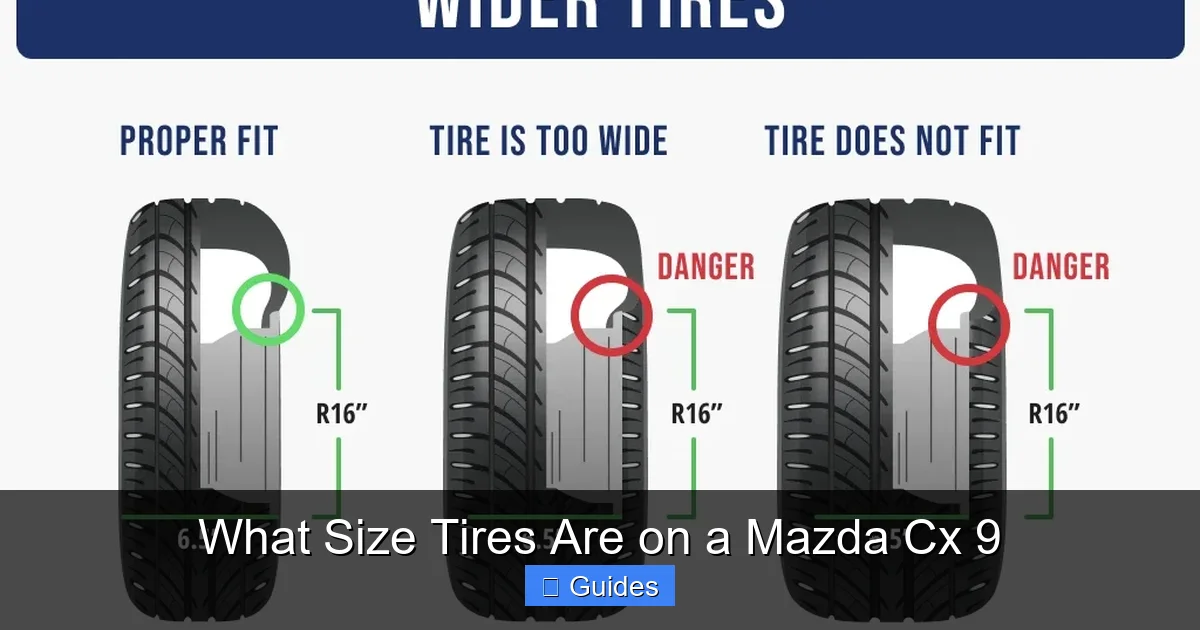
Getting these numbers right is essential. If you install a tire that’s too wide, it might rub against the wheel well. If the aspect ratio is too low, the ride could become harsh. And if the overall diameter is off, your speedometer and odometer will give incorrect readings.
For example, switching from a 235/60R18 to a 255/45R20 changes the overall diameter. Let’s calculate:
– 235/60R18: (235 × 0.60 × 2) / 25.4 + 18 = ~29.1 inches
– 255/45R20: (255 × 0.45 × 2) / 25.4 + 20 = ~29.0 inches
These are very close—less than 0.5% difference—so they’re considered compatible. But if you went to a much larger size, like 275/40R20, the diameter would be smaller, and your speedometer would read slower than your actual speed.
Can You Change Tire Sizes on a Mazda CX-9?
Visual guide about What Size Tires Are on a Mazda Cx 9
Image source: gotire.com
Yes, you can change tire sizes on your Mazda CX-9—but it’s not as simple as just picking a bigger wheel. There are important considerations to keep in mind.
Plus-Sizing: Going Larger
“Plus-sizing” means upgrading to a larger wheel and tire combination while keeping the overall diameter similar. This is often done for aesthetic or performance reasons.
For example, you could go from 18-inch wheels with 235/60R18 tires to 20-inch wheels with 255/45R20 tires. As we calculated earlier, the overall diameter is nearly identical, so your speedometer will remain accurate.
But here’s what to watch out for:
– **Clearance:** Larger wheels may rub against suspension components or the wheel well, especially when turning or going over bumps.
– **Ride comfort:** Lower-profile tires (like 255/45R20) have less sidewall, which means less cushioning. This can make the ride feel harsher, especially on rough roads.
– **Fuel economy:** Wider tires can increase rolling resistance, which may slightly reduce fuel efficiency.
– **Cost:** Larger wheels and tires are generally more expensive to buy and replace.
Downsizing: Going Smaller
Some drivers prefer smaller wheels for better ride comfort or to save money. For example, you could switch from 20-inch to 18-inch wheels.
But downsizing also has trade-offs:
– **Aesthetics:** Smaller wheels can make the vehicle look less aggressive or premium.
– **Handling:** Wider, lower-profile tires offer better grip and responsiveness. Going smaller may reduce cornering performance.
– **Brake clearance:** If your CX-9 has large brake calipers (common on higher trims), smaller wheels might not fit over them.
Using a Tire Size Calculator
The best way to ensure compatibility is to use a tire size calculator. These online tools let you compare different sizes and see how they affect overall diameter, speedometer accuracy, and clearance.
For example, if you’re considering switching from 235/60R18 to 245/50R19, a calculator will show you that the overall diameter changes by less than 1%, which is acceptable.
Always aim for a total diameter within 3% of the original size to avoid issues with ABS, traction control, and TPMS.
Best Tire Types for the Mazda CX-9
Now that you know the sizes, let’s talk about which tires are best for your CX-9. The right tire depends on your driving habits, climate, and priorities.
All-Season Tires (Standard)
Most Mazda CX-9 models come with all-season tires from the factory. These are designed to perform well in a variety of conditions—dry, wet, light snow, and moderate temperatures.
Examples include:
– **Michelin Defender LTX M/S**
– **Continental CrossContact LX25**
– **Goodyear Assurance WeatherReady**
These tires offer a great balance of comfort, longevity, and all-around performance. They’re ideal for drivers in mild to moderate climates who want one set of tires for year-round use.
Winter/Snow Tires
If you live in an area with heavy snow or freezing temperatures, consider dedicated winter tires. These are made with softer rubber compounds and deeper treads to grip snow and ice.
Examples:
– **Bridgestone Blizzak WS90**
– **Michelin X-Ice Snow**
Winter tires can dramatically improve traction and safety in cold weather. Even if your CX-9 has all-wheel drive, winter tires make a big difference.
Performance Tires
For drivers who enjoy spirited driving, performance tires offer better grip and handling. These are often found on higher trims with larger wheels.
Examples:
– **Michelin Pilot Sport All Season 4**
– **Continental ExtremeContact DWS06 Plus**
These tires provide sharper steering response and better cornering, but may wear faster and cost more.
All-Terrain Tires (For Off-Roading)
While the CX-9 isn’t designed for serious off-roading, some owners like to venture on gravel roads or light trails. In those cases, all-terrain tires can be a good option.
Examples:
– **BFGoodrich All-Terrain T/A KO2**
– **Toyo Open Country A/T III**
These tires are more durable and have aggressive tread, but they can be noisier and less fuel-efficient on highways.
Tire Maintenance Tips for Your Mazda CX-9
No matter what size or type of tire you have, proper maintenance is key to safety and longevity.
Check Tire Pressure Monthly
Underinflated tires wear unevenly, reduce fuel economy, and increase the risk of blowouts. Overinflated tires can reduce traction and make the ride harsh.
Check your tire pressure at least once a month and before long trips. Use the recommended PSI found on the driver’s door jamb sticker—not the maximum pressure listed on the tire sidewall.
For most CX-9 models, the recommended pressure is around 33–35 PSI.
Rotate Tires Every 5,000–7,500 Miles
Tire rotation helps ensure even wear. Front tires typically wear faster than rear tires due to steering and braking forces.
Mazda recommends rotating your tires every 7,500 miles, or sooner if you notice uneven wear.
A common rotation pattern for all-wheel-drive vehicles like the CX-9 is:
– Move front tires straight back
– Cross rear tires to the front (left rear to right front, right rear to left front)
Inspect for Damage and Wear
Regularly inspect your tires for:
– Cracks or bulges in the sidewall
– Uneven tread wear (could indicate alignment or suspension issues)
– Nails, screws, or other debris
Use the “penny test” to check tread depth: insert a penny into the tread with Lincoln’s head upside down. If you can see the top of his head, it’s time to replace the tire.
Align and Balance When Needed
If your vehicle pulls to one side or you notice vibration at high speeds, you may need an alignment or rebalancing.
Poor alignment causes uneven tire wear and reduces handling. Rebalancing fixes vibration caused by uneven weight distribution.
Use the Tire Pressure Monitoring System (TPMS)
The Mazda CX-9 is equipped with a TPMS that alerts you when tire pressure is too low. If the warning light comes on, check your tires immediately.
After replacing or rotating tires, the system may need to be reset. Refer to your owner’s manual for instructions.
Upgrading Your CX-9 Tires: What to Consider
If you’re thinking about upgrading your tires, here are some factors to consider.
Performance vs. Comfort
Larger, lower-profile tires improve handling but can reduce comfort. If you prioritize a smooth ride, stick with the original size or choose a tire with a higher aspect ratio.
Climate and Driving Conditions
Choose tires based on your environment. All-season tires are fine for most, but winter tires are essential in snowy areas.
Budget
Premium tires cost more but often last longer and perform better. Consider the total cost of ownership, including fuel economy and replacement frequency.
Warranty and Reviews
Look for tires with good warranties and positive customer reviews. Brands like Michelin, Continental, and Bridgestone are known for quality and reliability.
Professional Installation
Always have tires installed by a professional. They’ll ensure proper mounting, balancing, and TPMS reset.
Conclusion
So, what size tires are on a Mazda CX-9? The answer depends on your model year and trim, but common sizes include 225/65R17, 235/60R18, 245/50R19, and 255/45R20. Understanding these sizes—and how to read them—is essential for safe and effective tire replacement.
Whether you’re sticking with the original equipment or upgrading for better performance, always prioritize compatibility, safety, and proper maintenance. Regular checks, rotations, and inflation will keep your CX-9 running smoothly for years to come.
Remember, your tires are your connection to the road. Treat them well, and they’ll take you wherever you need to go—safely, comfortably, and efficiently.
Frequently Asked Questions
What is the standard tire size for a 2023 Mazda CX-9?
The 2023 Mazda CX-9 comes with different tire sizes depending on the trim. The base Sport trim uses 235/60R18 tires, while higher trims like Touring and Grand Touring often have 245/50R19. The Signature trim typically uses 255/45R20 tires.
Can I put 20-inch tires on my 2018 Mazda CX-9?
Yes, but only if your vehicle originally came with 20-inch wheels or if you’re upgrading from a compatible size. The 2018 CX-9 Signature trim uses 255/45R20 tires, so those are safe. If your model has 18-inch wheels, check clearance and overall diameter before upgrading.
How do I find the correct tire size for my Mazda CX-9?
Check the sticker on the driver’s side door jamb. It lists the recommended tire size and pressure. You can also find this information in your owner’s manual or by looking at the sidewall of your current tires.
Are all-season tires good for the Mazda CX-9?
Yes, all-season tires are ideal for most drivers. They provide reliable performance in dry, wet, and light snow conditions. If you live in a snowy climate, consider dedicated winter tires for better traction.
What happens if I use the wrong tire size on my CX-9?
Using the wrong size can cause speedometer errors, ABS or traction control issues, and uneven wear. It may also lead to tire rubbing or reduced fuel economy. Always match the overall diameter within 3% of the original.
How often should I rotate the tires on my Mazda CX-9?
Mazda recommends rotating your tires every 7,500 miles or sooner if you notice uneven wear. Regular rotation helps extend tire life and maintain balanced handling.

At CarLegit, we believe information should be clear, factual, and genuinely helpful. That’s why every guide, review, and update on our website is created with care, research, and a strong focus on user experience.