
Prioritize a comprehensive pre-purchase inspection by a specialist familiar with Maserati’s complex Ferrari-derived engines and F1-style automated manual transmission, as repair costs can be astronomical. Thoroughly vet the vehicle’s service history for consistent, documented maintenance and scrutinize the interior for common wear points on the leather and trim. Finally, insist on an extended, spirited test drive to personally evaluate the car’s iconic exhaust note, handling dynamics, and the transmission’s behavior in both automatic and manual modes.
So, you’re thinking about buying a Maserati GranTurismo. I get it. That feeling isn’t just about wanting a car. It’s about the sound of a Ferrari-derived V8 echoing off canyon walls. It’s about that perfect blend of Italian style and grand touring comfort. It’s an emotion on wheels.
But let’s be real for a second. Buying a car like this isn’t like picking up a commuter sedan. The stakes are higher, the costs are different, and the joy—oh, the joy—is immense when you get it right. I’ve been there, talking to owners, listening to mechanics, and falling in love with that exhaust note. It’s easy to get swept up in the romance, but a smart purchase is a happy purchase.
This guide is here to be your friend in that process. We’ll walk through everything you need to know, not to scare you, but to empower you. We’ll look at the heart-stopping beauty and the potential heartaches, so you can drive off with confidence and a giant smile. Let’s dive into the essential tips for buying a Maserati GranTurismo.
In This Article
- 1 Key Takeaways
- 2 📑 Table of Contents
- 3 Understanding the GranTurismo’s Legacy and Models
- 4 Critical Pre-Purchase Inspection Points
- 5 The All-Important Service History and Documentation
- 6 Owning the Experience: Cost of Ownership Realities
- 7 The Test Drive: What to Feel and Listen For
- 8 Key Specifications and Comparison Data
- 9 Finalizing Your Purchase and Next Steps
- 10 Frequently Asked Questions
- 10.1 What is the typical price range for a used Maserati GranTurismo?
- 10.2 What are the most common Maserati GranTurismo problems to check for?
- 10.3 How important is service history when buying a Maserati GranTurismo?
- 10.4 Should I buy an automatic or the DuoSelect F1 transmission?
- 10.5 What should I look for during a test drive?
- 10.6 Are Maserati GranTurismo maintenance costs as high as people say?
Key Takeaways
- Prioritize service history: Complete, dealer-stamped records are non-negotiable.
- Listen for timing chain noise: A rattle on startup signals a costly repair.
- Inspect the underbody thoroughly: Check for corrosion, especially in colder climates.
- Verify clutch or TCU health: High replacement costs make this a critical check.
- Budget for higher running costs: Factor in insurance, maintenance, and fuel expenses.
- Opt for a professional pre-purchase inspection: A specialist can uncover hidden issues.
📑 Table of Contents
- Understanding the GranTurismo’s Legacy and Models
- Critical Pre-Purchase Inspection Points
- The All-Important Service History and Documentation
- Owning the Experience: Cost of Ownership Realities
- The Test Drive: What to Feel and Listen For
- Key Specifications and Comparison Data
- Finalizing Your Purchase and Next Steps
Understanding the GranTurismo’s Legacy and Models
Before you even look at a single listing, you need to know what you’re looking at. The Maserati GranTurismo isn’t just one car; it’s a lineage of automotive art that evolved over a long and glorious production run.
The Different Generations and Key Updates
The first generation launched in 2007 and was a revelation. It was a 2+2 coupe or convertible (the GranCabrio) that looked like it was doing 100 mph while standing still. The major updates came in 2012 with the GranTurismo Sport, which brought a more powerful engine, revised styling, and a much-needed interior refresh. Later, models like the high-performance MC Stradale and the luxurious MC Centennial editions added more spice to the lineup. Knowing the year and trim is your first step.
Engine Choices: The Soul of the Car
This is where the magic lives. Most GranTurismos you’ll find have a glorious 4.7-liter naturally aspirated V8. Earlier models made around 405 horsepower, while the Sport and later models bumped it to 454 hp. It’s a Ferrari-built engine (from the F430 era) and it sings like an opera tenor. There was also a 4.2-liter V8 in some early base models, and a turbocharged 3.8-liter V8 from Ferrari in the limited-run GranTurismo MC. The 4.7L is the sweet spot for most buyers.
Practical Tip: Listen to cold starts and high-rev pulls in videos online. Fall in love with that sound. It’s a huge part of the ownership experience. If you don’t get chills, maybe look at a different car.
Critical Pre-Purchase Inspection Points
You’ve found a car that looks perfect online. Now, the real work begins. A thorough inspection is non-negotiable. This isn’t a place to cut corners.
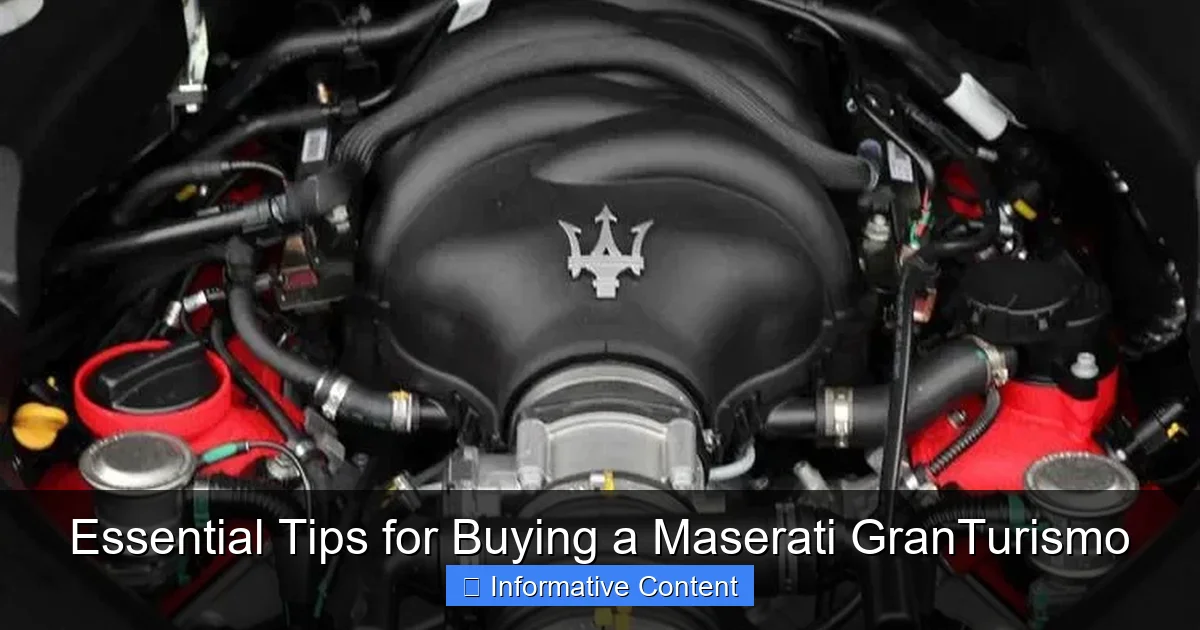
Visual guide about buying Maserati GranTurismo tips
Image source: images.pistonheads.com
Undercarriage and Structural Integrity
These are low-slung GT cars. Scrapes and bumps on the underside are common. Get the car on a lift. Look for damage to the aluminum undertrays, exhaust components, and any signs of serious impact. Check for rust, especially in colder climates where salt is used, though the aluminum body panels help resist it.
Brakes, Tires, and Suspension
Performance cars eat these components. New Brembo brakes (pads and rotors) for a GranTurismo can cost thousands. Check pad thickness and rotor scoring. Tires are expensive and wear quickly if the alignment is off. Look for uneven wear, which can signal suspension bushing issues. Listen for clunks over bumps—worn control arm bushings are a known, and costly, wear item.
Fluid Leaks and Engine Bay Check
Look for any signs of oil, coolant, or power steering fluid leaks. Common spots include the front timing cover gaskets and the power steering reservoir lines. Check the condition of all fluids. Dark, dirty oil or coolant that looks like a milkshake are major red flags.
The All-Important Service History and Documentation
A Maserati GranTurismo with a perfect, documented service history is worth its weight in gold. This is the single biggest factor in predicting future reliability and cost.
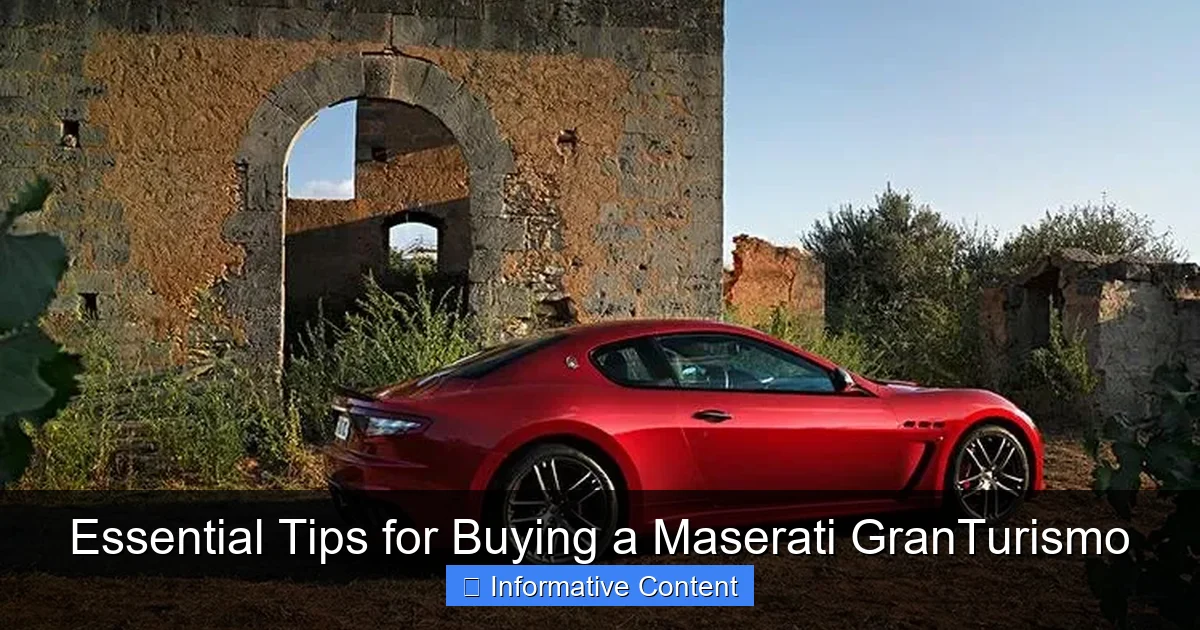
Visual guide about buying Maserati GranTurismo tips
Image source: images.pistonheads.com
What a Complete Service File Should Include
- Annual/Low-Mileage Services: Even if not driven much, these cars need yearly oil changes and inspections.
- Major Interval Services: The big one is the “30,000-mile” service (often due around 5-6 years), which includes spark plugs and can cost $3,000+.
- Recall and Service Campaign Notices: Proof that any manufacturer-issued updates were completed.
- Receipts for All Repairs: Big or small. A history of proactive maintenance is a great sign.
Red Flags in Service History
Be very wary of cars with large gaps in records, especially if they coincide with high-mileage periods. A car that sat undriven for years can have just as many problems as one that was driven hard. “I did the oil changes myself” is not sufficient documentation for a car of this complexity.
Practical Tip: Call the Maserati dealership or specialist shop listed on the receipts. With the VIN, they can often confirm the work done and give you their impression of the car and owner. This due diligence is invaluable.
Owning the Experience: Cost of Ownership Realities
Let’s talk money, frankly. The purchase price is just the entry fee. Understanding the true cost of ownership is an essential tip for buying a Maserati GranTurismo.
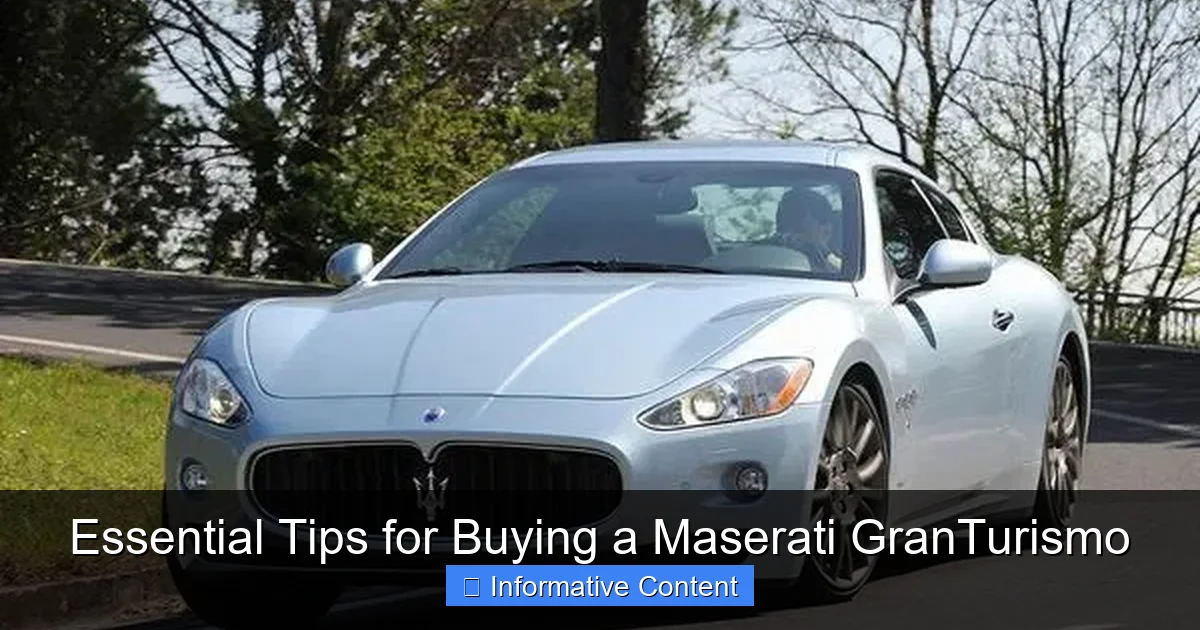
Visual guide about buying Maserati GranTurismo tips
Image source: images.pistonheads.com
Routine Maintenance and Unexpected Repairs
Annual servicing at a specialist (which I highly recommend over a dealer for older models) will typically run $1,000-$2,000 for basics. Tires are $1,500+ per set. Brakes are $3,000-$5,000. Then there are the known issues: F1 pump failure on automated manual cars ($2k+), sticky dashboard plastics, failing seat motors, and the aforementioned suspension bushings. Setting aside $3,000-$5,000 per year for maintenance and repairs is a realistic budget for an older example.
Finding the Right Specialist Mechanic
Your relationship with a good independent Maserati/Ferrari specialist is more important than your relationship with the car. A dealer will be exponentially more expensive for an out-of-warranty car. Find this specialist before you buy. Their pre-purchase inspection (PPI) is the best $300-$500 you will ever spend.
The Test Drive: What to Feel and Listen For
This is your moment. The test drive isn’t just about acceleration; it’s a full sensory diagnostic.
Transmission Behavior (DuoSelect vs. ZF Auto)
Most pre-2013 cars have the DuoSelect automated manual. It’s clunky in traffic but thrilling when driven hard. Listen for whining from the gearbox pump (a sign of impending failure). Feel for smooth shifts. Post-2013 cars have a sublime ZF 6-speed automatic that is smooth and fast. Know which one you’re driving and adjust your expectations accordingly.
Listening for Noises: Good vs. Bad
Some noise is character. The fuel pumps will hum. The transmission may whir. But listen for:
- Rattles from the dashboard or doors: Common, often fixable, but annoying.
- Grinding or clunking from the rear on acceleration/deceleration: Could indicate differential or driveshaft issues.
- Excessive exhaust rasp or leaks: The exhaust should sound glorious, not blown out.
Evaluating Comfort and Electronics
Drive on a rough road. Do the seats still feel supportive? Does the infotainment system (often outdated) work? Test every button, switch, and window. Check the air conditioning—a compressor failure is a costly fix.
Key Specifications and Comparison Data
This table breaks down the core specs for the main 4.7L V8 models, giving you a quick reference point during your search.
| Model Variant (Approx. Years) | Engine & Power | Transmission | Key Identifying Features |
|---|---|---|---|
| GranTurismo / GranCabrio (2007-2011) | 4.2L V8 (405 hp) or 4.7L V8 (433 hp) | DuoSelect Automated Manual | Earlier interior design, oval side vents, smaller brakes on base 4.2L. |
| GranTurismo Sport / MC Shift (2012-2018) | 4.7L V8 (454 hp) | Updated DuoSelect (MC Shift) or ZF Auto (from ~2013) | Revised front bumper, LED daytime runners, updated interior with nicer materials. |
| GranTurismo MC Stradale (2011-2015) | 4.7L V8 (454 hp) | F1-inspired DuoSelect (faster shifts) | Aggressive bodywork, carbon fiber accents, fixed-back racing seats, lighter weight. |
Finalizing Your Purchase and Next Steps
You’ve done the homework, found the car, aced the PPI, and fallen in love. Now, seal the deal smartly.
Negotiation Leverage
Use any issues found during the PPI as negotiation points. Not to lowball, but to fairly adjust the price to account for needed repairs. A car with imminent $4,000 brake job shouldn’t be priced like one with fresh brakes.
Pre-Delivery Preparation
Before the final handover, ensure you have:
- All keys and key fobs (they are very expensive to replace).
- The owner’s manual and any factory accessories.
- A clear, clean title.
- A plan for insurance (get agreed-value classic car insurance if eligible—it’s often cheaper).
Buying a Maserati GranTurismo is a journey that culminates in one of the most rewarding driving experiences on the planet. It’s not the cheapest, easiest, or most logical car to own. But logic rarely makes your heart race. By following these essential tips for buying a Maserati GranTurismo, you replace anxiety with excitement. You trade fear of the unknown for the confidence of knowledge. You’re not just buying a used car; you’re becoming the next curator of a piece of moving Italian history. Do your homework, trust the process, and get ready for the symphony. Your front-row seat awaits.
Frequently Asked Questions
What is the typical price range for a used Maserati GranTurismo?
Prices vary significantly based on model year, condition, and mileage, but generally range from the mid-$40,000s for higher-mileage early models to well over $100,000 for low-mileage, newer, or special editions. When buying a Maserati GranTurismo, a thorough pre-purchase inspection is crucial to ensure the asking price aligns with the car’s true condition.
What are the most common Maserati GranTurismo problems to check for?
Common areas of concern include the Ferrari-built V8’s potential for oil consumption and timing chain tensioner wear in earlier models. Also, inspect the F1 automated manual transmission (if equipped) for smooth operation and check the interior for premature wear on seats, dash leather, and switchgear.
How important is service history when buying a Maserati GranTurismo?
Service history is absolutely critical. A complete, documented history from a Maserati specialist or dealership is the best indicator of proper maintenance. Missing records can signal neglected care, potentially leading to very expensive repairs on these complex, high-performance vehicles.
Should I buy an automatic or the DuoSelect F1 transmission?
The later ZF automatic is generally more reliable and offers smoother daily driving. The earlier DuoSelect F1 gearbox provides a raw, race-car feel but can be costly to repair; only consider it if it has a flawless service record and you desire that specific driving experience.
What should I look for during a test drive?
Listen for any unusual engine or transmission noises, ensure all gears engage smoothly, and test the brakes for vibration or pulling. Pay close attention to how the car handles at low speeds and over bumps, checking for clunks that might indicate worn suspension components.
Are Maserati GranTurismo maintenance costs as high as people say?
Yes, maintenance and repair costs are significantly higher than average, aligning with its exotic car pedigree. Budget for premium fluids, specialized parts, and labor from technicians familiar with the brand. A well-maintained example is key to managing long-term ownership costs.

At CarLegit, we believe information should be clear, factual, and genuinely helpful. That’s why every guide, review, and update on our website is created with care, research, and a strong focus on user experience.