
Buying a used car can save you thousands—if you know what to look for. From checking the vehicle history to inspecting the engine and test driving, this guide walks you through every step to help you make a smart, safe purchase.
In This Article
- 1 Key Takeaways
- 2 📑 Table of Contents
- 3 Introduction: Why Buying a Used Car Makes Sense
- 4 Step 1: Do Your Homework Before You Shop
- 5 Step 2: Check the Vehicle History Report
- 6 Step 3: Inspect the Car Inside and Out
- 7 Step 4: Take It for a Test Drive
- 8 Step 5: Get a Pre-Purchase Inspection
- 9 Step 6: Review the Paperwork and Finalize the Deal
- 10 Conclusion: Drive Away with Confidence
- 11 Frequently Asked Questions
Key Takeaways
- Check the vehicle history report: Use services like Carfax or AutoCheck to uncover accidents, title issues, and odometer discrepancies.
- Inspect the car thoroughly: Look for rust, paint mismatches, uneven gaps, and signs of water damage both inside and out.
- Test drive the vehicle: Pay attention to engine noise, braking, steering, and how the transmission shifts.
- Get a pre-purchase inspection: Hire a trusted mechanic to evaluate the car’s condition before you buy.
- Verify ownership and paperwork: Ensure the seller has a clear title, matching VIN, and valid registration.
- Research market value: Use tools like Kelley Blue Book or Edmunds to ensure you’re paying a fair price.
- Negotiate confidently: Use your findings to negotiate a better deal or walk away if something feels off.
📑 Table of Contents
- Introduction: Why Buying a Used Car Makes Sense
- Step 1: Do Your Homework Before You Shop
- Step 2: Check the Vehicle History Report
- Step 3: Inspect the Car Inside and Out
- Step 4: Take It for a Test Drive
- Step 5: Get a Pre-Purchase Inspection
- Step 6: Review the Paperwork and Finalize the Deal
- Conclusion: Drive Away with Confidence
Introduction: Why Buying a Used Car Makes Sense
Buying a used car is one of the smartest financial decisions you can make. New cars lose value the moment you drive them off the lot—often dropping 20% in the first year alone. A used car, on the other hand, has already taken that initial depreciation hit. That means you can get more car for your money, whether you’re looking for a reliable commuter, a family SUV, or a sporty coupe.
But while buying used saves money, it also comes with risks. Unlike new cars, which come with warranties and full service records, used vehicles may have hidden problems. That’s why knowing what to look for when buying a used car is crucial. With the right approach, you can avoid scams, mechanical nightmares, and buyer’s remorse. This guide will walk you through every step—from research to test drive to final paperwork—so you can drive away with confidence.
Step 1: Do Your Homework Before You Shop
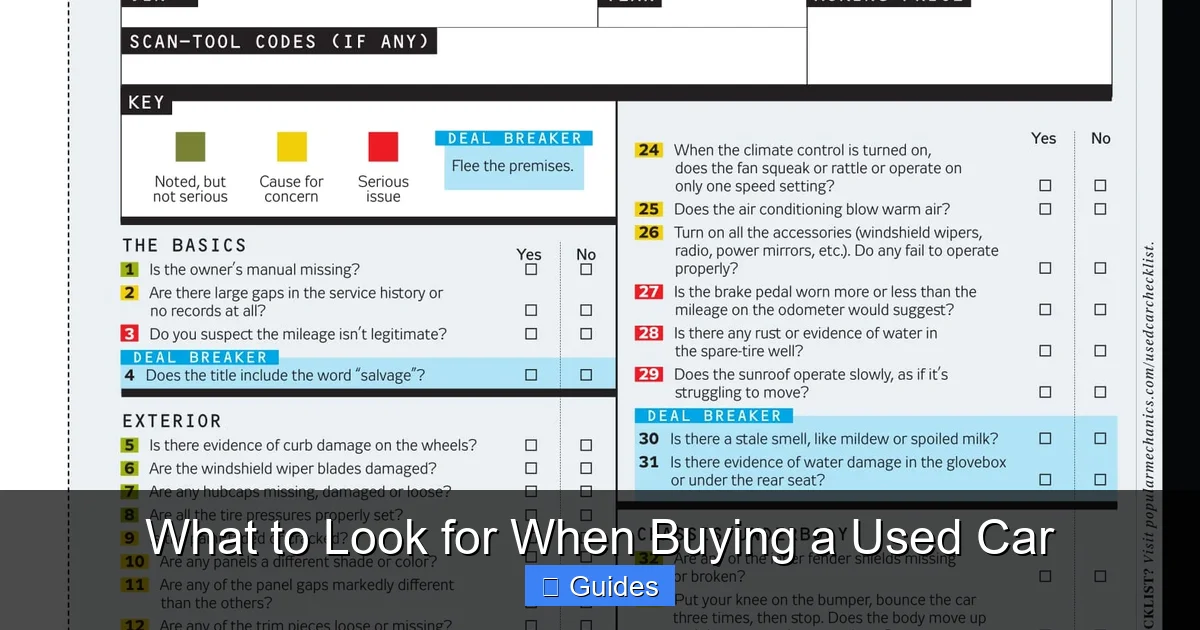
Visual guide about What to Look for When Buying a Used Car
Image source: images.sampleforms.com
Before you even step foot on a dealership lot or reply to a private seller’s ad, take time to research. The more you know, the better your chances of finding a great deal.
Set a Realistic Budget
Start by figuring out how much you can afford. Don’t just think about the purchase price—factor in taxes, registration, insurance, and potential repairs. A good rule of thumb is that your car payment (if financing) should not exceed 15% of your take-home pay. If you’re paying cash, make sure you’re not draining your emergency fund.
For example, if you have $15,000 to spend, aim for a car priced around $13,000 to leave room for fees and unexpected costs. And remember: the cheapest car isn’t always the best deal. A $5,000 car with high mileage and a sketchy history could cost you more in repairs down the road.
Choose the Right Make and Model
Not all used cars are created equal. Some brands and models are known for their reliability, while others have a reputation for expensive repairs. Do some digging on sites like Consumer Reports, J.D. Power, and Edmunds to find models with strong reliability ratings.
For instance, Toyota and Honda consistently rank high for long-term dependability. A used Toyota Camry or Honda Civic might cost a bit more upfront, but they’re likely to last longer and cost less to maintain. On the flip side, luxury brands like BMW or Mercedes can be tempting, but their repair costs can be steep—even for older models.
Also consider fuel efficiency, cargo space, safety ratings, and features that matter to you. If you have a long commute, a fuel-efficient sedan might be ideal. If you’re hauling kids or gear, an SUV or minivan could be better.
Use Online Tools to Compare Prices
Once you’ve narrowed down your options, use pricing tools to see what similar cars are selling for in your area. Kelley Blue Book (KBB), Edmunds, and NADA Guides all offer free valuation tools. Enter the car’s year, make, model, mileage, and condition to get a fair market range.
For example, a 2018 Honda Accord with 60,000 miles might be listed between $16,000 and $18,000. If you see one priced at $14,500, that could be a great deal—or a red flag. Use the data to spot outliers and negotiate from a position of strength.
Step 2: Check the Vehicle History Report
Visual guide about What to Look for When Buying a Used Car
Image source: images.sample.net
One of the most important things to look for when buying a used car is its history. A clean title doesn’t always mean a clean past. That’s where a vehicle history report comes in.
Why You Need a History Report
A vehicle history report pulls data from police departments, DMVs, insurance companies, and repair shops to give you a snapshot of the car’s life. It can reveal:
– Accident history
– Flood or fire damage
– Odometer rollback
– Number of previous owners
– Service and maintenance records
– Title issues (salvage, rebuilt, lemon law buyback)
These details can save you from buying a car with hidden damage or a dangerous defect.
Where to Get a Report
The two most popular services are Carfax and AutoCheck. Both cost around $40 for a single report, but many dealerships offer them for free. Private sellers may also provide one—if they don’t, ask for the VIN and run it yourself.
For example, a Carfax report might show that a 2017 Ford F-150 was in a minor fender bender but repaired properly. That’s usually not a dealbreaker. But if it shows the truck was declared a total loss after a flood, that’s a hard pass—even if it looks fine on the surface.
Red Flags to Watch For
Here are some warning signs in a history report:
– **Salvage or rebuilt title:** This means the car was declared a total loss by an insurance company. It may be safe to drive, but it can be harder to insure and resell.
– **Odometer rollback:** If the mileage jumps backward or doesn’t add up, someone may have tampered with it.
– **Multiple owners in a short time:** This could indicate mechanical problems or a lemon.
– **Lemon law buyback:** The manufacturer repurchased the car due to repeated defects.
If any of these appear, dig deeper or walk away.
Step 3: Inspect the Car Inside and Out

Visual guide about What to Look for When Buying a Used Car
Image source: lp-auto-assets.s3.amazonaws.com
Once you’ve found a car that passes the history check, it’s time for a physical inspection. This is your chance to spot problems the seller might not mention.
Exterior Inspection
Start with the body. Walk around the car and look for:
– **Rust or corrosion:** Check wheel wells, door edges, and under the car. Surface rust is common, but structural rust is dangerous.
– **Paint mismatches:** Different shades or textures can indicate bodywork from an accident.
– **Uneven panel gaps:** If doors, hood, or trunk don’t line up evenly, the car may have been in a collision.
– **Dents, scratches, or cracks:** Minor cosmetic damage is normal, but deep dents or cracked glass could signal bigger issues.
Use a flashlight to check under the car for leaks. Oil, coolant, or transmission fluid stains on the ground are bad signs.
Interior Inspection
Inside, look for:
– **Wear and tear:** Check seats, steering wheel, and pedals. Excessive wear might mean high mileage, even if the odometer says otherwise.
– **Odors:** A musty smell could mean water damage or mold. Smoke or mildew odors are hard to remove.
– **Stains or tears:** Look under floor mats and in the trunk. Water stains or wet carpeting suggest leaks or flooding.
– **Electronics:** Test all buttons, switches, and screens. Make sure the radio, AC, power windows, and lights work.
Open the glove box and check for service records. A well-maintained car often comes with receipts for oil changes, brakes, and other repairs.
Under the Hood
Pop the hood and inspect the engine bay. Look for:
– **Cleanliness:** A dirty engine isn’t necessarily bad, but a spotless one might mean it was cleaned to hide leaks.
– **Fluids:** Check oil, coolant, brake fluid, and transmission fluid. Low or dirty fluids can indicate poor maintenance.
– **Belts and hoses:** Look for cracks, fraying, or looseness.
– **Leaks:** Oil or coolant stains under the engine are red flags.
If you’re not confident in your ability to assess these things, bring a friend who knows cars—or better yet, hire a mechanic.
Step 4: Take It for a Test Drive
A test drive is your chance to see how the car feels on the road. Don’t rush it—spend at least 20 minutes driving in different conditions.
What to Listen For
Start the engine and listen. It should start smoothly without knocking, sputtering, or excessive noise. While driving, pay attention to:
– **Engine noise:** Knocking, ticking, or whining could mean internal problems.
– **Transmission shifts:** Automatic transmissions should shift smoothly. Hesitation, jerking, or slipping is a bad sign.
– **Brakes:** They should feel firm and stop the car without pulling to one side or making grinding noises.
– **Suspension:** Drive over bumps. Excessive bouncing or clunking could mean worn shocks or struts.
What to Feel
– **Steering:** It should feel responsive and not pull to one side. Vibrations at high speeds might indicate wheel balance issues.
– **Vibration:** If the steering wheel or seat vibrates, there could be alignment or tire problems.
– **Comfort:** Make sure the seats, ride, and cabin noise are acceptable for your needs.
Test Different Conditions
If possible, drive on highways, city streets, and hills. This will help you assess acceleration, braking, and handling in real-world situations.
For example, a car might feel fine at low speeds but struggle to merge onto a highway. Or it might brake well in traffic but squeal when stopping suddenly.
Use the Test Drive to Ask Questions
While driving, ask the seller about any quirks or issues. Why are they selling? Have there been any recent repairs? How often was it serviced?
Honest sellers will answer openly. If they dodge questions or seem defensive, that’s a red flag.
Step 5: Get a Pre-Purchase Inspection
Even if the car looks and drives well, a professional inspection is the best way to uncover hidden problems.
Why It’s Worth the Cost
A pre-purchase inspection (PPI) typically costs $100–$200, but it can save you thousands. A mechanic will check the engine, transmission, suspension, brakes, and more. They’ll also look for signs of previous damage or poor repairs.
For example, a mechanic might discover a leaking head gasket or worn timing belt—issues that could cost $1,500 or more to fix. If the inspection reveals major problems, you can walk away or use it to negotiate a lower price.
How to Find a Good Mechanic
Ask friends or family for recommendations, or look for a certified mechanic (ASE-certified) with good reviews. Avoid mechanics affiliated with the seller or dealership—they may not be impartial.
Call ahead and explain you’re buying a used car and want a full inspection. Most shops will accommodate you, especially if you’re paying out of pocket.
What the Inspection Should Cover
A thorough PPI should include:
– Engine and transmission condition
– Cooling and exhaust systems
– Brakes and suspension
– Electrical systems
– Frame and undercarriage
– Tire condition and alignment
Ask the mechanic to provide a written report with photos and recommendations. This can also help if you need to negotiate repairs with the seller.
Step 6: Review the Paperwork and Finalize the Deal
Before you hand over your money, make sure all the paperwork is in order.
Verify Ownership
Check that the seller’s name matches the title. If buying from a dealership, confirm they’re licensed. For private sales, meet in a safe, public place and bring a friend.
Check the Title
The title should be clean (not salvage or rebuilt) and free of liens. Make sure the VIN on the title matches the one on the car (usually on the dashboard or driver’s side door jamb).
Understand the Sale Type
– **Private sale:** You’ll sign a bill of sale and transfer the title. Some states require a smog check or safety inspection.
– **Dealership:** They’ll handle most paperwork, but read the contract carefully. Watch for add-ons like extended warranties or paint protection that inflate the price.
Negotiate the Price
Use your research and inspection findings to negotiate. If the car needs new tires or brakes, ask for a discount. Most sellers expect some haggling—don’t be afraid to walk away if the price isn’t right.
For example, if the car is listed at $17,000 but needs $1,200 in repairs, offer $15,500. Be polite but firm.
Complete the Transaction Safely
For private sales, use a secure payment method like a cashier’s check or bank transfer. Avoid wire transfers or cash for large amounts. Get a signed bill of sale that includes the VIN, sale price, and date.
Once the deal is done, register the car in your name and get insurance before driving it home.
Conclusion: Drive Away with Confidence
Buying a used car doesn’t have to be stressful. By knowing what to look for when buying a used car—from history reports to test drives to inspections—you can avoid costly mistakes and find a reliable vehicle that fits your budget.
Take your time, do your research, and trust your instincts. If something feels off, it probably is. With the right approach, you’ll not only save money but also gain peace of mind knowing you made a smart, informed decision.
Remember: the best deal isn’t always the cheapest one. It’s the one that gives you the most value, reliability, and confidence for years to come.
Frequently Asked Questions
How can I avoid buying a lemon?
Get a vehicle history report, have the car inspected by a mechanic, and buy from a reputable seller. Avoid cars with salvage titles or multiple owners in a short time.
Is it safe to buy a used car from a private seller?
Yes, but take precautions. Meet in a public place, bring a friend, and always get a pre-purchase inspection. Verify the title and VIN match.
What should I do if the car has a salvage title?
Salvage titles mean the car was declared a total loss. It may be safe to drive, but it can be harder to insure and resell. Only consider it if the price is very low and you’ve had it thoroughly inspected.
How much should I budget for repairs on a used car?
Set aside 10–15% of the purchase price for potential repairs. Older or high-mileage cars may need more. A pre-purchase inspection can help estimate costs.
Can I negotiate the price of a used car?
Absolutely. Use your research, inspection findings, and market data to make a reasonable offer. Most sellers expect some negotiation.
Do I need a mechanic to inspect a used car?
Yes, it’s highly recommended. A professional inspection can uncover hidden problems and save you from expensive repairs later.

At CarLegit, we believe information should be clear, factual, and genuinely helpful. That’s why every guide, review, and update on our website is created with care, research, and a strong focus on user experience.