
If your Chrysler 300 won’t start, the issue could range from a simple dead battery to a failing fuel pump or ignition switch. This guide walks you through the most common causes, how to diagnose them, and what you can do to get back on the road quickly and safely.
In This Article
- 1 Key Takeaways
- 2 📑 Table of Contents
- 3 Why Won’t My Chrysler 300 Start? A Complete Troubleshooting Guide
- 4 1. Battery and Electrical Issues
- 5 2. Starter Motor and Solenoid Problems
- 6 3. Ignition Switch and Key Fob Problems
- 7 4. Fuel System Failures
- 8 5. Sensor and Computer Problems
- 9 6. Security and Anti-Theft System Glitches
- 10 When to Call a Mechanic
- 11 Prevention Tips to Avoid Future No-Starts
- 12 Conclusion
- 13 Frequently Asked Questions
- 13.1 Why does my Chrysler 300 click but not start?
- 13.2 Can a bad key fob prevent my Chrysler 300 from starting?
- 13.3 How do I know if my fuel pump is bad?
- 13.4 What causes a Chrysler 300 to crank but not start?
- 13.5 Can a dead battery cause the Chrysler 300 not to start even with a jump?
- 13.6 How often should I replace the battery in my Chrysler 300?
Key Takeaways
- Dead or weak battery: The most common cause—check voltage and connections before assuming major repairs are needed.
- Faulty starter motor: A clicking sound with no engine turnover often points to a bad starter or solenoid.
- Bad ignition switch: If dash lights flicker or nothing happens when turning the key, the ignition switch may be failing.
- Fuel delivery issues: A clogged fuel filter, weak fuel pump, or bad fuel injectors can prevent the engine from getting gas.
- Faulty crankshaft position sensor: This critical sensor tells the engine when to fire—if it fails, the car won’t start even if everything else works.
- Security system glitches: The Chrysler 300’s anti-theft system (Sentry Key) can mistakenly block startup if the key fob is damaged or not recognized.
- Corroded or loose wiring: Poor electrical connections, especially in older models, can disrupt power flow and prevent starting.
📑 Table of Contents
- Why Won’t My Chrysler 300 Start? A Complete Troubleshooting Guide
- 1. Battery and Electrical Issues
- 2. Starter Motor and Solenoid Problems
- 3. Ignition Switch and Key Fob Problems
- 4. Fuel System Failures
- 5. Sensor and Computer Problems
- 6. Security and Anti-Theft System Glitches
- When to Call a Mechanic
- Prevention Tips to Avoid Future No-Starts
- Conclusion
Why Won’t My Chrysler 300 Start? A Complete Troubleshooting Guide
You’re running late for work, you hop into your sleek Chrysler 300, turn the key—and nothing. No engine cranking, no roar of life. Just silence. Or maybe a faint click. Frustrating? Absolutely. But don’t panic. A Chrysler 300 not starting is a common issue, and in most cases, it’s fixable without a trip to the dealership.
The Chrysler 300 is a reliable full-size sedan known for its smooth ride, powerful V6 and V8 engines, and bold styling. But like any vehicle, it’s not immune to mechanical and electrical hiccups. Whether you drive a 2005 model or a 2020, the reasons your 300 won’t start often fall into a few predictable categories: electrical problems, fuel system failures, ignition issues, or security system glitches.
In this guide, we’ll walk you through the most common causes of a Chrysler 300 not starting, how to identify them, and what you can do about it—whether you’re a DIY enthusiast or just want to understand what your mechanic is talking about. We’ll keep it simple, practical, and jargon-free. After all, no one wants to be stranded in a parking lot wondering if it’s the battery or the brain of the car that’s gone bad.
1. Battery and Electrical Issues
Visual guide about What Would Cause a Chrysler 300 Not to Start
Image source: images.opinautos.com
Let’s start with the most obvious suspect: the battery. If your Chrysler 300 won’t start, the battery is the first thing to check—especially if the dashboard lights are dim, the radio won’t turn on, or you hear a rapid clicking when you turn the key.
Signs of a Dead or Weak Battery
A dead battery is the #1 reason cars don’t start. In the Chrysler 300, you might notice:
– The engine doesn’t crank at all.
– Dashboard lights flicker or stay off.
– Headlights are dim, even when the car is off.
– A clicking sound when turning the key (often mistaken for a starter issue).
If your 300 is more than three years old, the battery may simply be at the end of its life. Car batteries typically last 3–5 years, depending on climate and usage. Extreme heat or cold can shorten that lifespan.
How to Test the Battery
You don’t need a mechanic to check your battery. Grab a multimeter (available at any auto parts store for under $20) and follow these steps:
1. Turn off the car and all accessories.
2. Set the multimeter to DC voltage (20V range).
3. Touch the red probe to the positive terminal (+) and the black probe to the negative terminal (–).
4. A healthy battery should read 12.6 volts or higher. Anything below 12.4 volts means it’s weak or discharged.
If the voltage is low, try jump-starting the car. If it starts and runs fine, the battery may just need a recharge. But if it dies again soon after, the battery is likely bad and needs replacement.
Corroded or Loose Battery Connections
Even with a good battery, corroded or loose terminals can prevent power from reaching the starter. Look for white, green, or blue powdery buildup on the terminals. This corrosion acts like insulation, blocking electrical flow.
To fix it:
– Disconnect the negative cable first (black), then the positive (red).
– Clean the terminals and cable ends with a wire brush or baking soda and water mix.
– Reconnect tightly, positive first, then negative.
– Apply a thin layer of dielectric grease to prevent future corrosion.
Pro tip: If your 300 has been sitting for weeks, the battery may have drained from parasitic draw—small electronics that keep drawing power even when the car is off. This is common in older models with aftermarket alarms or stereos.
2. Starter Motor and Solenoid Problems
Visual guide about What Would Cause a Chrysler 300 Not to Start
Image source: vaultcars.com
If the battery is fine but the engine still won’t crank, the next suspect is the starter motor. The starter is a small electric motor that turns the engine over when you turn the key. If it fails, your 300 won’t start—no matter how good the battery is.
How to Identify a Bad Starter
Listen carefully when you turn the key. If you hear a single loud click but the engine doesn’t turn over, that’s a classic sign of a faulty starter or solenoid. The solenoid is the switch that sends power to the starter motor. If it’s stuck or broken, the motor won’t engage.
Other signs include:
– Intermittent starting (works sometimes, doesn’t other times).
– A grinding noise when trying to start.
– The engine cranks slowly, even with a good battery.
Testing the Starter
Testing the starter requires some mechanical know-how, but it’s doable with basic tools. Here’s a simple method:
1. Locate the starter under the car, usually near the transmission.
2. Tap it gently with a hammer while someone tries to start the car. If it starts, the starter is likely failing and needs replacement.
3. Use a multimeter to check for power at the starter solenoid when the key is turned. If power is present but the starter doesn’t engage, it’s bad.
Replacing a starter on a Chrysler 300 can be tricky due to tight engine space, especially on V8 models. If you’re not confident, it’s best to leave this to a professional. Labor costs can range from $150 to $300, plus $100–$200 for the part.
Starter Relay Issues
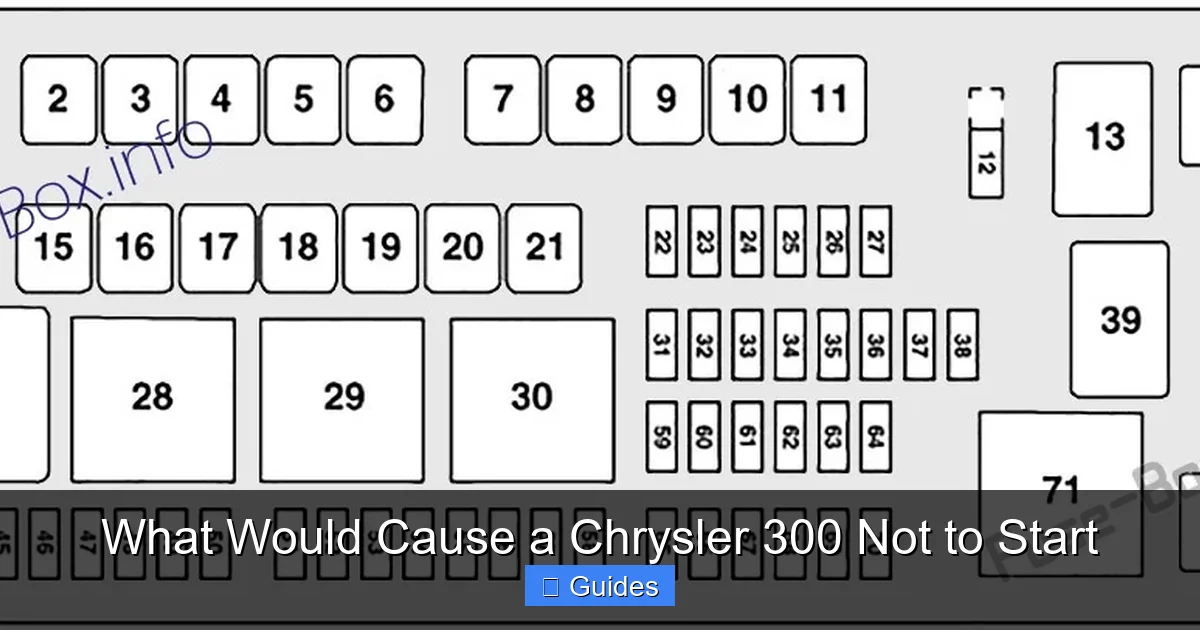
Sometimes the problem isn’t the starter itself, but the relay that controls it. The starter relay is a small electrical switch in the fuse box. If it fails, power won’t reach the starter.
To test it:
– Locate the starter relay in the Power Distribution Center (PDC) under the hood.
– Swap it with a similar relay (like the horn relay) and try starting the car.
– If it starts, replace the faulty relay (usually under $15).
3. Ignition Switch and Key Fob Problems
Visual guide about What Would Cause a Chrysler 300 Not to Start
Image source: cdn.dealeraccelerate.com
The ignition switch is what tells your Chrysler 300 to start when you turn the key or press the start button. If it’s worn out or damaged, the car won’t respond—even if everything else is working.
Symptoms of a Bad Ignition Switch
– The key turns, but nothing happens—no dash lights, no cranking.
– Dash lights flicker or go out when turning the key.
– The car starts sometimes but not others.
– The steering wheel is locked and won’t turn (a safety feature linked to the ignition).
In push-button start models, a faulty ignition switch can prevent the system from recognizing the key fob or engaging the starter.
Key Fob and Sentry Key System
The Chrysler 300 uses a security system called Sentry Key Immobilizer System (SKIS). It reads a chip in your key fob and only allows the car to start if it recognizes the key.
If the fob battery is dead, damaged, or not properly programmed, the car won’t start—even if you insert the physical key.
Try these fixes:
– Replace the key fob battery (usually a CR2032 coin cell).
– Use the spare key fob if you have one.
– Hold the fob directly against the start button (some models allow this as a backup).
If the system still doesn’t recognize the key, you may need to reprogram it using a diagnostic tool or visit a dealership.
Ignition Cylinder Wear
Over time, the mechanical part of the ignition switch—the cylinder—can wear out. This is common in older 300s with high mileage. You might notice the key is hard to turn or feels loose.
Replacing the ignition cylinder is a job for a professional, as it involves disassembling the steering column. Expect to pay $200–$400 for parts and labor.
4. Fuel System Failures
If your Chrysler 300 cranks but won’t start, the problem is likely fuel-related. The engine needs a steady supply of gasoline to ignite. If it’s not getting fuel, it won’t run—no matter how good the spark or compression is.
Fuel Pump Issues
The fuel pump sends gas from the tank to the engine. If it fails, the engine won’t get fuel. Common signs include:
– The engine cranks but doesn’t start.
– It starts briefly then dies.
– You hear a whining noise from the fuel tank area.
– Poor performance or stalling while driving.
To test the fuel pump:
– Turn the key to “ON” (don’t start the engine). You should hear a faint humming from the rear of the car for 2–3 seconds—that’s the pump priming.
– If you don’t hear it, the pump may be dead or not receiving power.
Replacing a fuel pump on a Chrysler 300 requires dropping the fuel tank, which is labor-intensive. Costs range from $400 to $800, depending on the model year and engine.
Clogged Fuel Filter
The fuel filter cleans debris from the gas before it reaches the engine. Over time, it can get clogged, restricting fuel flow.
Symptoms:
– Hard starting, especially when the engine is cold.
– Engine hesitation or stalling under acceleration.
– Reduced fuel economy.
Most mechanics recommend replacing the fuel filter every 30,000–60,000 miles. On the Chrysler 300, it’s usually located along the fuel line under the car. Replacement is relatively inexpensive ($50–$100 for parts and labor).
Bad Fuel Injectors
Fuel injectors spray gasoline into the engine’s combustion chamber. If they’re clogged or malfunctioning, the engine may not get the right fuel mixture.
Signs include:
– Rough idle or misfires.
– Engine cranks but won’t start.
– Strong smell of gasoline (indicating flooded injectors).
Cleaning or replacing injectors can cost $100–$300. Use high-quality fuel and consider adding a fuel system cleaner to your tank every 5,000 miles to prevent buildup.
5. Sensor and Computer Problems
Modern cars like the Chrysler 300 rely on a network of sensors and computers to manage engine operation. If a critical sensor fails, the engine control unit (ECU) may prevent the car from starting as a safety measure.
Crankshaft Position Sensor (CKP)
This sensor tells the ECU when the engine’s pistons are moving. Without this signal, the ECU won’t fire the spark plugs or inject fuel—so the car won’t start.
Symptoms:
– Engine cranks but doesn’t start.
– No spark or fuel delivery.
– Check Engine Light may be on.
The CKP sensor is usually located near the crankshaft pulley or transmission bell housing. Replacement costs $100–$200. Some owners report success by cleaning the sensor with electrical cleaner, but if it’s faulty, replacement is the only fix.
Camshaft Position Sensor (CMP)
Similar to the CKP, the camshaft sensor tells the ECU the position of the camshaft. If it fails, the engine may not start or may run poorly.
Symptoms:
– Hard starting.
– Stalling.
– Reduced power.
The CMP sensor is often located near the valve cover. Replacement is similar in cost to the CKP sensor.
Faulty Engine Control Unit (ECU)
In rare cases, the ECU itself may fail. This is the “brain” of the car, and if it’s damaged, the engine won’t start. Signs include:
– No communication with diagnostic tools.
– Multiple sensor failures at once.
– Electrical gremlins (lights flickering, windows not working).
ECU replacement is expensive ($500–$1,500) and usually requires programming by a dealer or specialist.
6. Security and Anti-Theft System Glitches
The Chrysler 300’s anti-theft system is designed to prevent unauthorized starting. But sometimes, it works too well—blocking startup even when you’re the rightful owner.
Sentry Key Immobilizer System (SKIS)
This system uses a transponder chip in the key fob. If the chip is damaged, the fob battery is dead, or the system malfunctions, the car won’t start.
Solutions:
– Replace the fob battery.
– Try the spare key.
– Reprogram the key using a diagnostic tool.
– Reset the system by disconnecting the battery for 10 minutes.
Aftermarket Alarms and Remote Starters
If you’ve installed an aftermarket alarm or remote start system, it could interfere with the factory electronics. Faulty wiring or a blown fuse in the alarm system can prevent the car from starting.
Check the fuse box for blown fuses related to the alarm or ignition. If you suspect the aftermarket system is the culprit, disconnect it temporarily to test.
When to Call a Mechanic
While many starting issues can be diagnosed at home, some problems require professional help. Call a mechanic if:
– You’ve checked the battery, starter, and fuses, but the car still won’t start.
– You suspect a fuel pump, ECU, or sensor failure.
– The Check Engine Light is on and you don’t have a code reader.
– You’re not comfortable working under the car or with electrical systems.
A professional diagnostic scan can pinpoint the exact issue quickly, saving you time and money in the long run.
Prevention Tips to Avoid Future No-Starts
An ounce of prevention is worth a pound of cure. Here’s how to keep your Chrysler 300 starting reliably:
– Test your battery annually, especially before winter.
– Replace the battery every 4–5 years.
– Keep battery terminals clean and tight.
– Use a battery tender if the car sits for long periods.
– Replace the fuel filter on schedule.
– Use high-quality gasoline and add fuel injector cleaner regularly.
– Avoid aftermarket electronics unless installed by a professional.
Conclusion
A Chrysler 300 not starting can be frustrating, but it’s rarely a mystery. Most causes—like a dead battery, bad starter, or faulty sensor—are common and fixable. By understanding the signs and doing basic checks, you can often solve the problem yourself or at least know what to tell your mechanic.
Remember: start simple. Check the battery, listen for clicks, and look for warning lights. From there, work your way through the fuel, ignition, and sensor systems. With a little patience and the right tools, you’ll have your 300 back on the road in no time.
And if all else fails? Don’t hesitate to call a pro. Sometimes, the best fix is knowing when to ask for help.
Frequently Asked Questions
Why does my Chrysler 300 click but not start?
A single loud click usually means the starter solenoid is engaging, but the starter motor isn’t turning. This could be a bad starter, weak battery, or poor electrical connection. Check the battery voltage and clean the terminals first.
Can a bad key fob prevent my Chrysler 300 from starting?
Yes. The Sentry Key system requires a working transponder chip in the fob. If the battery is dead or the chip is damaged, the car won’t start. Try the spare key or replace the fob battery.
How do I know if my fuel pump is bad?
Listen for a humming sound from the fuel tank when you turn the key to “ON.” If you don’t hear it, the pump may be dead. Also, if the engine cranks but won’t start and smells like gas, the pump could be failing.
What causes a Chrysler 300 to crank but not start?
This usually points to fuel, spark, or sensor issues. Common causes include a bad fuel pump, clogged fuel filter, faulty crankshaft sensor, or ignition coil problems. A diagnostic scan can help pinpoint the issue.
Can a dead battery cause the Chrysler 300 not to start even with a jump?
Yes, if the battery is completely dead or has internal damage, it may not hold a charge—even with a jump. Try jump-starting, but if it dies immediately, the battery likely needs replacement.
How often should I replace the battery in my Chrysler 300?
Most car batteries last 3–5 years. If your 300 is more than four years old, test the battery annually. Extreme temperatures and frequent short trips can shorten its life.

At CarLegit, we believe information should be clear, factual, and genuinely helpful. That’s why every guide, review, and update on our website is created with care, research, and a strong focus on user experience.