
When it comes to reliability, the 2017 BMW X3 stands out as the most dependable model year in the X3 lineup. With fewer reported issues, strong performance, and solid owner satisfaction, it strikes the perfect balance between luxury and longevity. If you’re shopping for a used BMW X3, this year should be at the top of your list.
So, you’re thinking about buying a BMW X3—smart move. It’s one of the most popular luxury compact SUVs on the market, blending German engineering, a premium interior, and solid driving dynamics. But here’s the thing: not all BMW X3s are created equal when it comes to reliability. Some years shine brighter than others, and if you’re looking for a used model that won’t leave you stranded or buried in repair bills, you need to know which year to target.
Over the years, the BMW X3 has evolved significantly—from its humble beginnings in 2004 to the sleek, tech-packed SUV we see today. But with each redesign and engine update, there have been growing pains. Some model years introduced innovative features but also new problems. Others dialed back the complexity and delivered a smoother, more dependable driving experience. That’s why it’s crucial to dig into the data, owner reviews, and expert analysis to find the sweet spot—the year when the X3 truly earned its reputation for reliability.
In this guide, we’ll break down the entire BMW X3 timeline, highlight the most reliable year, and explain why it stands above the rest. Whether you’re a first-time BMW buyer or upgrading from an older model, this information will help you make a confident, informed decision. Let’s dive in.
In This Article
Key Takeaways
- The 2017 BMW X3 is widely regarded as the most reliable model year due to its refined engine, fewer mechanical issues, and strong owner feedback.
- Early 2000s X3 models (2004–2006) had higher failure rates, especially with cooling systems and electrical components, making them less dependable.
- Turbocharged engines in 2011–2016 models introduced complexity, leading to more frequent repairs, particularly with the N20 engine’s timing chain.
- Regular maintenance is critical for any BMW X3—neglecting oil changes, brake fluid, and coolant can drastically reduce reliability.
- The 2017 model benefits from BMW’s updated B48 engine, which offers better fuel efficiency and fewer long-term issues than its predecessors.
- Reliability ratings from J.D. Power, Consumer Reports, and RepairPal consistently favor the 2017–2019 X3 range over earlier generations.
- Always check vehicle history and maintenance records when buying a used X3—even the most reliable year can fail with poor care.
📑 Table of Contents
A Brief History of the BMW X3
The BMW X3 first hit the market in 2004 as a compact luxury SUV designed to compete with vehicles like the Mercedes-Benz GLK and Audi Q5. Built on a modified version of the BMW 3 Series platform, the first-generation X3 (E83) was praised for its handling and off-road capability but criticized for its stiff ride and lack of refinement. Early models were powered by inline-6 engines, including the 2.5L and 3.0L variants, which were generally robust but prone to certain issues over time.
First Generation (2004–2010): The Foundation
The E83 X3 laid the groundwork for BMW’s SUV success. It offered a commanding driving position, all-wheel drive (xDrive), and a practical interior. However, reliability was a mixed bag. Common problems included coolant leaks, water pump failures, and issues with the transfer case. The 2004–2006 models, in particular, had higher-than-average repair rates, especially with the cooling system. The plastic coolant expansion tank was notorious for cracking, leading to overheating and engine damage if not caught early.
By 2007, BMW made some improvements, including a revised cooling system and better electrical components. The 2007–2010 models saw fewer major issues, but the N52 3.0L inline-6 engine—while reliable—still required diligent maintenance. Owners who stuck to the service schedule often enjoyed trouble-free driving, but those who skipped oil changes or ignored warning lights faced costly repairs.
Second Generation (2011–2017): A Shift in Design and Power
The second-generation X3 (F25) arrived in 2011 with a complete redesign. It was larger, more refined, and packed with new technology. BMW introduced turbocharged engines, including the 2.0L N20 four-cylinder and the 3.0L N55 inline-6. These engines delivered more power and better fuel economy, but they also brought new challenges.
The N20 engine, in particular, became a point of concern. While it was efficient and peppy, it was prone to timing chain issues—especially in 2011–2013 models. The timing chain could stretch or fail prematurely, leading to catastrophic engine damage. BMW eventually issued technical service bulletins and extended warranties for affected vehicles, but many owners still faced expensive repairs.
The 2014–2016 X3 models saw some improvements, including a revised timing chain design and better engine management software. However, the N20’s reputation for reliability remained tarnished. The 2017 model year marked a turning point. BMW introduced the updated B48 2.0L turbocharged engine, which replaced the N20. The B48 was more durable, efficient, and less prone to the issues that plagued its predecessor.
Third Generation (2018–Present): Modern Refinement
The current-generation X3 (G01) launched in 2018 with a focus on technology, comfort, and efficiency. It features a more spacious interior, advanced driver-assistance systems, and a range of engine options, including the B48, B58 (3.0L inline-6), and even a plug-in hybrid variant. While this generation is packed with innovation, it’s still too early to judge long-term reliability across all model years.
Early reports suggest that the 2018–2020 models are generally reliable, especially with the B48 and B58 engines. However, some owners have reported issues with the infotainment system, electrical glitches, and minor suspension noises. As with any modern BMW, regular software updates and dealer maintenance are key to avoiding problems.
What Makes a BMW X3 Reliable?
Reliability isn’t just about how often a car breaks down—it’s about how well it holds up over time with proper care. For the BMW X3, several factors contribute to its dependability: engine design, build quality, maintenance history, and owner habits. Let’s break down what makes one model year more reliable than another.

Visual guide about What Year Bmw X3 Is the Most Reliable
Image source: fourwheeltrends.com
Engine Technology and Design
The engine is the heart of any vehicle, and in the X3, it’s often the deciding factor in long-term reliability. Early X3 models used naturally aspirated inline-6 engines, which were simple and durable but less efficient. The shift to turbocharged engines in 2011 brought more power and better fuel economy, but also increased complexity.
The N20 engine, while impressive on paper, had a flawed timing chain design that could fail as early as 60,000 miles. This issue was less common in later years, but it still affects the overall reliability rating of 2011–2013 X3s. In contrast, the B48 engine introduced in 2017 uses a more robust timing chain and improved materials, reducing the risk of failure.
Another factor is oil consumption. Some BMW engines, including the N55 and early B48 variants, are known to burn oil over time. While this isn’t necessarily a sign of imminent failure, it requires vigilant monitoring and top-offs between oil changes. The 2017 X3 with the B48 engine shows better oil control than earlier models, contributing to its reliability edge.
Build Quality and Materials
BMW has a reputation for high build quality, but even the best manufacturers have off years. The 2017 X3 benefits from improved manufacturing processes and better quality control compared to earlier generations. Interior materials feel more premium, and fit-and-finish is noticeably better than in 2011–2015 models.
Exterior components like door handles, window regulators, and sunroofs are also more reliable in the 2017 model. Earlier X3s had issues with power window motors failing and sunroof drains clogging, leading to water leaks. These problems were largely addressed by 2017, making the vehicle more durable in daily use.
Maintenance and Owner Behavior
No matter how reliable a car is, it can fail if neglected. BMWs, in particular, require strict adherence to maintenance schedules. The X3 is no exception. Regular oil changes (every 7,500–10,000 miles), brake fluid flushes (every 2 years), and coolant replacements (every 4–5 years) are essential.
One of the biggest reliability killers is using the wrong type of oil. BMW recommends synthetic oil with specific specifications (like LL-01 or LL-04). Using conventional oil or the wrong viscosity can lead to sludge buildup and engine damage. The 2017 X3’s B48 engine is more tolerant of minor maintenance lapses than the N20, but it still demands proper care.
Another common issue is ignoring warning lights. The X3 has a sophisticated onboard diagnostics system, but many owners delay service when the check engine light comes on. A simple fix like replacing a faulty oxygen sensor can turn into a costly catalytic converter replacement if ignored. The 2017 model’s improved software helps detect issues earlier, giving owners more time to act.
The Most Reliable BMW X3: Why 2017 Stands Out
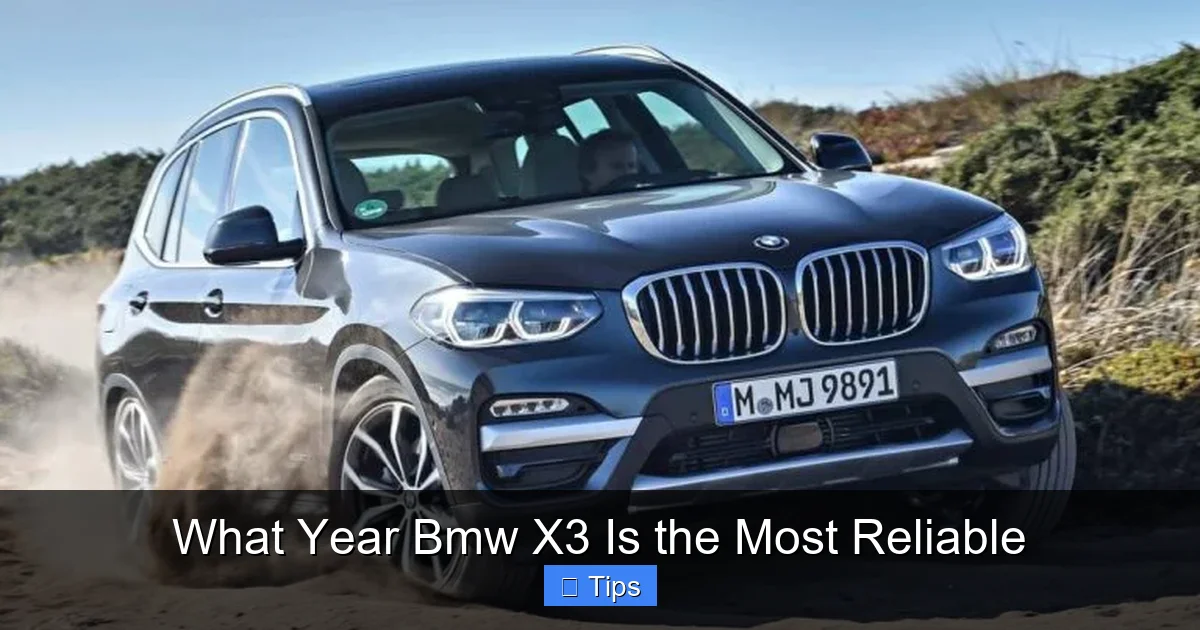
After analyzing reliability data, owner reviews, and expert ratings, one year consistently rises to the top: the 2017 BMW X3. This model year strikes the perfect balance between modern features, proven engineering, and long-term dependability. Here’s why it’s considered the most reliable X3 on the market.
Visual guide about What Year Bmw X3 Is the Most Reliable
Image source: cdn.car-recalls.eu
Engine Upgrade: The B48 Powerplant
The biggest reason the 2017 X3 is so reliable is the introduction of the B48 2.0L turbocharged engine. This engine replaced the problematic N20 and brought several improvements:
- Improved timing chain design: The B48 uses a more durable chain and tensioner system, reducing the risk of premature failure.
- Better fuel efficiency: The B48 delivers up to 28 mpg on the highway, making it one of the most efficient engines in the X3 lineup.
- Lower oil consumption: While no BMW engine is immune to oil burning, the B48 shows significantly less consumption than the N20.
- Enhanced cooling system: The 2017 X3 features an upgraded radiator and water pump, reducing the risk of overheating.
Owners of the 2017 X3 report fewer engine-related issues compared to earlier models. According to RepairPal, the 2017 X3 has an average annual repair cost of $649, which is lower than the $712 average for the 2011–2016 models. This may not seem like a huge difference, but over five years, it adds up to over $300 in savings.
Refined Transmission and Drivetrain
The 2017 X3 comes standard with an 8-speed automatic transmission, which is widely regarded as one of the best in the industry. It’s smooth, responsive, and durable. Unlike earlier models that occasionally suffered from rough shifting or solenoid issues, the 2017 transmission is more reliable and requires less maintenance.
The xDrive all-wheel-drive system also received updates in 2017, improving traction and reducing wear on components. Owners report fewer issues with the transfer case and differential, which were common failure points in the 2004–2010 X3s.
Owner Satisfaction and Real-World Feedback
Perhaps the best indicator of reliability is how owners feel about their vehicles. On forums like Bimmerpost and Reddit, 2017 X3 owners consistently praise the car’s dependability, comfort, and driving dynamics. Many report driving over 100,000 miles with only routine maintenance.
One owner on a popular BMW forum shared: “I bought my 2017 X3 with 40,000 miles and now have 120,000. I’ve only done oil changes, brakes, and tires. No major repairs. It’s been rock solid.” Stories like this are common among 2017 X3 owners, reinforcing its reputation for reliability.
Expert Ratings and Reliability Scores
Independent organizations also back up the 2017 X3’s reliability. J.D. Power gave the 2017 model a “Above Average” reliability rating, one of the highest in the luxury compact SUV segment. Consumer Reports rated it “Good” for reliability, noting fewer reported problems than earlier years.
RepairPal ranks the 2017 X3 as the most reliable in its class, with a 4.0 out of 5.0 reliability score. This is based on data from thousands of repair orders, including frequency and cost of repairs. The most common issues reported are minor—like brake pad replacements and sensor faults—rather than major engine or transmission failures.
Other Reliable BMW X3 Model Years
While the 2017 X3 is the standout, it’s not the only reliable option. If you’re open to other years, here are a few worth considering:

Visual guide about What Year Bmw X3 Is the Most Reliable
Image source: img.indianautosblog.com
2018–2019 BMW X3
The 2018 and 2019 models continue the trend of reliability, especially with the B48 and B58 engines. These years benefit from the same engineering improvements as the 2017 model, plus updated infotainment systems and safety features. The only downside is a slightly higher purchase price due to their newer status.
2014–2016 BMW X3 (with Caution)
If you find a well-maintained 2014–2016 X3 with low mileage and a clean service history, it can be a solid choice. These models have the revised N20 engine with the updated timing chain, reducing the risk of failure. However, you should still have a pre-purchase inspection done by a BMW specialist to check for any hidden issues.
2007–2010 BMW X3 (Budget Option)
For buyers on a tight budget, the 2007–2010 X3 can be a good value. These models are older and less expensive, but they’re also simpler mechanically. The N52 3.0L engine is reliable if maintained properly. Just be prepared for higher maintenance costs and fewer modern features.
Tips for Buying a Reliable Used BMW X3
Even the most reliable BMW X3 can become a money pit if it’s been poorly maintained. Here are some practical tips to help you find a dependable used model:
Get a Pre-Purchase Inspection
Always have a trusted BMW mechanic inspect the vehicle before buying. They can check for common issues like oil leaks, timing chain wear, and transmission problems. A thorough inspection costs $100–$200 but can save you thousands in repairs.
Check the Vehicle History Report
Use services like Carfax or AutoCheck to review the car’s history. Look for signs of accidents, flood damage, or frequent ownership changes. A clean history report is a good indicator of a well-cared-for vehicle.
Review Maintenance Records
Ask for service records to verify that the car has been maintained according to BMW’s schedule. Look for regular oil changes, brake fluid flushes, and coolant replacements. A lack of records is a red flag.
Test Drive Thoroughly
During the test drive, pay attention to how the car handles, shifts, and sounds. Listen for unusual noises, check for warning lights, and test all electronics. A smooth, quiet ride is a good sign of a healthy X3.
Consider Certified Pre-Owned (CPO)
BMW’s CPO program offers extended warranties and rigorous inspections. A CPO 2017 X3 gives you peace of mind and protection against unexpected repairs.
Conclusion
When it comes to finding the most reliable BMW X3, the 2017 model year is the clear winner. With its durable B48 engine, refined transmission, and strong owner satisfaction, it offers the best combination of performance, efficiency, and long-term dependability. While other years have their merits, the 2017 X3 stands out as the safest bet for buyers who want a luxury SUV that won’t let them down.
Of course, reliability also depends on how you treat the vehicle. Regular maintenance, timely repairs, and responsible driving habits are essential for any BMW. But starting with a solid foundation—like the 2017 X3—gives you the best chance of enjoying years of trouble-free driving. So whether you’re commuting to work or taking a weekend road trip, the 2017 BMW X3 is a smart, reliable choice that delivers on both luxury and longevity.
Frequently Asked Questions
What year BMW X3 is the most reliable?
The 2017 BMW X3 is widely considered the most reliable model year due to its durable B48 engine, fewer reported issues, and strong owner feedback. It strikes the best balance between modern features and long-term dependability.
Are older BMW X3 models reliable?
Older models like the 2007–2010 X3 can be reliable if well-maintained, but they’re more prone to issues like coolant leaks and transfer case problems. The 2004–2006 models are generally less dependable due to higher failure rates.
What are common problems with the BMW X3?
Common issues include timing chain failures (especially in 2011–2013 models), coolant leaks, oil consumption, and electrical glitches. The 2017 model addresses many of these problems with improved engineering.
How long do BMW X3 engines last?
With proper maintenance, a BMW X3 engine can last 150,000–200,000 miles or more. The B48 engine in the 2017 model is particularly durable and known for long service life.
Is the 2017 BMW X3 expensive to maintain?
The 2017 X3 has an average annual repair cost of $649, which is lower than earlier models. Regular maintenance is key to keeping costs down and avoiding major repairs.
Should I buy a used BMW X3?
Yes, if you choose a reliable model year like 2017 and ensure it has a clean history and proper maintenance. A pre-purchase inspection is highly recommended to avoid hidden issues.

At CarLegit, we believe information should be clear, factual, and genuinely helpful. That’s why every guide, review, and update on our website is created with care, research, and a strong focus on user experience.