
The Bugatti Veyron didn’t just break speed records—it rewrote the rules of automotive performance. Its blistering 0-60 mph time of 2.5 seconds set a new standard that competitors rushed to match, making acceleration a key metric in the hypercar world.
In This Article
- 1 Key Takeaways
- 2 📑 Table of Contents
- 3 The Dawn of a New Era in Supercar Performance
- 4 The Engineering Marvel Behind the Veyron’s Acceleration
- 5 How the Veyron Set the Benchmark for 0-60 Times
- 6 The Cultural and Marketing Impact of the Veyron’s Acceleration
- 7 Evolution: From Veyron to Chiron and Beyond
- 8 Practical Insights: What the Veyron Teaches Us About Performance
- 9 Conclusion: A Legacy That Still Accelerates
- 10 Frequently Asked Questions
- 10.1 What was the Bugatti Veyron’s 0-60 mph time?
- 10.2 How did the Veyron achieve such fast acceleration?
- 10.3 Why is the Veyron’s acceleration considered a benchmark?
- 10.4 Did any car beat the Veyron’s acceleration time?
- 10.5 Was the Veyron’s acceleration reliable in real-world conditions?
- 10.6 How did the Veyron influence modern hypercars?
Key Takeaways
- Revolutionary Engineering: The Veyron’s quad-turbocharged W16 engine delivered unprecedented power and torque, enabling its record-breaking acceleration.
- Benchmark Status: Its 0-60 mph time of 2.5 seconds became the gold standard for supercars and hypercars in the 2000s and 2010s.
- Aerodynamic Mastery: Active aerodynamics and adaptive suspension systems ensured stability at extreme speeds, enhancing both safety and performance.
- Technological Innovation: Advanced all-wheel drive and carbon-fiber construction were critical to achieving and sustaining high acceleration.
- Cultural Impact: The Veyron’s performance metrics influenced media coverage, marketing strategies, and consumer expectations across the automotive industry.
- Legacy and Evolution: Later models like the Veyron Super Sport and Chiron continued to push boundaries, cementing Bugatti’s reputation as a performance leader.
- Real-World Relevance: Understanding the Veyron’s acceleration helps enthusiasts appreciate modern EV hypercars and their rapid 0-60 times.
📑 Table of Contents
- The Dawn of a New Era in Supercar Performance
- The Engineering Marvel Behind the Veyron’s Acceleration
- How the Veyron Set the Benchmark for 0-60 Times
- The Cultural and Marketing Impact of the Veyron’s Acceleration
- Evolution: From Veyron to Chiron and Beyond
- Practical Insights: What the Veyron Teaches Us About Performance
- Conclusion: A Legacy That Still Accelerates
The Dawn of a New Era in Supercar Performance
Imagine standing on a quiet stretch of tarmac, the air still and the sun low on the horizon. A low-slung, sleek machine idles nearby—its engine a deep, rumbling promise of power. Then, with a flick of the wrist and a press of the pedal, it launches forward like a thunderbolt. In just 2.5 seconds, it hits 60 miles per hour. That’s not science fiction. That’s the Bugatti Veyron.
When the Veyron debuted in 2005, it didn’t just enter the supercar market—it redefined it. At a time when 0-60 mph times of 3.5 to 4 seconds were considered exceptional, the Veyron shattered expectations. Its acceleration wasn’t just fast; it was otherworldly. For the first time, a production car could outpace even the most aggressive race cars from just a decade earlier. This wasn’t just a car—it was a statement.
But why did acceleration matter so much? In the world of high-performance vehicles, speed has always been king. However, raw top speed—while impressive—was often limited by geography, safety, and practicality. Acceleration, on the other hand, was measurable, repeatable, and thrilling. It told a story of engineering prowess, driver engagement, and technological mastery. The Veyron’s ability to reach 60 mph in under 3 seconds wasn’t just a number—it was a symbol of what was possible.
The Engineering Marvel Behind the Veyron’s Acceleration
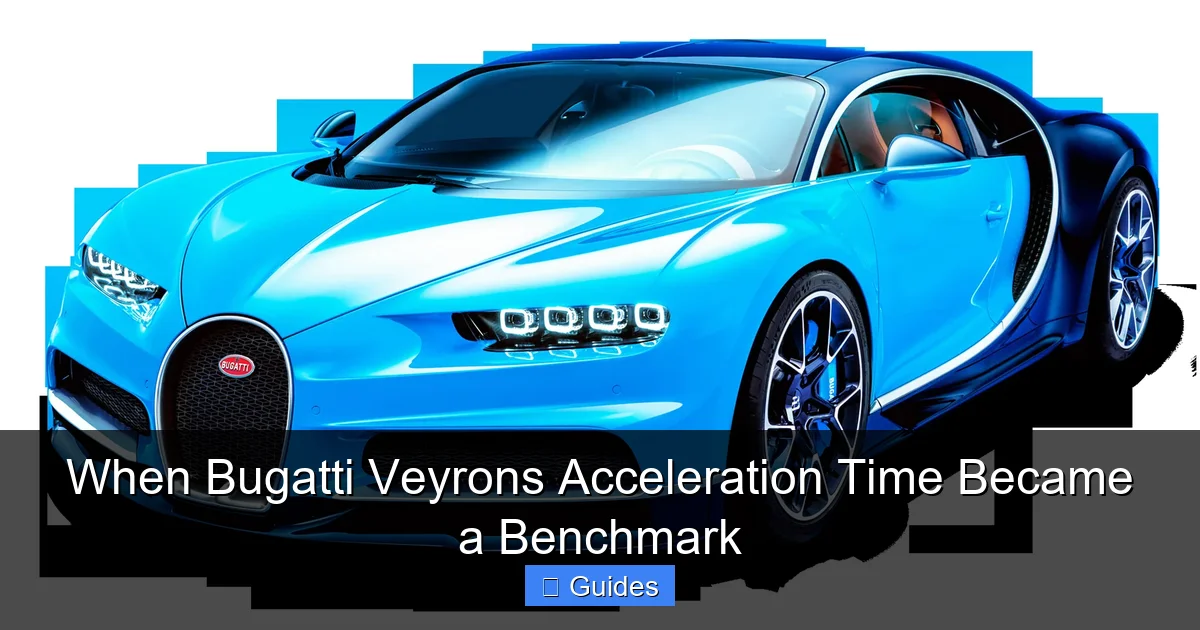
Visual guide about When Bugatti Veyrons Acceleration Time Became a Benchmark
Image source: pngimg.com
The Heart of the Beast: The W16 Engine
At the core of the Veyron’s acceleration prowess lies its legendary 8.0-liter quad-turbocharged W16 engine. This isn’t your average V8 or even a V12. The W16 is a marvel of mechanical ingenuity, essentially two narrow-angle V8 engines merged into a single block. With 16 cylinders and four turbochargers, it produced a staggering 1,001 horsepower in its original form—later increased to 1,200 hp in the Super Sport variant.
But power alone doesn’t guarantee quick acceleration. It’s the delivery of that power that matters. The Veyron’s engine was tuned for immediate torque, producing over 1,000 lb-ft of twisting force from as low as 2,200 rpm. This meant that from a standstill, the car could unleash immense force to the wheels without hesitation. The result? A launch that pinned drivers to their seats and left competitors in the dust.
All-Wheel Drive: Traction Where It Counts
One of the biggest challenges in achieving rapid acceleration is traction. Even the most powerful engine is useless if the tires can’t grip the road. The Veyron solved this with a sophisticated all-wheel-drive (AWD) system. Unlike traditional AWD setups, the Veyron’s system was engineered specifically for high-speed performance and launch control.
The car sent power to all four wheels, with a torque-sensing differential that dynamically adjusted power distribution based on grip and load. This meant that during a launch, the Veyron could maximize traction without wheel spin, allowing it to transfer nearly all of its engine power to the pavement. The result was a launch that felt more like a rocket launch than a car accelerating.
Lightweight Construction and Aerodynamics
While the Veyron was undeniably heavy—over 4,000 pounds—its construction was optimized for performance. Bugatti used extensive carbon fiber in the chassis and body panels to reduce weight without sacrificing rigidity. The monocoque structure was both strong and lightweight, providing a solid platform for the powerful drivetrain.
But weight isn’t the only factor. Aerodynamics play a crucial role in acceleration, especially at high speeds. The Veyron featured active aerodynamics, including an adaptive rear wing and underbody diffusers that adjusted based on speed and driving mode. At low speeds, the wing would lower to reduce drag and improve acceleration. As speed increased, it would rise to generate downforce, keeping the car planted and stable.
This balance between minimizing drag and maximizing downforce was key to the Veyron’s performance. It allowed the car to accelerate quickly off the line while maintaining control as it approached its top speed of over 250 mph.
How the Veyron Set the Benchmark for 0-60 Times
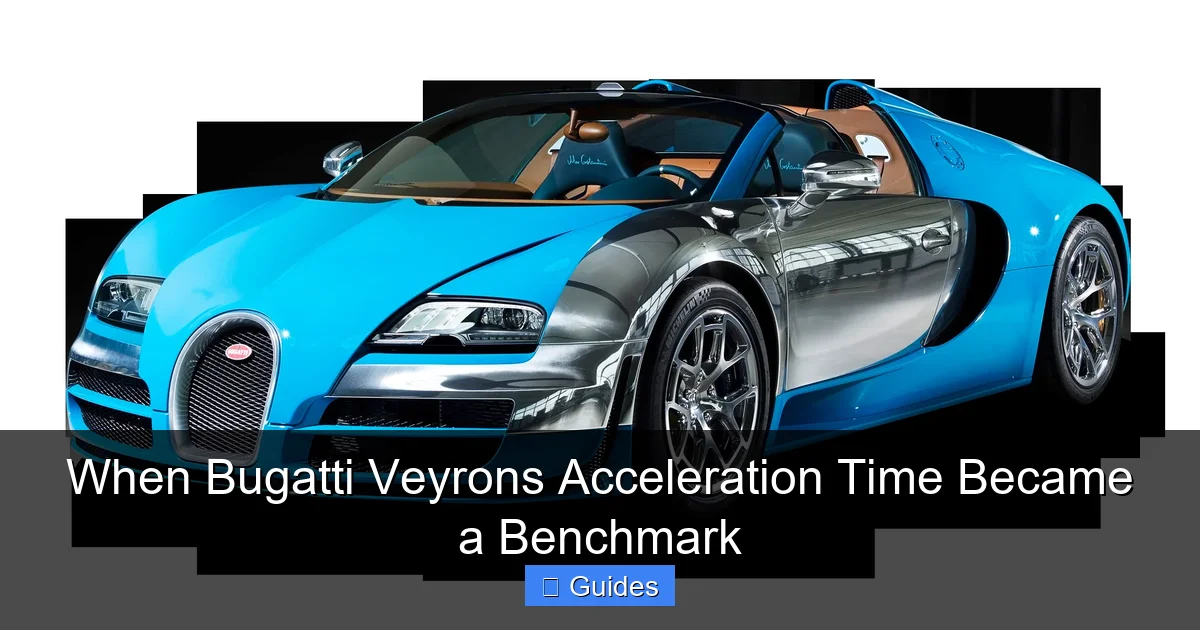
Visual guide about When Bugatti Veyrons Acceleration Time Became a Benchmark
Image source: pngimg.com
The Numbers That Changed Everything
When the Veyron first hit the market, its official 0-60 mph time was listed at 2.7 seconds. But independent tests quickly revealed it could do even better—consistently hitting 60 mph in 2.5 seconds under optimal conditions. This was unprecedented. At the time, even the fastest supercars like the Ferrari Enzo and Porsche Carrera GT were clocking in around 3.5 to 3.8 seconds.
The significance of this difference cannot be overstated. A 1-second gap in 0-60 time is enormous in performance terms. It’s the difference between a sports car and a hypercar. The Veyron didn’t just beat its rivals—it left them in another dimension.
Independent Testing and Media Validation
The Veyron’s acceleration wasn’t just a marketing claim. It was validated by independent journalists and testing organizations. Top Gear, one of the most influential automotive shows in the world, famously tested the Veyron and confirmed its 0-60 time of 2.5 seconds. Their test driver, The Stig, launched the car with precision, and the results were undeniable.
Other outlets like Motor Trend, Car and Driver, and Autocar conducted their own tests, all arriving at similar conclusions. The consistency of these results across different environments and drivers proved that the Veyron’s performance wasn’t a fluke—it was repeatable and reliable.
This media validation was crucial. In an era when manufacturers often exaggerated performance figures, the Veyron’s numbers stood up to scrutiny. It earned credibility not just through marketing, but through real-world testing.
The Ripple Effect on Competitors
Once the Veyron set the benchmark, other manufacturers had no choice but to respond. The race to match or beat its 0-60 time became a central focus for supercar development. Lamborghini, Ferrari, McLaren, and Porsche all began prioritizing acceleration in their new models.
For example, the Ferrari LaFerrari, introduced in 2013, targeted a 0-60 time of 2.4 seconds. The McLaren P1 and Porsche 918 Spyder followed suit, both achieving sub-2.5-second times. Even electric vehicles like the Tesla Roadster and Rimac Nevera began competing in this space, using instant torque to achieve 0-60 times under 2 seconds.
The Veyron didn’t just raise the bar—it changed the game. Acceleration became a key selling point, a metric that consumers and critics alike used to judge a car’s performance. The “0-60 wars” had begun, and the Veyron was the catalyst.
The Cultural and Marketing Impact of the Veyron’s Acceleration
Visual guide about When Bugatti Veyrons Acceleration Time Became a Benchmark
Image source: upload.wikimedia.org
Acceleration as a Status Symbol
In the world of luxury and performance, numbers matter. But they matter even more when they’re tied to emotion. The Veyron’s acceleration wasn’t just a spec—it was an experience. Owners and enthusiasts didn’t just talk about how fast the car was; they described the sensation of being launched into another dimension.
This emotional connection made acceleration a powerful marketing tool. Bugatti didn’t just sell a car; it sold a dream. The 0-60 time became a shorthand for ultimate performance, a badge of honor that few could claim. It was no longer enough to be fast—you had to be the fastest.
Influence on Automotive Media and Reviews
The Veyron changed how cars were reviewed. Before its arrival, top speed and lap times were the primary metrics. But the Veyron’s acceleration forced journalists to rethink their approach. Suddenly, 0-60 times were front and center in reviews, often highlighted in bold or featured in dramatic slow-motion footage.
Shows like Top Gear and The Grand Tour dedicated entire segments to launching the Veyron, emphasizing the raw power and precision of its acceleration. These broadcasts reached millions of viewers, further cementing the Veyron’s reputation as the ultimate performance machine.
Even today, when a new hypercar is tested, the first question is often: “What’s the 0-60 time?” This focus can be traced directly back to the Veyron’s influence.
Shaping Consumer Expectations
The Veyron didn’t just change what manufacturers built—it changed what consumers expected. Buyers began to demand faster acceleration, not just for bragging rights, but for the thrill of the drive. The idea that a car could reach 60 mph in under 3 seconds became the new normal for high-end performance.
This shift also influenced the broader automotive market. Even mainstream brands began highlighting 0-60 times in their advertising, knowing that performance metrics could sway purchasing decisions. The Veyron’s legacy extended far beyond the hypercar segment, shaping the entire industry’s approach to performance marketing.
Evolution: From Veyron to Chiron and Beyond
The Veyron Super Sport and Final Editions
Bugatti didn’t rest on its laurels. In 2010, it introduced the Veyron Super Sport, which increased power to 1,200 hp and reduced the 0-60 time to an astonishing 2.4 seconds. This version also set a Guinness World Record for the fastest production car at the time, reaching 267.856 mph.
Later special editions, like the Grand Sport Vitesse, continued to push the envelope, combining open-top driving with hypercar performance. These models proved that the Veyron platform still had room to grow, even years after its debut.
The Chiron: A Worthy Successor
When the Chiron was introduced in 2016, it carried the torch forward. With 1,500 hp and a 0-60 time of 2.3 seconds, it built on the Veyron’s legacy while introducing new technologies like a more advanced aerodynamics system and improved thermal management.
The Chiron didn’t just match the Veyron—it surpassed it. But the foundation had already been laid. The Veyron’s acceleration benchmark made the Chiron’s achievements possible, proving that continuous innovation was not only feasible but expected.
Electric Hypercars and the New Benchmark
Today, the race for acceleration has entered a new phase. Electric hypercars like the Rimac Nevera and Pininfarina Battista can hit 60 mph in under 2 seconds, thanks to instant torque and advanced battery technology. Even Tesla’s upcoming Roadster promises a 1.1-second 0-60 time with a rocket booster option.
While these numbers are impressive, they stand on the shoulders of giants. The Veyron was the first to make acceleration a central performance metric. Without its groundbreaking achievements, the current era of electric performance might not exist.
Practical Insights: What the Veyron Teaches Us About Performance
Understanding the Science of Acceleration
The Veyron’s success offers valuable lessons for anyone interested in performance driving or automotive engineering. First, power must be matched with control. The car’s AWD system, advanced traction control, and adaptive suspension ensured that its immense power was usable, not just theoretical.
Second, aerodynamics are just as important as engine output. The Veyron’s active systems allowed it to optimize for both acceleration and stability, a balance that many modern cars still struggle to achieve.
Finally, weight management is critical. Even with its heavy engine and all-wheel drive, the Veyron used lightweight materials to keep its mass in check. This principle remains relevant today, especially as electric vehicles grapple with battery weight.
Tips for Enthusiasts and Buyers
If you’re in the market for a high-performance car, the Veyron’s legacy offers guidance. Don’t just look at the 0-60 time—consider how it’s achieved. Is the car all-wheel drive? Does it have advanced traction control? How does it handle at high speeds?
Also, think about real-world usability. The Veyron was notoriously difficult to drive in traffic due to its stiff suspension and high power output. While its acceleration was legendary, it wasn’t always practical. Modern hypercars aim to balance performance with comfort, a lesson learned from the Veyron’s extremes.
For collectors, the Veyron remains a milestone. Its acceleration time isn’t just a number—it’s a piece of automotive history. Owning one means owning a benchmark.
The Future of Acceleration
As we move toward an electric future, the pursuit of faster acceleration will continue. But the principles established by the Veyron—power, control, aerodynamics, and innovation—will remain relevant. The next benchmark may come from an EV, but it will be built on the foundation the Veyron created.
Conclusion: A Legacy That Still Accelerates
The Bugatti Veyron didn’t just accelerate from 0 to 60 mph in 2.5 seconds—it accelerated the entire automotive industry into a new era of performance. Its engineering, innovation, and cultural impact transformed how we think about speed, power, and what a car can do.
More than a decade after its debut, the Veyron’s acceleration time remains a reference point. It’s the standard against which new hypercars are measured, the benchmark that started it all. Whether you’re a gearhead, a collector, or just someone who appreciates engineering excellence, the Veyron’s story is one worth knowing.
It reminds us that sometimes, the most important numbers aren’t the biggest—they’re the ones that change everything.
Frequently Asked Questions
What was the Bugatti Veyron’s 0-60 mph time?
The Bugatti Veyron could accelerate from 0 to 60 mph in just 2.5 seconds, making it one of the fastest production cars of its time. This time was later improved to 2.4 seconds in the Veyron Super Sport variant.
How did the Veyron achieve such fast acceleration?
The Veyron used a quad-turbocharged W16 engine producing over 1,000 horsepower, combined with an advanced all-wheel-drive system and lightweight carbon-fiber construction. Active aerodynamics also helped optimize traction and reduce drag during launch.
Why is the Veyron’s acceleration considered a benchmark?
The Veyron’s 0-60 time set a new standard for supercars and hypercars, forcing competitors to prioritize acceleration in their designs. It became the gold metric for performance, influencing media, marketing, and consumer expectations.
Did any car beat the Veyron’s acceleration time?
Yes, later models like the Veyron Super Sport, Chiron, and electric hypercars such as the Rimac Nevera have achieved faster 0-60 times. However, the Veyron was the first to make sub-3-second acceleration a reality in a production car.
Was the Veyron’s acceleration reliable in real-world conditions?
Independent tests by major automotive outlets confirmed the Veyron’s 0-60 time was consistent and repeatable. Its advanced traction control and AWD system ensured reliable performance across different environments.
How did the Veyron influence modern hypercars?
The Veyron shifted industry focus toward acceleration as a key performance metric. It inspired competitors to develop faster cars and paved the way for today’s electric hypercars that prioritize instant torque and rapid 0-60 times.

At CarLegit, we believe information should be clear, factual, and genuinely helpful. That’s why every guide, review, and update on our website is created with care, research, and a strong focus on user experience.