
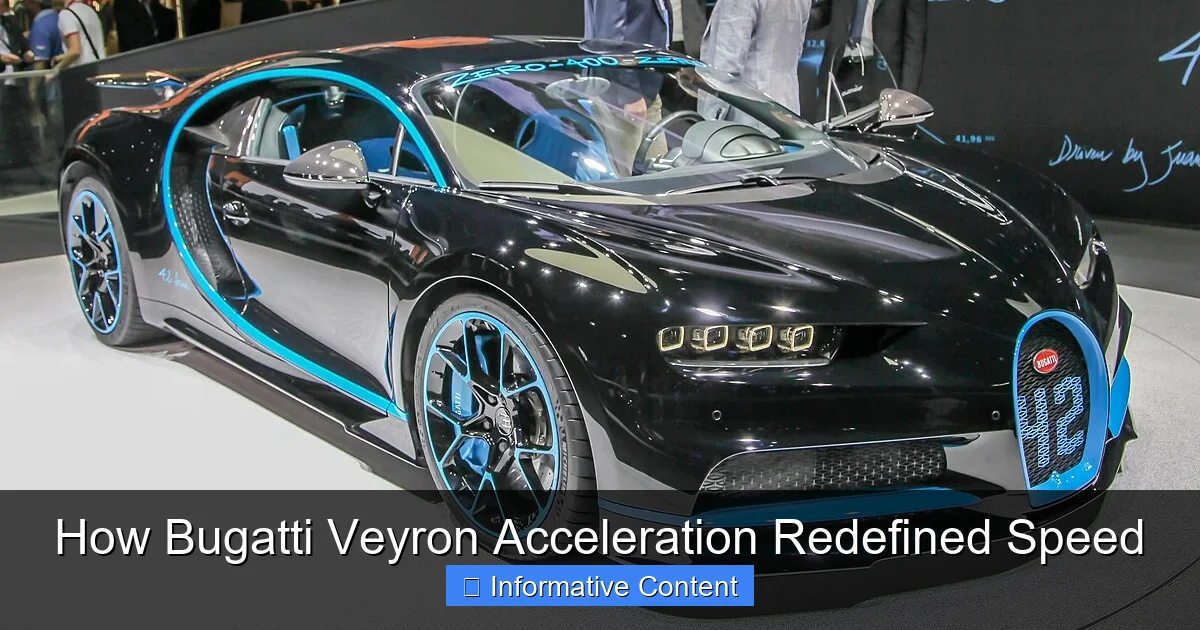
The Bugatti Veyron didn’t just break speed records; it shattered the entire paradigm of hypercar performance with its sub-2.5-second 0-60 mph acceleration. This monumental achievement instantly redefined the engineering limits of speed, forcing every competitor to chase a new, almost unimaginable benchmark. The Veyron’s acceleration time became the definitive yardstick, a legacy of raw power and technological audacity that forever changed the automotive industry’s pursuit of ultimate velocity.
In This Article
- 1 Key Takeaways
- 2 📑 Table of Contents
- 3 How Bugatti Veyron Acceleration Redefined Speed
- 4 The Pre-Veyron Landscape: What “Fast” Really Meant
- 5 Engineering the Impossible: The Veyron’s Power and Grip Recipe
- 6 The Benchmark is Set: 0-60 in 2.5 Seconds
- 7 Ripple Effect: How the Veyron Forced the Industry to Evolve
- 8 By the Numbers: The Veyron’s Staggering Performance Data
- 9 More Than a Number: The Lasting Cultural Impact
- 10 Conclusion: The Unforgettable Benchmark
- 11 Frequently Asked Questions
- 11.1 How fast did the Bugatti Veyron accelerate from 0 to 60 mph?
- 11.2 Why is the Bugatti Veyron’s acceleration considered an industry benchmark?
- 11.3 What engineering made the Veyron’s acceleration possible?
- 11.4 How did the Veyron’s acceleration time compare to its rivals?
- 11.5 Did the Veyron’s top speed or its acceleration have a bigger impact?
- 11.6 How did Bugatti Veyron acceleration redefine speed for future cars?
Key Takeaways
- The 0-60 mph time became the ultimate metric: It defined a new performance standard for hypercars.
- Engineering triumphed over raw power alone: Advanced aerodynamics and systems were key to control.
- It forced competitors to completely rethink their approach: A new era of technological one-upmanship began.
- The achievement was about repeatable, stable performance: Not just a single record-breaking run.
- It shifted the supercar goalposts from top speed to acceleration: Launch capability became a primary focus.
- The Veyron proved extreme performance requires immense investment: It justified its price through unprecedented engineering.
📑 Table of Contents
- How Bugatti Veyron Acceleration Redefined Speed
- The Pre-Veyron Landscape: What “Fast” Really Meant
- Engineering the Impossible: The Veyron’s Power and Grip Recipe
- The Benchmark is Set: 0-60 in 2.5 Seconds
- Ripple Effect: How the Veyron Forced the Industry to Evolve
- By the Numbers: The Veyron’s Staggering Performance Data
- More Than a Number: The Lasting Cultural Impact
- Conclusion: The Unforgettable Benchmark
How Bugatti Veyron Acceleration Redefined Speed
Remember the first time you saw a picture of the Bugatti Veyron? For me, it was in a glossy magazine in the early 2000s. It looked like a spaceship that had accidentally landed in a world of regular cars. But it wasn’t just the looks. There was a number, a single, staggering statistic, that everyone was whispering about. Zero to sixty in 2.5 seconds.
Back then, that wasn’t just fast. It was science fiction. It was a number that made you put the magazine down and just stare into space for a minute. How was that even possible? That feeling, that collective jaw-drop from car enthusiasts around the globe, is where our story begins. The Bugatti Veyron didn’t just enter the supercar scene; it detonated a benchmark in the middle of it. Its acceleration time became the new ruler by which all future hypercars would be measured.
Today, we take sub-three-second sprints for granted. Every new electric performance car seems to boast about it. But before the Veyron, that territory was mythical. It was the Veyron that turned myth into metal, rubber, and mind-bending engineering. It redefined our very understanding of speed, not by a small margin, but by a quantum leap. Let’s dive into how this machine did it and why its 0-60 mph time is still the ghost that haunts every engineer’s drawing board.
The Pre-Veyron Landscape: What “Fast” Really Meant
To understand the quake the Veyron caused, you have to remember the world it was born into. The late 1990s and early 2000s were the golden age of the analog supercar. Cars like the Ferrari F50, the McLaren F1, and the Porsche 911 GT1 were the kings. They were lightweight, screamed with high-revving naturally aspirated engines, and were built as much for the driver’s soul as for speed.
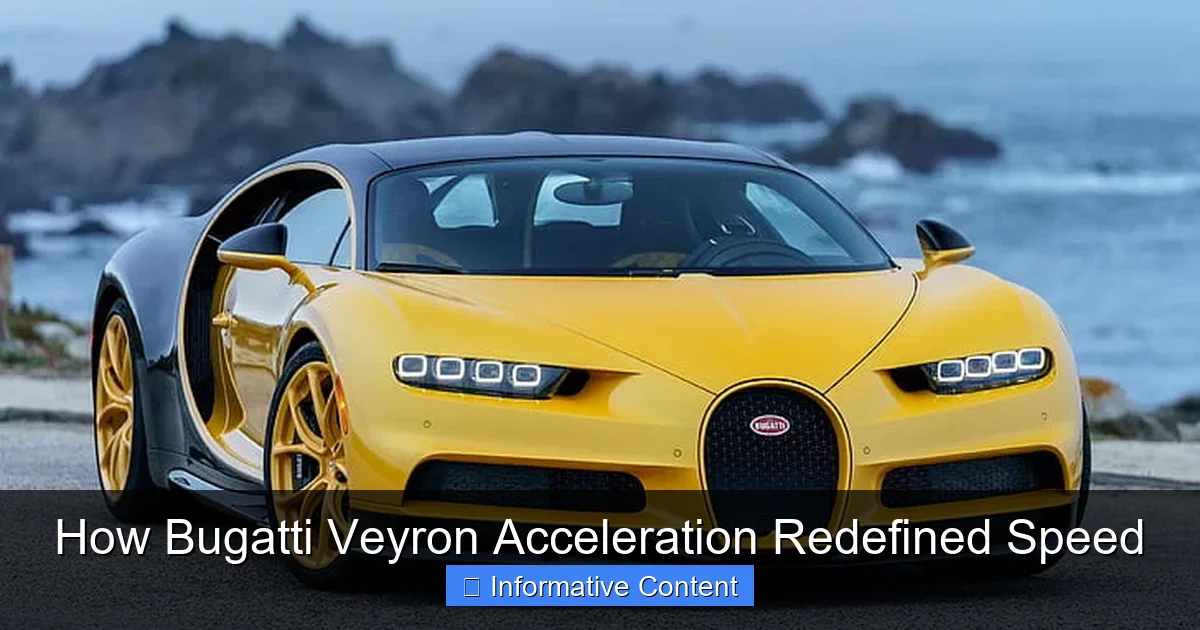
Visual guide about When Bugatti Veyrons Acceleration Time Became An Industry Benchmark
Image source: c4.wallpaperflare.com
Acceleration was brutal, but it had a ceiling. The holy grail, the McLaren F1, could hit 60 mph in about 3.2 seconds. That was the number to beat. It was achieved with a featherweight carbon fiber body, a glorious 6.1-liter V12, and a no-compromise racing ethos. The idea of a car shaving another 0.7 seconds off that time seemed ludicrous. It would require not just an evolution, but a completely new formula.
The Engineering Philosophy Divide
The prevailing wisdom was “less is more.” Power was important, but so was shedding weight. Aerodynamics were for stability at high speed, not for managing insane amounts of horsepower. Traction was a violent, wheel-spinning battle fought with rear-wheel drive and sharp reflexes. The Veyron’s approach, as we’d soon learn, was the polar opposite. It was a philosophy of “more is more,” and it would challenge every convention in the book.
Engineering the Impossible: The Veyron’s Power and Grip Recipe
So, how do you build a car that accelerates faster than a free-falling skydiver? You don’t tweak an existing design. You start from a blank sheet of paper with one insane goal. For Bugatti, under the Volkswagen Group, that goal was a 1,000 metric horsepower car that could exceed 250 mph. The acceleration was a breathtaking byproduct of solving that puzzle.
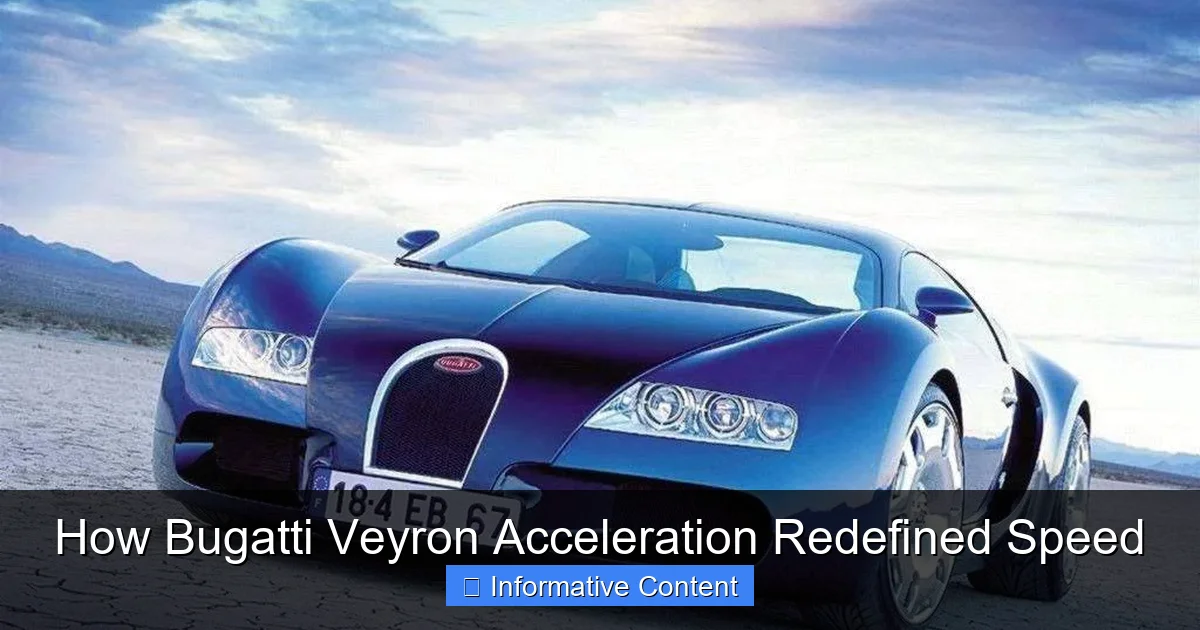
Visual guide about When Bugatti Veyrons Acceleration Time Became An Industry Benchmark
Image source: 4.bp.blogspot.com
The heart was an 8.0-liter quad-turbocharged W16 engine. Let that sink in. Sixteen cylinders, four turbochargers. It was less an engine and more a power station. It produced 1,001 PS (987 hp) in the original model. But power is useless if you can’t put it on the road.
The Real Magic: All-Wheel Drive and Sticky Tires
This is where the Veyron’s genius truly shone. Throwing 987 horsepower through just the rear wheels would result in a smoky, expensive fireworks display, not a record time. Bugatti’s solution was a permanent all-wheel-drive system with a Haldex center differential. It could send power precisely where it was needed to maximize grip.
Then came the tires. Michelin had to invent entirely new tires that could handle speeds over 250 mph and provide the grip for a 2.5-second launch. They were so specialized that a separate set of “top speed” keys were needed to lower the car and activate a special mode. The Veyron wasn’t just a car; it was a fully integrated system where the engine, drivetrain, tires, and aerodynamics worked in a complex, computer-managed ballet.
The Benchmark is Set: 0-60 in 2.5 Seconds
When the numbers were officially released and verified by magazines, the automotive world stood still. Bugatti Veyron acceleration was not just a performance metric; it was a headline. 2.5 seconds to 60 mph. 0-124 mph (200 km/h) in a surreal 7.3 seconds. The quarter-mile flashed by in 10.2 seconds.
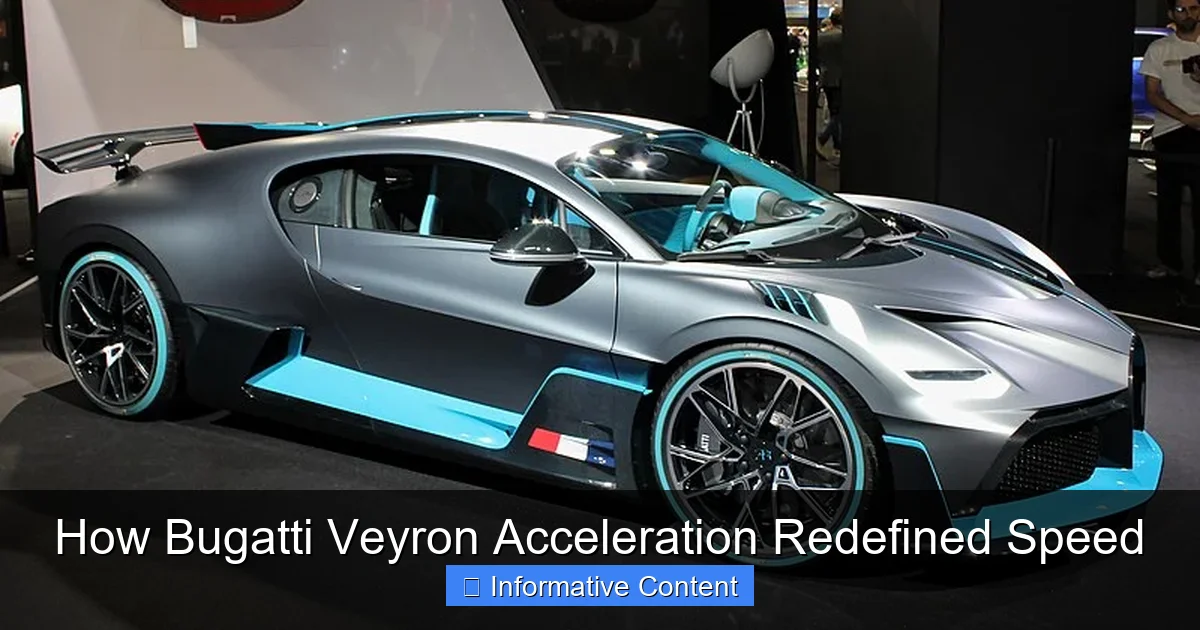
Visual guide about When Bugatti Veyrons Acceleration Time Became An Industry Benchmark
Image source: carwiki.de
I remember watching the first televised tests. The launch wasn’t a wild, tail-happy affair. It was eerily brutal and controlled. The nose lifted slightly, all four tires bit into the asphalt, and the car simply… vanished. The sound was a unique mix of a deep, guttural roar and the whistle of four turbos spooling. It was less like a car and more like a force of nature being reluctantly directed down a strip of tarmac.
Beyond the Sprint: A New Kind of Performance
The Bugatti Veyron acceleration benchmark did something crucial: it redefined the experience of speed. Previous supercars demanded skill, courage, and a bit of luck to extract their performance. The Veyron, with its stability control, all-wheel drive, and sophisticated electronics, made that apocalyptic level of speed accessible. It was fast not in spite of its complexity, but because of it. This changed the game. It proved that ultimate performance could come packaged with stability and, relative to its power, controllability.
Ripple Effect: How the Veyron Forced the Industry to Evolve
The Veyron’s 2.5-second gauntlet throw didn’t just create a new top spot. It forced every other manufacturer to go back to the drawing board. The old rules were obsolete. The Veyron proved that to compete in the new “hypercar” league it created, you needed a holistic approach.
We saw the rise of hybrid hypercars like the Porsche 918 Spyder, McLaren P1, and Ferrari LaFerrari. Why? Because electric motors deliver instant torque, filling in the tiny gaps where turbochargers lag, helping to chase that Veyron-like launch. All-wheel drive became almost mandatory for the top-tier hypercars. The focus shifted from just power-to-weight ratios to power-delivery systems.
The Electric Revolution and the Veyron’s Legacy
Today, the Veyron’s acceleration time is under direct assault from electric vehicles. A Tesla Model S Plaid can hit 60 mph in under 2 seconds. But here’s the thing: they are walking the path the Veyron paved. The Veyron normalized the idea of insane, computer-managed acceleration that feels less like driving and more like being shot from a cannon. It made the public and the industry accept that the future of speed was digital, electric, and all-wheel drive. The Veyron was the bridge from the analog scream of the McLaren F1 to the silent thrust of today’s EVs.
By the Numbers: The Veyron’s Staggering Performance Data
Sometimes, you just need to see the figures side-by-side to appreciate the leap. The table below puts the original Bugatti Veyron 16.4 in context with its legendary predecessor and a modern electric benchmark. It tells the story better than words ever could.
| Car Model | Year | 0-60 mph Time | Engine / Powertrain | Peak Power |
|---|---|---|---|---|
| McLaren F1 | 1992 | ~3.2 seconds | 6.1L V12 (Naturally Aspirated) | 627 hp |
| Bugatti Veyron 16.4 | 2005 | 2.5 seconds | 8.0L W16 (Quad-Turbo) | 987 hp |
| Bugatti Veyron Super Sport | 2010 | ~2.4 seconds | 8.0L W16 (Quad-Turbo) | 1,200 hp |
| Tesla Model S Plaid (Modern EV) | 2021 | ~1.99 seconds* | Tri-Motor Electric | 1,020 hp |
*With rollout subtracted, a common industry practice for measuring acceleration. The Veyron’s time was typically measured without rollout, making its achievement even more stark in its era.
Look at that gap between the F1 and the Veyron. It’s a canyon. The Veyron didn’t just raise the bar; it built an entirely new stadium.
More Than a Number: The Lasting Cultural Impact
The Bugatti Veyron acceleration benchmark did something rare: it escaped the car world and entered popular culture. It became the ultimate answer to “what’s the fastest car in the world?” in movies, video games, and playground arguments. It was a symbol of unattainable excess and engineering wonder.
It also sparked a “power war” that continues today. After 1,000 horsepower, why not 1,500? Why not 300 mph? Cars like the Koenigsegg Agera RS, the Hennessey Venom F5, and Bugatti’s own Chiron are direct descendants of the path the Veyron blazed. They all live in the world the Veyron defined—a world where acceleration times are measured in tiny, precious fractions of a second, and where every decimal point is a battle.
The Experience Over the Spec Sheet
Yet, for all the numbers, the Veyron’s legacy is also about feeling. Driving one, or even being a passenger, was described as a surreal experience. The acceleration wasn’t just fast; it was dense, a constant, unrelenting push that didn’t seem to fade. It proved that a car could be both a technological monument and an emotional one. It made you feel something primal and awe-struck, and that is something no future spec sheet will ever erase.
Conclusion: The Unforgettable Benchmark
So, why does the Bugatti Veyron acceleration time still matter? It matters because it was a clear, definitive line in the sand. There was “before the Veyron” and “after the Veyron.” It was the moment the hypercar was born as we know it—a fully integrated technological marvel where computers and raw power work together to defy physics.
It taught the industry that to reach new frontiers, you sometimes have to abandon old philosophies. It showed us that speed could be engineered with precision, not just unleashed with violence. And most importantly, it gave us a number—2.5 seconds—that became a universal shorthand for the impossible made real.
Today, as electric cars silently chase and beat that number, they do so standing on the shoulders of a giant. A giant with sixteen cylinders, four turbos, and the audacity to turn a benchmark into a legend. The Veyron didn’t just accelerate on the road; it accelerated the entire course of automotive history.
Frequently Asked Questions
How fast did the Bugatti Veyron accelerate from 0 to 60 mph?
The Bugatti Veyron’s acceleration time of 2.5 seconds to 60 mph was staggering for its 2005 debut. This benchmark shattered previous records for production cars, firmly establishing a new realm of hypercar performance that combined immense power with unprecedented traction and stability.
Why is the Bugatti Veyron’s acceleration considered an industry benchmark?
The Veyron’s acceleration redefined speed by proving that a road-legal car could reliably and repeatedly achieve such extreme performance. It forced the entire automotive industry to reconsider the upper limits of engineering, sparking a new “hypercar war” focused on surpassing its figures.
What engineering made the Veyron’s acceleration possible?
This feat was achieved through a monumental 8.0-liter quad-turbocharged W16 engine producing 1,001 horsepower, coupled with an advanced all-wheel-drive system and a dual-clutch transmission. This complex synergy managed the immense power delivery to the pavement, making the brutal acceleration accessible and controllable.
How did the Veyron’s acceleration time compare to its rivals?
Upon its release, the Veyron’s acceleration time was in a league of its own, significantly ahead of contemporary supercars from Ferrari and Porsche. It held the production car acceleration crown for years, directly inspiring rivals to develop their own thousand-horsepower machines to compete.
Did the Veyron’s top speed or its acceleration have a bigger impact?
While its 250+ mph top speed captured headlines, the Veyron’s acceleration had a more profound daily impact on the industry. It demonstrated that explosive, usable acceleration could be engineered into a complete package, changing the performance goals for all future high-end sports cars.
How did Bugatti Veyron acceleration redefine speed for future cars?
It shifted the focus from raw top speed to a holistic measure of performance, where sub-3-second 0-60 mph times became the new standard for hypercars. The Veyron proved extreme power could be tamed for the road, setting a template for the hybrid and electric hypercars that followed.

At CarLegit, we believe information should be clear, factual, and genuinely helpful. That’s why every guide, review, and update on our website is created with care, research, and a strong focus on user experience.