
The Jeep Wrangler transitioned to fuel injection in 1987 with the introduction of the YJ model, marking a major leap in engine efficiency and reliability. This shift replaced carburetors, offering better fuel economy, smoother performance, and easier cold starts—especially important for off-road adventures.
In This Article
- 1 Key Takeaways
- 2 📑 Table of Contents
- 3 The Evolution of Jeep Wrangler Engine Technology
- 4 Why Fuel Injection Was a Game-Changer for the Wrangler
- 5 The Generational Progression of Jeep Fuel Injection
- 6 Practical Tips for Maintaining Fuel-Injected Wranglers
- 7 The Legacy of Fuel Injection in the Jeep Wrangler
- 8 Conclusion
- 9 Frequently Asked Questions
- 9.1 When did the Jeep Wrangler first get fuel injection?
- 9.2 What type of fuel injection did the first Wrangler use?
- 9.3 Did all Wrangler engines switch to fuel injection at the same time?
- 9.4 How did fuel injection improve the Wrangler’s performance?
- 9.5 What is the difference between TBI and MPI in Jeeps?
- 9.6 Do modern Wranglers still use fuel injection?
Key Takeaways
- Fuel injection arrived in 1987: The Jeep Wrangler (YJ) was the first model to feature fuel injection, replacing older carbureted engines.
- Improved engine performance: Fuel injection delivered more precise fuel delivery, resulting in better throttle response and power output.
- Enhanced fuel efficiency: Drivers saw noticeable improvements in miles per gallon compared to carbureted predecessors.
- Better cold-weather operation: Fuel injection systems start more reliably in cold temperatures, a big advantage for off-roaders.
- Lower emissions and maintenance: Fuel injection reduced harmful emissions and minimized common carburetor issues like clogging and tuning problems.
- Evolution continued through generations: From TBI to MPI and modern EFI, Jeep refined fuel injection with each new Wrangler generation.
- Legacy of innovation: The switch to fuel injection set the foundation for today’s high-tech, efficient Wrangler engines.
📑 Table of Contents
The Evolution of Jeep Wrangler Engine Technology
If you’ve ever driven a classic Jeep—whether it’s a CJ-5 from the 1970s or a modern JL Wrangler—you know that these vehicles are more than just off-road machines. They’re icons of American automotive history, built for adventure, durability, and freedom. But behind that rugged exterior lies a story of continuous innovation, especially when it comes to engine technology. One of the most significant milestones in that evolution was the switch from carburetors to fuel injection. So, when did the Jeep Wrangler go to fuel injection? The answer might surprise you—it happened over three decades ago.
Back in the day, most vehicles, including Jeeps, relied on carburetors to mix air and fuel for combustion. While simple and reliable in their own right, carburetors had their limitations. They were sensitive to altitude changes, required frequent tuning, and struggled with cold starts. For off-roaders heading into remote mountain trails or snowy backcountry, these issues could mean the difference between a successful trip and being stranded. As emissions standards tightened and consumer demand for better performance grew, automakers had to adapt. Jeep, known for its no-nonsense engineering, made a pivotal decision in the mid-1980s: it was time to modernize.
The Carburetor Era: Strengths and Weaknesses
Before fuel injection, the Jeep Wrangler—then known as the CJ (Civilian Jeep) series—used carbureted engines. The AMC 258 inline-six and the 2.5L four-cylinder were common choices, both known for their durability and simplicity. Carburetors worked by using vacuum pressure to draw fuel into the engine’s intake manifold, where it mixed with air before entering the combustion chamber. This mechanical system was easy to repair with basic tools, making it ideal for remote adventures where a mechanic might be miles away.
However, carburetors weren’t perfect. They delivered fuel inconsistently under varying conditions. For example, at high altitudes, the air is thinner, which means less oxygen for combustion. A carburetor doesn’t automatically adjust for this, often resulting in a rich fuel mixture that wastes gas and reduces power. Similarly, in cold weather, carbureted engines often required manual choke adjustments to start, and even then, they could be finicky. Tuning a carburetor was more art than science—too much fuel, and you’d flood the engine; too little, and it wouldn’t run at all.
These limitations became more apparent as environmental regulations evolved. In the 1970s and 1980s, the U.S. government introduced stricter emissions standards to reduce air pollution. Carburetors, with their imprecise fuel delivery, struggled to meet these new requirements. Automakers needed a more efficient, controllable way to manage fuel—enter fuel injection.
The Birth of Fuel Injection in Jeeps
The switch to fuel injection didn’t happen overnight. It was the result of years of research and development, driven by both regulatory pressure and consumer demand. By the early 1980s, many automakers had already adopted fuel injection in their passenger cars. Jeep, however, held out a bit longer, partly due to the rugged, utilitarian nature of its vehicles. But by 1987, the time had come.
That year, Jeep introduced the Wrangler YJ model, replacing the long-running CJ series. Along with a new square-headlight design and improved suspension, the YJ brought a major mechanical upgrade: fuel injection. The 4.2L inline-six engine, previously carbureted, was now equipped with throttle body injection (TBI), a type of early electronic fuel injection system. This marked the official moment when the Jeep Wrangler went to fuel injection.
TBI worked by spraying fuel into the throttle body, where it mixed with incoming air before entering the intake manifold. While not as advanced as later multi-port systems, TBI was a huge step forward. It used electronic sensors to monitor engine conditions—such as temperature, airflow, and throttle position—and adjusted fuel delivery accordingly. This meant more consistent performance, better fuel economy, and lower emissions.
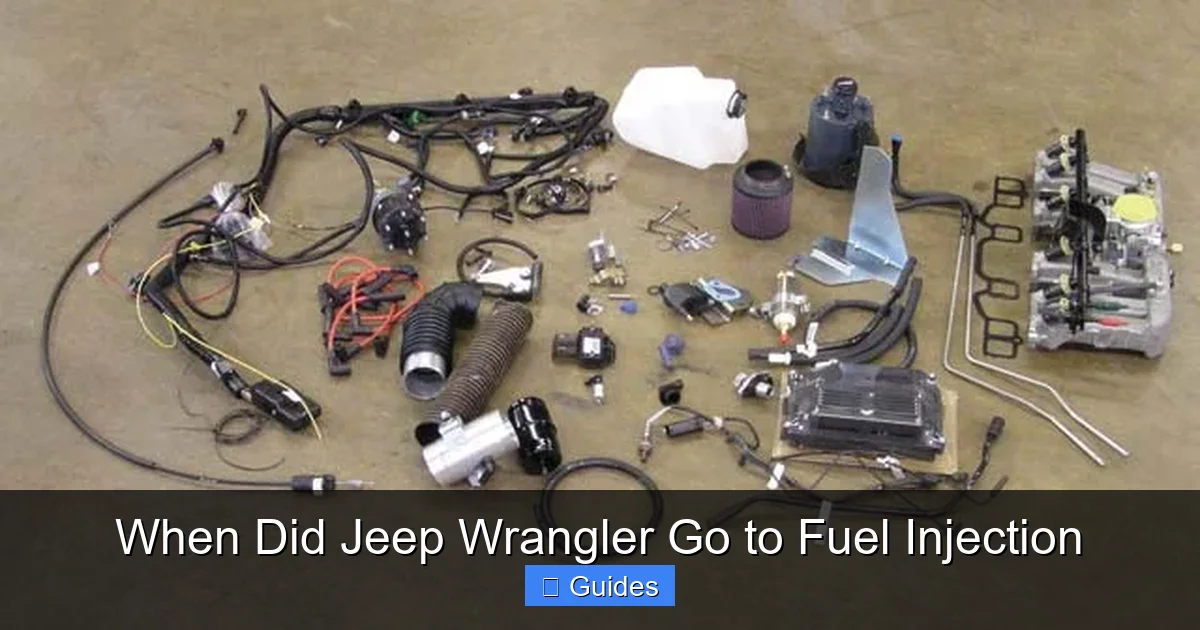
Why Fuel Injection Was a Game-Changer for the Wrangler

Visual guide about When Did Jeep Wrangler Go to Fuel Injection
Image source: cartireinflator.com
The move to fuel injection wasn’t just about meeting regulations—it fundamentally improved how the Jeep Wrangler performed in real-world conditions. For off-roaders, adventurers, and daily drivers alike, the benefits were immediate and noticeable.
More Reliable Cold Starts
One of the biggest complaints about carbureted engines was their poor cold-start performance. On a chilly morning, you’d often have to pump the gas pedal, wait for the choke to do its job, and hope the engine would fire up. With fuel injection, that hassle disappeared. The system automatically adjusted the air-fuel mixture based on engine temperature, ensuring a smooth start every time—even in freezing conditions.
For example, imagine you’re camping in the Rockies during early spring. Temperatures drop below freezing at night, and your Jeep is parked on a steep incline. With a carbureted engine, you might spend 10 minutes trying to get it started. But with fuel injection, you turn the key, and it roars to life on the first try. That reliability is priceless when you’re miles from the nearest town.
Improved Fuel Efficiency
Fuel injection delivers fuel more precisely than a carburetor, which means less waste and better mileage. In the late 1980s, when gas prices were rising and environmental awareness was growing, this was a major selling point. The 4.2L TBI engine in the YJ Wrangler offered noticeably better fuel economy than its carbureted predecessor.
While exact numbers vary depending on driving conditions, many owners reported gains of 1–2 miles per gallon. That might not sound like much, but over thousands of miles—especially for someone who uses their Wrangler for daily commuting and weekend trail rides—it adds up. Plus, better fuel efficiency meant fewer stops at the pump, which is always a win.
Smoother Throttle Response and Power Delivery
Carburetors often suffered from hesitation or “flat spots” in power delivery, especially during acceleration. This was due to the mechanical nature of fuel delivery—fuel had to be drawn in by vacuum, which could lag behind throttle input. Fuel injection eliminated this issue by using electronic controls to deliver fuel exactly when and where it was needed.
The result? A smoother, more responsive driving experience. Whether you’re crawling over rocks on a trail or merging onto a highway, the engine reacts instantly to your inputs. This responsiveness is especially important in off-road situations, where precise throttle control can mean the difference between making it over an obstacle or getting stuck.
Lower Emissions and Easier Maintenance
Fuel injection systems produce fewer harmful emissions than carburetors because they burn fuel more completely. This was crucial for meeting the Clean Air Act standards of the 1980s and 1990s. It also meant that Wranglers with fuel injection were more environmentally friendly—a growing concern among consumers.
Maintenance was another area where fuel injection shined. Carburetors required regular cleaning, tuning, and adjustment. Jets could clog, floats could stick, and gaskets could wear out. With fuel injection, many of these issues disappeared. The system was mostly self-regulating, requiring only occasional sensor checks and fuel filter changes. For the average driver, this meant less time under the hood and more time on the road.
The Generational Progression of Jeep Fuel Injection
Visual guide about When Did Jeep Wrangler Go to Fuel Injection
Image source: motortrend.com
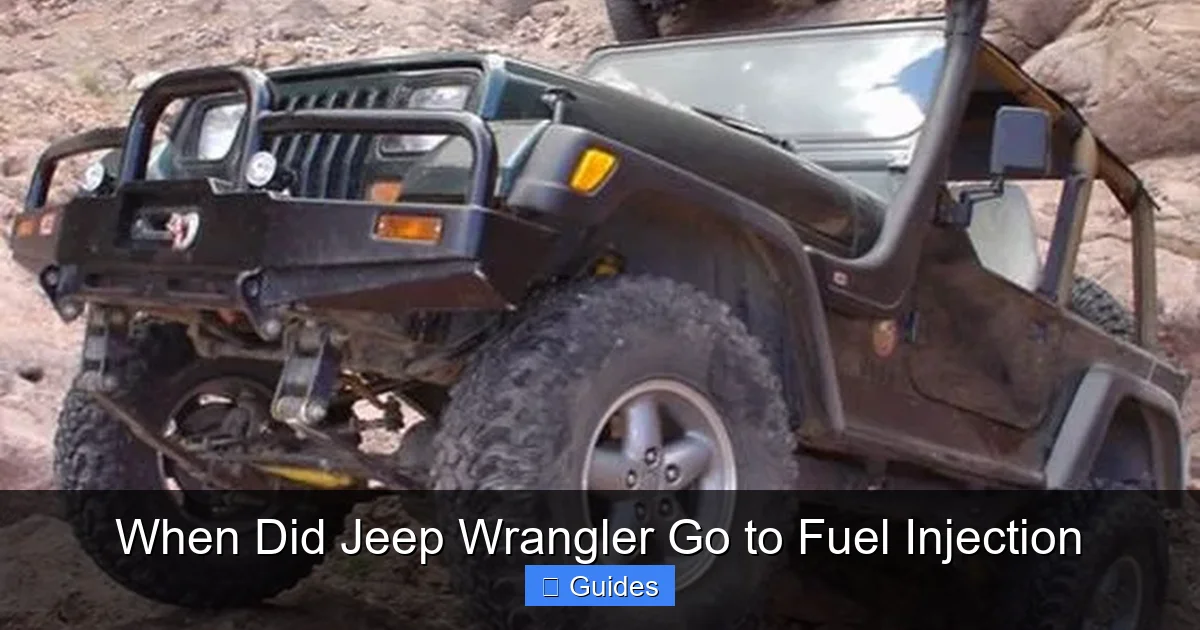
Once Jeep made the switch to fuel injection, it never looked back. Each new generation of the Wrangler brought further refinements to the fuel delivery system, making engines more efficient, powerful, and reliable.
YJ (1987–1995): Throttle Body Injection (TBI)
The YJ Wrangler, introduced in 1987, was the first to feature fuel injection. The 4.2L inline-six engine used a single-point throttle body injection system. While not as advanced as later systems, TBI was a solid foundation. It used a single injector mounted above the throttle body to spray fuel into the intake manifold. This system was simple, reliable, and a major upgrade over carburetors.
The 2.5L four-cylinder engine, however, remained carbureted until 1991, when it too received fuel injection. This staggered adoption allowed Jeep to test and refine the technology before rolling it out across the lineup.
TJ (1997–2006): Multi-Port Fuel Injection (MPI)
With the introduction of the TJ Wrangler in 1997, Jeep upgraded to multi-port fuel injection (MPI). Unlike TBI, which used a single injector, MPI featured one injector per cylinder, mounted directly in the intake port. This allowed for even more precise fuel delivery, improving performance and efficiency.
The TJ also introduced the 4.0L inline-six engine, which became legendary for its durability and torque. Paired with MPI, this engine delivered smooth power across the entire RPM range. It was a favorite among off-roaders for its ability to crawl over obstacles with minimal throttle input.
JK (2007–2018): Electronic Fuel Injection (EFI) and Modern Sensors
The JK Wrangler brought even more advanced fuel injection technology. The 3.8L V6 and later the 3.6L Pentastar V6 engines used sophisticated electronic fuel injection (EFI) systems with multiple sensors and real-time feedback. These systems could adjust fuel delivery based on a wide range of inputs, including oxygen levels in the exhaust, engine load, and ambient temperature.
This level of precision allowed for better fuel economy, lower emissions, and improved performance. The 3.6L Pentastar, in particular, was praised for its smooth power delivery and efficiency, making it a popular choice for both on- and off-road use.
JL (2018–Present): Direct Injection and Turbocharging
The current JL Wrangler represents the pinnacle of Jeep’s fuel injection evolution. The 2.0L turbocharged four-cylinder and 3.0L EcoDiesel V6 engines use direct fuel injection (DI), where fuel is injected directly into the combustion chamber. This allows for even greater control over the combustion process, resulting in higher efficiency and power.
The 2.0L turbo engine, for example, produces more horsepower and torque than the older 3.6L V6, while also offering better fuel economy. The EcoDiesel, meanwhile, delivers exceptional low-end torque and long-range capability—perfect for overlanding and towing.
Practical Tips for Maintaining Fuel-Injected Wranglers
Visual guide about When Did Jeep Wrangler Go to Fuel Injection
Image source: i.pinimg.com
While fuel injection systems are more reliable than carburetors, they still require proper care to perform at their best. Here are some practical tips for keeping your fuel-injected Wrangler running smoothly:
Use Quality Fuel
Always use high-quality gasoline or diesel, depending on your engine. Low-quality fuel can contain contaminants that clog injectors and damage sensors. For turbocharged or direct-injection engines, consider using top-tier fuel with added detergents to keep injectors clean.
Replace the Fuel Filter Regularly
The fuel filter prevents dirt and debris from reaching the injectors. Most manufacturers recommend replacing it every 30,000 to 60,000 miles. If you drive in dusty or off-road conditions, consider changing it more frequently.
Keep the Air Filter Clean
A dirty air filter restricts airflow, which can cause the engine to run rich (too much fuel). This not only wastes gas but can also foul spark plugs and oxygen sensors. Check and replace the air filter according to your owner’s manual.
Use Fuel System Cleaners
Over time, fuel injectors can accumulate deposits that affect performance. Using a quality fuel system cleaner every 5,000 to 10,000 miles can help dissolve these deposits and restore injector flow. Look for products specifically designed for your engine type.
Monitor the Check Engine Light
Modern fuel injection systems are tied to the vehicle’s onboard diagnostics (OBD). If the check engine light comes on, don’t ignore it. Use an OBD2 scanner to read the trouble code and address the issue promptly. Common problems include faulty oxygen sensors, mass airflow (MAF) sensor issues, or clogged injectors.
Winterize Your Wrangler
In cold climates, fuel injection systems can still face challenges. Use a fuel stabilizer if the vehicle will sit for long periods, and consider installing a block heater for easier cold starts. Diesel owners should use winter-grade fuel to prevent gelling.
The Legacy of Fuel Injection in the Jeep Wrangler
Looking back, the switch to fuel injection in 1987 was a turning point for the Jeep Wrangler. It marked the beginning of a new era—one defined by smarter engineering, better performance, and greater reliability. What started as a necessary response to emissions regulations evolved into a core part of the Wrangler’s identity.
Today’s Wranglers are more capable than ever, thanks in large part to advanced fuel injection systems. Whether you’re driving a vintage YJ with TBI or a modern JL with direct injection, you’re benefiting from decades of innovation. These systems don’t just make the engine run better—they make the entire driving experience more enjoyable.
For off-road enthusiasts, fuel injection means more confidence on the trail. You don’t have to worry about carburetor flooding or altitude-related performance drops. For daily drivers, it means better gas mileage and fewer trips to the mechanic. And for purists who love the classic Jeep feel, modern fuel injection delivers that rugged capability with a touch of modern refinement.
Conclusion
So, when did the Jeep Wrangler go to fuel injection? The answer is 1987—a year that marked a major milestone in the vehicle’s long and storied history. From the humble beginnings of throttle body injection in the YJ to the high-tech direct injection systems in today’s JL, fuel injection has transformed the Wrangler into a more efficient, powerful, and reliable machine.
This evolution wasn’t just about keeping up with the times. It was about staying true to the Jeep spirit: tough, capable, and always ready for the next adventure. Whether you’re crawling over boulders in Moab or cruising down the highway, the fuel injection system under the hood is working silently to make it all possible.
As Jeep continues to innovate—exploring hybrid powertrains and even electric models—the legacy of fuel injection remains a cornerstone of its success. It’s a reminder that even the most rugged vehicles can benefit from a little modern technology. And for Wrangler fans, that’s something worth celebrating.
Frequently Asked Questions
When did the Jeep Wrangler first get fuel injection?
The Jeep Wrangler first adopted fuel injection in 1987 with the introduction of the YJ model. The 4.2L inline-six engine was equipped with throttle body injection, replacing the older carbureted system.
What type of fuel injection did the first Wrangler use?
The first fuel-injected Wrangler used throttle body injection (TBI), a single-point system that sprayed fuel into the throttle body. It was less advanced than later multi-port systems but still a major improvement over carburetors.
Did all Wrangler engines switch to fuel injection at the same time?
No. While the 4.2L six-cylinder got fuel injection in 1987, the 2.5L four-cylinder remained carbureted until 1991. Jeep phased in the technology across its engine lineup over several years.
How did fuel injection improve the Wrangler’s performance?
Fuel injection improved throttle response, fuel efficiency, cold-start reliability, and emissions. It also reduced maintenance needs compared to carburetors, which required frequent tuning and cleaning.
What is the difference between TBI and MPI in Jeeps?
Throttle body injection (TBI) uses one injector for all cylinders, while multi-port injection (MPI) uses one injector per cylinder. MPI delivers fuel more precisely, resulting in better performance and efficiency.
Do modern Wranglers still use fuel injection?
Yes, all modern Wranglers use advanced fuel injection systems. The current JL model features direct injection in the 2.0L turbo and 3.0L EcoDiesel engines, offering high efficiency and power.

At CarLegit, we believe information should be clear, factual, and genuinely helpful. That’s why every guide, review, and update on our website is created with care, research, and a strong focus on user experience.