
Sport Mode in the Jeep Cherokee enhances throttle response, steering feel, and transmission behavior for a more dynamic drive. It’s ideal for highway merging, mountain roads, or when you want a sportier feel—but not for everyday commuting or off-roading.
So, you’ve got a Jeep Cherokee—maybe the Trailhawk, Limited, or even the rugged Latitude—and you’ve noticed that little “Sport” button on the center console. You’ve pressed it a few times, felt the car respond a bit more eagerly, but you’re not entirely sure when it’s actually worth using. Should you leave it on all the time? Is it just a gimmick? Or does it really make a difference?
Let’s clear things up.
The Jeep Cherokee’s Sport Mode isn’t just a flashy feature for show. It’s a real driving mode that changes how your SUV behaves—adjusting the throttle, steering, and transmission to deliver a more engaging, performance-oriented experience. But like any tool, it’s only useful when used correctly. Using Sport Mode at the wrong time can waste fuel, increase wear, or even reduce safety.
In this guide, we’ll walk you through exactly when to use Sport Mode in your Jeep Cherokee, how it works, and why it matters. Whether you’re cruising down the highway, tackling a winding mountain road, or just want to feel more connected to your ride, understanding Sport Mode will help you get the most out of your Cherokee.
In This Article
- 1 Key Takeaways
- 2 📑 Table of Contents
- 3 What Is Sport Mode in the Jeep Cherokee?
- 4 When Should You Use Sport Mode?
- 5 When Should You Avoid Sport Mode?
- 6 How Sport Mode Affects Fuel Economy
- 7 Sport Mode vs. Other Jeep Cherokee Driving Modes
- 8 Tips for Getting the Most Out of Sport Mode
- 9 Conclusion
- 10 Frequently Asked Questions
Key Takeaways
- Improved throttle response: Sport Mode makes the accelerator more sensitive, giving quicker acceleration when you need it.
- Enhanced steering feedback: The steering becomes tighter and more responsive, improving control on curvy roads.
- Optimized for performance driving: Use it on highways, mountain passes, or during spirited driving—not for daily errands.
- Not for off-roading: Sport Mode is designed for paved roads; use Selec-Terrain modes like Snow or Sand/Mud for rough terrain.
- Increased fuel consumption: Expect slightly lower fuel economy due to higher RPMs and aggressive shifting.
- Better overtaking capability: The quicker downshifts help you pass other vehicles safely and confidently.
- Use sparingly for best results: Reserve Sport Mode for situations where performance matters most to avoid unnecessary wear.
📑 Table of Contents
What Is Sport Mode in the Jeep Cherokee?
Before we dive into when to use it, let’s first understand what Sport Mode actually does. Think of it as your Jeep’s “performance switch.” When you press the Sport button—usually located near the gear shifter or on the center console—your Cherokee’s onboard computer adjusts several key systems to prioritize responsiveness and agility over comfort and fuel efficiency.
Here’s a breakdown of what changes:
Throttle Response
The most noticeable difference is in how the accelerator pedal behaves. In normal mode, the throttle is tuned for smooth, gradual acceleration—great for city driving and conserving fuel. But in Sport Mode, the throttle becomes much more sensitive. Even a light press of the pedal sends more power to the wheels, giving you quicker off-the-line response.
Transmission Behavior
The automatic transmission holds gears longer and shifts at higher RPMs. This keeps the engine in its power band, allowing for faster acceleration and better performance during overtaking. You’ll also notice that downshifts happen more quickly when you brake or slow down, keeping the engine ready for a burst of speed.
Steering Feel
Sport Mode tightens up the electric power steering, making it feel heavier and more precise. This gives you better feedback from the road, especially when cornering or making quick lane changes. It’s not as dramatic as in a sports car, but it definitely makes the Cherokee feel more planted and confident.
Suspension (If Equipped)
On higher trims like the Trailhawk or models with adaptive suspension, Sport Mode may also firm up the dampers. This reduces body roll during turns and improves overall stability at higher speeds. However, not all Cherokee models have this feature, so check your owner’s manual to see if your SUV includes it.
Engine Sound (Optional)
Some newer Cherokee models come with an active exhaust system that amplifies engine noise in Sport Mode. While this doesn’t improve performance, it adds to the sporty feel—making your drive more engaging and fun.
In short, Sport Mode transforms your Cherokee from a comfortable, relaxed cruiser into a more alert and responsive machine. It’s not about raw power—it’s about how quickly and confidently your SUV reacts to your inputs.
When Should You Use Sport Mode?
Now that you know what Sport Mode does, the big question is: when should you actually use it? The answer isn’t “all the time.” In fact, using it unnecessarily can do more harm than good. Here are the best situations to engage Sport Mode in your Jeep Cherokee.
1. Highway Driving and Merging
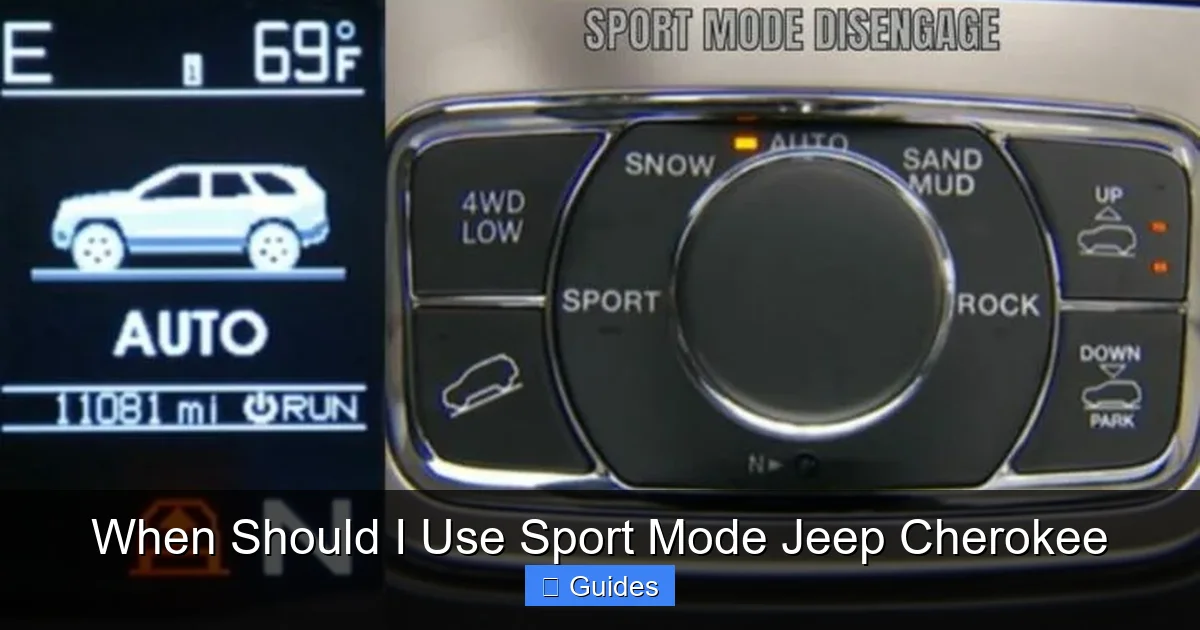
One of the most practical uses for Sport Mode is on the highway—especially when merging onto busy interstates or passing slower vehicles. In normal mode, the Cherokee’s transmission can be a bit slow to downshift, which means you might feel a lag when you hit the gas to pass someone.
Visual guide about When Should I Use Sport Mode Jeep Cherokee
Image source: jeepabc.com
But in Sport Mode, the transmission stays in a lower gear, keeping the engine revs higher and ready to respond. This gives you instant power when you need it. For example, if you’re merging onto a highway and a truck is approaching quickly, Sport Mode lets you accelerate faster and get up to speed more safely.
Tip: Use Sport Mode when entering highways, especially during rush hour or in areas with heavy traffic. It reduces the time you spend in the merge lane and helps you blend into traffic more smoothly.
2. Mountain Roads and Winding Highways
If you live in or travel through hilly or mountainous regions, Sport Mode can make a big difference. Roads like the Blue Ridge Parkway, Pacific Coast Highway, or even rural backroads with tight curves benefit from the improved throttle response and tighter steering.
In normal mode, the Cherokee’s softer suspension and relaxed throttle can make it feel a bit floaty on fast corners. But in Sport Mode, the firmer steering and quicker shifts help you maintain better control. You’ll feel more connected to the road, and the SUV will respond more predictably when you need to brake or accelerate mid-corner.
Example: Imagine driving up a winding mountain road with sharp switchbacks. In Sport Mode, you can brake later into a turn, downshift quickly, and accelerate out with confidence. The engine stays in the right gear, and the steering gives you precise feedback—making the drive more enjoyable and safer.
3. Overtaking and Passing
We’ve all been there—you’re driving on a two-lane road, and you need to pass a slow-moving vehicle. In normal mode, the Cherokee might hesitate when you hit the gas, especially if the transmission is in a high gear. This hesitation can force you to stay in the oncoming lane longer than you’d like.
Sport Mode solves this by keeping the transmission ready to downshift. When you press the accelerator, the engine responds immediately, giving you the power you need to complete the pass quickly and safely.
Tip: Activate Sport Mode just before you begin passing. Once you’re back in your lane, you can switch back to normal mode to save fuel.
4. Spirited Driving and Fun Roads
Let’s be honest—sometimes you just want to have a little fun. If you’re driving on a scenic backroad with smooth pavement and minimal traffic, Sport Mode can turn a routine drive into an enjoyable experience.
The quicker throttle, tighter steering, and sportier exhaust note (if equipped) make the Cherokee feel more alive. It’s not a sports car, but it’s definitely more engaging in Sport Mode. Whether you’re cruising through the countryside or exploring a new route, this mode adds a layer of excitement.
Just remember: this isn’t about speeding or reckless driving. It’s about enjoying the drive within safe and legal limits.
5. Towing or Carrying Heavy Loads
While Sport Mode isn’t specifically designed for towing, it can help when you’re carrying a heavy load or pulling a trailer. The improved throttle response and lower gear holding make it easier to accelerate from a stop or maintain speed on inclines.
For example, if you’re towing a small camper or hauling a full load of gear, Sport Mode can reduce the strain on the engine and transmission. It keeps the RPMs up, preventing the vehicle from lugging in high gears.
Note: Always follow your owner’s manual guidelines for towing. Sport Mode can assist, but it doesn’t replace proper towing practices like using the correct hitch, weight distribution, and trailer brakes.
When Should You Avoid Sport Mode?
Just as important as knowing when to use Sport Mode is knowing when not to. Using it in the wrong situations can lead to increased fuel consumption, unnecessary wear, and even reduced safety.
City Driving and Stop-and-Go Traffic
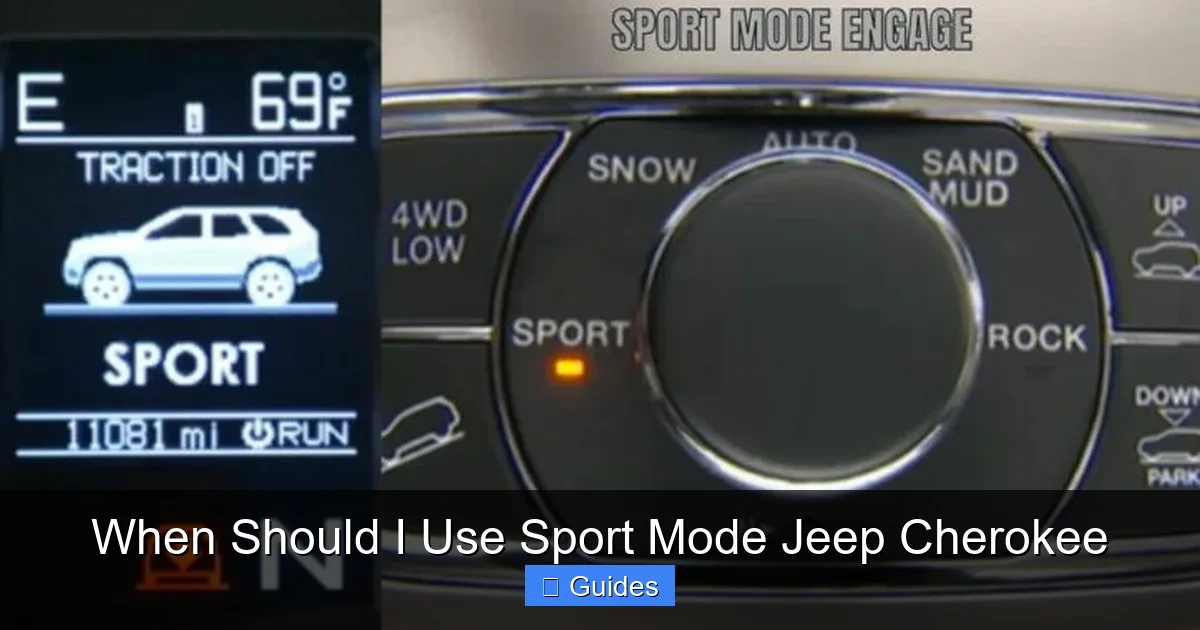
Sport Mode is not ideal for daily commuting or heavy traffic. The sensitive throttle can make the vehicle feel jerky at low speeds, especially when accelerating from a stop. This can be annoying in stop-and-go traffic and may even surprise passengers.
Visual guide about When Should I Use Sport Mode Jeep Cherokee
Image source: jeepabc.com
Additionally, the transmission holds gears longer, which means more engine braking and frequent shifting. This can lead to a rougher ride and increased wear on the transmission over time.
Tip: Stick to normal mode in the city. Save Sport Mode for open roads where you can take advantage of its performance benefits.
Off-Roading and Rough Terrain
Despite the name, Sport Mode is not designed for off-roading. In fact, it can be counterproductive. The firmer steering and quicker throttle response can make it harder to control the vehicle on loose or uneven surfaces.
For off-roading, Jeep offers specialized modes like Snow, Sand/Mud, Rock, and Auto (via the Selec-Terrain system). These modes adjust traction control, throttle sensitivity, and transmission behavior to suit the terrain. Sport Mode, on the other hand, is optimized for paved roads and performance driving.
Example: If you’re driving on a muddy trail or rocky path, using Sport Mode could cause the wheels to spin more easily or make the vehicle harder to steer precisely. Always switch to the appropriate Selec-Terrain mode when going off-road.
Fuel-Efficient Driving
Sport Mode increases fuel consumption. Because the engine runs at higher RPMs and the transmission shifts less frequently, you’ll burn more gas—especially during acceleration.
If you’re trying to maximize fuel economy—say, on a long road trip or during a fuel shortage—avoid Sport Mode. Normal or Eco mode (if available) will give you better mileage by keeping the engine in lower gears and smoothing out throttle input.
Tip: Use Sport Mode only when performance matters. For everyday driving, normal mode is more efficient and comfortable.
How Sport Mode Affects Fuel Economy
Let’s talk about the elephant in the room: fuel economy. One of the biggest trade-offs with Sport Mode is reduced fuel efficiency. But how much does it really cost you?
On average, using Sport Mode can reduce your fuel economy by 1 to 2 miles per gallon (MPG), depending on driving style and conditions. That might not sound like much, but over time, it adds up.
For example, if you drive 15,000 miles a year and your Cherokee gets 25 MPG in normal mode, you’d use about 600 gallons of gas. In Sport Mode, that drops to around 23–24 MPG, meaning you’d use 625–650 gallons. At $3.50 per gallon, that’s an extra $87–$175 per year.
Of course, this depends on how often you use Sport Mode. If you only use it occasionally—say, for highway merging or weekend drives—the impact is minimal. But if you leave it on all the time, you’ll notice the difference at the pump.
Tips to Minimize Fuel Impact
- Use Sport Mode only when needed—turn it off after merging or passing.
- Avoid aggressive driving, even in Sport Mode. Smooth inputs save fuel.
- Combine Sport Mode with cruise control on long highway stretches to maintain steady speeds.
- Monitor your fuel economy using the onboard trip computer to see how much you’re using.
Remember, Sport Mode is a tool—not a default setting. Use it wisely, and you’ll enjoy better performance without breaking the bank.
Sport Mode vs. Other Jeep Cherokee Driving Modes
The Jeep Cherokee offers multiple driving modes, and it’s easy to get confused about which one to use. Here’s a quick comparison to help you choose the right mode for the situation.
Normal Mode
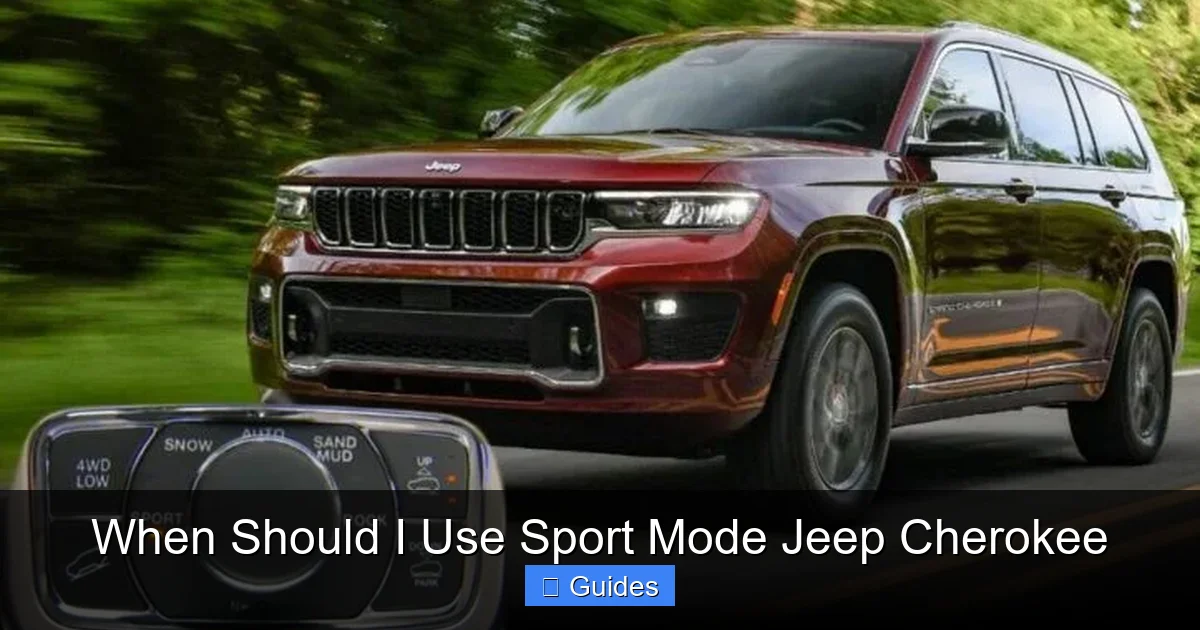
The default setting for everyday driving. It balances performance, comfort, and fuel economy. Use this for city driving, commuting, and general use.
Visual guide about When Should I Use Sport Mode Jeep Cherokee
Image source: jeepabc.com
Eco Mode (if equipped)
Optimized for maximum fuel efficiency. It softens throttle response, adjusts climate control, and may limit accessory power. Great for long trips or when you want to save gas.
Sport Mode
Prioritizes performance and responsiveness. Use for highways, mountain roads, overtaking, or spirited driving. Not ideal for city or off-road use.
Selec-Terrain Modes (Snow, Sand/Mud, Rock, Auto)
Designed for off-road and adverse conditions. These modes adjust traction control, throttle, and transmission for specific terrains. Use instead of Sport Mode when driving on snow, mud, or rough trails.
Snow Mode
Reduces throttle sensitivity and adjusts traction control to prevent wheel slip. Ideal for icy or snowy roads.
Sand/Mud Mode
Allows more wheel slip to help the vehicle “float” over loose surfaces. Use in deep sand, mud, or gravel.
Rock Mode
For extreme off-roading. It locks the rear differential (if equipped) and adjusts traction control for maximum grip on rocks and steep inclines.
Auto Mode
Automatically selects the best mode based on driving conditions. A good “set it and forget it” option for mixed driving.
In short: Use Sport Mode for performance on paved roads. Use Selec-Terrain modes for off-roading or bad weather. And stick to Normal or Eco for daily driving.
Tips for Getting the Most Out of Sport Mode
Now that you know when and how to use Sport Mode, here are some practical tips to help you get the best experience:
1. Use It Strategically
Don’t leave Sport Mode on all the time. Activate it only when you need the extra performance—like before merging or passing. Turn it off when you’re done to save fuel and reduce wear.
2. Pair It with Manual Shifting (If Available)
Some Cherokee models come with paddle shifters or a manual shift mode. In Sport Mode, you can use these to control gear changes yourself. This gives you even more control, especially on mountain roads or during spirited driving.
3. Be Mindful of Tire Pressure
Sport Mode puts more stress on your tires, especially during cornering. Make sure your tire pressure is set to the recommended level (found on the driver’s door jamb) to maintain grip and handling.
4. Check Your Suspension
If your Cherokee has adaptive suspension, Sport Mode will firm it up. But if your shocks or struts are worn, the ride may feel harsh. Have your suspension inspected regularly, especially if you use Sport Mode frequently.
5. Listen to Your Engine
Sport Mode keeps the engine in higher RPMs, which can increase noise and vibration. If you notice unusual sounds or excessive vibration, it could be a sign of engine or transmission issues. Get it checked by a mechanic.
6. Combine with Safe Driving Habits
Sport Mode makes your Cherokee more responsive, but it doesn’t make it invincible. Always drive within your limits, obey speed limits, and maintain a safe following distance—even in Sport Mode.
Conclusion
Sport Mode in the Jeep Cherokee is more than just a fun button—it’s a practical tool that enhances performance, handling, and driving enjoyment when used correctly. Whether you’re merging onto a busy highway, tackling a winding mountain road, or simply want a more engaging drive, Sport Mode gives your Cherokee the edge it needs.
But remember: it’s not for every situation. Avoid using it in city traffic, off-roading, or when fuel economy is a priority. Instead, reserve it for moments when performance matters—like overtaking, spirited driving, or towing.
By understanding how Sport Mode works and when to use it, you’ll get the most out of your Jeep Cherokee while keeping it running smoothly for years to come. So the next time you hit that Sport button, do it with confidence—and enjoy the ride.
Frequently Asked Questions
Does Sport Mode damage my Jeep Cherokee?
No, Sport Mode is a factory-designed feature and won’t damage your vehicle when used appropriately. However, frequent use can increase wear on the transmission and engine over time, so use it sparingly.
Can I use Sport Mode in the rain or snow?
It’s not recommended. Sport Mode increases throttle sensitivity, which can lead to wheel spin on wet or slippery surfaces. Use Snow or Auto mode instead for better traction and control.
Does Sport Mode improve towing capacity?
No, it doesn’t increase towing capacity. However, it can help with throttle response and gear holding when towing, making acceleration and hill climbing easier.
Can I leave Sport Mode on all the time?
You can, but it’s not advised. Constant use reduces fuel economy and may lead to premature wear. It’s best to use it only when performance is needed.
Does Sport Mode work in 4WD?
Yes, Sport Mode works in both 2WD and 4WD. However, for off-roading, use the appropriate Selec-Terrain mode instead for optimal traction and control.
Is Sport Mode available on all Jeep Cherokee trims?
Most trims from the Latitude up include Sport Mode, but availability may vary by model year and region. Check your owner’s manual or vehicle settings to confirm.

At CarLegit, we believe information should be clear, factual, and genuinely helpful. That’s why every guide, review, and update on our website is created with care, research, and a strong focus on user experience.