
Losing your car key doesn’t have to mean a costly tow or days without your vehicle. Whether you need a basic key, a transponder key, or a smart fob, there are several reliable places to get a car key made—each with different costs, speeds, and convenience levels. This guide walks you through all your options so you can choose the best one for your situation.
In This Article
- 1 Key Takeaways
- 2 📑 Table of Contents
- 3 Introduction: Don’t Panic—You’ve Got Options
- 4 Understanding Your Car Key: Types and Technology
- 5 Option 1: Your Car Dealership
- 6 Option 2: Professional Automotive Locksmiths
- 7 Option 3: Big-Box Retailers and Hardware Stores
- 8 Option 4: Online Key Replacement Services
- 9 Option 5: DIY Key Programming (For Some Vehicles)
- 10 Prevention: How to Avoid Losing Your Key Again
- 11 Insurance and Roadside Assistance: Hidden Helpers
- 12 Conclusion: Choose the Right Option for Your Situation
- 13 Frequently Asked Questions
Key Takeaways
- Understanding Where Can I Get A Car Key Made: Provides essential knowledge
📑 Table of Contents
- Introduction: Don’t Panic—You’ve Got Options
- Understanding Your Car Key: Types and Technology
- Option 1: Your Car Dealership
- Option 2: Professional Automotive Locksmiths
- Option 3: Big-Box Retailers and Hardware Stores
- Option 4: Online Key Replacement Services
- Option 5: DIY Key Programming (For Some Vehicles)
- Prevention: How to Avoid Losing Your Key Again
- Insurance and Roadside Assistance: Hidden Helpers
- Conclusion: Choose the Right Option for Your Situation
Introduction: Don’t Panic—You’ve Got Options
Losing your car key is one of those frustrating moments that can throw your entire day off track. Whether it slipped out of your pocket at the grocery store, got locked inside your vehicle, or simply vanished into the couch cushions, the panic sets in quickly. You might think you’re stuck paying hundreds of dollars at the dealership or waiting days for a replacement. But here’s the good news: there are more ways than ever to get a car key made—and many of them are faster, cheaper, and more convenient than you’d expect.
The key (pun intended) is knowing where to look and understanding what type of key your car uses. Modern vehicles often come with advanced security features like transponder chips, remote starters, and keyless entry systems. That means simply cutting a new metal key isn’t enough—you may also need to program it to sync with your car’s computer. But don’t worry. Whether you drive a 1995 sedan or a 2024 electric SUV, there’s a solution out there for you. In this guide, we’ll walk you through every option, from traditional dealerships to mobile locksmiths and even online services, so you can get back on the road with confidence.
Understanding Your Car Key: Types and Technology
Visual guide about Where Can I Get a Car Key Made
Image source: lihpao.com
Before you rush off to get a replacement, it helps to know what kind of key you’re dealing with. Not all car keys are created equal, and the type you have will determine where you can get it made and how much it will cost.
Basic Mechanical Keys
These are the simplest type—just a plain metal blade that fits into the ignition and door locks. Common in older vehicles (typically pre-2000), they don’t have any electronic components. If your car uses a basic key, you’re in luck: it’s the easiest and cheapest to duplicate. Many hardware stores, big-box retailers, and even some gas stations can cut a copy in minutes for under $10.
Transponder Keys
Introduced in the mid-1990s, transponder keys have a small electronic chip embedded in the plastic head. When you insert the key into the ignition, the car sends a radio signal to the chip. If the chip responds with the correct code, the engine will start. If not, the car won’t turn over—even if the key physically fits. This adds a layer of security but also means the key must be programmed to your vehicle. Most modern cars (up to about 2015) use transponder keys.
Remote Key Fobs
These combine a traditional key with a remote control for locking, unlocking, and sometimes starting the car. The fob has buttons for functions like trunk release, panic alarm, and remote start. While the key blade may be mechanical or transponder-based, the remote part requires battery power and programming. Replacing a remote fob often means syncing it with your car’s security system.
Smart Keys (Proximity Keys)
Found in many newer vehicles (2015 and later), smart keys allow you to start your car with the push of a button while the key remains in your pocket or bag. The car detects the key’s signal when you’re nearby, enabling keyless entry and ignition. These keys are the most complex and expensive to replace, often requiring specialized equipment and software to program.
Flip Keys and Laser-Cut Keys
Some vehicles use flip keys (also called switchblade keys), where the metal blade folds into the fob. Others have laser-cut keys with intricate grooves on both sides, making them harder to duplicate. These often require precision cutting tools and may need programming as well.
Understanding your key type is the first step in knowing where to go. A basic key can be copied almost anywhere, but a smart key will likely need a professional with the right tools and access to your car’s software.
Option 1: Your Car Dealership
Visual guide about Where Can I Get a Car Key Made
Image source: locksmithmenlopark.net
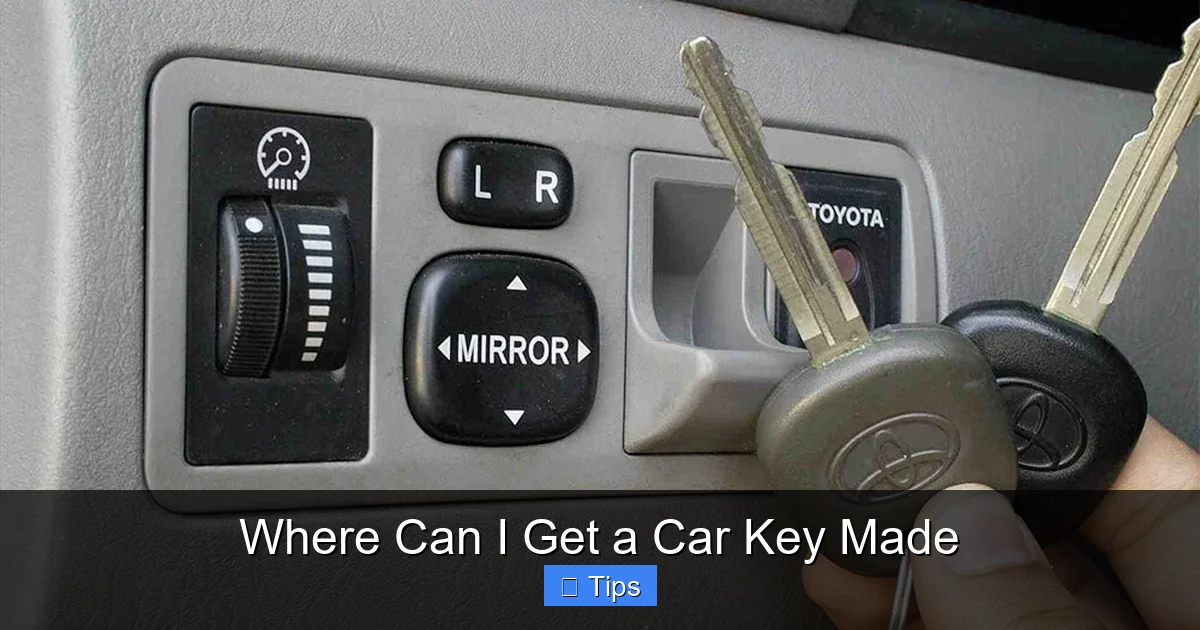
When most people think of getting a car key made, the dealership is the first place that comes to mind—and for good reason. Dealerships have direct access to your vehicle’s make, model, and VIN (Vehicle Identification Number), which allows them to order an exact OEM (Original Equipment Manufacturer) replacement key.
Pros of Going to the Dealership
The biggest advantage is compatibility. Since the key is made specifically for your car, it will work seamlessly with all systems—ignition, locks, remote functions, and security. Dealerships also have the specialized equipment needed to program advanced keys, including smart fobs and proximity keys. If your car is still under warranty, some dealerships may even cover the cost of a replacement key.
Another benefit is peace of mind. You’re dealing with factory-trained technicians who know your vehicle inside and out. There’s less risk of errors or malfunctions compared to third-party services.
Cons of Going to the Dealership
The main downside? Cost. Dealerships are typically the most expensive option. A single replacement key can range from $150 to $500 or more, depending on the vehicle and key type. For example, a basic transponder key for a Honda Civic might cost $200, while a smart key for a BMW X5 could run over $600.
There’s also the issue of convenience. You’ll likely need to schedule an appointment, and wait times can vary. If you’re locked out of your car at night or on a weekend, the dealership may not be open. Plus, you’ll need to provide proof of ownership—usually your registration, ID, and sometimes the original key—which can be a hassle if you’ve lost everything.
When to Choose the Dealership
The dealership is best if you want a guaranteed OEM key, your car is new or high-end, or you’re not in a rush and don’t mind paying a premium. It’s also a solid choice if you’re unsure about your key type and want an expert to assess it.
Option 2: Professional Automotive Locksmiths
Visual guide about Where Can I Get a Car Key Made
Image source: easykeyslondon.com
If you’re looking for a faster, more affordable alternative to the dealership, a professional automotive locksmith is often the way to go. These specialists are trained to handle all types of car keys and can often come to you—whether you’re at home, work, or stranded on the side of the road.
What Locksmiths Can Do
Modern locksmiths aren’t just about picking locks. They carry portable cutting machines and programming tools that allow them to duplicate and program keys on the spot. Many can handle transponder keys, remote fobs, and even some smart keys. Some even offer 24/7 emergency service, so you’re not stuck waiting until morning.
For example, if you lose your key at 2 a.m. after a late shift, a mobile locksmith can arrive within an hour, cut a new key, and program it—all without you having to tow your car anywhere.
Cost and Convenience
Locksmiths are generally much cheaper than dealerships. A transponder key might cost $100–$250, and a remote fob $150–$300—often half the price of a dealership. Plus, many offer flat-rate pricing, so you know the cost upfront.
The convenience factor is huge. You don’t need an appointment, and most locksmiths can work on multiple vehicle brands. Just make sure to choose a licensed, insured, and reputable locksmith. Look for reviews, certifications (like from the Associated Locksmiths of America), and avoid anyone who quotes an unusually low price—it could be a scam.
Limitations
While locksmiths can handle most keys, some high-end or newer vehicles (especially those with advanced encryption) may require dealership-level programming. In those cases, the locksmith might refer you to the dealer or charge extra for specialized equipment.
Also, not all locksmiths carry every key blank. If your car uses a rare or discontinued key, they may need to order it, which could take a day or two.
Tips for Hiring a Locksmith
– Ask for a written quote before any work begins.
– Verify their license and insurance.
– Check online reviews on Google, Yelp, or the BBB.
– Avoid “pop-up” locksmiths who advertise heavily online but have no physical location.
– Make sure they can program the key—not just cut it.
Option 3: Big-Box Retailers and Hardware Stores
For basic mechanical keys, your local Walmart, Home Depot, or Ace Hardware might be all you need. These stores often have key-cutting machines that can duplicate simple keys quickly and affordably.
What They Can Handle
Retailers are great for non-electronic keys—think older cars, spare keys, or valet keys. Many can also cut transponder key blades (the metal part), but they usually can’t program the chip. So if your key has a chip, you’ll still need to get it programmed elsewhere.
Some stores, like Walmart, offer key duplication services for under $10. Home Depot and Lowe’s also have key-cutting stations, and some even offer basic remote fob battery replacements.
Limitations and Risks
The biggest limitation is programming. Without the ability to sync the key to your car’s computer, a transponder or smart key won’t work—even if it’s cut perfectly. Also, not all stores carry every key blank. If your key has a unique shape or is from a less common brand, they may not have it in stock.
There’s also a security risk. Some people worry about giving their car key to a retail employee, especially if it has a remote or chip. While most stores are trustworthy, it’s worth considering whether you’re comfortable with that.
When to Use Retailers
These stores are ideal if you need a spare key for an older car, want a backup for emergencies, or are on a tight budget. Just remember: for anything beyond a basic key, you’ll likely need to visit a locksmith or dealership afterward.
Option 4: Online Key Replacement Services
In the digital age, you can now order a replacement car key online—sometimes for a fraction of the dealership price. Companies like KeylessRide, CarKeyMart, and KeySavior allow you to enter your vehicle info, upload proof of ownership, and have a new key shipped to your door.
How It Works
You start by providing your car’s make, model, year, and VIN. Some services also ask for photos of your registration or driver’s license to verify ownership. Once approved, they cut and program the key using your vehicle’s specifications and ship it to you—usually within a few days.
Some services even include a self-programming kit. For certain vehicles, you can program the key yourself by following simple steps, like turning the ignition on and off in a specific sequence.
Pros and Cons
The biggest advantage is cost. Online keys can be 30–50% cheaper than dealerships. They’re also convenient if you’re not in a rush and prefer to avoid in-person visits.
However, there are downsides. You’ll need to wait for shipping, which can take 3–7 days. Also, not all vehicles are supported—some high-security or newer models require dealership-only programming. And if you’re locked out of your car, waiting a week isn’t an option.
Tips for Using Online Services
– Only use reputable companies with clear return policies and customer support.
– Double-check your vehicle info before ordering.
– Be prepared to provide proof of ownership—scammers often target these services.
– Read reviews to ensure they’ve successfully handled your car’s make and model.
Option 5: DIY Key Programming (For Some Vehicles)
Believe it or not, some cars allow you to program a new key yourself—no tools or professionals needed. This is called “on-board programming” and works on certain makes and models, especially older ones.
How DIY Programming Works
The process varies by vehicle, but it usually involves inserting an existing key, turning the ignition, and following a specific sequence of steps. For example, in some Honda and Acura models, you can program a new transponder key by turning the ignition on and off five times, then pressing a button on the new key.
Check your owner’s manual or search online for your car’s specific programming instructions. YouTube tutorials can also be helpful.
Limitations
DIY programming only works if you have at least one working key. If you’ve lost all your keys, this method won’t help. Also, it’s not available on most modern vehicles with advanced security systems.
When to Try It
If you have a spare key and a compatible vehicle, DIY programming can save you time and money. Just make sure you follow the steps exactly—mistakes can lock you out or damage the system.
Prevention: How to Avoid Losing Your Key Again
Once you’ve gone through the hassle of getting a new key, the last thing you want is to lose it again. Here are some simple tips to prevent future lockouts:
- Keep a spare key in a secure location. Give one to a trusted family member or friend, or use a magnetic key box hidden under your car (though this isn’t foolproof).
- Use a key tracker. Devices like Tile or Apple AirTag can help you locate your keys using your smartphone.
- Attach your keys to something noticeable. A bright lanyard or keychain makes them harder to misplace.
- Check your pockets before leaving the car. Make it a habit to pat down your pockets or check your bag before walking away.
- Consider a keyless entry system. Some aftermarket systems let you unlock your car with your phone, reducing reliance on physical keys.
Insurance and Roadside Assistance: Hidden Helpers
Before you pay out of pocket, check your car insurance policy or roadside assistance plan. Many providers offer key replacement coverage—either as part of comprehensive insurance or as an add-on service.
For example, AAA and some credit card companies include lockout assistance and key replacement in their premium plans. Some insurance policies even reimburse you for lost keys, though there may be a deductible.
It’s worth calling your provider to ask. You might be surprised by what’s covered.
Conclusion: Choose the Right Option for Your Situation
Getting a car key made doesn’t have to be a nightmare. Whether you go to the dealership, call a locksmith, visit a retail store, or order online, there’s a solution that fits your budget, timeline, and vehicle type. The key is knowing your options and acting quickly.
Start by identifying your key type. If it’s basic, a hardware store might do. If it’s advanced, a locksmith or dealership is your best bet. And always keep a spare key somewhere safe—because prevention is always cheaper than replacement.
Losing your keys is stressful, but with the right information, you can turn a frustrating moment into a quick fix. So the next time you misplace your car key, don’t panic. Just refer back to this guide, and you’ll know exactly where to go.
Frequently Asked Questions
Can I get a car key made without the original?
Yes, but it depends on the key type and where you go. Locksmiths and dealerships can often make a key using your VIN and proof of ownership, even without the original. However, some advanced keys may require at least one working key for programming.
How much does it cost to get a car key made?
Costs vary widely: basic keys cost $5–$15, transponder keys $100–$250, and smart keys $200–$600+. Dealerships are usually the most expensive, while locksmiths and online services offer lower prices.
How long does it take to get a car key made?
A basic key can be cut in minutes at a retail store. Transponder and smart keys may take 30 minutes to a few hours if done on-site. Online orders typically take 3–7 days for shipping.
Can I program a car key myself?
Some vehicles allow DIY programming if you have at least one working key. Check your owner’s manual or online guides for your specific make and model. Most modern cars require professional programming.
Will my insurance cover a lost car key?
Some comprehensive insurance policies and roadside assistance plans include key replacement coverage. Check with your provider to see if you’re eligible for reimbursement.
Is it safe to order a car key online?
It can be safe if you use a reputable company and provide proper proof of ownership. Stick to well-reviewed services with clear policies and customer support to avoid scams.

At CarLegit, we believe information should be clear, factual, and genuinely helpful. That’s why every guide, review, and update on our website is created with care, research, and a strong focus on user experience.