
Finding a donated car for free is possible through nonprofit organizations, religious groups, and government-assisted programs. With the right research and eligibility, you can receive a reliable vehicle at no cost to help with transportation needs.
In This Article
- 1 Key Takeaways
- 2 📑 Table of Contents
- 3 Where Can I Get a Donated Car for Free?
- 4 Top Nonprofit Organizations That Give Away Free Cars
- 5 Government and State-Assisted Programs
- 6 Faith-Based and Community Organizations
- 7 Online Platforms and Direct Donor Programs
- 8 How to Qualify for a Free Donated Car
- 9 Tips to Increase Your Chances of Getting a Free Car
- 10 Avoiding Scams and Fake Programs
- 11 Conclusion
- 12 Frequently Asked Questions
Key Takeaways
- Nonprofit charities offer free donated cars: Organizations like Goodwill, Vehicles for Change, and 1-800-Charity Cars provide vehicles to low-income individuals, veterans, and families in need.
- Eligibility requirements vary: Most programs require proof of income, employment, insurance, and a valid driver’s license. Some prioritize single parents, disabled individuals, or those transitioning from homelessness.
- Government and state programs may help: Some states have transportation assistance programs that include vehicle donations or subsidies for car purchases.
- Churches and faith-based groups are valuable resources: Many religious organizations run car donation programs to support their communities, especially during emergencies or life transitions.
- Online platforms connect donors with recipients: Websites like FreeCars.org and NeedACar.org allow individuals to apply directly for donated vehicles.
- Be cautious of scams: Always verify the legitimacy of a program before sharing personal information or paying any fees—legitimate free car programs never charge application fees.
- Prepare required documents in advance: Having your ID, proof of income, insurance quotes, and references ready speeds up the application process.
📑 Table of Contents
- Where Can I Get a Donated Car for Free?
- Top Nonprofit Organizations That Give Away Free Cars
- Government and State-Assisted Programs
- Faith-Based and Community Organizations
- Online Platforms and Direct Donor Programs
- How to Qualify for a Free Donated Car
- Tips to Increase Your Chances of Getting a Free Car
- Avoiding Scams and Fake Programs
- Conclusion
Where Can I Get a Donated Car for Free?
Imagine this: You’re working hard, trying to get to your job, take your kids to school, or attend medical appointments—but you don’t have a car. Public transportation isn’t reliable, rideshares add up fast, and buying a vehicle isn’t in the budget. It’s a tough spot to be in. But here’s some good news: **you may be able to get a donated car for free**.
Yes, free. No hidden costs, no loans, no strings attached—just a reliable vehicle given to you by a charitable organization or community program. These donated cars can be life-changing, offering independence, stability, and peace of mind. Whether you’re a single parent, a veteran, someone recovering from hardship, or simply struggling financially, there are real opportunities out there.
But how do you find them? And how do you make sure you’re applying to a legitimate program? That’s exactly what this guide is for. We’ll walk you through the best places to look, what you need to qualify, and how to avoid scams. By the end, you’ll have a clear roadmap to getting a free donated car—and the freedom that comes with it.
Top Nonprofit Organizations That Give Away Free Cars
Visual guide about Where Can I Get a Donated Car for Free
Image source: dollarsprout.com
One of the most reliable ways to get a donated car for free is through established nonprofit organizations. These groups receive vehicle donations from individuals and corporations, then refurbish and distribute them to people in need. They often focus on specific populations, such as low-income families, veterans, or individuals with disabilities.
Goodwill Industries
Goodwill is well-known for its thrift stores, but many people don’t realize they also run vehicle donation programs. Through partnerships with local agencies, Goodwill helps provide free cars to job seekers, people in job training programs, and those transitioning out of homelessness. The goal is to remove transportation barriers so individuals can gain employment and achieve self-sufficiency.
To qualify, you typically need to be enrolled in a Goodwill job program or referred by a social service agency. You’ll also need to show proof of income (even if it’s low), a valid driver’s license, and proof of insurance. The application process may take a few weeks, but it’s worth it—Goodwill has helped thousands of people get back on the road.
Vehicles for Change
Based in Maryland but serving multiple states, Vehicles for Change is a standout organization in the free car donation space. They provide refurbished vehicles to low-income individuals who are employed or actively seeking work. The program emphasizes long-term success—recipients must complete financial literacy training and commit to maintaining the vehicle.
What’s great about Vehicles for Change is their transparency. They clearly outline eligibility: you must earn at least $18,000 annually, have a valid license, and be able to insure the car. They also require a background check and references. While the process is thorough, it ensures that the cars go to people who will use them responsibly.
1-800-Charity Cars (Now part of 800-Car-Cash)
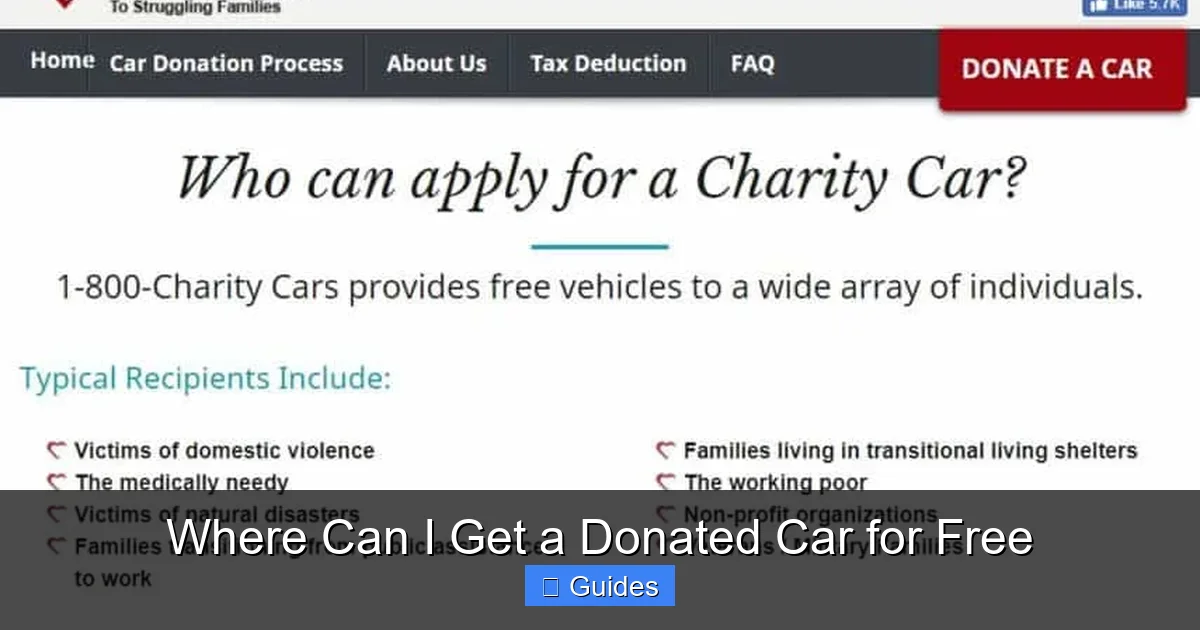
Originally known as 1-800-Charity Cars, this organization has been giving away free vehicles since 2006. They’ve distributed over 10,000 cars to families, veterans, and individuals facing hardships like domestic violence or medical crises. The program is national, so no matter where you live in the U.S., you can apply.
Applicants must demonstrate a genuine need—such as lack of transportation to work, school, or medical care—and provide documentation like pay stubs, ID, and a letter explaining their situation. The organization reviews applications monthly and selects recipients based on need and readiness. They also offer support services, including help with insurance and registration.
FreeCars.org
FreeCars.org is a newer but growing platform that connects car donors directly with people in need. Unlike traditional charities, this site allows individuals to donate their vehicles and specify who they want to help—like a single mom, a veteran, or a senior citizen. Recipients apply online, share their story, and wait to be matched with a donor.
The application is simple: fill out a form, upload required documents, and write a brief personal statement. The site is free to use, and there are no fees. While not every applicant gets a car right away, the platform increases your chances by exposing your need to a wide network of potential donors.
Government and State-Assisted Programs
Visual guide about Where Can I Get a Donated Car for Free
Image source: michiganmobility.org
While the federal government doesn’t have a direct “free car” program, several state and local agencies offer transportation assistance that can include vehicle donations or subsidies. These programs are often part of broader welfare, workforce development, or disability support initiatives.
State Welfare and TANF Programs
Temporary Assistance for Needy Families (TANF) is a federal grant program that gives states flexibility in supporting low-income families. Some states use TANF funds to provide transportation assistance, which may include car donations, repair vouchers, or even cash grants to buy a used vehicle.
For example, in Washington State, the Department of Social and Health Services (DSHS) offers a “Vehicle Purchase Program” for TANF recipients who need a car to get to work. The program provides up to $5,000 toward the purchase of a reliable used car. While not exactly a “free donated car,” it significantly reduces the cost and is often the next best thing.
To find out if your state offers similar programs, contact your local Department of Social Services or visit the Benefits.gov website. Search for “transportation assistance” or “vehicle donation program” in your state.
Vocational Rehabilitation Services
If you have a disability, your state’s Vocational Rehabilitation (VR) agency may help you get a car. These agencies assist people with disabilities in finding and keeping employment. Transportation is often a major barrier, so VR counselors may approve funding for a vehicle purchase or donation.
The process starts with an assessment to determine your employment goals and transportation needs. If a car is deemed essential, the agency may cover the cost of a used vehicle, insurance, or even modifications like hand controls. You’ll need to work with a VR counselor and provide medical documentation of your disability.
This isn’t a quick fix—it can take several months—but it’s a valuable resource for people with disabilities who are striving for independence.
Unemployment and Job Training Programs
Some workforce development programs include transportation support as part of their services. For instance, the Workforce Innovation and Opportunity Act (WIOA) funds job training and placement services, and in some cases, covers transportation costs—including vehicle donations.
Local American Job Centers (AJCs) can tell you if your area offers such benefits. They may partner with nonprofits to provide free cars to participants in training programs. If you’re enrolled in a certified job training course, ask your case manager about transportation assistance options.
Faith-Based and Community Organizations

Visual guide about Where Can I Get a Donated Car for Free
Image source: tinyhousedesign.com
Churches, mosques, synagogues, and other religious institutions often run charitable programs to support their communities. Many have car donation ministries that give away vehicles to members or local residents in need. These programs are usually funded by donations and volunteer efforts.
Local Churches and Ministries
It’s worth reaching out to churches in your area—even if you’re not a member. Many have outreach programs that include food, clothing, and yes, cars. For example, some Baptist churches run “Car Ministry” programs where volunteers repair donated vehicles and give them to families facing hardship.
To apply, you may need to speak with a pastor or outreach coordinator. Be honest about your situation and provide documentation like ID, proof of income, and a letter explaining why you need a car. Some churches require a brief interview or home visit.
Catholic Charities
Catholic Charities operates in nearly every U.S. state and offers a wide range of services, including emergency assistance, housing support, and transportation help. While not all locations give away free cars, many have partnerships with local mechanics and donors to provide vehicles to those in crisis.
For example, Catholic Charities in Chicago has a “Wheels for Work” program that helps low-income individuals get to jobs. They may provide a donated car, help with repairs, or offer a transportation stipend. Contact your local office to ask about available programs.
Salvation Army
The Salvation Army is another faith-based organization with a strong presence nationwide. They offer emergency assistance, including help with transportation. While they don’t typically give away cars directly, they may refer you to partner programs or help cover the cost of a vehicle through their social services.
In some cases, the Salvation Army has partnered with local mechanics to refurbish donated cars and distribute them to families in need. Check with your local corps office to see what’s available in your area.
Online Platforms and Direct Donor Programs
The internet has made it easier than ever to connect people who want to donate cars with those who need them. Several online platforms facilitate these connections, allowing you to apply directly and share your story with potential donors.
NeedACar.org
NeedACar.org is a free service that helps people find donated vehicles. You create a profile, upload your documents, and write a personal statement explaining your need. The site then matches you with donors or charities that may be able to help.
The platform is user-friendly and doesn’t charge fees. It’s especially helpful for people in rural areas where local programs may be limited. While there’s no guarantee you’ll get a car, the more detailed your profile, the better your chances.
GoFundMe and Crowdfunding
If traditional programs aren’t an option, consider starting a crowdfunding campaign. Platforms like GoFundMe allow you to share your story and raise money to buy a used car. While this isn’t a “donated car” in the traditional sense, it can be a powerful way to get community support.
Be transparent about your situation and include photos, documents, and updates. Many people are willing to help when they hear a compelling story. You can also reach out to local news outlets—sometimes a heartfelt story leads to unexpected donations, including a free car.
Facebook Groups and Community Boards
Don’t overlook social media. Join local Facebook groups like “Free Stuff [Your City]” or “Community Helpers [Your State]” and post a polite request for a donated car. Many people give away vehicles they no longer need, especially if they know it will help someone in their community.
Be sure to include your location, a brief explanation of your need, and your contact info. Avoid sounding desperate—focus on your goals and how the car will improve your life.
How to Qualify for a Free Donated Car
Not everyone who applies gets a car—there are usually eligibility requirements to ensure the vehicles go to those who need them most and will use them responsibly. Here’s what most programs look for:
Proof of Income and Employment
Most programs require you to be employed or actively seeking work. You’ll need to provide recent pay stubs, a letter from your employer, or documentation of job applications. Some programs set minimum income thresholds (e.g., $15,000–$20,000 per year) to ensure you can afford insurance and maintenance.
Valid Driver’s License and Insurance
You must have a valid driver’s license and be able to insure the vehicle. Some programs require you to get an insurance quote before approval. This shows you’re prepared to take responsibility for the car.
Proof of Need
You’ll need to explain why you need a car. Common reasons include:
– No access to public transportation
– Need to get to work, school, or medical appointments
– Recovering from homelessness or domestic violence
– Caring for a family member with a disability
Write a clear, honest statement. Include specific examples, like “I walk 45 minutes to my job because there’s no bus route.”
References and Background Checks
Some programs ask for personal or professional references—people who can vouch for your character and responsibility. Others may run a background check to ensure there are no serious legal issues.
Residency and Documentation
You’ll need to prove you live in the service area. Provide a utility bill, lease agreement, or government ID. Have all documents ready before applying to speed up the process.
Tips to Increase Your Chances of Getting a Free Car
Getting a donated car isn’t just about applying—it’s about standing out in a competitive process. Here are some practical tips to improve your odds:
Apply to Multiple Programs
Don’t put all your hopes on one organization. Apply to several charities, state programs, and online platforms. The more applications you submit, the better your chances.
Write a Compelling Personal Statement
Your story matters. Explain your situation clearly and emotionally, but stay factual. Mention how a car will change your life—like allowing you to keep your job or take your child to daycare.
Follow Up Politely
After applying, wait a week or two, then send a polite follow-up email or call. Ask if they need additional information. This shows you’re serious and organized.
Get Help from a Social Worker
If you’re working with a case manager, social worker, or job counselor, ask them to write a letter of support. Their endorsement can carry a lot of weight.
Be Patient and Persistent
The process can take weeks or even months. Don’t get discouraged. Keep applying, updating your documents, and reaching out to new programs.
Avoiding Scams and Fake Programs
Unfortunately, not all car donation programs are legitimate. Scammers often pose as charities and ask for application fees, personal information, or upfront payments. Here’s how to stay safe:
Never Pay to Apply
Legitimate free car programs do not charge application fees. If a site asks for money, it’s a red flag.
Check the Organization’s Credentials
Look for a physical address, phone number, and official website. Search for reviews on sites like Charity Navigator or the Better Business Bureau.
Verify the Domain Name
Scammers often use fake websites that look real. Check the URL carefully—misspellings or odd extensions (like .net instead of .org) can be warning signs.
Avoid giving out your Social Security number, bank details, or credit card info unless you’re certain the site is secure and legitimate.
Trust Your Instincts
If something feels off—pressure to act fast, vague answers, or requests for money—walk away.
Conclusion
Getting a donated car for free is not a fantasy—it’s a real possibility for thousands of people every year. Whether through nonprofit charities, government programs, faith-based groups, or online platforms, there are multiple pathways to receiving a vehicle at no cost. The key is knowing where to look, understanding the requirements, and applying with honesty and persistence.
Remember, these programs exist because people believe in second chances and the power of transportation to transform lives. A car isn’t just a mode of transport—it’s a tool for stability, opportunity, and independence. If you’re struggling without reliable transportation, don’t give up. Take the first step today: gather your documents, write your story, and start applying.
You deserve the freedom to move forward. And with the right support, that freedom could be just around the corner.
Frequently Asked Questions
Can I really get a donated car for free?
Yes, many nonprofit organizations and community programs give away cars at no cost to individuals in need. These programs are designed to help people overcome transportation barriers and improve their quality of life.
Do I have to pay taxes on a free donated car?
Generally, no. Since you’re receiving the car as a gift from a charity, it’s not considered taxable income. However, you may need to pay registration and title fees, which vary by state.
How long does it take to get a donated car?
The timeline varies by program, but it typically takes 2–8 weeks from application to receiving the vehicle. Some programs have waiting lists, so patience is important.
Can I get a free car if I have bad credit?
Yes. Most free car programs don’t check credit scores. They focus on need, employment, and responsibility instead of financial history.
What if I don’t have insurance?
You’ll need to obtain insurance before receiving the car. Some programs help you find affordable quotes or provide temporary coverage assistance.
Are donated cars in good condition?
Most reputable programs inspect and refurbish vehicles before giving them away. While they may not be brand new, they are typically safe and reliable for daily use.

At CarLegit, we believe information should be clear, factual, and genuinely helpful. That’s why every guide, review, and update on our website is created with care, research, and a strong focus on user experience.