
Knowing where the battery in a BMW X3 is located can save you time and stress during maintenance or emergencies. Unlike most vehicles with under-hood batteries, the BMW X3 houses its battery in the trunk—specifically under the floor panel on the right-hand side. This guide walks you through everything you need to know about accessing, replacing, and maintaining your X3’s battery safely and efficiently.
In This Article
- 1 Key Takeaways
- 2 📑 Table of Contents
- 3 Why the BMW X3 Battery Location Might Surprise You
- 4 Where Exactly Is the Battery in a BMW X3?
- 5 What Type of Battery Does the BMW X3 Use?
- 6 How to Safely Replace the Battery in a BMW X3
- 7 Tips for Maintaining Your BMW X3 Battery
- 8 Common Mistakes to Avoid When Handling the X3 Battery
- 9 Conclusion: Stay Informed and Prepared
- 10 Frequently Asked Questions
- 10.1 Where is the battery located in a BMW X3?
- 10.2 Can I jump-start a BMW X3 from the trunk?
- 10.3 Do I need a special tool to replace the BMW X3 battery?
- 10.4 How often should I replace the battery in my BMW X3?
- 10.5 What happens if I don’t register the new battery?
- 10.6 Can I use a regular car battery in my BMW X3?
Key Takeaways
- Location: The BMW X3 battery is located in the trunk, under the right-hand side floor panel, not under the hood.
- Access Method: Remove the trunk floor mat and lift the plastic cover to reveal the battery compartment.
- Special Tools Needed: A 10mm socket wrench is typically required to disconnect the battery terminals safely.
- Battery Type: Most X3 models use an AGM (Absorbent Glass Mat) battery, which supports start-stop technology and higher electrical demands.
- Replacement Tips: Always register the new battery with the vehicle’s computer system using a diagnostic tool or visit a BMW service center.
- Safety First: Disconnect the negative terminal first and reconnect it last to avoid electrical shorts or damage.
- Maintenance: Check battery health annually, especially before winter, and keep terminals clean and corrosion-free.
📑 Table of Contents
- Why the BMW X3 Battery Location Might Surprise You
- Where Exactly Is the Battery in a BMW X3?
- What Type of Battery Does the BMW X3 Use?
- How to Safely Replace the Battery in a BMW X3
- Tips for Maintaining Your BMW X3 Battery
- Common Mistakes to Avoid When Handling the X3 Battery
- Conclusion: Stay Informed and Prepared
Why the BMW X3 Battery Location Might Surprise You
If you’ve ever popped the hood of a BMW X3 expecting to find the battery right there—next to the engine—you’re not alone. Many drivers are caught off guard when they realize the battery isn’t under the hood at all. Instead, it’s tucked away in the trunk. This design choice by BMW isn’t arbitrary; it’s part of a broader engineering strategy to optimize weight distribution, protect the battery from engine heat, and free up space in the engine bay for other components.
The BMW X3, like many modern BMW models, places its battery in the rear of the vehicle. Specifically, it’s located under the right-hand side of the trunk floor panel. This might seem inconvenient at first, especially if you’re used to jumping a car or replacing a battery in a more traditional setup. But once you know where to look and how to access it, the process becomes straightforward.
Understanding this unique placement is essential for routine maintenance, emergency jump-starts, or battery replacement. Whether you’re a new X3 owner or a long-time driver, knowing where your battery is and how to handle it can save you time, money, and frustration. In this guide, we’ll walk you through everything you need to know—from locating the battery to safely replacing it and maintaining it for long-term performance.
Where Exactly Is the Battery in a BMW X3?
Visual guide about Where Is the Battery in a Bmw X3
Image source: i.ytimg.com
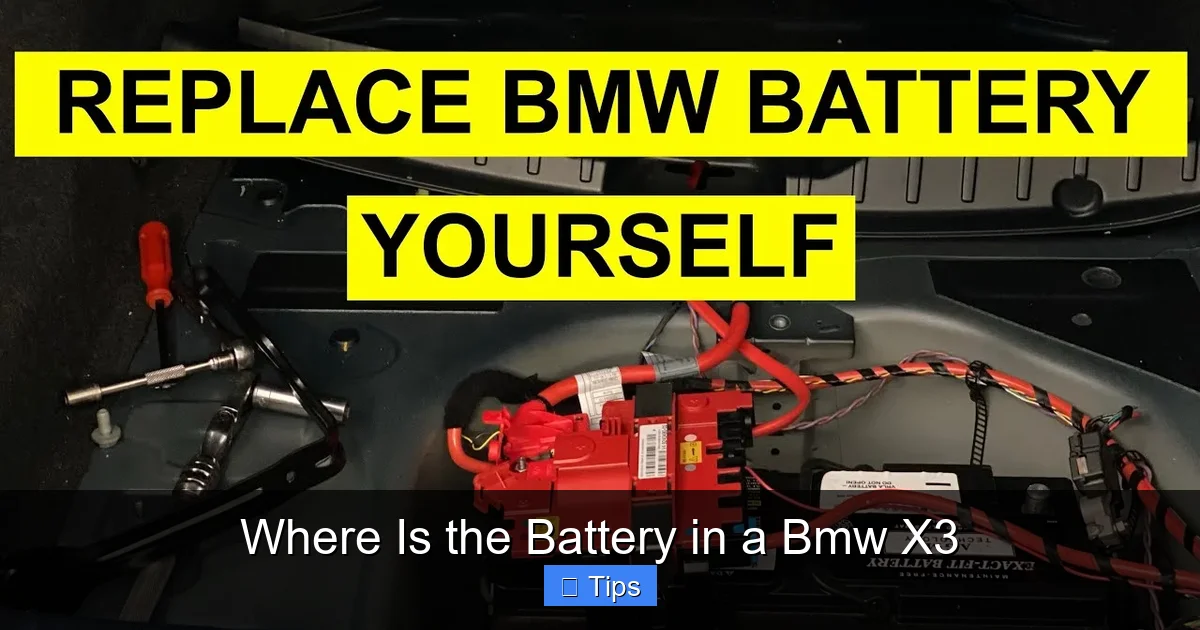
Let’s get straight to the point: the battery in a BMW X3 is located in the trunk, on the right-hand side, beneath the floor panel. This is true for most model years, including the E83 (2004–2010), F25 (2011–2017), and G01 (2018–present) generations. While the exact position may vary slightly depending on the model year and trim, the general location remains consistent.
To access the battery, you’ll need to open the trunk and remove the floor mat. Underneath, you’ll see a plastic panel or cover—usually held in place by clips or a simple latch. Lift this panel, and you’ll reveal the battery compartment. The battery itself is secured in a tray and connected to the vehicle’s electrical system via positive and negative terminals.
One thing to note is that the battery is often surrounded by insulation or protective material to shield it from moisture and vibration. Some models may also have a battery cover or housing that needs to be unclipped or unscrewed. Always handle these components gently to avoid breaking clips or damaging wiring.
Step-by-Step: How to Access the Battery
Accessing the battery in your BMW X3 is easier than it sounds. Here’s a simple step-by-step guide:
1. **Open the Trunk**: Make sure the vehicle is off and the key is removed from the ignition.
2. **Remove the Floor Mat**: Lift the carpeted floor mat in the trunk. It’s usually held in place by Velcro or clips.
3. **Lift the Plastic Cover**: Under the mat, you’ll see a plastic panel on the right side. Gently lift it up—some models have a pull tab or recessed handle.
4. **Locate the Battery**: Once the cover is removed, you’ll see the battery housed in a tray. It’s typically a rectangular black or gray box with two terminals (red for positive, black for negative).
5. **Identify the Terminals**: The positive terminal is usually marked with a “+” sign and covered with a red cap. The negative terminal is marked with a “–” and may have a black cap.
It’s important to work in a well-lit area and avoid using metal tools near the terminals unless necessary. If you’re planning to disconnect the battery, make sure you have the right tools on hand—especially a 10mm socket wrench.
Why Did BMW Put the Battery in the Trunk?
You might be wondering: why would BMW place the battery so far from the engine? There are several engineering and design reasons behind this decision.
First, **weight distribution** plays a big role. By placing the battery in the rear, BMW helps balance the vehicle’s front-to-rear weight ratio. This improves handling, especially during cornering and braking. Since the engine and transmission are already heavy at the front, moving the battery to the back helps create a more neutral balance.
Second, **engine bay space** is limited in modern vehicles. With turbochargers, advanced cooling systems, and electronic components, there’s simply less room under the hood. Relocating the battery frees up valuable space for other critical systems.
Third, **thermal protection** is a factor. Engine compartments get extremely hot, and excessive heat can shorten a battery’s lifespan. By placing the battery in the cooler, more stable environment of the trunk, BMW helps extend its life and reliability.
Finally, **electrical efficiency** is improved. Modern BMWs, including the X3, use advanced electrical systems with high power demands—especially with features like start-stop technology, infotainment systems, and driver assistance features. AGM batteries, which are commonly used in the X3, perform better in stable temperatures and can handle frequent charging cycles.
What Type of Battery Does the BMW X3 Use?
Visual guide about Where Is the Battery in a Bmw X3
Image source: i.ytimg.com
The BMW X3 typically uses an **AGM (Absorbent Glass Mat) battery**, especially in models equipped with start-stop technology. AGM batteries are a type of sealed lead-acid battery that offers several advantages over traditional flooded batteries.
AGM batteries are designed to handle higher electrical loads and frequent charge-discharge cycles. This makes them ideal for vehicles with advanced electronics and energy-intensive features. In the X3, the start-stop system automatically shuts off the engine when the car is idle (like at a red light) and restarts it when you press the accelerator. This process puts extra strain on the battery, which is why AGM technology is essential.
AGM vs. Standard Batteries: What’s the Difference?
So, what makes AGM batteries different from the standard lead-acid batteries you might find in older cars?
– **Construction**: AGM batteries use a fiberglass mat to absorb the electrolyte, rather than letting it float freely. This makes them spill-proof and more resistant to vibration.
– **Performance**: AGM batteries deliver higher cranking power and can recharge faster than flooded batteries.
– **Lifespan**: They typically last longer—often 4 to 6 years with proper maintenance—compared to 3 to 5 years for standard batteries.
– **Maintenance**: AGM batteries are maintenance-free and don’t require water top-ups.
Because of these benefits, BMW recommends using only AGM batteries in the X3. Using a standard flooded battery can lead to reduced performance, shorter lifespan, and potential damage to the vehicle’s electrical system.
How to Identify Your X3’s Battery Type
If you’re unsure whether your X3 has an AGM battery, here’s how to check:
1. **Look for Labels**: The battery itself usually has a label indicating “AGM,” “Absorbent Glass Mat,” or “Start-Stop Compatible.”
2. **Check the Owner’s Manual**: The manual will specify the recommended battery type for your model year.
3. **Consult a BMW Dealer or Mechanic**: If you’re still unsure, a quick visit to a BMW service center can confirm the battery type.
Using the correct battery type is crucial. Installing a non-AGM battery in a start-stop equipped X3 can cause the system to malfunction, reduce fuel efficiency, and even trigger warning lights on the dashboard.
How to Safely Replace the Battery in a BMW X3
Visual guide about Where Is the Battery in a Bmw X3
Image source: i.ytimg.com
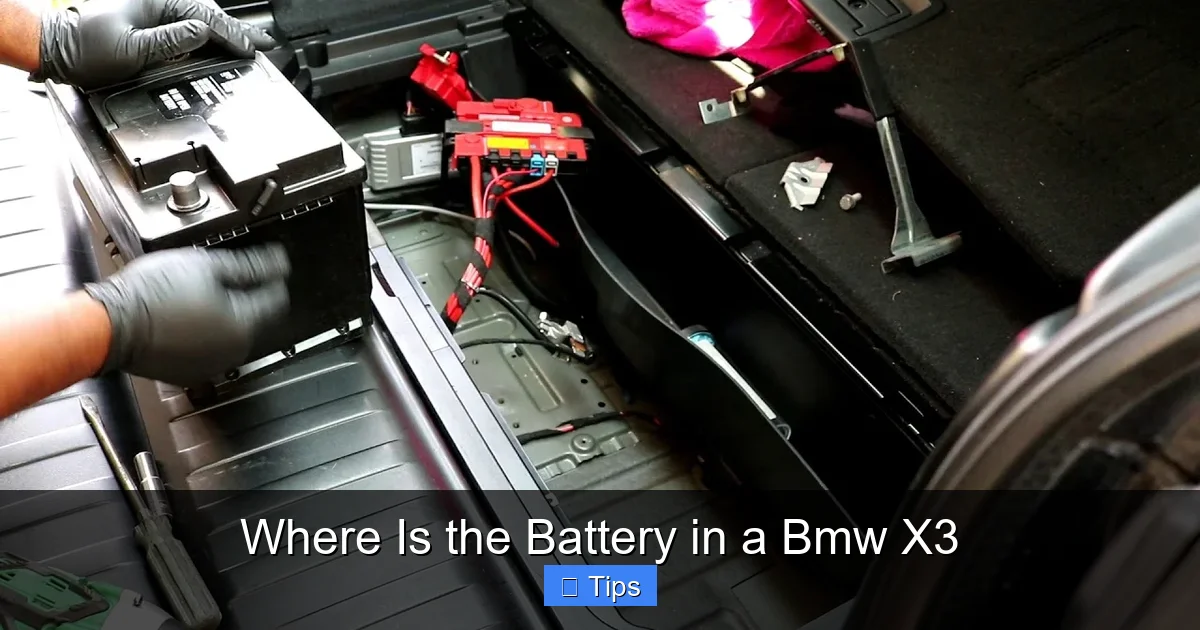
Replacing the battery in your BMW X3 isn’t difficult, but it does require some care—especially because of the vehicle’s advanced electronics. Unlike older cars, modern BMWs rely on a sophisticated battery management system (BMS) that monitors battery health and charging patterns. Simply swapping out the battery without proper procedures can lead to issues like electrical glitches, warning lights, or even damage to the car’s computer.
Tools You’ll Need
Before you begin, gather the following tools:
– 10mm socket wrench or ratchet
– Safety gloves and goggles
– Battery terminal cleaner (optional)
– New AGM battery (correct size and specification)
– Memory saver device (optional, to preserve radio and settings)
Step-by-Step Battery Replacement Guide
Follow these steps to safely replace your BMW X3 battery:
1. **Turn Off the Vehicle**: Ensure the engine is off and the key is removed. Put the car in park (or first gear for manual transmissions) and engage the parking brake.
2. **Disconnect the Negative Terminal First**: Using the 10mm wrench, loosen the nut on the negative (black) terminal. Carefully remove the cable and tuck it away from the battery to prevent accidental contact.
3. **Disconnect the Positive Terminal**: Repeat the process for the positive (red) terminal. Always disconnect negative first and reconnect it last to avoid short circuits.
4. **Remove the Battery Hold-Down Clamp**: Most X3 models have a metal or plastic clamp securing the battery in place. Use the wrench to remove the bolts or clips.
5. **Lift Out the Old Battery**: AGM batteries are heavy—typically 40 to 50 pounds—so use proper lifting technique. Avoid tilting the battery to prevent acid leakage (even though AGM batteries are sealed).
6. **Clean the Tray and Terminals**: Use a battery terminal cleaner or a mix of baking soda and water to remove any corrosion. Dry thoroughly.
7. **Install the New Battery**: Place the new AGM battery in the tray, ensuring it’s oriented correctly (terminals on the correct sides). Secure it with the hold-down clamp.
8. **Reconnect the Positive Terminal**: Attach the positive cable first, tightening the nut securely.
9. **Reconnect the Negative Terminal**: Finally, reconnect the negative cable.
10. **Register the New Battery**: This is a critical step. Use a BMW-compatible diagnostic tool (like ISTA or a professional OBD2 scanner) to register the new battery with the vehicle’s computer. This tells the system the battery is new and resets the charging profile. Skipping this step can lead to poor charging, reduced battery life, and electrical issues.
What Happens If You Don’t Register the Battery?
Many drivers assume that once the new battery is installed, the job is done. But in BMWs, **battery registration** is essential. The car’s battery management system (BMS) monitors the battery’s state of charge, age, and health. When a new battery is installed, the system needs to be informed so it can adjust the charging strategy accordingly.
If you skip registration:
– The alternator may overcharge or undercharge the battery.
– The start-stop system may not function properly.
– You might see warning lights on the dashboard.
– The battery’s lifespan could be significantly reduced.
While some independent mechanics and auto parts stores offer battery registration services, the most reliable method is through a BMW dealership or a certified technician with the right diagnostic equipment.
Tips for Maintaining Your BMW X3 Battery
A well-maintained battery can last longer and perform better, especially in extreme temperatures. Here are some practical tips to keep your X3’s battery in top condition.
Check Battery Health Annually
Even though AGM batteries are maintenance-free, it’s a good idea to have the battery tested once a year—especially before winter. Cold weather reduces battery efficiency, and a weak battery may struggle to start the engine in freezing conditions.
Most auto parts stores offer free battery testing. They’ll check the voltage, cold cranking amps (CCA), and overall health. If the test shows the battery is nearing the end of its life, consider replacing it proactively to avoid being stranded.
Keep Terminals Clean and Tight
Corrosion on the battery terminals can interfere with electrical connections and reduce performance. Inspect the terminals regularly for white or greenish buildup. If you see corrosion, disconnect the battery (following the proper sequence) and clean the terminals with a wire brush and baking soda solution.
After cleaning, apply a thin layer of dielectric grease to prevent future corrosion. Make sure the terminal connections are tight—loose connections can cause voltage drops and starting problems.
Avoid Short Trips and Parasitic Drain
Frequent short trips don’t give the alternator enough time to fully recharge the battery. Over time, this can lead to a gradual loss of charge, especially in vehicles with high electrical demands like the X3.
To help maintain charge:
– Take longer drives occasionally to allow the battery to recharge fully.
– Turn off unnecessary electronics (like heated seats, infotainment, and lights) when the engine is off.
– Use a battery maintainer or trickle charger if the vehicle will be parked for extended periods (e.g., during vacations or winter storage).
Protect the Battery from Extreme Temperatures
While the trunk location helps protect the battery from engine heat, extreme cold can still affect performance. In winter, consider using a battery blanket or parking in a garage to keep the battery warmer.
In hot climates, ensure the trunk area is well-ventilated and avoid leaving the car in direct sunlight for long periods. Excessive heat can accelerate battery degradation.
Monitor Warning Signs
Your BMW X3 has built-in systems to monitor battery health. Pay attention to warning signs such as:
– Slow engine cranking
– Dim headlights or interior lights
– Frequent need for jump-starts
– Dashboard warning lights (e.g., battery or charging system alerts)
If you notice any of these symptoms, have the battery and charging system checked immediately.
Common Mistakes to Avoid When Handling the X3 Battery
Even experienced DIYers can make mistakes when working with the BMW X3 battery. Here are some common pitfalls to avoid:
Disconnecting the Wrong Terminal First
Always disconnect the **negative terminal first** and reconnect it last. This reduces the risk of short circuits, which can damage the electrical system or cause sparks near the battery.
Using the Wrong Battery Type
As mentioned earlier, using a non-AGM battery in a start-stop equipped X3 can cause serious issues. Always confirm the correct battery specification before purchasing.
Skipping Battery Registration
This is one of the most common mistakes. Failing to register the new battery can lead to poor performance and reduced lifespan. Don’t assume the car will “figure it out” on its own.
Forgetting to Secure the Battery
A loose battery can shift during driving, potentially damaging terminals or wiring. Always use the hold-down clamp to secure the battery in place.
Ignoring Safety Precautions
Batteries contain sulfuric acid and produce flammable hydrogen gas. Always wear gloves and safety goggles, work in a well-ventilated area, and avoid smoking or using open flames near the battery.
Conclusion: Stay Informed and Prepared
Knowing where the battery in a BMW X3 is located is more than just a handy fact—it’s a key part of vehicle ownership. With the battery tucked away in the trunk, it’s easy to forget about it until you need it most. But with the right knowledge, you can access, replace, and maintain your X3’s battery safely and effectively.
From understanding why BMW chose this unique location to learning how to register a new battery, this guide equips you with everything you need. Whether you’re performing routine maintenance or dealing with a dead battery on a cold morning, being prepared makes all the difference.
Remember: use the correct AGM battery, follow proper safety procedures, and always register the new battery with the vehicle’s computer. With these steps, your BMW X3 will stay reliable, efficient, and ready for the road ahead.
Frequently Asked Questions
Where is the battery located in a BMW X3?
The battery in a BMW X3 is located in the trunk, under the right-hand side floor panel. You’ll need to remove the trunk mat and lift the plastic cover to access it.
Can I jump-start a BMW X3 from the trunk?
Yes, but you should use the jump-start terminals under the hood, not the battery in the trunk. The positive terminal is near the fuse box, and the negative is on the chassis. This prevents sparks near the battery.
Do I need a special tool to replace the BMW X3 battery?
A 10mm socket wrench is typically all you need to disconnect the terminals and remove the hold-down clamp. No special tools are required for the physical replacement.
How often should I replace the battery in my BMW X3?
Most AGM batteries last 4 to 6 years. Have the battery tested annually, especially before winter, to determine if replacement is needed.
What happens if I don’t register the new battery?
Skipping battery registration can cause charging issues, start-stop system failure, and reduced battery life. Always register the new battery using a BMW-compatible diagnostic tool.
Can I use a regular car battery in my BMW X3?
No. The BMW X3 requires an AGM battery, especially if it has start-stop technology. Using a standard flooded battery can damage the electrical system and void warranties.

At CarLegit, we believe information should be clear, factual, and genuinely helpful. That’s why every guide, review, and update on our website is created with care, research, and a strong focus on user experience.