
Knowing where the TPMS reset button is on your Hyundai Sonata can save you time, money, and stress. This guide walks you through the exact location, step-by-step reset procedures, and troubleshooting tips for different model years—so you can keep your tires safe and your dashboard warning light off.
In This Article
- 1 Key Takeaways
- 2 📑 Table of Contents
- 3 Understanding TPMS: Why It Matters in Your Hyundai Sonata
- 4 Where Is the TPMS Reset Button on a Hyundai Sonata?
- 5 Step-by-Step Guide to Resetting TPMS on Your Hyundai Sonata
- 6 Troubleshooting Common TPMS Issues in the Hyundai Sonata
- 7 Tips for Maintaining Your Hyundai Sonata’s TPMS
- 8 Conclusion: Stay Safe, Stay Informed
- 9 Frequently Asked Questions
- 9.1 Where is the TPMS reset button on a 2018 Hyundai Sonata?
- 9.2 Do 2021 Hyundai Sonatas have a TPMS reset button?
- 9.3 How long does it take for the TPMS light to turn off after a reset?
- 9.4 Can I reset the TPMS without driving the car?
- 9.5 Why does my TPMS light keep coming back on?
- 9.6 Is it safe to drive with the TPMS light on?
Key Takeaways
- TPMS reset button location varies by model year: Most Hyundai Sonatas from 2011–2019 have the button under the steering wheel, near the driver’s knee panel.
- Newer models (2020+) may not have a physical button: Instead, they use the infotainment system or instrument cluster menu to reset TPMS.
- Always check tire pressure before resetting: Incorrect pressure readings can trigger false warnings even after a reset.
- Reset only when necessary: Avoid frequent resets unless you’ve adjusted tire pressure or rotated tires.
- Battery disconnection isn’t required: Unlike older systems, modern Sonatas allow soft resets without disconnecting the car battery.
- Use a TPMS scan tool for stubborn issues: If the light won’t turn off, a professional tool may be needed to relearn sensor IDs.
- Regular maintenance prevents TPMS problems: Check tire pressure monthly and inspect sensors during routine service.
📑 Table of Contents
- Understanding TPMS: Why It Matters in Your Hyundai Sonata
- Where Is the TPMS Reset Button on a Hyundai Sonata?
- Step-by-Step Guide to Resetting TPMS on Your Hyundai Sonata
- Troubleshooting Common TPMS Issues in the Hyundai Sonata
- Tips for Maintaining Your Hyundai Sonata’s TPMS
- Conclusion: Stay Safe, Stay Informed
Understanding TPMS: Why It Matters in Your Hyundai Sonata
Your Hyundai Sonata is packed with smart safety features, and one of the most important—yet often overlooked—is the Tire Pressure Monitoring System, or TPMS. This system constantly checks the air pressure in your tires and alerts you if any drop below the recommended level. Low tire pressure isn’t just annoying; it can lead to poor fuel economy, uneven tire wear, and even dangerous blowouts, especially at high speeds.
Imagine you’re driving down the highway on a family road trip. Suddenly, a yellow warning light flashes on your dashboard—the TPMS light. Your first thought might be, “Is something seriously wrong?” But in many cases, it’s just a matter of adjusting tire pressure or resetting the system. That’s where knowing where the TPMS reset button is on your Hyundai Sonata becomes crucial.
The TPMS system uses sensors mounted inside each tire (either on the valve stem or attached to the wheel) to monitor pressure. When you inflate your tires, rotate them, or replace a sensor, the system may need to be recalibrated. That’s when the reset function comes into play. But here’s the catch: the location of the TPMS reset button isn’t the same across all Sonata models. Depending on the year, you might find a physical button, or you might need to use the touchscreen or instrument cluster menu.
How TPMS Works in Modern Vehicles
Modern TPMS systems fall into two categories: direct and indirect. The Hyundai Sonata uses a direct TPMS, which means each tire has its own sensor that sends real-time pressure data to the car’s computer. These sensors are battery-powered and typically last 5–10 years. When the system detects pressure below the manufacturer’s recommended level (usually around 28–32 PSI for a Sonata), it triggers a warning light on the dashboard.
The beauty of direct TPMS is accuracy. Unlike indirect systems that estimate pressure based on wheel speed, direct sensors give precise readings. However, this also means they require more maintenance. Sensors can fail, batteries can die, and sometimes the system just needs a “refresh” after tire work.
That’s why understanding how to reset the TPMS—and where to find the reset button—is essential for every Sonata owner. It’s not just about turning off a light; it’s about ensuring your car’s safety systems are working correctly.
Common Reasons You Might Need to Reset TPMS
There are several everyday situations where you’ll need to reset the TPMS on your Hyundai Sonata:
– After inflating or deflating tires to the correct pressure
– Following a tire rotation or wheel alignment
– Replacing a damaged or faulty TPMS sensor
– Installing new tires or wheels with new sensors
– After a seasonal tire change (e.g., switching from summer to winter tires)
– When the TPMS warning light stays on despite proper tire pressure
In each of these cases, the system may still “remember” the old pressure readings or sensor IDs. Resetting tells the car to relearn the current state of your tires. Without a reset, the warning light might stay on unnecessarily, or worse—fail to alert you when there’s a real issue.
Where Is the TPMS Reset Button on a Hyundai Sonata?
Visual guide about Where Is the Tpms Reset Button Hyundai Sonata
Image source: puretyre.co.uk
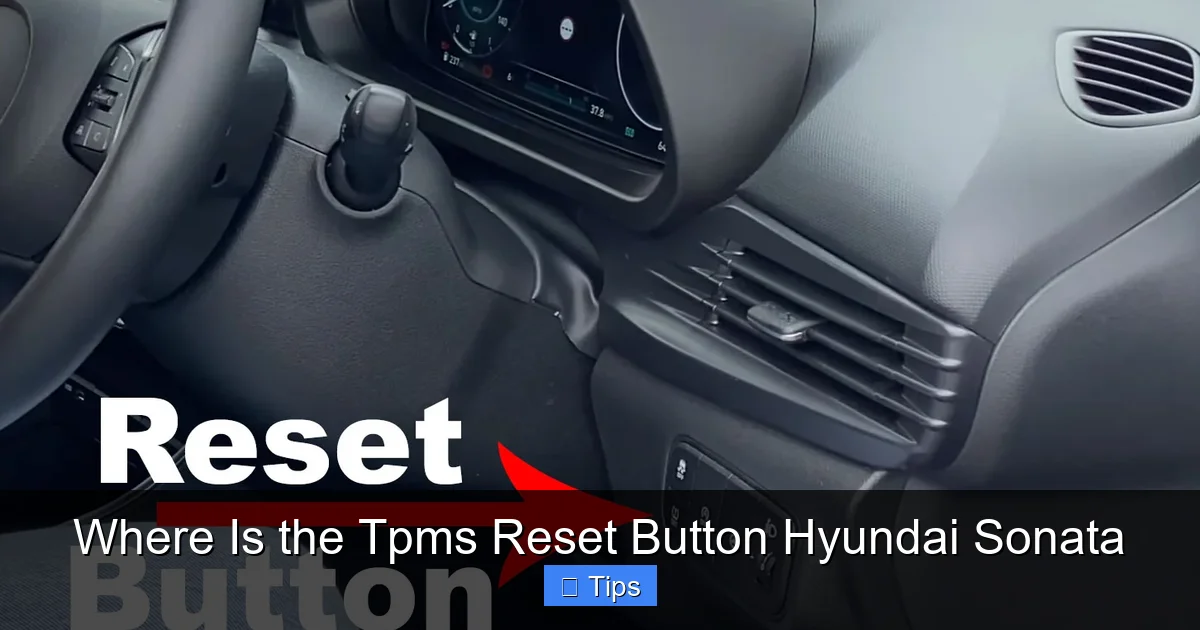
Now for the million-dollar question: Where exactly is the TPMS reset button on a Hyundai Sonata? The answer depends largely on your vehicle’s model year. Hyundai has updated the TPMS system over the years, and with it, the method for resetting it.
Models 2011–2019: The Physical Reset Button
If you drive a Hyundai Sonata from 2011 to 2019, you’re in luck—you likely have a physical TPMS reset button. This button is typically located under the steering wheel, near the driver’s left knee. To find it:
1. Sit in the driver’s seat and look down toward the footwell.
2. You’ll see a small panel or cover near the brake pedal and lower dashboard.
3. The TPMS reset button is usually a small, round, black or gray button labeled “SET” or “TPMS.”
4. It’s often recessed to prevent accidental presses.
Some owners describe it as being “hidden in plain sight”—easy to miss if you don’t know where to look. On certain trims, it might be behind a small plastic cover that you need to gently pry open with a flathead screwdriver or your fingernail.
For example, on a 2015 Hyundai Sonata Limited, the button is located just above the OBD-II port (the diagnostic port used by mechanics). It’s about the size of a pencil eraser and requires a firm press to activate.
Models 2020 and Newer: Menu-Based Reset
Starting with the 2020 Hyundai Sonata, Hyundai moved away from the physical reset button. Instead, the TPMS reset is handled through the vehicle’s infotainment system or instrument cluster menu. This change aligns with Hyundai’s shift toward more integrated, touchscreen-controlled features.
To reset TPMS on a 2020 or newer Sonata:
1. Turn the ignition to the “ON” position (do not start the engine).
2. Use the steering wheel controls to navigate to the “Settings” menu on the instrument cluster.
3. Select “Vehicle” > “Tire Pressure” > “Reset.”
4. Confirm the reset when prompted.
Alternatively, on models with a larger touchscreen (like the 2021 Sonata SEL Plus), you can access the TPMS reset through the main menu:
– Tap the “CAR” icon on the home screen.
– Go to “Vehicle Settings” > “Tire Pressure” > “Reset TPMS.”
This method is more intuitive for tech-savvy drivers but can be confusing for those used to physical buttons. It also means you’ll need to refer to your owner’s manual if you’re unsure of the exact steps.
Why the Change? Hyundai’s Design Evolution
Hyundai’s decision to remove the physical TPMS reset button in newer models reflects a broader trend in automotive design: simplifying the dashboard and centralizing controls. By moving functions like TPMS reset to the touchscreen, Hyundai reduces clutter and creates a cleaner interior.
However, this shift has its downsides. If your infotainment system freezes or the battery dies, you might not be able to reset the TPMS without a professional tool. That’s why it’s still helpful to know the old method—especially if you drive an older Sonata or rent one during travel.
Step-by-Step Guide to Resetting TPMS on Your Hyundai Sonata
Visual guide about Where Is the Tpms Reset Button Hyundai Sonata
Image source: tireandwheelco.com
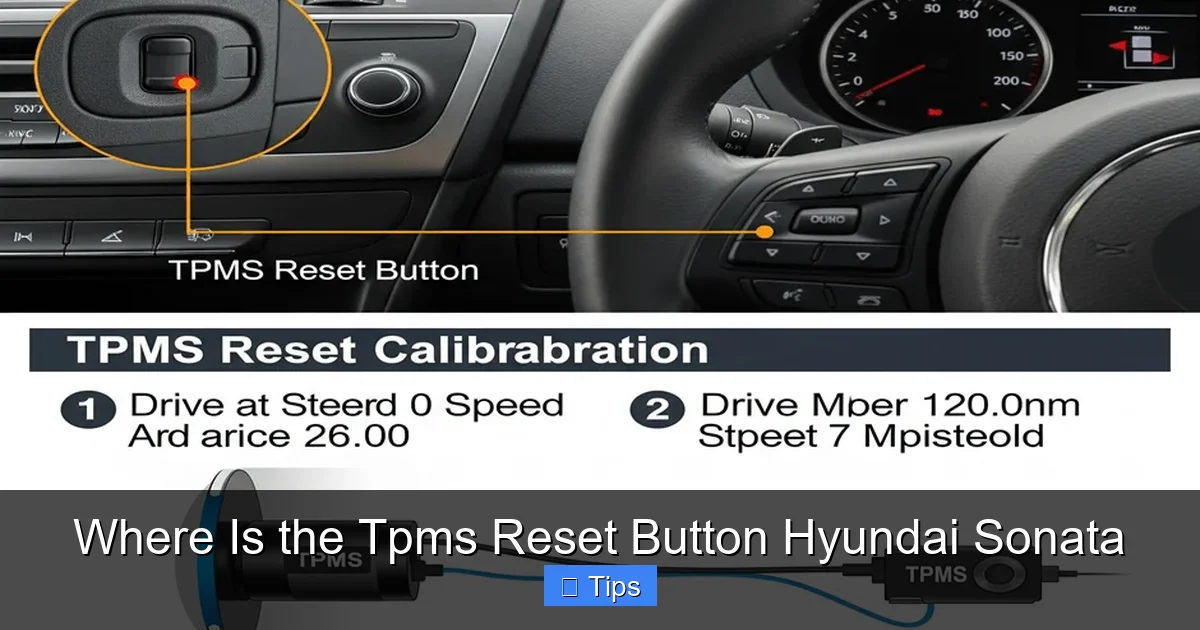
Now that you know where the reset button is (or isn’t), let’s walk through the actual reset process. Whether you have a physical button or a menu-based system, the goal is the same: tell your car to relearn the current tire pressure and turn off the warning light.
For 2011–2019 Models: Using the Physical Button
Follow these steps to reset the TPMS on older Sonata models:
1. **Park your car on a flat surface** and turn off the engine.
2. **Check and adjust tire pressure** to the recommended level (found on the driver’s door jamb sticker). Use a reliable tire gauge—don’t rely on gas station gauges, which can be inaccurate.
3. **Turn the ignition to the “ON” position** (press the start button without pressing the brake pedal). Do not start the engine.
4. **Locate the TPMS reset button** under the steering wheel, near the knee panel.
5. **Press and hold the button** for about 3–5 seconds until the TPMS warning light blinks three times.
6. **Release the button** and wait. The system will begin relearning the sensor IDs.
7. **Drive the car at 30–50 mph for 10–15 minutes**. This allows the sensors to transmit data and the system to confirm proper pressure.
8. **Check the dashboard**. The TPMS light should turn off. If it stays on, repeat the process or check for sensor issues.
Tip: Some owners report that the button must be pressed firmly and held for the full duration. If the light doesn’t blink, try again.
For 2020+ Models: Using the Infotainment or Instrument Cluster Menu
For newer Sonatas, the process is slightly different:
1. **Ensure all tires are properly inflated** to the recommended PSI.
2. **Turn the ignition to “ON”** (do not start the engine).
3. **Use the steering wheel controls** to access the instrument cluster menu.
4. **Navigate to “Settings” > “Vehicle” > “Tire Pressure” > “Reset.”**
5. **Confirm the reset** when prompted.
6. **Drive the vehicle at 30–50 mph for 10–15 minutes** to allow the system to relearn sensor data.
7. **Monitor the dashboard**. The TPMS light should turn off after the drive cycle.
On models with a touchscreen:
1. Tap the “CAR” icon on the home screen.
2. Go to “Vehicle Settings” > “Tire Pressure” > “Reset TPMS.”
3. Confirm and follow the on-screen instructions.
4. Drive as described above.
What If the Light Won’t Turn Off?
Sometimes, even after a reset, the TPMS light remains on. This could mean:
– One or more sensors are faulty or have a dead battery.
– The tire pressure is still incorrect.
– The system hasn’t completed the relearn process.
– There’s a software glitch.
In such cases, try the reset process again. If that doesn’t work, visit a Hyundai dealership or a trusted tire shop. They can use a TPMS scan tool to check sensor health and force a relearn.
Troubleshooting Common TPMS Issues in the Hyundai Sonata
Visual guide about Where Is the Tpms Reset Button Hyundai Sonata
Image source: ranwhenparked.net
Even with the reset button in the right place and the correct procedure, TPMS problems can still occur. Here are some common issues and how to fix them.
TPMS Light Stays On After Reset
If the light won’t turn off, first double-check tire pressure. Cold weather can cause pressure to drop, so check tires when they’re cold (before driving). If pressure is correct, the issue may be a faulty sensor. TPMS sensors have internal batteries that last 5–10 years. Once they die, the sensor must be replaced.
Another possibility is that the system hasn’t completed the relearn cycle. Make sure you drive at the recommended speed for at least 10 minutes. Avoid short trips or idling.
Intermittent or Flashing TPMS Light
A flashing TPMS light (rather than a steady glow) usually indicates a system malfunction, such as a communication error between sensors and the car’s computer. This often points to a dead sensor battery or damaged sensor.
In this case, a professional diagnostic tool is needed. Dealerships and many tire shops have TPMS scanners that can read error codes and identify which sensor is failing.
TPMS Light Comes On in Cold Weather
Cold temperatures cause air to contract, reducing tire pressure. A drop of 1 PSI for every 10°F temperature decrease is normal. If your TPMS light comes on in winter, simply inflate your tires to the correct pressure and reset the system.
Pro tip: Keep a portable tire inflator in your trunk during winter months. It’s a lifesaver when you’re away from a gas station.
Aftermarket Wheels and TPMS Compatibility
If you’ve installed aftermarket wheels, make sure they’re compatible with TPMS sensors. Some custom wheels don’t have provisions for sensors, or the sensors may not fit properly. In such cases, you may need to purchase new sensors or use a TPMS bypass module (though this disables the system and is not recommended for safety reasons).
Tips for Maintaining Your Hyundai Sonata’s TPMS
Prevention is always better than cure. Here are some best practices to keep your TPMS working smoothly:
Check Tire Pressure Monthly
Make it a habit to check your tire pressure at least once a month. Use a digital tire gauge for accuracy. Check when tires are cold for the most reliable reading.
Rotate Tires Regularly
Tire rotation (every 5,000–7,500 miles) helps ensure even wear. After rotation, reset the TPMS so the system recognizes the new sensor positions.
Inspect Sensors During Service
When you get your tires serviced or replaced, ask the technician to inspect the TPMS sensors for damage or corrosion. Valve stems can crack, and sensors can get knocked loose.
Replace Sensors When Needed
If a sensor fails, replace it promptly. Most sensors cost $50–$150 each, including installation. While it’s an added expense, it’s cheaper than dealing with a blowout or poor fuel economy.
Keep Your Owner’s Manual Handy
Your Hyundai Sonata owner’s manual contains the exact TPMS reset procedure for your model year. Keep it in the glove box or download the digital version from Hyundai’s website.
Conclusion: Stay Safe, Stay Informed
Knowing where the TPMS reset button is on your Hyundai Sonata—and how to use it—is a small but powerful skill that enhances your driving safety. Whether you drive a 2015 model with a hidden button under the steering column or a 2022 with a sleek touchscreen menu, understanding your TPMS system helps you respond quickly to warnings and avoid unnecessary repairs.
Remember, the TPMS isn’t just about turning off a light. It’s about maintaining proper tire pressure, which affects handling, braking, fuel efficiency, and overall safety. By following the steps in this guide, you can reset your system with confidence and keep your Sonata running smoothly for years to come.
Don’t wait for the warning light to come on. Take a few minutes today to locate your TPMS reset button or menu, check your tire pressure, and familiarize yourself with the process. Your tires—and your peace of mind—will thank you.
Frequently Asked Questions
The TPMS reset button on a 2018 Hyundai Sonata is located under the steering wheel, near the driver’s left knee. Look for a small, round button labeled “SET” or “TPMS” in the lower dashboard panel.
No, the 2021 Hyundai Sonata does not have a physical TPMS reset button. Instead, you must use the infotainment system or instrument cluster menu to reset the TPMS.
How long does it take for the TPMS light to turn off after a reset?
After resetting the TPMS, drive the car at 30–50 mph for 10–15 minutes. The light should turn off once the system relearns the sensor data.
Can I reset the TPMS without driving the car?
No, a drive cycle is required for the system to relearn sensor IDs. Idling or short trips won’t complete the relearn process.
Why does my TPMS light keep coming back on?
This could indicate a faulty sensor, low tire pressure, or a system that hasn’t completed the relearn cycle. Check pressure and consider a professional diagnostic if the issue persists.
Is it safe to drive with the TPMS light on?
Driving with the TPMS light on is not recommended. It could mean underinflated tires, which increase the risk of blowouts, poor handling, and reduced fuel efficiency.

At CarLegit, we believe information should be clear, factual, and genuinely helpful. That’s why every guide, review, and update on our website is created with care, research, and a strong focus on user experience.