
If you’re wondering where the transmission dipstick is on a Nissan Frontier, you’re not alone—many owners are surprised to learn it doesn’t always have one. Depending on your model year and transmission type, the dipstick may be located near the engine bay or replaced with a fill plug and electronic sensor. This guide breaks down everything you need to know to check and maintain your Frontier’s transmission fluid properly.
In This Article
- 1 Key Takeaways
- 2 📑 Table of Contents
- 3 Understanding the Nissan Frontier’s Transmission System
- 4 Locating the Transmission Dipstick on Older Nissan Frontiers (Pre-2005)
- 5 Checking Transmission Fluid on Newer Nissan Frontiers (2005 and Later)
- 6 Manual Transmission Fluid Check on Nissan Frontier
- 7 Recommended Transmission Fluids for Nissan Frontier
- 8 Signs Your Transmission Fluid Needs Attention
- 9 Maintenance Tips for Long-Term Transmission Health
- 10 Conclusion
- 11 Frequently Asked Questions
- 11.1 Do all Nissan Frontiers have a transmission dipstick?
- 11.2 How do I check transmission fluid on a 2010 Nissan Frontier?
- 11.3 Can I use Dexron III in my Nissan Frontier?
- 11.4 How often should I change the transmission fluid in my Frontier?
- 11.5 What happens if I overfill the transmission fluid?
- 11.6 Can I check my transmission fluid myself?
Key Takeaways
- Not all Nissan Frontiers have a traditional dipstick: Models from 2005 onward, especially those with automatic transmissions, often use a sealed system without a dipstick.
- Location varies by model year and transmission type: Older models (pre-2005) typically have a dipstick near the engine, while newer ones require a different method to check fluid levels.
- Manual transmissions usually have a fill plug: These are checked by removing a bolt on the side of the transmission case.
- Automatic transmissions may use a dipstick or electronic monitoring: Some models have a dipstick, while others rely on a scan tool or dealer diagnostics.
- Checking fluid requires the engine to be warm: Always check transmission fluid with the engine running and at operating temperature for accurate readings.
- Use only the recommended fluid type: Nissan specifies specific fluids like NS-2 or NS-3; using the wrong type can damage the transmission.
- Regular maintenance prevents costly repairs: Checking and changing transmission fluid every 30,000 to 60,000 miles helps extend the life of your Frontier’s transmission.
📑 Table of Contents
- Understanding the Nissan Frontier’s Transmission System
- Locating the Transmission Dipstick on Older Nissan Frontiers (Pre-2005)
- Checking Transmission Fluid on Newer Nissan Frontiers (2005 and Later)
- Manual Transmission Fluid Check on Nissan Frontier
- Recommended Transmission Fluids for Nissan Frontier
- Signs Your Transmission Fluid Needs Attention
- Maintenance Tips for Long-Term Transmission Health
- Conclusion
Understanding the Nissan Frontier’s Transmission System
The Nissan Frontier is a rugged, dependable pickup truck that has earned a loyal following among off-road enthusiasts, contractors, and daily drivers alike. Known for its durability and strong towing capacity, the Frontier relies heavily on a well-maintained transmission to deliver smooth power delivery and reliable performance. Whether you’re hauling gear up a mountain trail or commuting through city traffic, your transmission plays a critical role in how your truck feels and responds.
But here’s the thing—many Frontier owners are caught off guard when they pop the hood and can’t find a transmission dipstick. Unlike older vehicles where a long, yellow or red-handled dipstick is easy to spot near the engine, modern Nissan Frontiers often use sealed transmission systems. This shift in design reflects broader industry trends toward improved efficiency, reduced maintenance, and better fluid longevity. However, it also means that checking your transmission fluid isn’t as straightforward as it used to be.
Understanding your Frontier’s transmission type is the first step in knowing how to maintain it. The Frontier has been offered with both manual and automatic transmissions over the years, and the method for checking fluid varies significantly between them. Additionally, model years play a big role—older trucks (pre-2005) are more likely to have a traditional dipstick, while newer models (2005 and later) often use sealed systems that require specialized tools or procedures to inspect.
Why the Dipstick Disappeared
So why did Nissan remove the dipstick? The answer lies in engineering advancements and a push toward longer service intervals. Sealed transmissions are designed to operate with minimal fluid changes—sometimes lasting 100,000 miles or more—under normal driving conditions. By eliminating the dipstick, manufacturers reduce the risk of contamination, improper fluid top-offs, and accidental overfilling. It also simplifies the design and reduces potential leak points.
But this convenience comes with a trade-off: less DIY accessibility. Without a dipstick, many owners feel left in the dark about their transmission’s health. That’s why it’s essential to know your specific model year and transmission type. Whether you drive a 2001 Frontier with a manual gearbox or a 2020 model with an automatic CVT, the approach to checking fluid will differ.
Locating the Transmission Dipstick on Older Nissan Frontiers (Pre-2005)
Visual guide about Where Is the Transmission Dipstick on Nissan Frontier
Image source: i.ytimg.com
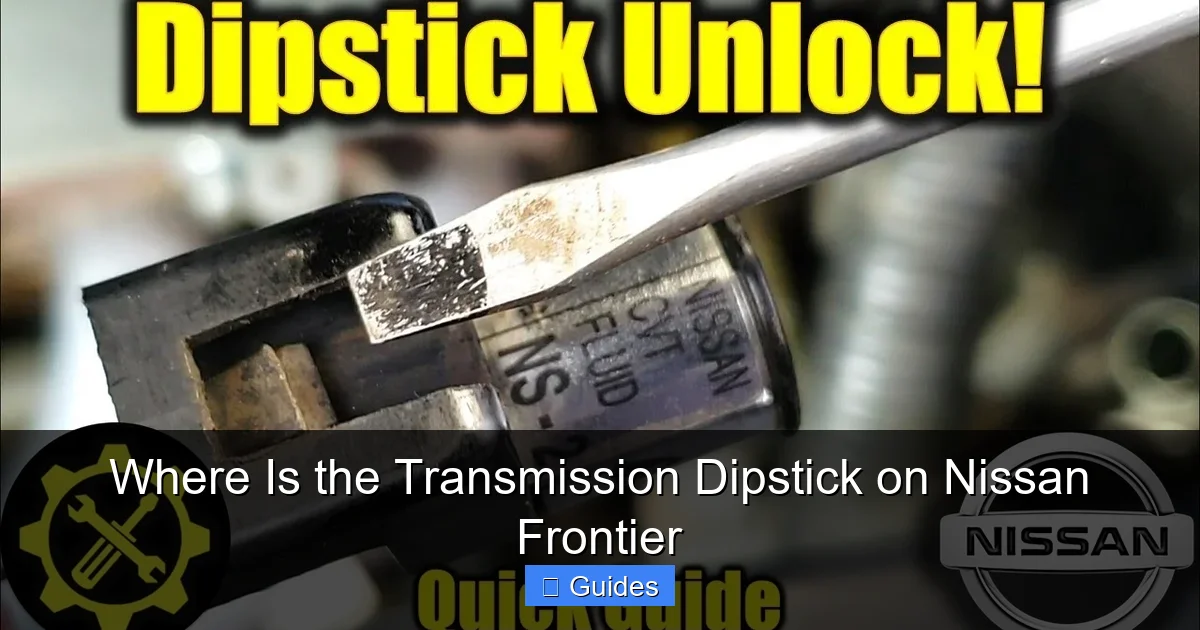
If you own a Nissan Frontier from the early 2000s or late 1990s, there’s a good chance your truck has a traditional transmission dipstick. These older models, particularly those with the 3.3L V6 engine and 4-speed automatic transmission, were built with serviceability in mind. The dipstick is usually easy to find and use—just like checking your engine oil.
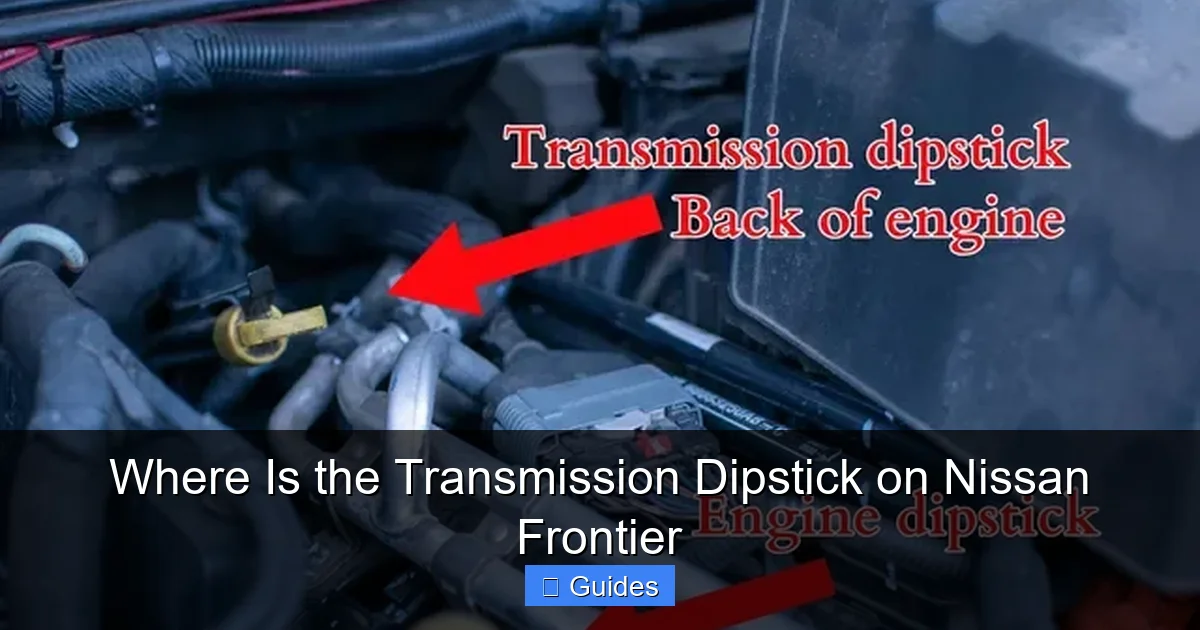
To locate the dipstick, open the hood and look toward the back of the engine bay, near the firewall. You’ll typically find a long, metal rod with a bright yellow or red handle labeled “ATF” (Automatic Transmission Fluid). It’s often positioned near the engine’s rear, close to the transmission housing. On some models, it may be tucked behind the air intake or near the brake fluid reservoir, so a quick visual scan is helpful.
How to Check the Fluid on Older Models
Checking the transmission fluid on a pre-2005 Frontier is straightforward, but it must be done correctly to get an accurate reading. Here’s a step-by-step guide:
1. **Warm up the engine:** Start your truck and let it run for about 10–15 minutes. Transmission fluid expands when hot, so checking it cold can give a false low reading.
2. **Shift through the gears:** With the engine running, move the shifter through all gear positions (P, R, N, D, etc.) and return it to Park. This circulates the fluid and ensures the level is accurate.
3. **Turn off the engine:** Once you’ve cycled the gears, turn off the engine and wait a minute for the fluid to settle.
4. **Pull the dipstick:** Remove the dipstick, wipe it clean with a lint-free cloth, reinsert it fully, and pull it out again.
5. **Check the level:** Look at the markings on the dipstick. There should be “Full” and “Add” indicators. The fluid should be between these lines. Also, note the color—healthy fluid is bright red or pink. Dark, burnt-smelling fluid indicates it’s time for a change.
It’s important to use only the recommended Nissan ATF (usually Dexron III or equivalent) and avoid overfilling. Too much fluid can cause foaming, overheating, and transmission damage.
Common Mistakes to Avoid
Even with a dipstick, it’s easy to make errors. One common mistake is checking the fluid when the engine is cold. Cold fluid contracts, so the dipstick may show a low level even when the transmission is full. Another error is not cycling through the gears before checking—this ensures the torque converter is filled and the reading is accurate.
Also, never add fluid unless the dipstick shows it’s low. Overfilling can be just as harmful as underfilling. If you’re unsure, consult your owner’s manual or a trusted mechanic.
Checking Transmission Fluid on Newer Nissan Frontiers (2005 and Later)
Visual guide about Where Is the Transmission Dipstick on Nissan Frontier
Image source: lirp.cdn-website.com
Starting around 2005, Nissan began phasing out the traditional dipstick on many Frontier models, especially those with automatic transmissions. This change was part of a broader shift toward sealed transmission systems designed for longer service life and reduced maintenance. As a result, finding a dipstick under the hood of a 2010 or 2020 Frontier can be a frustrating experience—because it might not be there.
Instead of a dipstick, newer Frontiers often use one of two methods to monitor transmission fluid: a fill plug with a level check bolt or an electronic sensor system. The approach you’ll need depends on your specific model year, engine, and transmission type.
Models with a Fill Plug and Level Check Bolt
Many automatic Nissan Frontiers from 2005 to around 2015 use a fill plug system. In this design, there’s no dipstick. Instead, the transmission has a fill plug (usually a 17mm or 19mm bolt) on the side of the transmission case, near the driver’s side. To check the fluid level, you’ll need to remove this plug with the engine running and at operating temperature.
Here’s how it works:
1. **Warm up the engine:** Drive the truck for at least 15–20 minutes to bring the transmission fluid to normal operating temperature (around 175–200°F).
2. **Park on level ground:** Make sure the truck is on a flat surface to ensure an accurate reading.
3. **Leave the engine running:** Unlike oil checks, transmission fluid must be checked with the engine running.
4. **Locate the fill plug:** Crawl under the truck (use jack stands for safety) and find the fill plug on the side of the transmission. It’s usually near the rear of the transmission, close to the crossmember.
5. **Remove the plug:** Use a socket wrench to carefully remove the bolt. If fluid starts to drip or stream out, the level is correct. If nothing comes out, the fluid is low and needs to be added.
6. **Add fluid if needed:** Use a funnel and the recommended Nissan ATF (typically NS-2 or NS-3) to add fluid slowly until it begins to drip from the fill hole. Do not overfill.
7. **Replace the plug:** Once the fluid is at the correct level, reinstall the fill plug and tighten it to the specified torque.
This method requires some mechanical skill and access to the underside of the vehicle. If you’re not comfortable doing this yourself, a mechanic can perform the check quickly and safely.
Models with Electronic Transmission Monitoring
Some newer Nissan Frontiers, especially those with continuously variable transmissions (CVTs) or advanced automatics, use electronic sensors to monitor fluid levels and condition. In these cases, there is no dipstick or fill plug accessible to the average owner. Instead, the transmission control module (TCM) monitors fluid temperature, pressure, and wear.
To check the fluid level on these models, you’ll typically need a scan tool or diagnostic computer that can communicate with the vehicle’s onboard systems. Many independent shops and dealerships have this equipment, and they can perform a “transmission fluid level check” as part of routine maintenance.
While this system is convenient and reduces the risk of human error, it also means you can’t perform a quick visual check at home. If you notice symptoms like slipping gears, delayed shifting, or warning lights on the dashboard, it’s best to have a professional inspect the transmission.
Manual Transmission Fluid Check on Nissan Frontier
Visual guide about Where Is the Transmission Dipstick on Nissan Frontier
Image source: i.ytimg.com
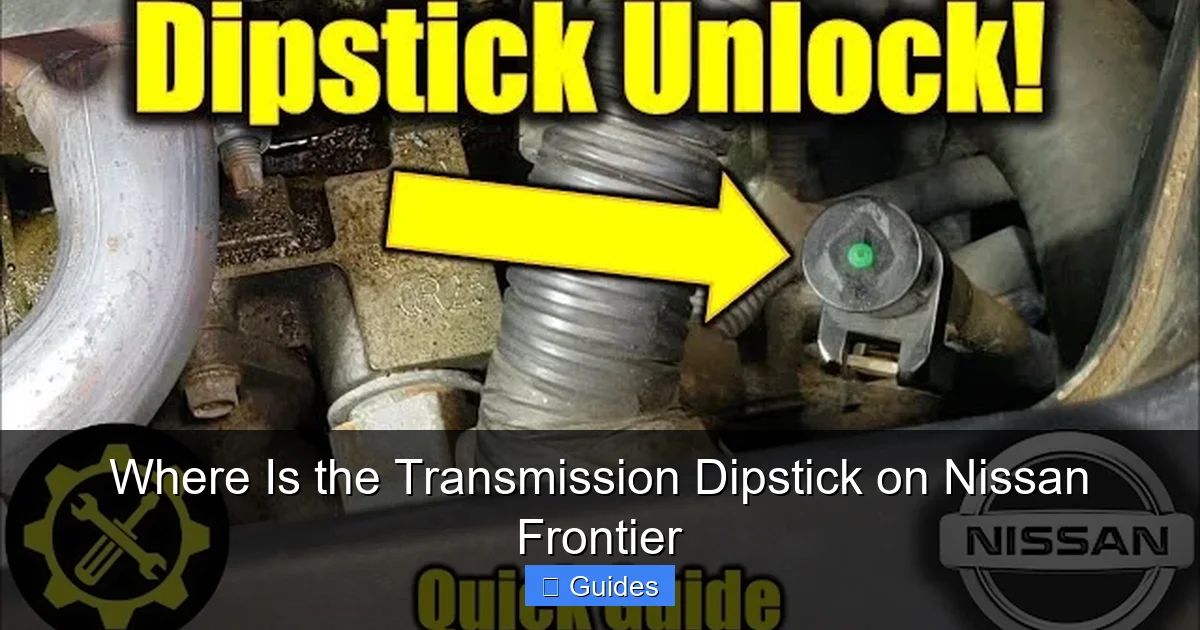
If your Nissan Frontier has a manual transmission—common in older models and some off-road trims—the process for checking fluid is different from automatics. Manual transmissions don’t use the same type of fluid (they typically use gear oil), and they don’t have a dipstick either.
Instead, manual transmissions are checked via a fill plug, similar to some automatic models. The fill plug is usually located on the side of the transmission case and is marked with a bolt that must be removed to check the level.
Steps to Check Manual Transmission Fluid
1. **Warm up the transmission:** Drive the truck for 10–15 minutes to warm the gear oil.
2. **Park on level ground:** Ensure the vehicle is stable and level.
3. **Locate the fill plug:** On most Frontiers, it’s on the driver’s side of the transmission, about halfway up the case.
4. **Remove the plug:** Use a wrench to loosen the bolt. If gear oil starts to seep out, the level is correct. If not, it’s low.
5. **Add fluid if needed:** Use a pump or funnel to add the recommended gear oil (usually 75W-90 synthetic) until it begins to drip from the hole.
6. **Reinstall the plug:** Tighten it securely to avoid leaks.
Manual transmissions generally require less frequent fluid changes than automatics—often every 60,000 to 100,000 miles—but it’s still important to check the level periodically, especially if you do a lot of towing or off-roading.
Recommended Transmission Fluids for Nissan Frontier
Using the correct transmission fluid is just as important as checking the level. Nissan specifies particular fluid types for different models and years, and using the wrong kind can lead to poor performance, overheating, or even transmission failure.
Automatic Transmission Fluids
For most Nissan Frontiers with automatic transmissions, the recommended fluid is Nissan Genuine ATF NS-2 or NS-3. These are synthetic fluids designed specifically for Nissan’s sealed transmission systems. They offer excellent thermal stability, wear protection, and smooth shifting performance.
– **NS-2:** Used in many 2005–2015 models with 5-speed automatics.
– **NS-3:** Found in newer models, including those with CVTs and 7-speed automatics.
Always check your owner’s manual or the transmission fluid cap (if present) for the exact specification. Never substitute with generic Dexron or Mercon fluids unless explicitly approved by Nissan.
Manual Transmission Fluids
Manual transmissions in the Frontier typically use 75W-90 synthetic gear oil. Nissan recommends using their genuine gear oil or a high-quality equivalent from brands like Mobil 1, Red Line, or Royal Purple. Avoid using automatic transmission fluid in a manual gearbox—it’s not designed for the high-pressure, sliding-contact environment of manual gears.
Signs Your Transmission Fluid Needs Attention
Even if you can’t easily check the fluid yourself, there are several warning signs that your transmission may be low or degraded:
– **Delayed or rough shifting:** Hesitation when shifting into gear or jerky transitions between gears.
– **Slipping gears:** The engine revs but the truck doesn’t accelerate as expected.
– **Burning smell:** Overheated or burnt fluid emits a sharp, acrid odor.
– **Transmission fluid leaks:** Red or brown fluid under the truck, especially near the transmission pan.
– **Warning lights:** The “Check Engine” or “Transmission” light may illuminate on the dashboard.
If you notice any of these symptoms, have your transmission inspected as soon as possible. Ignoring them can lead to costly repairs or complete transmission failure.
Maintenance Tips for Long-Term Transmission Health
Keeping your Nissan Frontier’s transmission in top shape doesn’t require a mechanic’s degree—just regular attention and smart habits.
– **Follow the maintenance schedule:** Check your owner’s manual for recommended service intervals. Most automatics need a fluid change every 30,000 to 60,000 miles, while manuals can go longer.
– **Use only recommended fluids:** Stick to Nissan-specified ATF or gear oil to ensure compatibility and performance.
– **Avoid overheating:** Heavy towing, off-roading, and stop-and-go traffic can overheat the transmission. Consider installing an auxiliary cooler if you frequently push your truck’s limits.
– **Don’t ignore leaks:** Even small drips can lead to low fluid levels and damage over time.
– **Warm up the engine:** Especially in cold weather, let the engine and transmission warm up before driving aggressively.
Conclusion
So, where is the transmission dipstick on a Nissan Frontier? The answer isn’t always straightforward. While older models (pre-2005) often have a traditional dipstick near the engine, newer Frontiers typically use sealed systems with fill plugs or electronic monitoring. Knowing your model year, transmission type, and the correct fluid specification is key to maintaining your truck’s performance and longevity.
Whether you’re checking fluid with a dipstick, a fill plug, or a scan tool, regular maintenance is essential. A healthy transmission means smoother shifts, better fuel economy, and fewer unexpected repairs down the road. When in doubt, consult your owner’s manual or visit a trusted mechanic. Your Nissan Frontier will thank you with years of reliable service.
Frequently Asked Questions
Do all Nissan Frontiers have a transmission dipstick?
No, not all Nissan Frontiers have a transmission dipstick. Models from 2005 onward, especially those with automatic transmissions, often use sealed systems without a dipstick. Older models (pre-2005) are more likely to have one.
How do I check transmission fluid on a 2010 Nissan Frontier?
On a 2010 Frontier with an automatic transmission, there’s typically no dipstick. Instead, you’ll need to check the fluid via the fill plug on the side of the transmission. This requires the engine to be running and the fluid warm.
Can I use Dexron III in my Nissan Frontier?
Only if your owner’s manual specifies it. Most newer Frontiers require Nissan-specific fluids like NS-2 or NS-3. Using the wrong fluid can damage the transmission.
How often should I change the transmission fluid in my Frontier?
For automatic transmissions, every 30,000 to 60,000 miles is typical. Manual transmissions can go 60,000 to 100,000 miles. Always refer to your owner’s manual for exact intervals.
What happens if I overfill the transmission fluid?
Overfilling can cause foaming, overheating, and pressure buildup, which may damage seals and internal components. Always add fluid slowly and stop when it begins to drip from the fill hole.
Can I check my transmission fluid myself?
Yes, if your model has a dipstick or fill plug. For sealed systems with electronic monitoring, you’ll likely need a professional with a scan tool to check the level accurately.

At CarLegit, we believe information should be clear, factual, and genuinely helpful. That’s why every guide, review, and update on our website is created with care, research, and a strong focus on user experience.