
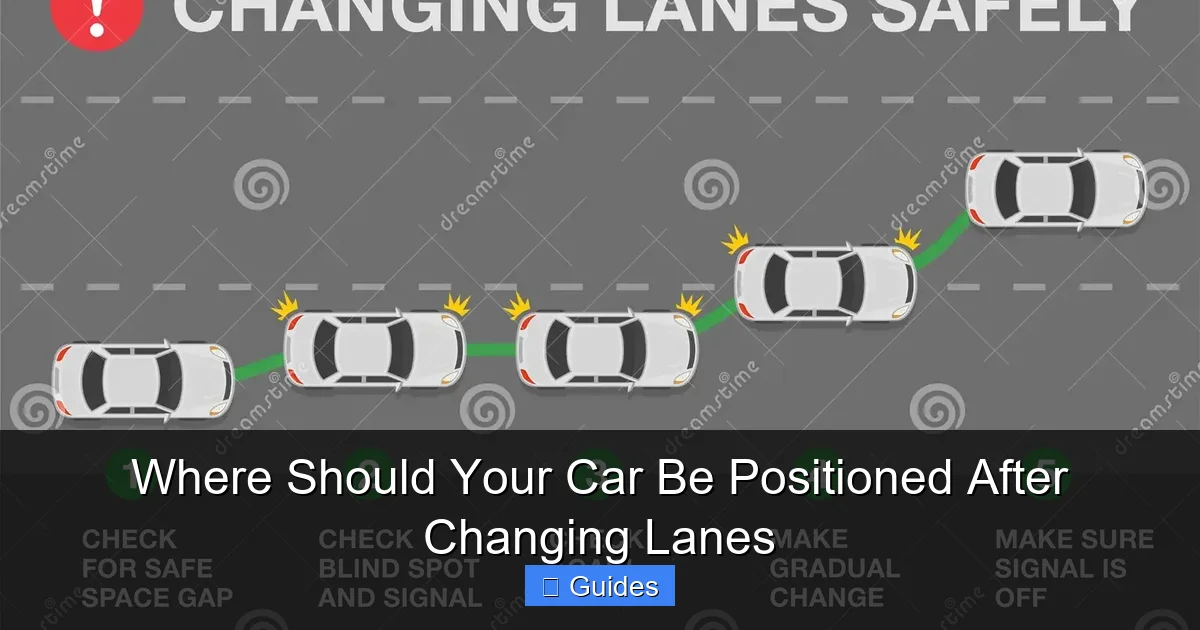
Proper lane positioning after a lane change is essential for safety, traffic flow, and driver confidence. Knowing exactly where to place your vehicle helps prevent collisions, reduces confusion, and keeps everyone on the road moving smoothly.
In This Article
- 1 Key Takeaways
- 2 📑 Table of Contents
- 3 Why Lane Positioning Matters After a Lane Change
- 4 How to Properly Position Your Car After Changing Lanes
- 5 The Role of Mirrors and Blind Spot Checks
- 6 Common Mistakes After Changing Lanes
- 7 Tips for Different Driving Conditions
- 8 How to Practice Safe Lane Positioning
- 9 Conclusion
- 10 Frequently Asked Questions
- 10.1 Where should your car be positioned after changing lanes?
- 10.2 How far should you be from the car ahead after a lane change?
- 10.3 Is it safe to stay beside another vehicle after changing lanes?
- 10.4 Should you adjust your speed after changing lanes?
- 10.5 Do you need to check your blind spot after changing lanes?
- 10.6 What should you do if you realize you’re too close to the car ahead after a lane change?
Key Takeaways
- Stay centered in your new lane: After changing lanes, position your car in the center of the lane to maintain balance and visibility.
- Avoid lingering in blind spots: Move fully into the new lane and avoid staying next to other vehicles where you can’t be seen.
- Match the speed of traffic: Adjust your speed to blend seamlessly with surrounding vehicles for a smooth transition.
- Use mirrors and check blind spots: Always confirm your position using side and rearview mirrors and shoulder checks.
- Signal early and clearly: Use your turn signal well in advance to alert other drivers of your intention.
- Don’t cut off other drivers: Ensure you have enough space ahead before merging to avoid sudden braking.
- Practice defensive positioning: Stay aware of surrounding traffic and leave room for unexpected moves by others.
📑 Table of Contents
Why Lane Positioning Matters After a Lane Change
Changing lanes might seem like a simple task—just flick the signal, check your mirrors, and move over. But what happens *after* you’ve completed the lane change is just as important as the maneuver itself. Where you position your car in the new lane can affect your safety, the safety of others, and the overall flow of traffic. It’s not just about getting from point A to point B—it’s about doing it smoothly, predictably, and responsibly.
Think of lane positioning like choosing where to stand in a crowded room. If you stand too close to someone, they might feel uncomfortable. If you’re too far to one side, you might block the view or path of others. The same logic applies on the road. After changing lanes, your car should be positioned in a way that makes you visible, predictable, and safe. This means staying centered in your lane, maintaining a steady speed, and avoiding behaviors that could confuse or endanger other drivers.
Many drivers focus so much on the act of changing lanes that they forget about what comes next. But proper positioning after a lane change is a critical part of defensive driving. It helps prevent side-swipe accidents, reduces the risk of being hit from behind, and ensures you’re not lingering in another driver’s blind spot. Whether you’re on a busy highway or a quiet suburban street, mastering this skill makes you a more confident and responsible driver.
How to Properly Position Your Car After Changing Lanes
Visual guide about Where Should Your Car Be Positioned After Changing Lanes
Image source: d2hucwwplm5rxi.cloudfront.net
After you’ve signaled, checked your mirrors and blind spots, and safely moved into the new lane, the next step is to position your car correctly. This isn’t just about staying in the lines—it’s about being where other drivers expect you to be.
Stay Centered in the Lane
The ideal position after a lane change is to be centered within the lane. This means your car should be roughly equidistant from the lane markings on both sides. Being centered gives you the best visibility, control, and reaction time. It also makes it easier for other drivers to predict your movements.
For example, if you’re driving on a two-lane highway and you change from the right lane to the left lane, don’t hug the center line. That could make oncoming traffic (if it’s a two-way road) or vehicles in the opposite direction feel uneasy. Similarly, don’t drift toward the shoulder. This reduces your margin of error if you need to swerve or brake suddenly.
A good way to check your position is to glance at the lane markings on both sides of your car. If one side appears much closer than the other, you’re off-center. Adjust gently by steering slightly in the opposite direction until both sides look even.
Maintain a Safe Following Distance
Once you’re in the new lane, it’s important to establish a safe following distance from the vehicle ahead. The general rule is the “three-second rule”: pick a fixed object on the road, like a sign or tree, and count how many seconds it takes to reach it after the car in front passes it. If it’s less than three seconds, you’re too close.
After a lane change, you might find yourself too close to the car in front—especially if you merged quickly. In that case, ease off the accelerator and allow a safe gap to open up. This gives you time to react if the car ahead brakes suddenly.
For instance, imagine you’re driving at 65 mph on the highway and you change lanes to pass a slower vehicle. If you immediately find yourself only one second behind the next car, you’re in a dangerous position. Instead, slow down slightly or wait for a better gap before merging. Once in the lane, gradually adjust your speed to match traffic while maintaining that three-second cushion.
Avoid Lingering in Blind Spots
One of the biggest mistakes drivers make after changing lanes is staying next to another vehicle for too long. This is especially dangerous on highways, where speeds are high and blind spots are larger.
Every vehicle has blind spots—areas where the driver can’t see other cars, even with mirrors. If you position your car directly beside another vehicle, you’re essentially invisible to them. This increases the risk of a side-swipe collision if they decide to change lanes without checking properly.
To avoid this, move fully into your new lane and either pull ahead of the vehicle you were next to or fall back slightly. The goal is to be clearly in front of or behind them, not beside them. This gives both you and the other driver a clear view of each other and reduces the chance of a surprise maneuver.
For example, if you change lanes to pass a truck, don’t stay level with it for more than a few seconds. Either accelerate gently to get ahead or slow down to let it pass you. Trucks have especially large blind spots, so being beside one for too long is risky.
Match the Speed of Traffic
Speed matching is crucial after a lane change. If you enter a lane going significantly slower than the surrounding traffic, you create a hazard. Other drivers may have to brake suddenly or swerve to avoid you, which can lead to rear-end collisions or loss of control.
Conversely, if you enter a lane going much faster than traffic, you might catch up to the car ahead too quickly, forcing you to brake hard. This can also cause chain-reaction braking behind you.
The best practice is to adjust your speed *before* you change lanes. Check the speed of vehicles in the lane you’re entering using your mirrors and by observing their relative movement. If they’re going faster, speed up slightly before merging. If they’re slower, slow down.
Once you’re in the new lane, continue to match the flow. Use your speedometer and visual cues—like how quickly the cars around you are passing or being passed—to stay in sync. This creates a smooth, predictable driving pattern that benefits everyone on the road.
The Role of Mirrors and Blind Spot Checks
Visual guide about Where Should Your Car Be Positioned After Changing Lanes
Image source: d2hucwwplm5rxi.cloudfront.net
Proper lane positioning starts with awareness. You can’t position your car correctly if you don’t know where it is relative to other vehicles. That’s where mirrors and blind spot checks come in.
Use All Three Mirrors
Your car has three mirrors: the rearview mirror and two side mirrors. Each serves a different purpose, and all are essential for safe lane changes and positioning.
The rearview mirror gives you a broad view of what’s behind you. Use it to monitor traffic in the lane you’re leaving and to check your position after changing lanes. If you see a car approaching quickly from behind in your new lane, you may need to adjust your speed or position.
The side mirrors show vehicles in adjacent lanes. Adjust them so you can see the side of your car and a portion of the next lane. This helps you spot cars that are beside you or approaching from behind.
However, mirrors alone aren’t enough. They have limitations, especially when it comes to blind spots.
Always Check Your Blind Spots
Blind spots are areas around your vehicle that aren’t visible in the mirrors. They vary in size depending on your car’s design, but they’re always there. The most dangerous blind spot is directly beside and slightly behind your car—right where another vehicle might be when you’re changing lanes.
To check your blind spot, do a quick shoulder check. Turn your head and look over your right shoulder when changing to the right lane, and over your left shoulder when changing to the left lane. This gives you a direct view of any vehicle that might be hiding in your blind spot.
For example, imagine you’re driving on a four-lane highway and you want to move from the second lane to the third. You check your mirrors and see no cars. But when you do a shoulder check, you spot a motorcycle approaching quickly in your blind spot. Without that check, you might have merged right into it.
After changing lanes, it’s also a good idea to do a quick mirror and blind spot check to confirm your position. Make sure you’re not too close to the car ahead, not lingering beside another vehicle, and centered in your lane.
Adjust Mirrors for Better Visibility
Many drivers don’t adjust their mirrors properly, which reduces their effectiveness. Here’s how to set them up for maximum visibility:
– Rearview mirror: Adjust it so you can see the entire rear window without moving your head.
– Side mirrors: Position them so you can just see the side of your car at the edge of the mirror. This minimizes overlap with the rearview mirror and expands your field of view.
Some modern cars have blind spot monitoring systems that alert you when a vehicle is in your blind spot. These can be helpful, but they shouldn’t replace manual checks. Sensors can fail, and not all systems detect motorcycles or bicycles.
Common Mistakes After Changing Lanes

Visual guide about Where Should Your Car Be Positioned After Changing Lanes
Image source: thumbs.dreamstime.com
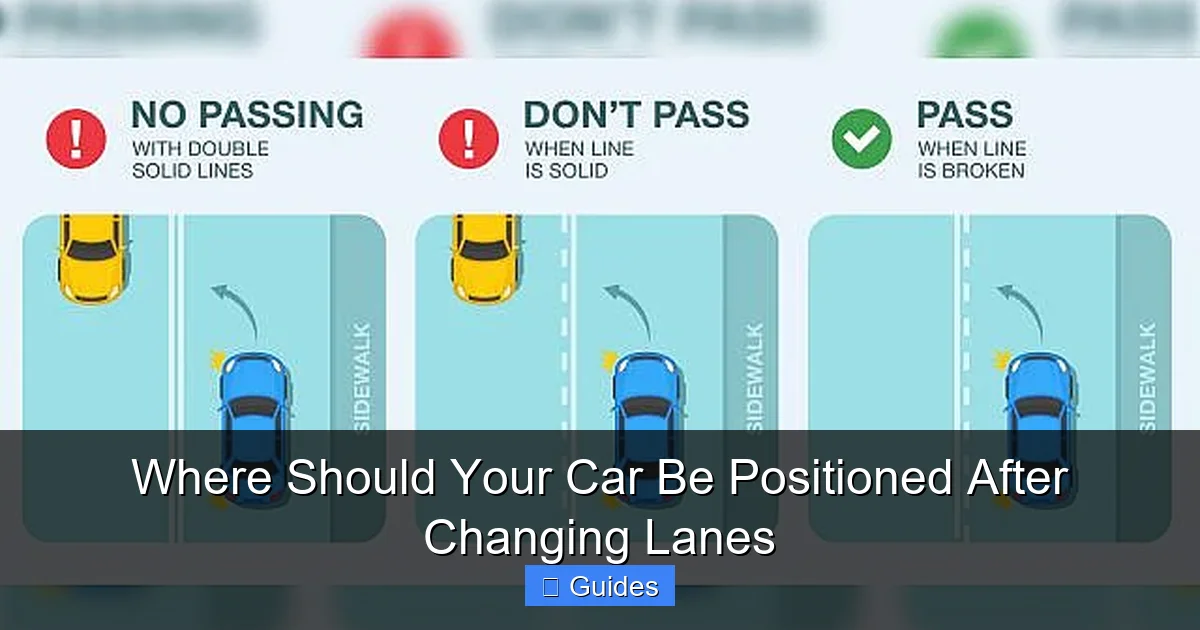
Even experienced drivers make mistakes when positioning their cars after a lane change. Being aware of these common errors can help you avoid them.
Cutting Off Other Drivers
One of the most dangerous mistakes is merging too closely in front of another vehicle. This forces the other driver to brake suddenly, which can cause a rear-end collision—especially at high speeds.
Cutting off another driver often happens when someone changes lanes without leaving enough space. For example, a driver might see a gap and merge immediately, not realizing the car ahead is traveling faster than they are.
To avoid this, always ensure there’s at least a three-second gap ahead of the vehicle you’re merging in front of. If you’re not sure, wait for a larger gap or slow down to let the car pass before changing lanes.
Drifting After the Lane Change
Some drivers change lanes but then drift toward one side of the lane. This can happen if they’re not paying attention or if they’re distracted by passengers, phones, or navigation systems.
Drifting reduces your control and increases the risk of crossing into another lane or hitting the shoulder. It also makes it harder for other drivers to predict your movements.
To stay centered, keep your eyes focused down the road, not just at the hood of your car. Use the lane markings as a guide, and make small steering corrections as needed.
Forgetting to Turn Off the Turn Signal
After changing lanes, many drivers forget to turn off their turn signal. This can confuse other drivers, who might think you’re about to change lanes again.
Modern cars often have self-canceling signals, but they don’t always work perfectly—especially if you only signal briefly. Make it a habit to check your signal after every lane change and turn it off manually if needed.
Speeding Up or Slowing Down Abruptly
Changing speed suddenly after a lane change can disrupt traffic flow. If you accelerate too quickly, you might catch up to the car ahead. If you slow down too much, you could cause a chain reaction of braking behind you.
Instead, adjust your speed gradually. Use smooth acceleration and braking to blend into traffic without causing disruptions.
Tips for Different Driving Conditions
Lane positioning isn’t one-size-fits-all. What works on a sunny day on the highway might not work in heavy rain or on a narrow country road. Here’s how to adapt your positioning to different conditions.
Highway Driving
On highways, speeds are high, and traffic is dense. After changing lanes, focus on:
– Maintaining a steady speed that matches traffic.
– Keeping a three- to four-second following distance.
– Avoiding lingering beside large vehicles like trucks and buses.
– Using cruise control (if safe) to maintain consistent speed.
Highway lane changes require more space and time. Always signal early, check mirrors and blind spots, and merge smoothly.
City and Urban Driving
In cities, traffic is slower but more unpredictable. Pedestrians, cyclists, and frequent stops add complexity. After changing lanes:
– Be extra cautious of motorcycles and bicycles in blind spots.
– Watch for cars turning or pulling out from side streets.
– Keep a shorter but safe following distance due to frequent stops.
– Use your turn signal early, as other drivers may be distracted.
In heavy traffic, lane changes should be minimal. Only change lanes when necessary, and always do so safely.
Night Driving
At night, visibility is reduced, and it’s harder to judge distances. After changing lanes:
– Use your high beams when safe to improve visibility.
– Rely more on your mirrors and blind spot checks.
– Avoid sudden movements that could surprise other drivers.
– Be extra cautious of vehicles with broken taillights or no lights.
Night driving requires heightened awareness. Take your time and don’t rush lane changes.
Adverse Weather Conditions
Rain, snow, fog, and ice make roads slippery and visibility poor. After changing lanes in bad weather:
– Increase your following distance to four or more seconds.
– Avoid sudden steering or braking.
– Use gentle acceleration and deceleration.
– Be extra cautious of hydroplaning or skidding.
In snow or ice, lane positioning is even more critical. Stay centered and avoid sharp turns that could cause loss of control.
How to Practice Safe Lane Positioning
Like any driving skill, proper lane positioning improves with practice. Here are some tips to help you get better:
Start in Light Traffic
If you’re new to driving or want to improve your lane-changing skills, practice in light traffic first. Choose a quiet highway or suburban road where you can focus on your technique without pressure.
Use Reference Points
Use visual cues to help you stay centered. For example, align the center of your car with the center of the lane. Or use the lane markings on both sides as guides.
Take a Defensive Driving Course
Defensive driving courses teach advanced techniques for safe lane changes and positioning. They often include hands-on practice and expert feedback.
Ask for Feedback
If you’re learning to drive or want to improve, ask a trusted friend or family member to ride with you. They can observe your lane changes and offer constructive feedback.
Stay Calm and Focused
Stress and distractions can lead to poor positioning. Stay calm, keep your eyes on the road, and avoid multitasking while driving.
Conclusion
Where you position your car after changing lanes is more than just a detail—it’s a key part of safe, responsible driving. Proper positioning keeps you visible, predictable, and in control. It helps prevent accidents, reduces stress for other drivers, and keeps traffic flowing smoothly.
By staying centered in your lane, maintaining a safe following distance, avoiding blind spots, and matching the speed of traffic, you create a safer environment for everyone on the road. Use your mirrors, check your blind spots, and always signal your intentions clearly.
Remember, driving isn’t just about getting from one place to another. It’s about doing it safely, respectfully, and confidently. Mastering lane positioning is a simple but powerful way to become a better driver. So the next time you change lanes, take a moment to check your position. Your safety—and the safety of others—depends on it.
Frequently Asked Questions
Where should your car be positioned after changing lanes?
After changing lanes, your car should be centered in the new lane, with equal distance from both lane markings. This ensures visibility, control, and predictability for other drivers.
How far should you be from the car ahead after a lane change?
You should maintain at least a three-second following distance from the vehicle ahead. Increase this to four or more seconds in adverse weather or heavy traffic.
Is it safe to stay beside another vehicle after changing lanes?
No, staying beside another vehicle puts you in their blind spot and increases the risk of a side-swipe collision. Either pull ahead or fall back to be clearly visible.
Should you adjust your speed after changing lanes?
Yes, you should match the speed of traffic in your new lane. Avoid sudden acceleration or braking to maintain smooth traffic flow.
Do you need to check your blind spot after changing lanes?
Yes, always do a quick mirror and blind spot check after changing lanes to confirm your position and ensure you’re not too close to other vehicles.
What should you do if you realize you’re too close to the car ahead after a lane change?
Ease off the accelerator and allow a safe gap to open up. If necessary, signal and change lanes again when it’s safe to do so.

At CarLegit, we believe information should be clear, factual, and genuinely helpful. That’s why every guide, review, and update on our website is created with care, research, and a strong focus on user experience.