
Deciding between the Nissan Rogue and Mitsubishi Outlander? You’re not alone—both are popular compact SUVs with strong reputations. While the Rogue shines in fuel efficiency and advanced driver aids, the Outlander offers more standard seating and a bolder design. Your choice depends on priorities: comfort and tech (Rogue) or space and value (Outlander).
In This Article
- 1 Key Takeaways
- 2 📑 Table of Contents
- 3 Introduction: Two Titans of the Compact SUV Market
- 4 Performance and Fuel Efficiency: Which SUV Sips Less Gas?
- 5 Interior Comfort and Cargo Space: Room for Everyone and Everything
- 6 Technology and Infotainment: Staying Connected on the Go
- 7 Safety Features and Ratings: Protecting What Matters Most
- 8 Value, Reliability, and Ownership Costs: What’s the Long-Term Picture?
- 9 Final Verdict: Which SUV Is Right for You?
- 10 Frequently Asked Questions
- 10.1 Which SUV has better fuel economy, the Rogue or Outlander?
- 10.2 Does the Mitsubishi Outlander have a third row of seats?
- 10.3 Which SUV has more advanced safety features?
- 10.4 Is the Nissan Rogue more reliable than the Mitsubishi Outlander?
- 10.5 Which SUV has a better infotainment system?
- 10.6 Which SUV holds its value better over time?
Key Takeaways
- Fuel Efficiency: The Nissan Rogue delivers better gas mileage, especially with its turbocharged engine and Xtronic CVT, making it ideal for daily commuters.
- Seating and Space: The Mitsubishi Outlander comes standard with third-row seating (optional on Rogue), offering more passenger flexibility for larger families.
- Safety Features: Both SUVs earn top safety ratings, but the Rogue includes more advanced driver-assist tech as standard, including ProPILOT Assist.
- Interior Quality: The Rogue boasts a more refined cabin with higher-quality materials and a modern infotainment layout compared to the Outlander’s dated feel.
- Driving Dynamics: The Rogue offers a smoother, more composed ride, while the Outlander feels more utilitarian with a stiffer suspension.
- Value and Warranty: The Outlander wins on warranty coverage with a 10-year/100,000-mile powertrain warranty, giving it an edge for long-term ownership peace of mind.
- Technology and Infotainment: The Rogue features a larger touchscreen, wireless Apple CarPlay, and better voice recognition, making it more user-friendly for tech-savvy drivers.
📑 Table of Contents
- Introduction: Two Titans of the Compact SUV Market
- Performance and Fuel Efficiency: Which SUV Sips Less Gas?
- Interior Comfort and Cargo Space: Room for Everyone and Everything
- Technology and Infotainment: Staying Connected on the Go
- Safety Features and Ratings: Protecting What Matters Most
- Value, Reliability, and Ownership Costs: What’s the Long-Term Picture?
- Final Verdict: Which SUV Is Right for You?
Introduction: Two Titans of the Compact SUV Market
When it comes to choosing a reliable, family-friendly compact SUV, the Nissan Rogue and Mitsubishi Outlander are two names that consistently rise to the top. Both vehicles have carved out strong reputations over the years—offering practicality, safety, and everyday usability at competitive price points. But with so many similarities, how do you decide which one truly fits your lifestyle?
Whether you’re a daily commuter, a weekend adventurer, or a parent shuttling kids to school and soccer practice, the right SUV can make all the difference. The Rogue and Outlander each bring unique strengths to the table. The Rogue is known for its smooth ride, excellent fuel economy, and cutting-edge technology. Meanwhile, the Outlander stands out with its standard third-row seating and impressive warranty coverage. In this detailed comparison, we’ll break down every important aspect—from performance and interior comfort to safety and long-term value—so you can make an informed decision.
Performance and Fuel Efficiency: Which SUV Sips Less Gas?
One of the first things most buyers consider is how well a vehicle performs on the road and how much it costs to keep it running. When it comes to the Nissan Rogue and Mitsubishi Outlander, there are clear differences in engine power, transmission, and fuel economy.
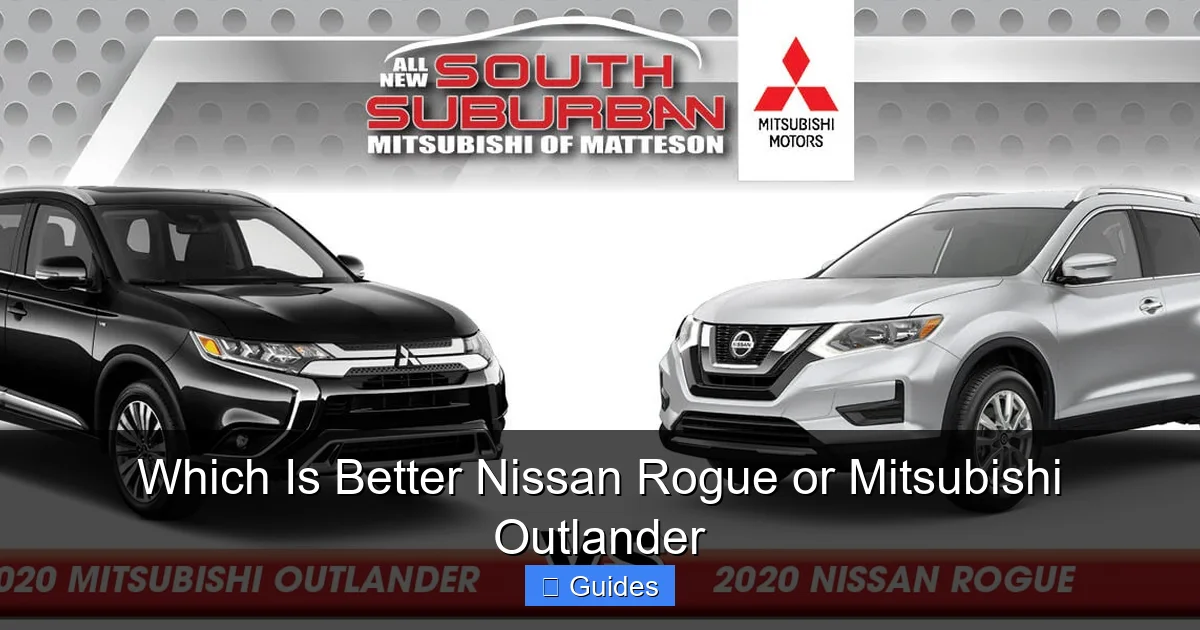
Visual guide about Which Is Better Nissan Rogue or Mitsubishi Outlander
Image source: pictures.dealer.com
Engine and Powertrain Options
The 2024 Nissan Rogue is powered by a 1.5-liter turbocharged three-cylinder engine that delivers 201 horsepower and 225 lb-ft of torque. This might sound small, but Nissan’s engineering makes it surprisingly peppy, especially in city driving. The engine is paired with an Xtronic continuously variable transmission (CVT) that’s been refined over the years to reduce the “rubber band” effect often associated with CVTs. Front-wheel drive is standard, but all-wheel drive is available across all trims.
In contrast, the Mitsubishi Outlander uses a 2.5-liter four-cylinder engine producing 181 horsepower and 181 lb-ft of torque. It’s connected to an 8-speed automatic transmission, which feels more traditional and responsive than a CVT. Like the Rogue, front-wheel drive is standard, with all-wheel drive optional. While the Outlander’s engine isn’t as powerful, it offers a more familiar driving feel, especially for those who dislike CVTs.
Real-World Fuel Economy
Fuel efficiency is where the Rogue pulls ahead. The 2024 Rogue achieves an EPA-estimated 30 mpg in the city and 37 mpg on the highway with front-wheel drive—impressive for a non-hybrid SUV. Even with all-wheel drive, it still manages 28 mpg city and 35 mpg highway. That translates to fewer trips to the pump and lower annual fuel costs, especially for drivers logging high mileage.
The Outlander, while not a gas guzzler, lags behind. It gets 24 mpg city and 30 mpg highway with front-wheel drive, and 23/29 mpg with all-wheel drive. That’s a noticeable difference—especially over time. For example, if you drive 15,000 miles a year and gas costs $3.50 per gallon, the Rogue could save you over $300 annually compared to the Outlander. That adds up, especially for budget-conscious families.
Driving Experience and Handling
Behind the wheel, the Rogue feels more refined and composed. Its suspension is tuned for comfort, absorbing bumps and road imperfections with ease. Steering is light and responsive, making it easy to maneuver in tight parking lots or city traffic. The turbocharged engine provides strong low-end torque, so acceleration from a stop feels quick and confident.
The Outlander, on the other hand, has a more utilitarian feel. Its suspension is stiffer, which helps with body roll on winding roads but can make the ride feel harsher over rough pavement. The 8-speed transmission shifts smoothly, but the engine can feel strained under heavy load, especially when climbing hills or carrying a full load of passengers and cargo. Still, it’s perfectly capable for everyday driving.
Interior Comfort and Cargo Space: Room for Everyone and Everything
When it comes to interior space, both SUVs aim to maximize comfort and utility, but they take different approaches. The Rogue focuses on premium feel and smart design, while the Outlander prioritizes flexibility and seating capacity.
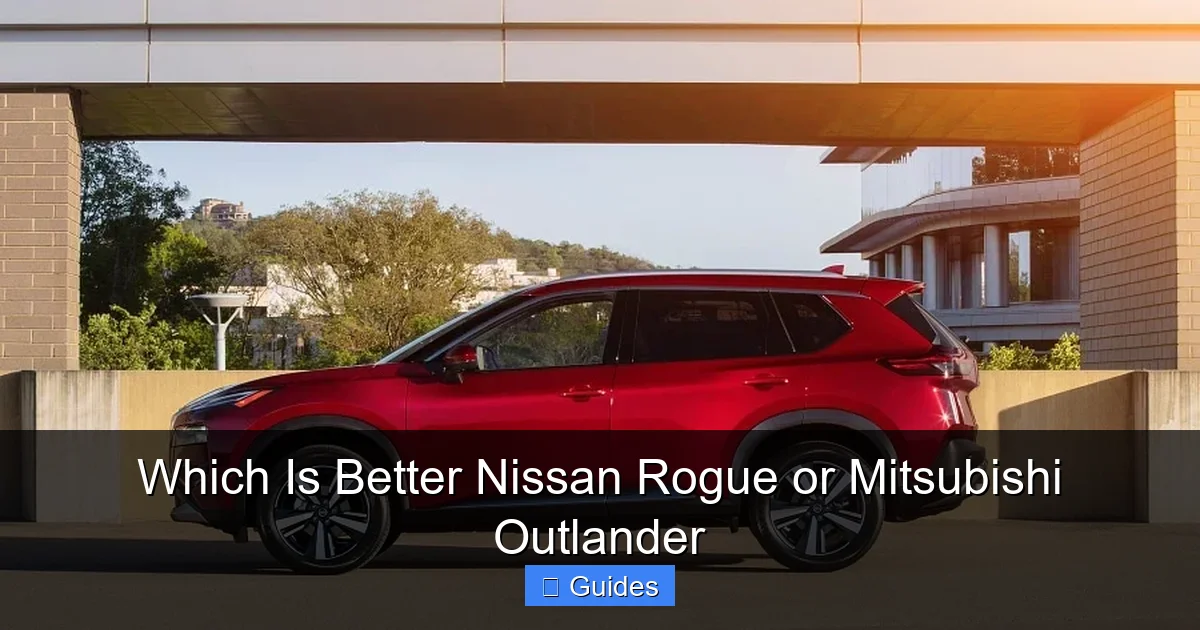
Visual guide about Which Is Better Nissan Rogue or Mitsubishi Outlander
Image source: tadvantagebetaprod-com.cdn-convertus.com
Seating Capacity and Layout
The Mitsubishi Outlander comes standard with seating for seven passengers across three rows. The third row is best suited for children or short trips, but it’s a rare feature in this class and a major selling point for families needing extra seats without stepping up to a larger SUV. The second row slides and reclines, offering decent legroom for adults.
The Nissan Rogue, by default, seats five passengers. However, a third-row option is available on higher trims, bringing total capacity to seven. That said, the third row in the Rogue is even tighter than the Outlander’s—more of a “just-in-case” feature than a practical daily solution. For most buyers, the five-seat configuration is more than enough, and the Rogue’s second row offers excellent legroom and comfort.
Interior Materials and Design
Step inside the Rogue, and you’re greeted by a modern, well-organized cabin. Soft-touch materials, contrast stitching, and available leather upholstery give it a more upscale feel. The dashboard is clean and intuitive, with a floating touchscreen that adds a tech-forward vibe. Higher trims include heated and ventilated front seats, a heated steering wheel, and ambient lighting—features that enhance comfort on long drives.
The Outlander’s interior, while functional, feels more dated. Plastics are harder and less refined, and the design lacks the sophistication of the Rogue. That said, Mitsubishi has made improvements in recent years, adding more soft-touch surfaces and better ergonomics. Still, it doesn’t quite match the Rogue’s premium ambiance.
Cargo Space and Practicality
Cargo space is another area where the two SUVs differ. The Rogue offers 36.5 cubic feet of cargo space behind the second row, expanding to 74.1 cubic feet with the rear seats folded. That’s competitive for the class and enough for groceries, luggage, or camping gear.
The Outlander provides 11.7 cubic feet behind the third row, 33.7 cubic feet behind the second row, and 79.7 cubic feet with both rear rows down. While the total cargo volume is slightly larger, the third row eats into usable space when it’s in use. If you frequently need seven seats, the Outlander wins. But if you prioritize cargo over passengers, the Rogue’s more accessible layout may be preferable.
Technology and Infotainment: Staying Connected on the Go
In today’s world, a good infotainment system is almost as important as engine power. Both the Rogue and Outlander come equipped with modern tech, but the Rogue takes a clear lead in usability and innovation.
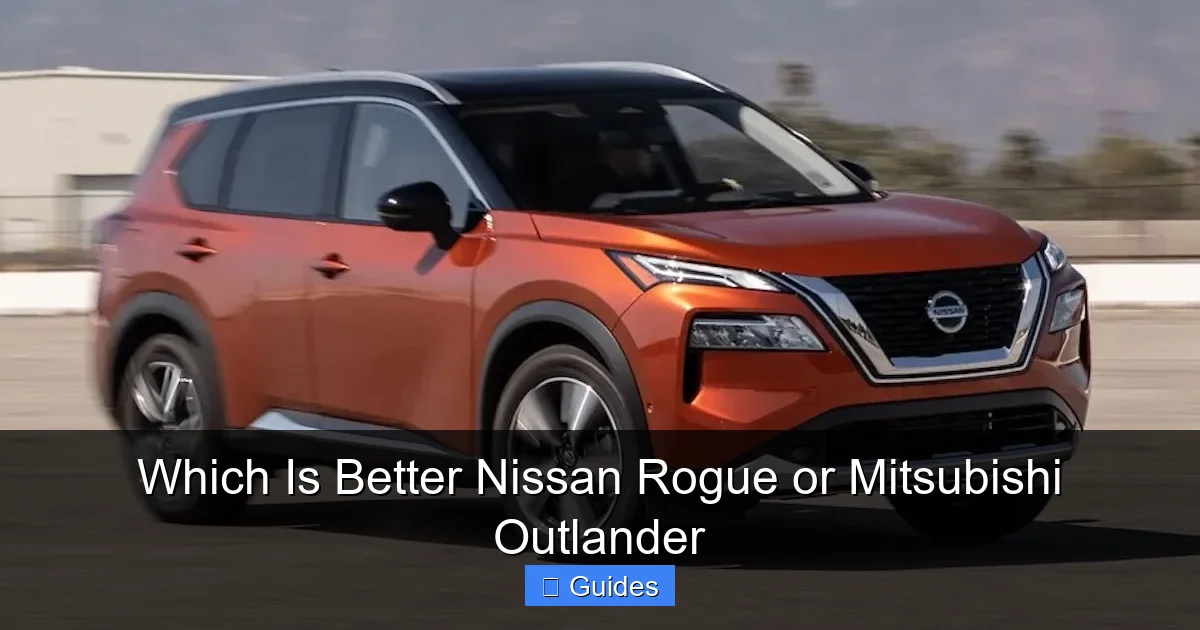
Visual guide about Which Is Better Nissan Rogue or Mitsubishi Outlander
Image source: motorbiscuit.com
Infotainment Systems and Screen Size
The 2024 Nissan Rogue features an 8-inch touchscreen as standard, with a 9-inch upgrade available on higher trims. The system runs Nissan’s latest interface, which is intuitive and responsive. It supports wireless Apple CarPlay and Android Auto, a major convenience for drivers who hate dealing with cables. Voice recognition is accurate, and the system integrates well with smartphone apps.
The Mitsubishi Outlander comes with a 9-inch touchscreen across all trims—a nice touch—but the software feels slower and less polished. Apple CarPlay and Android Auto are available, but only via wired connection, which can be frustrating. The interface is functional but lacks the smooth animations and quick response of the Rogue’s system.
Available Tech Features
The Rogue offers a range of high-tech features, including a 12.3-inch digital instrument cluster, a head-up display, and a premium Bose audio system. Higher trims also include wireless phone charging, multiple USB-C ports, and a Wi-Fi hotspot. These features make long drives more enjoyable and keep passengers entertained.
The Outlander includes a digital instrument cluster on upper trims, but it’s smaller and less customizable. Audio quality is decent with the standard six-speaker system, but there’s no premium audio option. Wireless charging is available, but again, only on higher trims. Overall, the tech package feels more basic compared to the Rogue’s comprehensive suite.
Driver Assistance and Connectivity
Both SUVs offer strong connectivity options, including Bluetooth, navigation, and over-the-air updates. However, the Rogue’s integration with Nissan’s mobile app allows for remote start, lock/unlock, and vehicle status checks—features that add convenience, especially in extreme weather.
The Outlander also has a mobile app, but it’s less robust and not as widely praised by users. While it offers basic functions like remote start, the app can be slow and occasionally unreliable. For tech-savvy buyers, the Rogue’s ecosystem is simply more polished and user-friendly.
Safety Features and Ratings: Protecting What Matters Most
Safety is a top priority for SUV buyers, and both the Rogue and Outlander deliver strong protection. However, the Rogue edges ahead with more standard safety tech and higher overall ratings.
Standard Safety Technology
The Nissan Rogue comes standard with Nissan Safety Shield 360, a suite that includes automatic emergency braking with pedestrian detection, blind-spot warning, rear cross-traffic alert, lane departure warning, and high beam assist. On higher trims, you also get ProPILOT Assist—a semi-autonomous driving system that combines adaptive cruise control and lane centering for highway driving. It’s one of the best driver-assist systems in its class.
The Mitsubishi Outlander includes a solid set of standard safety features, such as forward collision mitigation, lane departure warning, and automatic high beams. However, blind-spot monitoring and rear cross-traffic alert are only available on higher trims. The Outlander doesn’t offer a hands-free highway assist system like ProPILOT, which may be a drawback for long-distance drivers.
Crash Test Ratings
Both SUVs have earned top marks from the Insurance Institute for Highway Safety (IIHS) and the National Highway Traffic Safety Administration (NHTSA). The 2024 Rogue received a Top Safety Pick+ award from the IIHS, with “Good” ratings in all crash tests and superior ratings for front crash prevention. The Outlander also earned a Top Safety Pick, but with an “Acceptable” rating in the driver-side small overlap front test—slightly lower than the Rogue’s performance.
Real-World Safety Benefits
Having advanced safety features isn’t just about ratings—it’s about peace of mind. The Rogue’s ProPILOT Assist can reduce driver fatigue on long trips by maintaining speed and staying centered in the lane. Its automatic emergency braking has been shown to prevent or mitigate collisions in real-world scenarios. While the Outlander is still very safe, it doesn’t offer the same level of proactive assistance.
For families, especially those with teen drivers, the Rogue’s comprehensive safety suite may be the deciding factor. It’s not just about avoiding accidents—it’s about feeling confident every time you hit the road.
Value, Reliability, and Ownership Costs: What’s the Long-Term Picture?
When comparing vehicles, it’s important to look beyond the sticker price. Long-term value includes reliability, maintenance costs, resale value, and warranty coverage.
Pricing and Trim Levels
The 2024 Nissan Rogue starts at around $28,000 for the base S trim, with higher trims like the SV, SL, and Platinum ranging up to $38,000. The Rogue offers a good balance of features even at the base level, with standard safety tech and a modern interior.
The Mitsubishi Outlander starts slightly lower, at about $27,500 for the base ES trim. However, to get features like blind-spot monitoring, leather seats, and a larger touchscreen, you’ll need to step up to the SEL or GT trims, which can push the price over $35,000. While the Outlander appears cheaper upfront, the Rogue often offers more value per dollar when comparing similarly equipped models.
Warranty and Reliability
This is where the Outlander shines. Mitsubishi offers one of the best warranties in the industry: a 5-year/60,000-mile basic warranty and a 10-year/100,000-mile powertrain warranty. That’s a huge advantage for buyers planning to keep their vehicle long-term. It also includes 24/7 roadside assistance for the first five years.
The Nissan Rogue comes with a 3-year/36,000-mile basic warranty and a 5-year/60,000-mile powertrain warranty. While solid, it doesn’t match Mitsubishi’s coverage. In terms of reliability, both brands have improved significantly over the years. J.D. Power and Consumer Reports rank both SUVs as above average, with the Rogue slightly edging out the Outlander in predicted reliability.
Resale Value and Maintenance
The Rogue tends to hold its value better than the Outlander, thanks to Nissan’s strong brand reputation and higher demand in the used market. According to Kelley Blue Book, the Rogue retains about 50% of its value after three years, compared to around 45% for the Outlander.
Maintenance costs are similar for both vehicles, with routine services like oil changes, tire rotations, and brake inspections priced competitively. However, the Outlander’s longer warranty can offset potential repair costs down the road, especially for major components like the engine or transmission.
Final Verdict: Which SUV Is Right for You?
After comparing every major aspect—performance, interior, tech, safety, and value—the choice between the Nissan Rogue and Mitsubishi Outlander comes down to your personal priorities.
If you value fuel efficiency, a refined driving experience, advanced technology, and top-tier safety features, the Nissan Rogue is the clear winner. It’s ideal for commuters, tech lovers, and families who want a comfortable, modern SUV with strong resale value.
On the other hand, if you need third-row seating, prioritize long-term warranty protection, and want a lower starting price, the Mitsubishi Outlander is a compelling option. It’s great for larger families or buyers who plan to keep their vehicle for a decade or more.
Ultimately, both SUVs are excellent choices in the compact segment. But for most buyers, the Rogue’s blend of efficiency, comfort, and innovation makes it the better overall package. That said, the Outlander’s unique strengths—especially its standard third row and unbeatable warranty—mean it shouldn’t be overlooked.
Take both for a test drive. See which one feels right for your lifestyle. Because when it comes to choosing between the Nissan Rogue and Mitsubishi Outlander, the best SUV is the one that fits your life—not just your budget.
Frequently Asked Questions
Which SUV has better fuel economy, the Rogue or Outlander?
The Nissan Rogue has significantly better fuel economy, achieving up to 37 mpg on the highway compared to the Outlander’s 30 mpg. This makes the Rogue a better choice for drivers who prioritize fuel savings.
Does the Mitsubishi Outlander have a third row of seats?
Yes, the Mitsubishi Outlander comes standard with a third row, seating up to seven passengers. The Nissan Rogue offers a third row only as an option on higher trims.
Which SUV has more advanced safety features?
The Nissan Rogue includes more standard safety technology, such as ProPILOT Assist, blind-spot monitoring, and rear cross-traffic alert. The Outlander offers these features only on higher trims.
Is the Nissan Rogue more reliable than the Mitsubishi Outlander?
Both SUVs are reliable, but the Rogue scores slightly higher in predicted reliability ratings. However, the Outlander’s 10-year powertrain warranty offers added peace of mind.
Which SUV has a better infotainment system?
The Nissan Rogue has a more user-friendly infotainment system with wireless Apple CarPlay, a larger touchscreen, and better voice recognition. The Outlander’s system is functional but less polished.
Which SUV holds its value better over time?
The Nissan Rogue tends to retain more of its value after three years, thanks to stronger brand demand and higher resale prices in the used market.

At CarLegit, we believe information should be clear, factual, and genuinely helpful. That’s why every guide, review, and update on our website is created with care, research, and a strong focus on user experience.