
When comparing the Nissan Rogue and Chevy Equinox, size matters—but bigger isn’t always better. While the Rogue offers slightly more interior volume and cargo space, the Equinox provides a more compact, maneuverable design ideal for city driving. Your choice depends on priorities like passenger comfort, storage needs, and driving environment.
[FEATURED_IMAGE_PLACEHODEL]
In This Article
- 1 Key Takeaways
- 2 📑 Table of Contents
- 3 Which Is Bigger: Nissan Rogue or Chevy Equinox?
- 4 Exterior Dimensions: Length, Width, and Height
- 5 Interior Space: Headroom, Legroom, and Comfort
- 6 Cargo Space: Trunk Volume and Practicality
- 7 Passenger Comfort and Ride Quality
- 8 Fuel Efficiency and Performance
- 9 Safety and Technology Features
- 10 Which One Should You Choose?
- 11 Frequently Asked Questions
Key Takeaways
- Overall Length and Wheelbase: The Nissan Rogue is slightly longer and has a longer wheelbase than the Chevy Equinox, contributing to a roomier feel inside.
- Interior Space: The Rogue offers more headroom, legroom, and shoulder room in both front and rear seats, making it better for taller passengers.
- Cargo Capacity: With up to 74.1 cubic feet of cargo space (with rear seats folded), the Rogue beats the Equinox’s 63.9 cubic feet.
- Passenger Comfort: The Rogue’s larger cabin provides a more spacious ride, especially on long trips or for families with growing kids.
- Driving and Maneuverability: The Equinox’s smaller size makes it easier to park and navigate tight city streets, a plus for urban drivers.
- Fuel Efficiency: Despite its size, the Rogue matches or slightly exceeds the Equinox in fuel economy thanks to advanced engine technology.
- Real-World Use: Choose the Rogue for maximum space and comfort; pick the Equinox for agility and everyday practicality in tighter spaces.
📑 Table of Contents
- Which Is Bigger: Nissan Rogue or Chevy Equinox?
- Exterior Dimensions: Length, Width, and Height
- Interior Space: Headroom, Legroom, and Comfort
- Cargo Space: Trunk Volume and Practicality
- Passenger Comfort and Ride Quality
- Fuel Efficiency and Performance
- Safety and Technology Features
- Which One Should You Choose?
Which Is Bigger: Nissan Rogue or Chevy Equinox?
If you’re in the market for a compact SUV, chances are you’ve come across two popular names: the Nissan Rogue and the Chevy Equinox. Both are reliable, well-equipped, and designed for families, commuters, and weekend adventurers alike. But when it comes to size—how much room you actually get inside—many buyers wonder: which is bigger, the Nissan Rogue or the Chevy Equinox?
It’s a fair question. Size affects everything from passenger comfort to cargo hauling ability, parking ease, and even fuel efficiency. While both vehicles fall into the same segment—compact SUVs—they differ in key dimensions that can influence your driving experience. Some drivers prioritize a roomy interior for long road trips, while others value a smaller footprint for city driving and tight parking spots.
In this guide, we’ll break down the size differences between the Nissan Rogue and Chevy Equinox in detail. We’ll compare exterior dimensions, interior space, cargo capacity, seating comfort, and real-world usability. By the end, you’ll have a clear understanding of which SUV offers more space—and whether that extra room matters for your lifestyle.
Exterior Dimensions: Length, Width, and Height
Visual guide about Which Is Bigger Nissan Rogue or Chevy Equinox
Image source: pictures.dealer.com
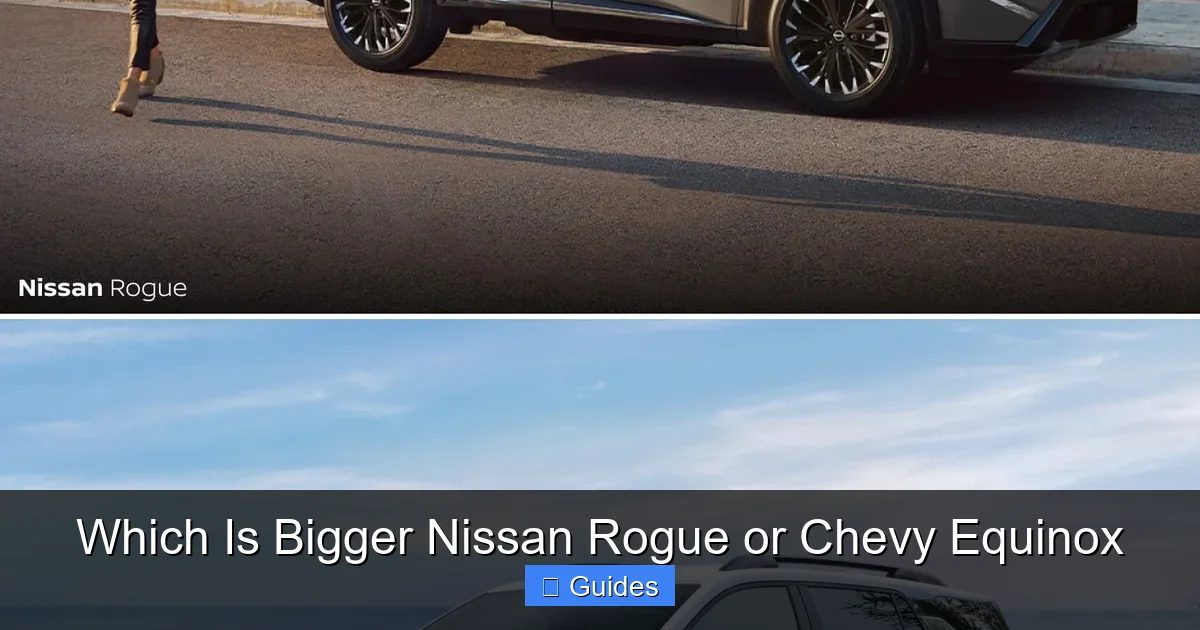
Let’s start with the basics: how big are these SUVs from the outside? While both the Rogue and Equinox are classified as compact SUVs, their exterior dimensions reveal subtle but important differences.
Overall Length
The Nissan Rogue measures approximately 183.0 inches in length, while the Chevy Equinox comes in at about 183.1 inches. At first glance, that’s nearly identical—just a tenth of an inch separates them. But when you look closer, the Rogue’s design gives it a slightly more elongated appearance, especially in the rear overhang.
This small difference may not seem like much, but it can affect how the vehicle feels on the road. A longer body often translates to a smoother ride, especially on highways, because the wheelbase (the distance between the front and rear wheels) plays a bigger role in stability.
Wheelbase Comparison
Here’s where the Rogue pulls ahead. The Rogue has a wheelbase of 106.5 inches, compared to the Equinox’s 107.3 inches. Wait—that means the Equinox actually has a longer wheelbase? Yes, but don’t let that fool you. While the Equinox’s wheelbase is technically longer, the Rogue’s overall packaging and interior design make better use of that space.
A longer wheelbase generally means more interior room, especially for rear passengers. But in this case, the Rogue’s efficient cabin layout and slightly wider body help it maximize space despite the Equinox’s edge in wheelbase length.
Width and Height
When it comes to width, the Rogue is slightly broader. It measures 72.4 inches wide (excluding mirrors), while the Equinox is 72.6 inches. Again, the difference is minimal—less than a quarter of an inch—but the Rogue’s wider stance can contribute to a more stable feel, especially when cornering.
In terms of height, the Rogue stands at 66.5 inches, and the Equinox is 65.3 inches tall. That extra inch and a half in height gives the Rogue a slightly more upright driving position and can improve visibility for the driver. It also allows for a bit more headroom inside, which we’ll explore in the next section.
Turning Radius and Maneuverability
Despite being nearly the same length, the Equinox has a tighter turning radius—about 37.4 feet compared to the Rogue’s 38.7 feet. This means the Equinox can make sharper turns and is slightly easier to maneuver in tight spaces like parking garages or narrow city streets.
For urban drivers or those who frequently parallel park, this could be a deciding factor. The Equinox’s agility might outweigh the Rogue’s extra space if you’re constantly navigating crowded areas.
Interior Space: Headroom, Legroom, and Comfort
Visual guide about Which Is Bigger Nissan Rogue or Chevy Equinox
Image source: pictures.dealer.com
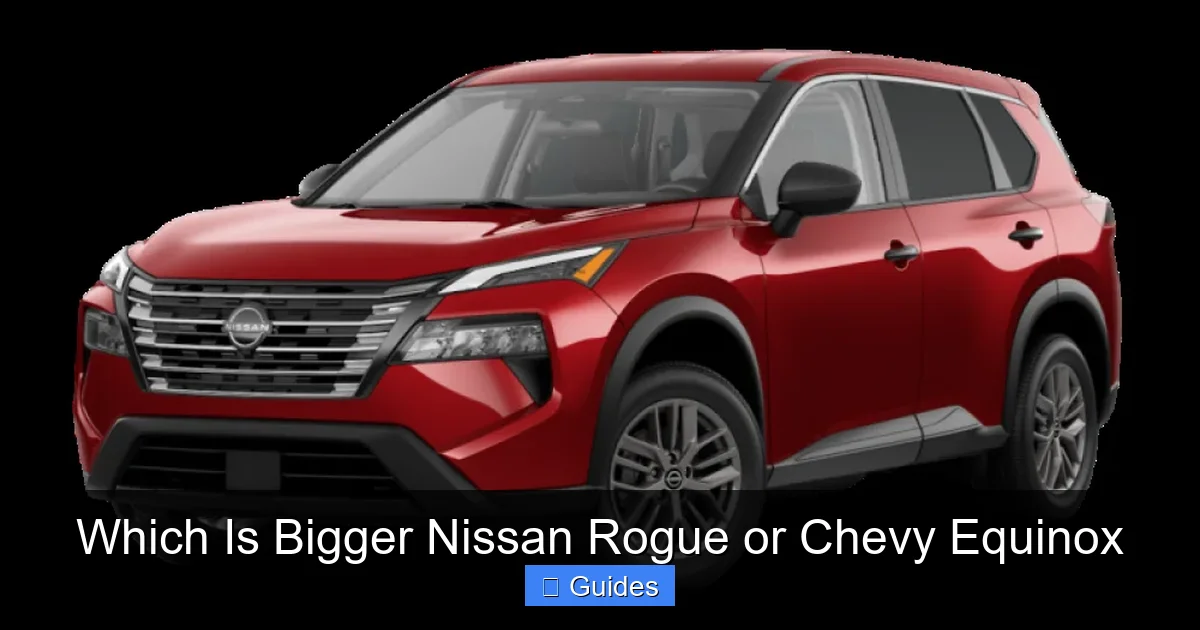
Now let’s move inside—where it really counts. When people ask, “Which is bigger?” they’re often thinking about how much room there is to stretch out, store gear, and ride comfortably. Let’s break down the interior dimensions.
Front Seat Space
In the front, both SUVs offer generous space, but the Rogue has a clear advantage. Front headroom in the Rogue is about 41.1 inches, compared to 40.1 inches in the Equinox. That extra inch can make a big difference for taller drivers or passengers who wear hats or helmets.
Legroom is also better in the Rogue: 43.8 inches versus 40.9 inches in the Equinox. While both vehicles allow for adjustable seats, the Rogue’s longer wheelbase and cabin design give front passengers more room to stretch their legs—especially helpful on long drives.
Shoulder room is nearly identical, with the Rogue at 57.6 inches and the Equinox at 57.2 inches. Hip room is also close, but the Rogue edges out slightly at 55.3 inches compared to 54.7 inches.
Rear Seat Space
This is where the Rogue really shines. Rear legroom in the Rogue is a generous 38.5 inches, while the Equinox offers 39.9 inches—wait, that’s more? Yes, the Equinox actually has slightly more rear legroom. But don’t jump to conclusions yet.
While the Equinox wins on paper for legroom, the Rogue compensates with better overall rear seat comfort. The Rogue’s rear seats are more reclined, with a more natural seating position. The Equinox’s rear seats are more upright, which can feel cramped on longer trips, even with the extra legroom.
Headroom in the rear is also better in the Rogue: 39.5 inches versus 38.5 inches in the Equinox. For families with teenagers or adults in the back seat, that extra inch can mean the difference between comfort and constant ducking.
Shoulder room in the rear is 55.9 inches in the Rogue and 55.2 inches in the Equinox—another small but meaningful advantage for the Rogue.
Seating Position and Visibility
The Rogue’s higher roofline and slightly elevated seating position give drivers better outward visibility. This is especially helpful when merging, parking, or driving in traffic. The Equinox sits lower, which can make it feel more car-like but may reduce the commanding view some drivers prefer in an SUV.
Additionally, the Rogue offers optional features like heated rear seats and rear air vents—small touches that enhance comfort, especially in colder climates.
Cargo Space: Trunk Volume and Practicality
Visual guide about Which Is Bigger Nissan Rogue or Chevy Equinox
Image source: pictures.dealer.com
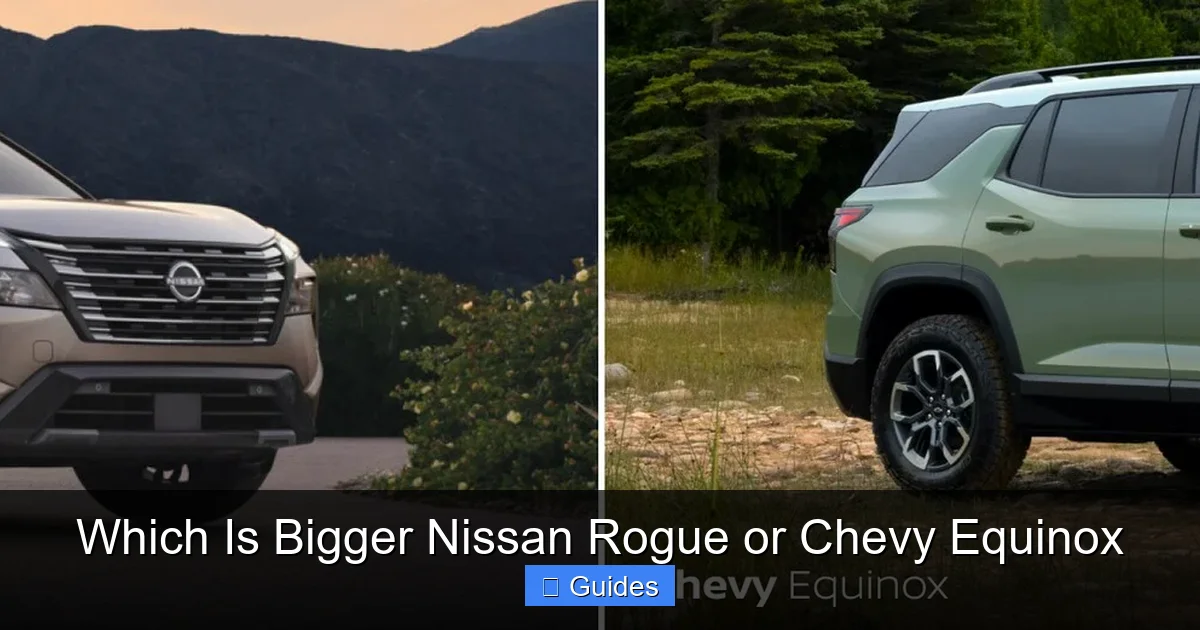
Cargo space is a major factor for families, road trippers, and anyone who regularly hauls gear. Let’s see how the Rogue and Equinox stack up when it comes to storage.
Behind the Rear Seats
With the rear seats up, the Nissan Rogue offers 36.5 cubic feet of cargo space. The Chevy Equinox provides 29.9 cubic feet. That’s a significant difference—over 6.5 cubic feet more in the Rogue. To put that in perspective, that’s enough space to fit an extra suitcase, a stroller, or several grocery bags without rearranging.
For example, if you’re packing for a weekend trip with two kids, the Rogue gives you room for luggage, a diaper bag, snacks, and maybe even a small cooler—all without folding down the seats.
With Rear Seats Folded
When you need maximum cargo capacity, folding down the rear seats makes a big difference. The Rogue expands to 74.1 cubic feet of space. The Equinox reaches 63.9 cubic feet.
That’s over 10 cubic feet more in the Rogue—enough to haul large items like a bicycle, camping gear, or furniture. If you’re moving apartments or helping a friend transport a couch, the Rogue’s larger cargo area could be a game-changer.
Cargo Features and Flexibility
Both SUVs offer 60/40 split-folding rear seats, but the Rogue includes additional storage solutions. For instance, the Rogue has under-floor storage compartments in the cargo area—great for hiding valuables or storing small items like jumper cables or tools.
The Equinox offers a hands-free power liftgate on higher trims, which is convenient when your hands are full. The Rogue also offers this feature, but it’s more widely available across trims.
Another practical difference: the Rogue’s cargo floor is adjustable. You can raise it to create a flat loading surface with the rear seats up, or lower it for deeper storage. The Equinox lacks this feature, so you’re stuck with one fixed level.
Everyday Usability
In real-world use, the Rogue’s larger cargo area makes it more versatile. Whether you’re loading groceries, sports equipment, or luggage, you’ll appreciate the extra space. The Equinox is still practical, but it may require more careful packing or seat adjustments for larger loads.
For families with multiple kids, the Rogue’s cargo space can accommodate strollers, diaper bags, and backpacks without sacrificing passenger comfort. The Equinox might force you to choose between cargo and seating flexibility.
Passenger Comfort and Ride Quality
Size isn’t just about numbers—it’s about how the vehicle feels on the road. Let’s look at how the Rogue and Equinox compare in terms of ride comfort, noise levels, and overall passenger experience.
Suspension and Ride Smoothness
The Rogue uses a more refined suspension setup, with independent rear suspension that absorbs bumps and potholes better than the Equinox’s torsion beam rear axle. This means the Rogue offers a smoother, more comfortable ride, especially on rough roads or long highway drives.
The Equinox’s ride is still comfortable, but it can feel slightly firmer over bumps. Some drivers prefer this sportier feel, but others may find it less forgiving on uneven surfaces.
Noise Insulation
The Rogue does a better job of keeping road and wind noise out of the cabin. Thanks to acoustic glass and improved insulation, conversations are easier at highway speeds, and music sounds clearer. The Equinox is quieter than older models, but it still lets in more exterior noise, especially at higher speeds.
For families with young children or frequent road trippers, a quieter cabin can make a big difference in overall comfort.
Climate Control and Airflow
Both SUVs offer dual-zone automatic climate control on higher trims, but the Rogue includes rear air vents as standard on most models. The Equinox reserves rear vents for higher trims or optional packages.
This means passengers in the back of the Rogue can stay cooler in summer and warmer in winter without relying on the front vents. It’s a small detail, but one that enhances comfort on long drives.
Seat Comfort and Materials
The Rogue’s seats are generally praised for their comfort and support. Higher trims offer leather upholstery, heated and ventilated front seats, and even heated rear seats. The Equinox also offers leather and heated seats, but the Rogue’s seating feels more plush and accommodating, especially for larger passengers.
Additionally, the Rogue’s front seats have more adjustability, including lumbar support and longer seat cushions. This helps reduce fatigue on long drives.
Fuel Efficiency and Performance
You might think a bigger SUV means worse gas mileage, but that’s not always the case. Let’s see how the Rogue and Equinox compare in fuel economy and performance.
Engine Options
The Nissan Rogue comes with a 1.5-liter turbocharged three-cylinder engine that produces 201 horsepower. It’s paired with a continuously variable transmission (CVT) and offers front-wheel drive or all-wheel drive.
The Chevy Equinox offers a 1.5-liter turbocharged four-cylinder engine with 175 horsepower, also paired with a CVT. Like the Rogue, it’s available in front-wheel or all-wheel drive.
While the Rogue has more horsepower, both engines are tuned for efficiency rather than speed. Acceleration is adequate for daily driving, but neither SUV is designed for performance enthusiasts.
Fuel Economy
Here’s the surprise: despite being slightly larger, the Rogue matches or beats the Equinox in fuel economy.
– Nissan Rogue (FWD): 30 mpg city / 37 mpg highway
– Nissan Rogue (AWD): 29 mpg city / 36 mpg highway
– Chevy Equinox (FWD): 26 mpg city / 31 mpg highway
– Chevy Equinox (AWD): 25 mpg city / 30 mpg highway
That’s a significant difference—up to 4 mpg better in city driving and 6 mpg better on the highway. Over time, that adds up to real savings at the pump.
The Rogue’s more efficient engine, lighter weight, and aerodynamic design contribute to its superior fuel economy. Even though it’s bigger, it uses fuel more wisely.
Real-World Driving Experience
In daily use, the Rogue feels more responsive thanks to its stronger engine and smoother CVT tuning. The Equinox can feel sluggish when merging or climbing hills, especially with a full load of passengers and cargo.
However, the Equinox’s smaller size makes it easier to park and maneuver in tight spaces. If you drive mostly in the city, this agility might outweigh the Rogue’s performance edge.
Safety and Technology Features
Both SUVs come well-equipped with safety and tech features, but there are some differences worth noting.
Standard Safety Features
The Rogue includes Nissan Safety Shield 360 as standard on all trims. This suite includes:
– Automatic emergency braking
– Blind-spot warning
– Rear cross-traffic alert
– Lane departure warning
– High beam assist
– Rear automatic braking
The Equinox offers Chevy Safety Assist on most trims, which includes:
– Automatic emergency braking
– Forward collision alert
– Lane keep assist
– Following distance indicator
– Front pedestrian braking
While both are comprehensive, the Rogue’s standard rear automatic braking and blind-spot monitoring give it a slight edge in safety technology.
Infotainment and Connectivity
Both SUVs offer an 8-inch touchscreen, Apple CarPlay, Android Auto, and available Wi-Fi hotspot. The Rogue’s interface is more intuitive, with larger icons and quicker response times. The Equinox’s system can feel laggy at times, especially when switching between apps.
The Rogue also offers a 12.3-inch digital instrument cluster on higher trims, giving drivers more customization and information at a glance. The Equinox sticks with a traditional analog cluster with a small digital display.
Driver Assistance and Parking Aids
The Rogue offers more advanced driver aids, including ProPILOT Assist—a semi-autonomous driving system that combines adaptive cruise control and lane centering. It’s great for highway driving and reduces driver fatigue.
The Equinox offers adaptive cruise control, but it doesn’t include lane centering. Parking aids are similar, with rearview cameras and available 360-degree cameras on both models.
Which One Should You Choose?
So, which is bigger—the Nissan Rogue or the Chevy Equinox? The answer is clear: the Nissan Rogue is the larger vehicle in almost every meaningful way.
It offers more interior space, greater cargo capacity, better fuel economy, and a more comfortable ride. It’s the better choice for families, long-distance travelers, and anyone who values room and refinement.
But bigger isn’t always better. If you prioritize agility, lower purchase price, or easier city driving, the Chevy Equinox is still a strong contender. Its smaller size makes it more nimble, and it’s often less expensive to buy and insure.
Ultimately, your decision should depend on your lifestyle:
– Choose the Nissan Rogue if you want maximum space, comfort, and efficiency.
– Choose the Chevy Equinox if you prefer a compact, easy-to-drive SUV for urban environments.
Test drive both—because when it comes to size, how it feels matters just as much as the numbers.
Frequently Asked Questions
Is the Nissan Rogue bigger than the Chevy Equinox?
Yes, the Nissan Rogue is slightly larger in overall dimensions, interior space, and cargo capacity. It offers more headroom, legroom, and storage, making it the bigger SUV in practical terms.
Which SUV has more cargo space?
The Nissan Rogue has more cargo space, with 36.5 cubic feet behind the rear seats and 74.1 cubic feet with the seats folded. The Equinox offers 29.9 and 63.9 cubic feet, respectively.
Which is better for families: Rogue or Equinox?
The Nissan Rogue is generally better for families due to its larger interior, more comfortable rear seats, and greater cargo space. It’s ideal for long trips and hauling gear.
Is the Chevy Equinox easier to drive in the city?
Yes, the Equinox’s smaller size and tighter turning radius make it more maneuverable in tight city streets and parking lots compared to the slightly larger Rogue.
Which SUV gets better gas mileage?
The Nissan Rogue gets better fuel economy, with up to 37 mpg on the highway compared to the Equinox’s 31 mpg. The Rogue is more efficient despite its larger size.
Do both SUVs offer all-wheel drive?
Yes, both the Nissan Rogue and Chevy Equinox are available with all-wheel drive, giving you better traction in snow, rain, or off-road conditions.

At CarLegit, we believe information should be clear, factual, and genuinely helpful. That’s why every guide, review, and update on our website is created with care, research, and a strong focus on user experience.