

If your camper smells like rotten eggs, it’s likely due to hydrogen sulfide gas from a malfunctioning water heater, sewer gases, or a failing battery. This guide breaks down the common causes, how to identify them, and practical steps to eliminate the odor for good.
In This Article
- 1 Key Takeaways
- 2 📑 Table of Contents
- 3 Why Does My Camper Smell Like Rotten Eggs? A Complete Guide to Solving the Stink
- 4 Understanding the Rotten Egg Smell: What’s Really Happening?
- 5 Common Causes of Rotten Egg Smell in Campers
- 6 How to Diagnose the Source of the Smell
- 7 Prevention Tips: Keep Your Camper Smelling Fresh
- 8 When to Call a Professional
- 9 Conclusion
- 10 Frequently Asked Questions
- 10.1 Why does my camper smell like rotten eggs only when I use hot water?
- 10.2 Can a rotten egg smell in my camper be dangerous?
- 10.3 How often should I replace my water heater anode rod?
- 10.4 Will a water filter stop the rotten egg smell?
- 10.5 Can I remove the anode rod completely?
- 10.6 Why does my camper smell like rotten eggs after winter storage?
Key Takeaways
- Hydrogen sulfide gas from water heaters is a top cause: Anode rods reacting with bacteria in hot water tanks produce the rotten egg smell—replacing or removing the rod can help.
- Sewer gas leaks from plumbing traps are common: Dry P-traps allow sewer gases to enter your camper; simply adding water can fix this issue.
- Failing RV batteries emit sulfur-like odors: Overcharged or damaged lead-acid batteries release hydrogen sulfide—inspect and maintain your battery regularly.
- Propane leaks mimic rotten eggs but are dangerous: Propane is odorized with mercaptan, which smells similar—always treat this as an emergency and ventilate immediately.
- Clogged vents or blocked drain lines trap odors: Roof vents and drain lines need regular cleaning to prevent buildup and gas accumulation.
- Prevention is easier than cure: Routine maintenance, proper winterization, and using quality water filters reduce the risk of foul smells.
- Professional help may be needed: If DIY fixes don’t work, consult an RV technician to inspect hidden plumbing or electrical issues.
📑 Table of Contents
- Why Does My Camper Smell Like Rotten Eggs? A Complete Guide to Solving the Stink
- Understanding the Rotten Egg Smell: What’s Really Happening?
- Common Causes of Rotten Egg Smell in Campers
- How to Diagnose the Source of the Smell
- Prevention Tips: Keep Your Camper Smelling Fresh
- When to Call a Professional
- Conclusion
Why Does My Camper Smell Like Rotten Eggs? A Complete Guide to Solving the Stink
You’ve just pulled into a beautiful campsite, set up your awning, and stepped inside your camper—only to be greeted by a smell like rotten eggs. Your heart sinks. It’s not just unpleasant; it’s downright alarming. You start wondering: Is something broken? Is it dangerous? Could it be toxic?
Don’t panic. That foul odor is more common than you think, and in most cases, it’s not a sign of a major disaster. But it is a signal that something in your RV needs attention. Whether it’s your water system, plumbing, battery, or even your propane line, the source of the smell can usually be traced back to one of a handful of culprits. The good news? Most of these issues are fixable with a little know-how and some basic tools.
In this guide, we’ll walk you through the most common reasons your camper smells like rotten eggs, how to identify the source, and what you can do to eliminate the odor for good. We’ll also share practical tips for preventing the problem from coming back, so you can enjoy fresh, clean air every time you hit the road.
Understanding the Rotten Egg Smell: What’s Really Happening?
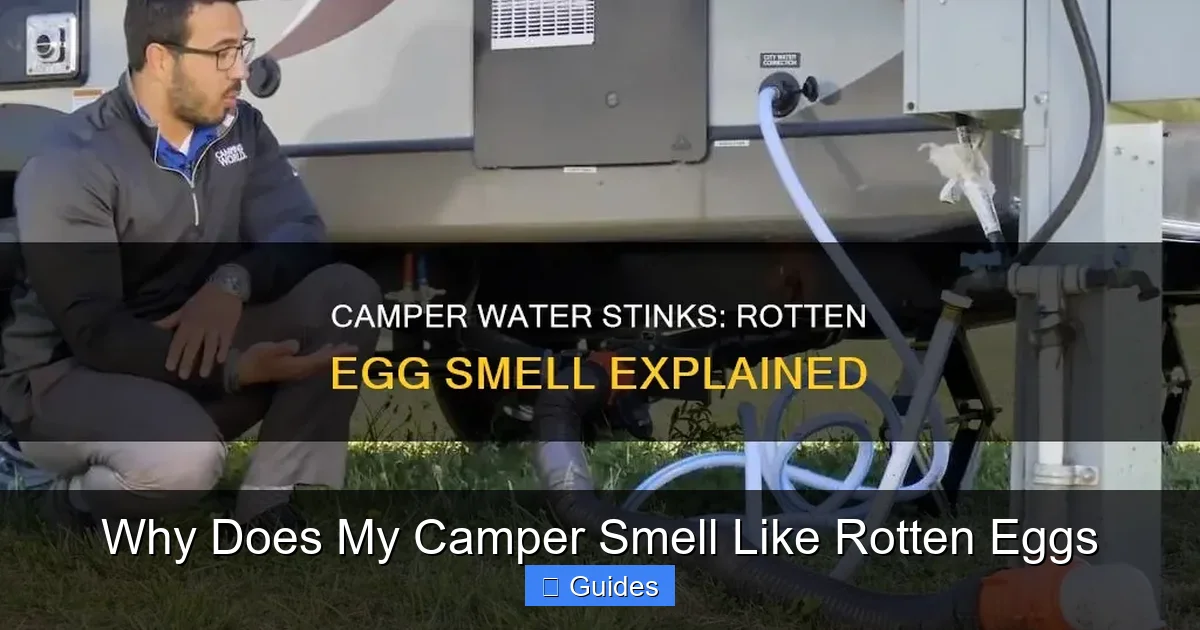
The “rotten egg” smell in your camper is almost always caused by a gas called hydrogen sulfide (H₂S). This gas is naturally produced when sulfur-reducing bacteria break down organic matter in the absence of oxygen. It’s the same compound that gives swamp gas, sewage, and even some hot springs their distinctive stench.

Visual guide about Why Does My Camper Smell Like Rotten Eggs
Image source: gocarlife.com
How Hydrogen Sulfide Forms in RVs
In the context of your camper, hydrogen sulfide typically forms in one of three places: your water heater, your plumbing system, or your battery compartment. Each of these environments can foster the right conditions for sulfur bacteria to thrive—especially when water sits stagnant, temperatures are warm, and there’s a source of sulfur (like minerals in water or battery acid).
For example, if you leave your camper unused for weeks or months, water in the heater tank can become a breeding ground for bacteria. When the heater kicks on, it heats the water and releases trapped gases—including hydrogen sulfide—into your faucets. The result? A strong, sulfur-like odor when you turn on the hot water.
Why the Smell Is More Noticeable in Campers
RVs are small, enclosed spaces with limited ventilation. Unlike a house, where odors can dissipate quickly, a camper traps smells and amplifies them. Even a small amount of hydrogen sulfide can fill the entire living area, making the problem seem worse than it is.
Additionally, many campers use well water or fill up at different campgrounds with varying water quality. Well water, in particular, often contains high levels of sulfur compounds, which can react with metal components in your plumbing or water heater to produce that telltale egg smell.
Is the Smell Dangerous?
In low concentrations, hydrogen sulfide is more of a nuisance than a health risk. You might notice headaches, nausea, or irritation in your eyes and throat if exposed for long periods. However, at high levels—especially in confined spaces—it can be toxic and even deadly.
That’s why it’s important not to ignore the smell. Even if it seems mild, it’s a warning sign that something in your system needs attention. And if you ever suspect a propane leak (which is also odorized to smell like rotten eggs), treat it as an emergency and evacuate immediately.
Common Causes of Rotten Egg Smell in Campers
Now that you understand what’s causing the odor, let’s dive into the most common sources. Each has its own symptoms, fixes, and prevention tips.
Visual guide about Why Does My Camper Smell Like Rotten Eggs
Image source: shunauto.com
1. Water Heater Anode Rod Reactions
One of the most frequent causes of the rotten egg smell in campers is the anode rod in your water heater. This small metal rod is designed to corrode over time, protecting the tank from rust. But when it reacts with sulfur bacteria in the water, it can produce hydrogen sulfide gas.
Most anode rods are made of magnesium or aluminum. Magnesium rods are especially prone to this reaction because they’re highly reactive. If your camper uses well water or water with high sulfur content, the problem can develop quickly.
Signs it’s the anode rod:
- The smell only comes from the hot water faucet.
- The odor disappears after running the hot water for a few minutes.
- You haven’t replaced the anode rod in over a year.
How to fix it:
- Replace the anode rod: Swap out the magnesium rod for an aluminum-zinc alloy rod, which is less reactive. Some RVers even use a powered anode rod, which uses electricity to prevent corrosion without producing gas.
- Remove the anode rod temporarily: If you’re not using the water heater, you can remove the rod entirely. Just remember to reinstall it before using hot water again.
- Flush the tank: Drain and flush the water heater to remove sediment and bacteria. Add a cup of hydrogen peroxide or white vinegar to the tank, let it sit for a few hours, then flush thoroughly.
Pro tip: If you’re boondocking or using well water, consider installing a whole-RV water filter with a sulfur-reducing cartridge. This can significantly reduce the sulfur content before it even reaches your heater.
2. Dry P-Traps and Sewer Gas Leaks
Another common culprit is dry P-traps in your sink, shower, or toilet drains. P-traps are U-shaped pipes under your drains that hold water, creating a seal that blocks sewer gases from entering your camper. But if a drain hasn’t been used in a while, the water in the trap can evaporate—especially in dry or hot climates.
Once the seal is broken, sewer gases (including hydrogen sulfide) can travel up through the drain and into your living space. The result? A persistent rotten egg smell, even when you’re not using water.
Signs it’s a dry P-trap:
- The smell is strongest near sinks, showers, or the toilet.
- The odor appears after your camper has been unused for several days.
- You notice the smell more in the morning or after long periods of inactivity.
How to fix it:
- Run water in all drains: Turn on every faucet and flush the toilet to refill the P-traps. This simple step often solves the problem immediately.
- Add water manually: If a drain is hard to reach (like under a cabinet), use a funnel or small cup to pour water directly into the drain.
- Use drain seals: For drains you rarely use (like a wet bar or utility sink), consider installing a drain seal or cap to prevent evaporation.
Prevention tip: Make it a habit to run water in all drains before and after long trips. If you store your camper for the winter, pour a cup of RV-safe antifreeze into each drain to protect the trap.
3. Failing or Overcharged RV Batteries
Your RV’s battery system can also be the source of a rotten egg smell—especially if you have a lead-acid battery. When these batteries are overcharged, damaged, or nearing the end of their life, they can release hydrogen sulfide gas as a byproduct of chemical reactions inside the cells.
This is more common in older campers or those with faulty charging systems. Solar panels, converters, or inverters that aren’t regulating voltage properly can cause the battery to “gas” excessively, releasing foul odors.
Signs it’s the battery:
- The smell is strongest near the battery compartment or under the fridge.
- You notice corrosion around the battery terminals.
- The battery is swollen, leaking, or not holding a charge.
- The odor appears when the battery is charging or under load.
How to fix it:
- Inspect the battery: Check for cracks, leaks, or bulging. If you see any, replace the battery immediately.
- Clean the terminals: Use a mixture of baking soda and water to neutralize acid buildup, then scrub with a wire brush.
- Check the charging system: Use a multimeter to test the voltage. A properly charged 12V battery should read 12.6–12.8 volts when resting. If it’s over 13.8 volts while charging, your charger may be overcharging.
- Ventilate the battery compartment: Ensure the battery box has proper airflow. Consider installing a vent fan if it’s enclosed.
Safety note: Always wear gloves and eye protection when handling batteries. Hydrogen sulfide and battery acid are both hazardous.
4. Propane Leaks (The Dangerous Mimic)
Here’s a critical point: propane leaks can smell exactly like rotten eggs, but they’re far more dangerous than water heater issues. Propane is naturally odorless, so manufacturers add a chemical called mercaptan to give it that sulfur-like smell as a safety warning.
If you smell gas near your stove, furnace, or propane tank, do not ignore it. A propane leak can lead to fire, explosion, or carbon monoxide poisoning.
Signs it’s a propane leak:
- The smell is strong near appliances or the propane tank.
- You hear a hissing sound.
- The odor is present even when no water is running.
- Your carbon monoxide detector or propane alarm is going off.
What to do immediately:
- Turn off the propane supply at the tank.
- Open all windows and doors to ventilate the camper.
- Do not use electrical switches, lighters, or phones—sparks can ignite the gas.
- Leave the camper and move to a safe distance.
- Call a certified RV technician or propane service to inspect and repair the leak.
Prevention tip: Install a propane leak detector near your floor (since propane is heavier than air). Test it monthly and replace it every 5–7 years.
5. Clogged Roof Vents or Drain Lines
Your camper’s plumbing system relies on roof vents to allow air into the pipes, preventing vacuum locks and helping waste flow smoothly. But if these vents get clogged with leaves, bird nests, or debris, they can trap gases and cause odors to back up into your camper.
Similarly, the drain line from your toilet or gray water tank can become blocked, allowing sewer gases to escape through the toilet bowl or sink.
Signs of clogged vents or drains:
- Gurgling sounds from drains when you flush the toilet.
- Slow-draining sinks or showers.
- Odors that worsen after using the toilet or running water.
- Visible debris on the roof near the vent pipes.
How to fix it:
- Clean the roof vents: Use a soft brush or compressed air to remove debris. A garden hose can help flush out stubborn clogs.
- Snake the drain lines: Use a drain snake or auger to clear blockages in the toilet or gray tank drain.
- Use enzyme-based cleaners: Pour RV-safe drain cleaner into your tanks monthly to break down waste and prevent clogs.
Pro tip: Install vent covers or screens to keep animals and debris out. Check them before every trip.
How to Diagnose the Source of the Smell
With so many possible causes, it’s important to methodically narrow down the source. Here’s a simple troubleshooting checklist:

Visual guide about Why Does My Camper Smell Like Rotten Eggs
Image source: shootingstar-rvresort.com
- Identify when the smell occurs: Does it happen only with hot water? Only near the toilet? Only when charging the battery?
- Check each system one by one: Start with the water heater, then move to drains, battery, and propane.
- Use the “sniff test”: Get close to potential sources and see where the odor is strongest.
- Test with water: Run hot and cold water separately to see if the smell is isolated to one.
- Inspect visually: Look for corrosion, leaks, or debris.
If you’re still unsure, consider using a hydrogen sulfide test strip (available online) to confirm the presence of the gas. These strips change color when exposed to H₂S, helping you confirm the issue.
Prevention Tips: Keep Your Camper Smelling Fresh
Once you’ve eliminated the odor, the last thing you want is for it to come back. Here’s how to prevent future rotten egg smells:
- Replace the anode rod annually or switch to a powered anode.
- Use a whole-RV water filter with a sulfur-reducing cartridge.
- Run water in all drains before and after storage.
- Flush the water heater every 6 months.
- Inspect and clean roof vents regularly.
- Maintain your battery and charging system.
- Install gas detectors for propane and carbon monoxide.
- Winterize properly to prevent stagnant water and bacterial growth.
When to Call a Professional
While many of these fixes are DIY-friendly, some issues require expert help. Call an RV technician if:
- You suspect a propane or electrical issue.
- The smell persists after trying all fixes.
- You’re unsure how to safely access or repair a component.
- Your water heater or plumbing system needs major repair.
Your safety and peace of mind are worth the cost of professional service.
Conclusion
A camper that smells like rotten eggs is frustrating, but it’s rarely a sign of a catastrophic failure. In most cases, the odor comes from a manageable issue like a reactive anode rod, dry P-traps, or a failing battery. By understanding the causes and taking proactive steps, you can eliminate the smell and keep your RV fresh and safe.
Remember: the key is early detection and regular maintenance. Don’t wait for the stink to become unbearable. A little prevention goes a long way in ensuring your next adventure is as pleasant as it is memorable.
Frequently Asked Questions
Why does my camper smell like rotten eggs only when I use hot water?
This is almost always due to the anode rod in your water heater reacting with sulfur bacteria. The hot water heats the tank and releases trapped hydrogen sulfide gas. Replacing the anode rod or flushing the tank usually solves the problem.
Can a rotten egg smell in my camper be dangerous?
In low levels, hydrogen sulfide is mostly a nuisance. But high concentrations can cause headaches, nausea, or respiratory issues. If you suspect a propane leak, treat it as an emergency and ventilate the area immediately.
How often should I replace my water heater anode rod?
Most anode rods should be inspected every 6 months and replaced annually, especially if you use well water or notice a sulfur smell. Consider switching to a powered anode rod for longer life and fewer odors.
Will a water filter stop the rotten egg smell?
A whole-RV water filter with a sulfur-reducing cartridge can significantly reduce the smell by removing sulfur compounds before they reach your plumbing. It’s a great preventive measure, especially for well water users.
Can I remove the anode rod completely?
Yes, you can remove the anode rod if you’re not using the water heater, but this will leave the tank vulnerable to corrosion. Reinstall it before using hot water again, or consider a powered anode as a permanent solution.
Why does my camper smell like rotten eggs after winter storage?
Stagnant water in the heater, dry P-traps, or a dead battery can all cause odors after long storage. Flush the system, refill the traps, and check the battery to eliminate the smell.

At CarLegit, we believe information should be clear, factual, and genuinely helpful. That’s why every guide, review, and update on our website is created with care, research, and a strong focus on user experience.