
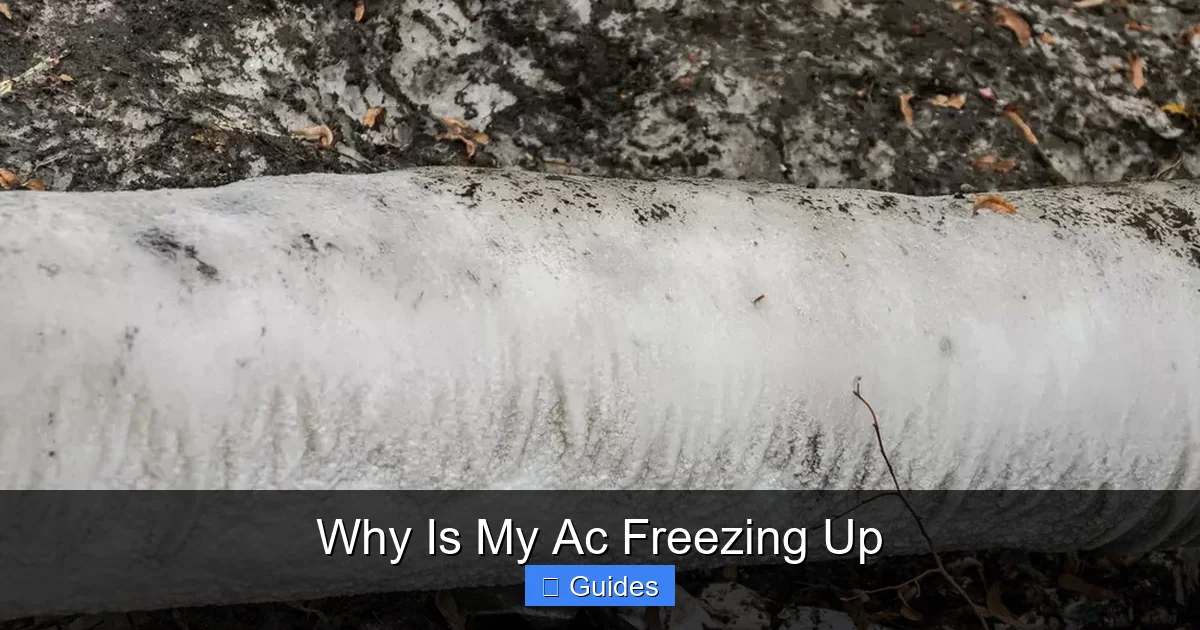
If your AC is freezing up, it’s usually due to restricted airflow, low refrigerant, or dirty components. Ignoring the problem can damage your system and spike energy bills. Learn the top causes and simple solutions to keep your air conditioner running smoothly all summer long.
In This Article
- 1 Key Takeaways
- 2 Why Is My AC Freezing Up? Understanding the Basics
- 3 Top Causes of AC Freezing and How to Fix Them
- 4 Environmental Factors That Contribute to AC Freezing
- 5 How to Diagnose and Fix a Frozen AC
- 6 Preventing AC Freezing: Maintenance Tips
- 7 When to Call a Professional
- 8 Conclusion
- 9 Key Takeaways
- 10 Frequently Asked Questions
- 10.1 Can a dirty air filter really cause my AC to freeze?
- 10.2 How long does it take for ice to melt on a frozen AC unit?
- 10.3 Is it safe to keep running my AC if it’s frozen?
- 10.4 Can low refrigerant cause ice buildup?
- 10.5 How often should I change my air filter to prevent freezing?
- 10.6 Will a frozen AC increase my energy bill?
Key Takeaways
- Restricted airflow is the #1 cause of AC freezing: Clogged air filters, closed vents, or blocked outdoor units prevent proper air circulation, leading to ice buildup.
- Low refrigerant levels trigger freezing: When refrigerant is low, pressure drops and coils get too cold, causing moisture in the air to freeze on the evaporator coil.
- Dirty evaporator coils reduce heat absorption: Dust and grime on coils act as insulation, preventing proper heat exchange and promoting ice formation.
- Thermostat or blower issues disrupt system balance: A malfunctioning thermostat or weak blower fan can cause the system to run too long or not move enough air, leading to freezing.
- Outdoor temperature and humidity play a role: Running your AC in very humid or unusually cool weather increases the risk of ice forming on internal components.
- Regular maintenance prevents most freezing problems: Changing filters monthly, cleaning coils annually, and scheduling professional tune-ups can stop freezing before it starts.
- Turn off the AC immediately if you see ice: Continuing to run a frozen unit can damage the compressor and lead to costly repairs.
Why Is My AC Freezing Up? Understanding the Basics
You walk into your home after a long, hot day, expecting cool, refreshing air—but instead, you find your AC unit running nonstop, yet the house feels warm. Worse, you notice ice forming on the outdoor unit or water pooling around the indoor air handler. Sound familiar? If your AC is freezing up, you’re not alone. This frustrating issue affects countless homeowners each summer, especially during heatwaves when air conditioners are pushed to their limits.
But why does this happen? At first glance, it seems counterintuitive—how can a machine designed to cool your home actually get too cold? The truth is, your AC system relies on a delicate balance of airflow, refrigerant, and heat exchange. When any part of this system is disrupted, the evaporator coil (the part responsible for absorbing heat from your indoor air) can drop below freezing temperatures. Moisture in the air then condenses and freezes on the coil, forming a layer of ice that blocks airflow and reduces cooling efficiency. Over time, this ice buildup can completely stop your AC from working, leading to discomfort and potentially expensive repairs.
Understanding the root causes of AC freezing is the first step toward solving the problem. While it might be tempting to just wait it out or crank up the thermostat, doing so can worsen the issue. Ice doesn’t just slow down cooling—it can damage internal components like the compressor, which is one of the most expensive parts to replace. That’s why it’s crucial to act quickly when you notice signs of freezing, such as reduced airflow, strange noises, or visible ice on the unit. In the sections that follow, we’ll break down the most common reasons your AC might be freezing up, how to diagnose them, and what you can do to fix and prevent the problem for good.
Top Causes of AC Freezing and How to Fix Them
1. Dirty or Clogged Air Filters
One of the most common—and easiest to fix—causes of AC freezing is a dirty air filter. Your air filter’s job is to trap dust, pollen, pet dander, and other airborne particles before they enter your HVAC system. Over time, this filter becomes clogged, restricting the flow of air through the system. When airflow is reduced, the evaporator coil doesn’t receive enough warm air to absorb heat properly. As a result, the coil temperature drops below freezing, and moisture in the air condenses and turns to ice.
For example, imagine your AC is like a straw. If you block part of the straw with your finger, less liquid flows through. Similarly, a dirty filter acts like a partial blockage, limiting the amount of air reaching the evaporator coil. This restriction causes the coil to get too cold, leading to ice buildup. In fact, studies show that a clogged filter can reduce airflow by up to 15%, significantly increasing the risk of freezing.
The good news? Fixing this issue is simple. Check your air filter every month, especially during peak cooling season. If it looks dirty or discolored, replace it with a new one. Most filters should be changed every 1–3 months, depending on usage and household factors like pets or allergies. Using a high-efficiency filter can also improve air quality and reduce strain on your system. By maintaining clean filters, you ensure proper airflow and help prevent your AC from freezing up.
2. Low Refrigerant Levels
Refrigerant is the lifeblood of your air conditioning system. It absorbs heat from indoor air and releases it outside, allowing your home to stay cool. However, if your system is low on refrigerant—due to a leak or improper installation—the pressure inside the evaporator coil drops. This causes the coil to become extremely cold, often below 32°F (0°C), which leads to rapid ice formation.
Unlike a dirty filter, low refrigerant isn’t something you can easily fix on your own. Refrigerant leaks require professional detection and repair. Common signs of low refrigerant include hissing sounds near the indoor unit, ice on the refrigerant lines, or a noticeable drop in cooling performance. You might also notice that your AC runs constantly but never seems to cool the house effectively.
If you suspect a refrigerant issue, it’s important to call a licensed HVAC technician. They can use specialized tools to locate the leak, repair it, and recharge the system with the correct amount of refrigerant. Attempting to add refrigerant yourself without fixing the leak will only provide a temporary solution and could violate environmental regulations. Remember, refrigerant isn’t something that “runs out” like gas in a car—if your system is low, there’s likely a leak that needs attention.
3. Dirty Evaporator Coils
The evaporator coil is located inside your indoor air handler and is responsible for absorbing heat from the air passing over it. When this coil becomes coated with dust, dirt, or mold, it acts as an insulator, reducing its ability to absorb heat. As a result, the coil temperature drops too low, and moisture in the air freezes on its surface.
Over time, even small amounts of dirt can accumulate on the coil, especially if your air filter isn’t changed regularly. You might not see the coil directly, but signs of a dirty coil include reduced cooling, increased energy bills, and ice buildup. In severe cases, the coil can become completely encased in ice, blocking airflow entirely.
Cleaning the evaporator coil is a job best left to professionals, as it requires disassembling part of the air handler and using specialized cleaning solutions. However, you can help prevent buildup by changing your air filter regularly and scheduling annual HVAC maintenance. During a tune-up, a technician will inspect and clean the coil, ensuring it operates efficiently and reducing the risk of freezing.
4. Blower Fan Problems
The blower fan is responsible for circulating air throughout your home and over the evaporator coil. If the fan is malfunctioning—due to a faulty motor, broken belt, or dirty fan blades—it may not move enough air. This reduced airflow causes the coil to get too cold, leading to ice formation.
Signs of a blower issue include weak airflow from vents, unusual noises like grinding or squealing, or the fan not turning on at all. In some cases, the fan may run but at a slower speed than normal, which still restricts airflow enough to cause freezing.
If you suspect a blower problem, check the fan blades for dirt or obstructions and ensure the unit is receiving power. However, electrical or mechanical issues should be handled by a professional. Replacing a motor or repairing wiring can be dangerous without proper training and tools.
5. Thermostat Issues
Your thermostat controls when your AC turns on and off based on the temperature setting. If it’s malfunctioning—reading the temperature incorrectly or failing to signal the system to shut off—your AC may run continuously. This extended runtime can cause the evaporator coil to overcool and freeze.
For instance, if your thermostat is placed near a heat source like a lamp or window, it might think the room is warmer than it actually is, causing the AC to run longer than necessary. Similarly, a faulty sensor or wiring issue can disrupt the system’s normal cycling.
To test your thermostat, try setting it to a higher temperature and see if the AC shuts off. If it doesn’t, or if you notice inconsistent cooling, consider replacing the thermostat or having it inspected by a technician. Modern programmable or smart thermostats can also help maintain consistent temperatures and prevent overcooling.
Environmental Factors That Contribute to AC Freezing
High Indoor Humidity
Humidity plays a major role in AC freezing. When indoor air is very moist—common in summer months or in homes with poor ventilation—the evaporator coil has to work harder to remove moisture. If the coil temperature drops too low during this process, the moisture can freeze instead of draining away.
Using a dehumidifier in conjunction with your AC can help reduce indoor humidity and lower the risk of freezing. Additionally, ensuring proper ventilation in areas like bathrooms and kitchens can prevent excess moisture from entering the air.
Running the AC in Cool Weather
It might seem harmless to run your AC on a mild 70°F day, but doing so can increase the risk of freezing. When outdoor temperatures are cool, the refrigerant pressure drops, which can cause the evaporator coil to become too cold. This is especially true if your system is oversized for your home.
To avoid this, consider using a fan or opening windows on cooler days instead of running the AC. If you must use the AC, set the thermostat to a moderate temperature (around 74–76°F) to prevent overcooling.
Blocked Outdoor Unit
The outdoor condenser unit needs adequate airflow to release heat. If it’s surrounded by debris, plants, or snow, airflow is restricted, which can cause the system to overwork and increase the risk of freezing indoors.
Keep at least two feet of clearance around the outdoor unit and clean away leaves, dirt, and snow regularly. This ensures proper heat exchange and reduces strain on the system.
How to Diagnose and Fix a Frozen AC
Step 1: Turn Off the AC
The first thing to do when you notice ice on your AC is to turn it off immediately. Running a frozen unit can damage the compressor and other components. Switch the thermostat to “off” and turn off the power at the breaker if necessary.
Step 2: Let the Ice Melt
Allow the ice to melt naturally. This may take several hours. You can speed up the process by turning on the fan mode (without cooling) to circulate warm air over the coil. Avoid using hair dryers or other heat sources, as they can damage components.
Step 3: Check the Air Filter
Once the ice has melted, inspect the air filter. If it’s dirty, replace it. This simple step resolves many freezing issues.
Step 4: Inspect Vents and Ducts
Make sure all supply and return vents are open and unobstructed. Furniture, rugs, or closed doors can block airflow. Also, check for leaks or gaps in your ductwork, which can reduce efficiency.
Step 5: Call a Professional
If the problem persists after basic troubleshooting, contact an HVAC technician. They can check for refrigerant leaks, clean the coils, and ensure all components are functioning properly.
Preventing AC Freezing: Maintenance Tips
Prevention is always better than repair. To keep your AC from freezing up, follow these maintenance tips:
- Change air filters every 1–3 months.
- Schedule annual HVAC inspections and cleanings.
- Keep the outdoor unit clear of debris.
- Ensure all vents are open and unobstructed.
- Use a programmable thermostat to avoid overcooling.
- Monitor indoor humidity and use a dehumidifier if needed.
By staying proactive, you can enjoy reliable cooling all summer long and avoid the headache of a frozen AC.
When to Call a Professional
While some AC freezing issues can be resolved with simple fixes like changing a filter, others require professional expertise. Call an HVAC technician if:
- You suspect a refrigerant leak.
- The evaporator coil is dirty or damaged.
- The blower fan isn’t working properly.
- Ice returns after melting.
- You hear unusual noises or notice electrical issues.
Ignoring these signs can lead to more serious damage and higher repair costs. A qualified technician can diagnose the root cause and ensure your system is safe and efficient.
Conclusion
If your AC is freezing up, don’t panic—but don’t ignore it either. This common issue is usually caused by restricted airflow, low refrigerant, or dirty components, all of which can be prevented with regular maintenance. By understanding the causes and taking quick action, you can restore your AC’s performance and avoid costly repairs. Remember to change your filters, keep your unit clean, and schedule professional tune-ups. With the right care, your air conditioner will keep you cool and comfortable all season long.
This is a comprehensive guide about Why Is My Ac Freezing Up.
Key Takeaways
- Understanding Why Is My Ac Freezing Up: Provides essential knowledge
Frequently Asked Questions
Can a dirty air filter really cause my AC to freeze?
Yes, absolutely. A clogged air filter restricts airflow, causing the evaporator coil to get too cold and freeze. This is one of the most common and easily fixable causes of AC freezing.
How long does it take for ice to melt on a frozen AC unit?
It typically takes 1–3 hours for ice to melt naturally after turning off the AC. Using the fan mode can help speed up the process by circulating warm air.
Is it safe to keep running my AC if it’s frozen?
No, you should turn off the AC immediately. Running a frozen unit can damage the compressor and other components, leading to expensive repairs.
Can low refrigerant cause ice buildup?
Yes, low refrigerant levels reduce pressure in the system, causing the evaporator coil to become extremely cold and freeze. This usually indicates a leak that needs professional repair.
How often should I change my air filter to prevent freezing?
Check your filter monthly and replace it every 1–3 months, especially during heavy use. A clean filter ensures proper airflow and reduces the risk of freezing.
Will a frozen AC increase my energy bill?
Yes, a frozen AC works harder to cool your home, consuming more energy and increasing your utility bills. It also reduces cooling efficiency, making your home less comfortable.

At CarLegit, we believe information should be clear, factual, and genuinely helpful. That’s why every guide, review, and update on our website is created with care, research, and a strong focus on user experience.