
If your Jeep is making a humming noise, it’s often due to tire wear, wheel bearings, or drivetrain issues. Ignoring the sound can lead to costly repairs, so early diagnosis is key. This guide breaks down the most common causes and what you can do about them.
In This Article
Key Takeaways
- Tire issues are the #1 cause: Worn, uneven, or mismatched tires often create a low humming or droning sound, especially at highway speeds.
- Wheel bearings wear out over time: A failing wheel bearing usually produces a rhythmic hum that gets louder with speed and may change when turning.
- Drivetrain problems can mimic humming: Issues with the transfer case, differential, or driveshaft can cause deep humming noises, particularly in 4WD models.
- Alignment and suspension matter: Poor alignment or worn suspension parts can alter tire contact and generate noise.
- Check for aftermarket modifications: Larger tires, lift kits, or performance parts may introduce new sounds if not properly installed or balanced.
- Listen for changes in noise: Note when the hum occurs—during acceleration, turning, or at certain speeds—to help pinpoint the source.
- Don’t ignore it: Early inspection can prevent bigger, more expensive problems down the road.
📑 Table of Contents
Why Is My Jeep Making a Humming Noise?
You’re cruising down the highway in your Jeep, windows down, enjoying the open air—when suddenly, you notice a low, persistent humming noise coming from underneath. It’s not loud enough to drown out the radio, but it’s there. Constant. Annoying. And maybe a little worrying.
If this sounds familiar, you’re not alone. Humming noises in Jeeps are one of the most common complaints among owners, especially those with Wranglers, Cherokees, or Gladiators. The good news? In most cases, the cause is identifiable and fixable. The bad news? Ignoring it could lead to more serious—and expensive—problems down the line.
Jeeps are built for adventure. They’re rugged, capable, and designed to handle everything from city streets to rocky trails. But that toughness comes with complexity. With all-wheel drive systems, solid axles, and often modified setups, there are more moving parts that can generate noise. A humming sound might seem minor, but it’s often your Jeep’s way of saying, “Hey, something’s not right.”
The key is to listen carefully. Is the hum constant or does it change with speed? Does it get louder when you turn? Does it happen only in 4WD? These clues can help you—and your mechanic—narrow down the source. In this guide, we’ll walk you through the most common reasons your Jeep is making a humming noise, how to diagnose them, and what you can do to fix it.
Common Causes of Humming Noises in Jeeps
Visual guide about Why Is My Jeep Making a Humming Noise
Image source: wikihow.com
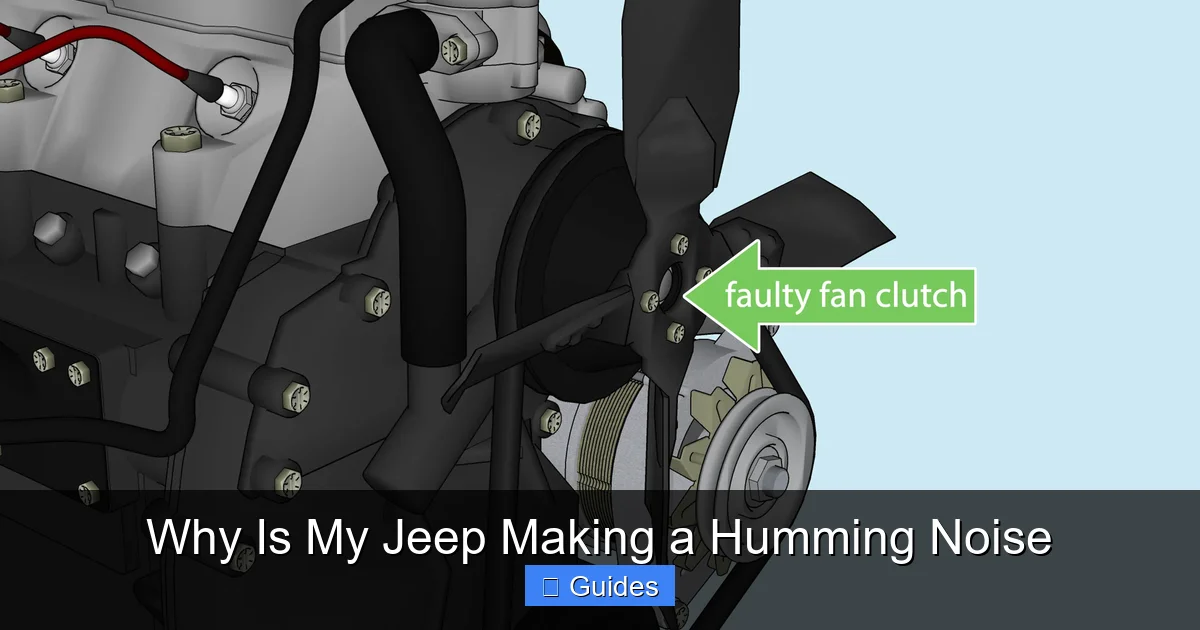
Humming noises in Jeeps can stem from a variety of sources, but they generally fall into a few main categories: tires, wheel bearings, drivetrain components, suspension, and modifications. Let’s break them down one by one.
Tire-Related Humming
Tires are the most frequent culprit when it comes to humming noises. Think of your tires as the only part of your Jeep touching the road. If they’re worn unevenly, mismatched, or damaged, they can create a constant droning sound that increases with speed.
One common issue is **tread wear patterns**. Over time, tires can develop cupping, scalloping, or feathering—irregular wear that causes a rhythmic hum. This often happens due to poor alignment, unbalanced wheels, or worn suspension components. For example, if your front tires are wearing more on the inside edge, it could indicate a camber issue, and that uneven contact patch will generate noise.
Another tire-related cause is **mismatched tires**. If you’ve replaced only one or two tires instead of all four, the difference in tread depth or brand can create a humming sound. Even small variations in diameter can cause the tires to rotate at slightly different speeds, leading to a drone that feels like it’s coming from the drivetrain.
Also, **tire type matters**. All-terrain or mud-terrain tires are naturally louder than highway tires. If you’ve recently switched to aggressive off-road tires, the increased tread block noise might be mistaken for a mechanical issue. But if the hum is new or worsening, it’s worth investigating.
Wheel Bearing Failure
Wheel bearings allow your wheels to spin smoothly with minimal friction. When they wear out, they often produce a low-pitched humming or grinding noise that gets louder as you drive faster. The sound may also change when you turn—getting louder when turning left or right, which shifts the load to one side.
A failing wheel bearing might start subtly, but it can quickly escalate. You might notice vibration in the steering wheel, uneven tire wear, or even a wobble at high speeds. In extreme cases, a seized bearing can cause a wheel to lock up, which is extremely dangerous.
How can you tell if it’s the wheel bearing? Try this simple test: drive at a steady speed (say, 50 mph) and gently turn the steering wheel left and right. If the noise gets louder when turning one way, the bearing on the opposite side is likely failing. For example, if the hum increases when turning right, the left wheel bearing may be the problem.
Replacing a wheel bearing isn’t always a DIY job—especially on solid axle Jeeps—but catching it early can save you from more serious damage.
Drivetrain and Differential Issues
Jeeps, especially 4×4 models, have complex drivetrains that include a transfer case, differentials, and driveshafts. Any of these components can produce a humming noise if they’re worn or low on fluid.
The **differential** is responsible for transferring power from the driveshaft to the wheels while allowing them to rotate at different speeds during turns. If the differential gears are worn or the fluid is old and contaminated, it can create a deep, growling hum. This noise is often more noticeable during acceleration or deceleration.
Similarly, the **transfer case**—which splits power between the front and rear axles in 4WD—can hum if its internal gears are damaged or if it’s low on fluid. You might notice the noise only when 4WD is engaged, or it could be present all the time.
Another possibility is a **worn or unbalanced driveshaft**. If the U-joints are dry or damaged, or if the driveshaft is bent or out of balance, it can cause a rhythmic hum or vibration. This is especially common in lifted Jeeps, where the driveshaft angle changes and puts extra stress on the components.
Suspension and Alignment Problems
Your Jeep’s suspension system doesn’t just affect ride comfort—it also plays a role in noise generation. Worn shocks, bushings, or control arms can allow excessive movement, leading to uneven tire wear and humming sounds.
For example, if your **control arm bushings** are cracked or deteriorated, the suspension may not hold the wheels in proper alignment. This can cause the tires to scrub against the road, creating a constant drone. Similarly, **worn ball joints** can allow play in the steering knuckle, leading to noise and poor handling.
**Alignment issues** are another common cause. If your Jeep’s wheels aren’t properly aligned—meaning they’re not pointing straight or at the correct angle—the tires will wear unevenly and generate noise. You might notice the Jeep pulling to one side or the steering wheel being off-center.
Regular suspension inspections—especially after off-roading—can help catch these issues early. And if you’ve recently hit a big pothole or curb, it’s worth getting an alignment check.
Aftermarket Modifications and Upgrades
Many Jeep owners love to customize their vehicles. Lift kits, larger tires, performance exhausts, and upgraded drivetrain components can all improve capability and style. But they can also introduce new noises—including humming.
For instance, **larger tires** may rub against fenders or suspension parts if not properly fitted, creating a constant hum or whine. They can also increase rotational mass, putting more strain on the drivetrain and potentially causing noise.
**Lift kits** change the geometry of your suspension and drivetrain. If not installed correctly, they can alter driveshaft angles, stress U-joints, or cause binding in the transfer case—all of which can lead to humming or vibration.
Even **performance exhaust systems** can sometimes create a drone at certain RPMs, especially if they’re not tuned properly. While this is usually more of a cabin noise issue, it can be mistaken for a mechanical hum.
If you’ve recently modified your Jeep and started hearing a new noise, consider whether the change could be the cause. Sometimes, a simple adjustment—like re-torquing suspension bolts or adding a driveshaft spacer—can resolve the issue.
How to Diagnose the Humming Noise
Visual guide about Why Is My Jeep Making a Humming Noise
Image source: fourwheeltrends.com
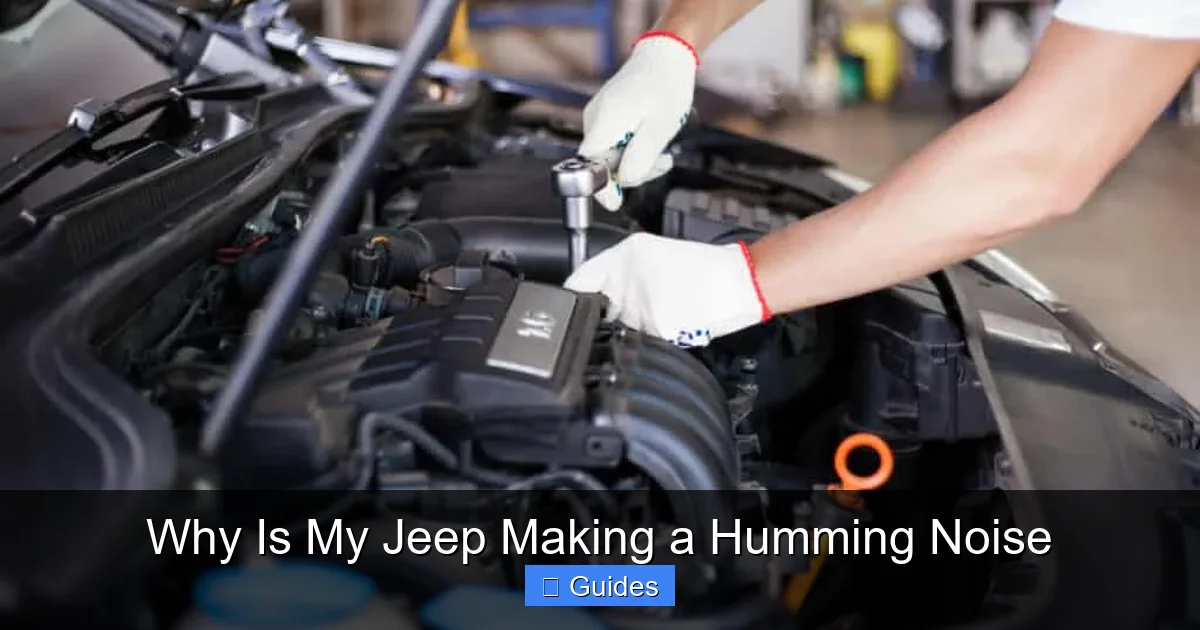
Now that you know the possible causes, how do you figure out which one is affecting your Jeep? Diagnosis starts with careful observation and a few simple tests.
Listen for Patterns
Pay attention to when the humming occurs. Does it happen only at certain speeds? Does it change when you accelerate, brake, or turn? Here’s what to listen for:
– **Speed-dependent hum:** If the noise gets louder as you go faster, it’s likely related to tires, wheel bearings, or drivetrain components.
– **Noise during turns:** A hum that changes when turning left or right often points to a wheel bearing issue.
– **Noise in 4WD only:** If the sound appears only when 4WD is engaged, suspect the transfer case or front differential.
– **Noise under acceleration or deceleration:** This could indicate a differential or driveshaft problem.
Perform a Visual Inspection
Start by looking at your tires. Check for uneven wear, bulges, or damage. Compare tread depth across all four tires—mismatched tires are a common cause of humming.
Next, inspect the suspension. Look for cracked bushings, leaking shocks, or loose components. Grab the tire at the 12 and 6 o’clock positions and try to wiggle it. If there’s play, the wheel bearing may be worn.
Check the driveshaft and U-joints for rust, damage, or excessive play. A dry or seized U-joint can cause vibration and noise.
Test Drive and Isolate the Noise
Take your Jeep for a test drive on a quiet road. Try driving at different speeds and note when the noise appears. Then, try these tests:
– **Turn the steering wheel gently left and right** while driving at a steady speed. If the noise changes, it’s likely a wheel bearing.
– **Shift into neutral** and coast. If the hum continues, it’s probably not engine-related.
– **Engage and disengage 4WD** to see if the noise changes. If it only happens in 4WD, focus on the transfer case or front differential.
Check Fluid Levels
Low or dirty fluid in the differential, transfer case, or transmission can cause humming. Locate the fill plugs on these components and check the fluid level and condition. If it’s low, top it off. If it’s dark, gritty, or smells burnt, it’s time for a change.
When to See a Mechanic
Visual guide about Why Is My Jeep Making a Humming Noise
Image source: fourwheeltrends.com
While some humming noises can be diagnosed at home, others require professional attention. Here’s when you should take your Jeep to a trusted mechanic:
– The noise is getting louder or more frequent.
– You notice vibration, pulling, or handling issues.
– The hum is accompanied by grinding, clicking, or knocking sounds.
– You’ve tried basic fixes (like tire rotation or fluid checks) and the noise persists.
– You’re unsure of the source and don’t want to risk further damage.
A qualified mechanic can perform a thorough inspection, including lifting the Jeep and spinning the wheels by hand to check for bearing play. They may also use a stethoscope or electronic listening device to pinpoint the noise source.
Prevention and Maintenance Tips
The best way to avoid humming noises is through regular maintenance. Here are some tips to keep your Jeep running smoothly:
– **Rotate your tires every 5,000 to 7,000 miles** to promote even wear.
– **Check tire pressure monthly** and adjust for load or temperature changes.
– **Get regular alignments**, especially after off-roading or hitting potholes.
– **Inspect suspension components** during oil changes or tire rotations.
– **Change differential and transfer case fluids** according to your owner’s manual (usually every 30,000 to 60,000 miles).
– **Avoid mismatched tires**—replace all four at once if possible.
– **Address modifications carefully**—ensure lift kits and larger tires are properly installed and balanced.
Conclusion
A humming noise in your Jeep can be annoying, but it’s rarely a sign of immediate danger—if you act quickly. By understanding the common causes—tires, wheel bearings, drivetrain issues, suspension problems, and modifications—you can take the right steps to diagnose and fix the problem.
Start by listening carefully and performing simple checks. If the noise persists or you’re unsure of the cause, don’t hesitate to visit a mechanic. Early intervention can save you time, money, and stress down the road.
Remember, your Jeep is built for adventure. Keep it in top shape, and it’ll keep taking you where you want to go—quietly and confidently.
Frequently Asked Questions
Can bad tires really cause a humming noise?
Yes, absolutely. Worn, uneven, or mismatched tires are one of the most common causes of humming in Jeeps. The irregular tread patterns create a constant droning sound, especially at highway speeds.
How do I know if it’s the wheel bearing or the tire?
Try turning the steering wheel gently left and right while driving. If the noise changes, it’s likely a wheel bearing. If the sound stays the same, it’s more likely tire-related.
Is a humming noise in 4WD normal?
Some mild noise is normal when engaging 4WD, but a loud or persistent hum isn’t. It could indicate low fluid, worn gears, or a problem with the transfer case or differential.
Can a lift kit cause humming?
Yes, if not installed correctly. Lift kits can alter drivetrain angles, stress U-joints, or cause tire rubbing—all of which can generate noise.
Should I worry if the humming is new?
Yes. A new humming noise often signals wear or damage. Ignoring it can lead to more serious issues, so it’s best to investigate early.
Can I drive my Jeep if it’s making a humming noise?
You can drive short distances, but avoid high speeds or long trips. Continuing to drive with a serious issue—like a failing wheel bearing—can lead to breakdowns or accidents.

At CarLegit, we believe information should be clear, factual, and genuinely helpful. That’s why every guide, review, and update on our website is created with care, research, and a strong focus on user experience.