
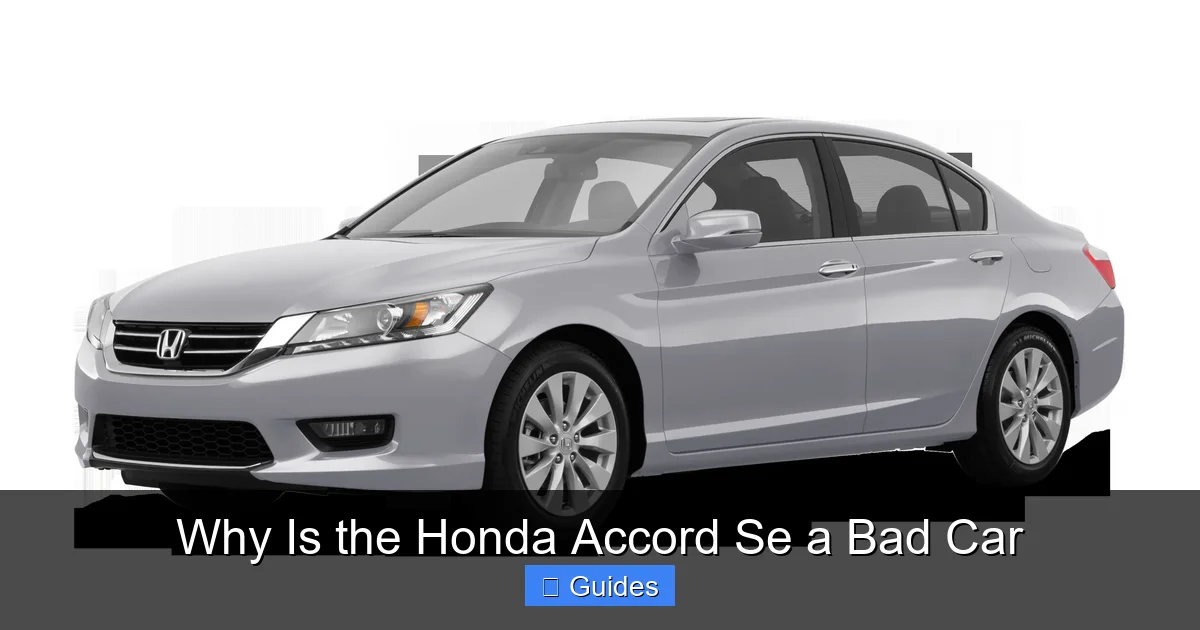
The Honda Accord SE has long been seen as a reliable sedan, but several recurring issues—from transmission problems to poor interior materials—make it a questionable choice. While it offers decent fuel economy and a smooth ride, hidden flaws and outdated features may outweigh its benefits for many buyers.
In This Article
- 1 Key Takeaways
- 2 📑 Table of Contents
- 3 Introduction: The Honda Accord SE’s Reputation vs. Reality
- 4 Transmission Troubles: A Recurring Nightmare
- 5 Outdated and Frustrating Infotainment System
- 6 Cheap Interior Materials and Poor Build Quality
- 7 Limited Standard Safety Features
- 8 Engine Performance: Underpowered and Uninspiring
- 9 Resale Value and Ownership Costs
- 10 Conclusion: Is the Honda Accord SE Worth It?
- 11 Frequently Asked Questions
Key Takeaways
- Transmission reliability concerns: Many Accord SE models, especially from 2013–2017, suffer from jerky shifting, delayed response, and premature failure.
- Outdated infotainment system: The base SE trim often comes with a slow, clunky touchscreen that lacks modern smartphone integration like wireless Apple CarPlay or Android Auto.
- Cheap interior materials: Despite Honda’s reputation for quality, the SE trim uses hard plastics and low-grade upholstery that feel flimsy and wear quickly.
- Limited standard safety features: Unlike higher trims or competitors, the SE often lacks advanced driver-assist tech like adaptive cruise control or lane-keeping assist.
- Poor resale value compared to higher trims: The SE depreciates faster than EX or Touring models due to fewer features and lower demand in the used market.
- Engine performance falls short: The base 2.4L four-cylinder engine feels underpowered, especially when merging or climbing hills, making daily driving less enjoyable.
- Recalls and service bulletins: Multiple NHTSA recalls over the years highlight ongoing mechanical and electrical issues that affect long-term ownership satisfaction.
📑 Table of Contents
- Introduction: The Honda Accord SE’s Reputation vs. Reality
- Transmission Troubles: A Recurring Nightmare
- Outdated and Frustrating Infotainment System
- Cheap Interior Materials and Poor Build Quality
- Limited Standard Safety Features
- Engine Performance: Underpowered and Uninspiring
- Resale Value and Ownership Costs
- Conclusion: Is the Honda Accord SE Worth It?
Introduction: The Honda Accord SE’s Reputation vs. Reality
For decades, the Honda Accord has been a household name in the midsize sedan category. Known for reliability, fuel efficiency, and practicality, it’s often recommended to first-time car buyers, families, and commuters alike. Among its many trims, the Accord SE—positioned as an entry-level or mid-tier option—has attracted buyers looking for affordability without sacrificing too much comfort or performance. On paper, it seems like a smart choice: decent gas mileage, a spacious cabin, and the trusted Honda badge.
But dig a little deeper, and you’ll find that the Accord SE isn’t the rock-solid value it appears to be. While higher trims like the EX-L or Touring offer refined interiors, advanced tech, and stronger engines, the SE often cuts corners in ways that compromise the overall driving experience. From transmission hiccups to a lackluster infotainment system, the SE trim frequently disappoints owners who expected more from a brand synonymous with dependability. In fact, many automotive forums, consumer reports, and real-world owner reviews point to a pattern of issues that make the Accord SE a less-than-ideal purchase—especially when compared to rivals like the Toyota Camry LE or Hyundai Sonata SEL.
This article explores why the Honda Accord SE might be considered a bad car, not because it’s inherently dangerous or unusable, but because it fails to deliver the balanced value and reliability that Honda promises. We’ll examine common mechanical flaws, interior shortcomings, outdated technology, and ownership costs to help you decide whether the SE is worth your investment—or if you should consider upgrading to a higher trim or switching brands altogether.
Transmission Troubles: A Recurring Nightmare
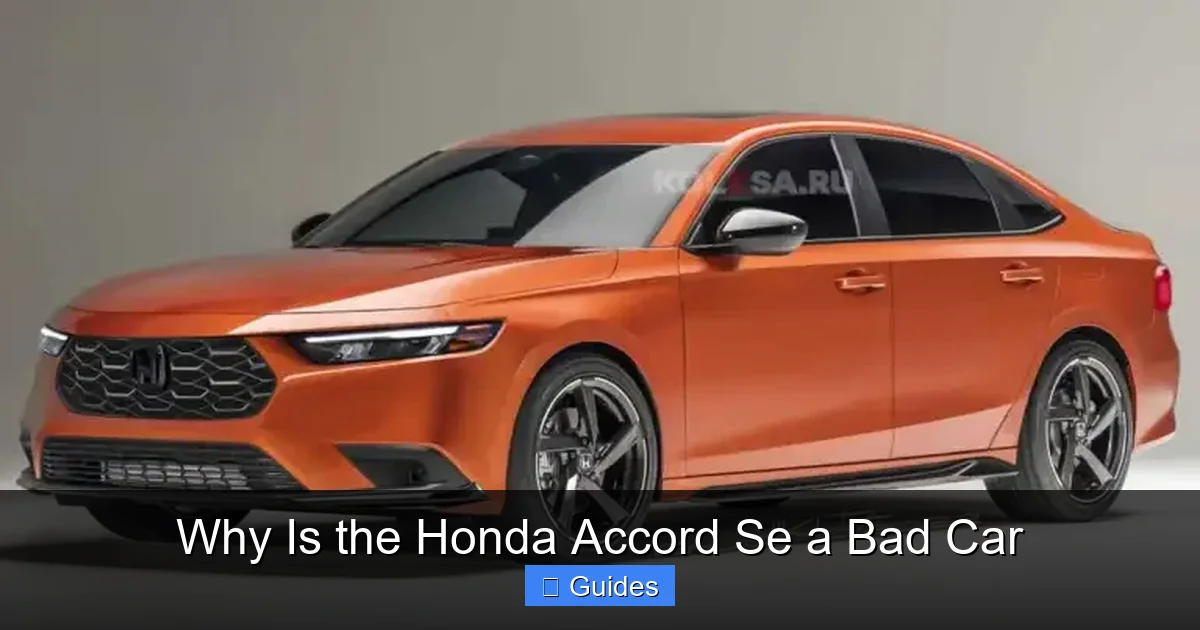
One of the most frequently cited problems with the Honda Accord SE—particularly models from 2013 to 2017—is its continuously variable transmission (CVT). While CVTs are designed to improve fuel efficiency by providing seamless acceleration, the implementation in the Accord SE has been widely criticized for being jerky, unresponsive, and prone to failure.
Jerky Shifting and Delayed Response
Many owners report that the CVT in the Accord SE feels “rubbery” or “slipping,” especially during light acceleration or when coming to a stop. Instead of smooth power delivery, drivers often experience a lag between pressing the gas pedal and the car actually moving. This delay can be frustrating in stop-and-go traffic or when trying to merge onto a highway. Some have described the sensation as “the car hesitating like it’s thinking about whether it wants to go or not.”
Visual guide about Why Is the Honda Accord Se a Bad Car
Image source: i0.wp.com
This issue isn’t just annoying—it can also be unsafe. Imagine pulling out into an intersection and the car doesn’t respond immediately. That split-second delay could mean the difference between a smooth merge and a near-miss accident. While Honda has issued software updates over the years to improve CVT behavior, many owners say the fixes are only temporary or don’t fully resolve the problem.
Premature Transmission Failure
Beyond the driving experience, the CVT in the Accord SE has a troubling history of premature failure. According to data from the National Highway Traffic Safety Administration (NHTSA) and consumer advocacy sites like CarComplaints.com, hundreds of owners have reported transmission replacements or major repairs before reaching 100,000 miles. Some even experienced failures as early as 60,000 miles.
One owner from Ohio shared their story: “I bought a 2015 Accord SE with 40,000 miles. By 85,000, the transmission started shuddering and eventually died. The repair cost over $4,000, and Honda wouldn’t cover it under warranty because it was past the 60,000-mile powertrain coverage.” Stories like this are not uncommon, and they highlight a significant reliability concern that undermines the Accord’s reputation.
Lack of Transmission Cooling
Another contributing factor to CVT failure is the lack of a dedicated transmission cooler in many Accord SE models. Unlike higher trims or performance-oriented vehicles, the SE doesn’t come equipped with additional cooling systems to manage heat buildup in the transmission. Over time, excessive heat can degrade transmission fluid and damage internal components, leading to premature wear.
This design oversight is especially problematic for drivers in hot climates or those who frequently tow or carry heavy loads. Without proper cooling, the CVT is more likely to overheat and fail, turning what should be a low-maintenance vehicle into a money pit.
Outdated and Frustrating Infotainment System
In today’s connected world, a car’s infotainment system is almost as important as its engine or brakes. Unfortunately, the Honda Accord SE often falls short in this department, offering a system that feels outdated, slow, and lacking in essential features.
Clunky Touchscreen and Poor Interface Design
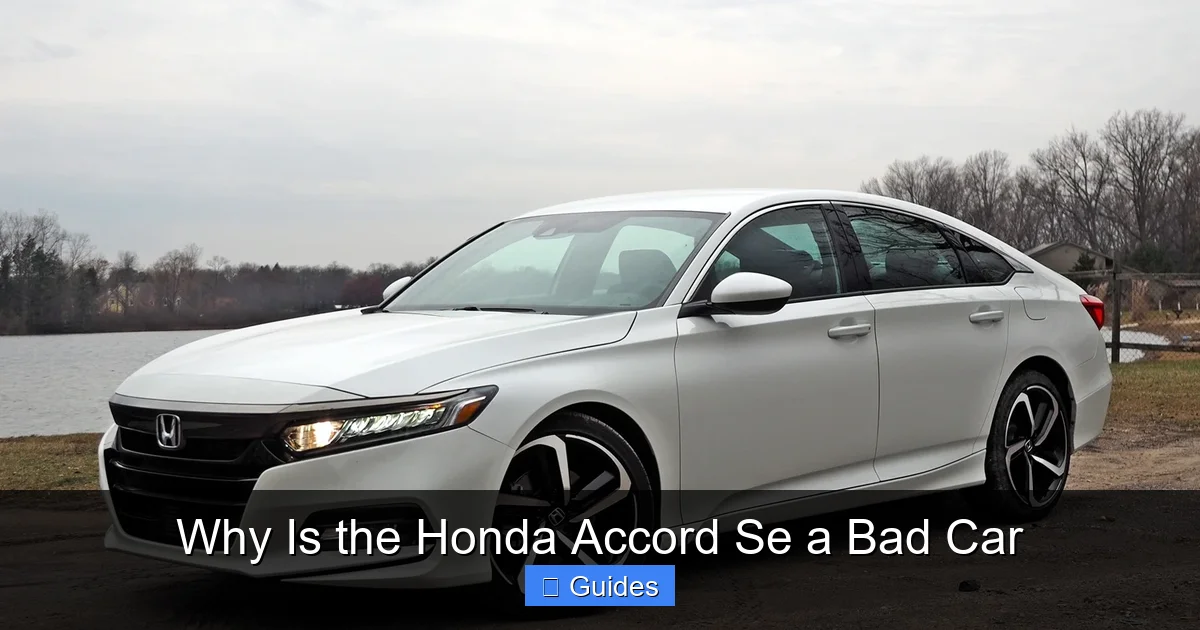
The base infotainment system in the Accord SE typically includes a 5- or 7-inch touchscreen with a dated interface. The graphics are pixelated, the menu layout is confusing, and the response time is sluggish—sometimes taking several seconds to register a tap. This lag can be infuriating when you’re trying to change the radio station or enter an address into the navigation system.
Visual guide about Why Is the Honda Accord Se a Bad Car
Image source: truedelta.com
Compared to competitors like the Toyota Camry or Mazda6, which offer crisp displays and intuitive controls, the Accord SE’s system feels like it’s stuck in the past. Even budget-friendly models from Hyundai and Kia now come with larger, more responsive screens and cleaner software design.
Limited Smartphone Integration
One of the biggest letdowns is the lack of wireless Apple CarPlay and Android Auto in most Accord SE trims. While some newer models (2021 and later) include wired connectivity, you’ll need to plug in your phone every time you get in the car. This might seem like a small inconvenience, but it adds up over time—especially when you’re used to the convenience of wireless systems in other vehicles.
Even more frustrating is that Honda reserves wireless smartphone integration for higher trims like the EX and Touring. So, if you want the latest tech, you’re forced to pay significantly more. For a car that’s supposed to be an affordable option, this feels like a deliberate upsell tactic that penalizes budget-conscious buyers.
Another cost-cutting measure is the absence of built-in navigation on the SE trim. While you can use your phone for GPS via Apple CarPlay or Android Auto, you’re out of luck if your phone dies or you’re in an area with poor signal. Higher trims include Honda’s navigation system, but again, that means paying more for a feature that should be standard in 2024.
This omission is particularly glaring when you consider that even some economy cars now offer built-in navigation as a standard or optional feature. The Accord SE’s lack of it feels like a step backward, especially for a vehicle that’s often used for long commutes or road trips.
Cheap Interior Materials and Poor Build Quality
Honda has long been praised for its well-built interiors, but the Accord SE often fails to live up to that standard. While the cabin is spacious and functional, the materials used feel cheap, and the overall build quality doesn’t match the brand’s reputation.
Hard Plastics and Low-Grade Upholstery
From the moment you step inside, you’re greeted by hard, shiny plastics on the dashboard, door panels, and center console. These materials not only look inexpensive but also feel flimsy to the touch. Over time, they’re prone to scratching, cracking, and fading—especially in sunny climates.
Visual guide about Why Is the Honda Accord Se a Bad Car
Image source: hondatheotherside.com
The seats, typically covered in cloth or low-quality synthetic leather, lack the cushioning and support found in higher trims. Long drives can become uncomfortable, and the fabric tends to wear out quickly, showing signs of pilling and discoloration within a few years. Even the seat adjustments are often manual and stiff, making it difficult to find a comfortable driving position.
Noisy Cabin and Poor Sound Insulation
Another downside is the lack of sound insulation. Road noise, wind noise, and engine drone are more noticeable in the Accord SE compared to competitors. This is especially true at highway speeds, where the cabin can feel loud and tiring over long distances.
The absence of acoustic glass or additional insulation materials means that passengers are more exposed to external sounds. This not only affects comfort but also makes it harder to have conversations or enjoy music without cranking up the volume.
Limited Storage and Ergonomic Flaws
While the Accord SE offers decent trunk space, the interior storage options are limited. The center console is small, the door pockets are narrow, and there’s no dedicated space for larger items like water bottles or tablets. This can be frustrating for families or commuters who need to carry multiple items daily.
Additionally, some controls are poorly placed or difficult to use while driving. For example, the climate control buttons are often small and lack tactile feedback, making it hard to adjust settings without taking your eyes off the road.
Limited Standard Safety Features
Safety is a top priority for most car buyers, but the Honda Accord SE often comes up short in this area—especially when compared to higher trims or rival vehicles.
Honda Sensing Not Standard on All SE Models
Honda Sensing, the brand’s suite of advanced driver-assist features, includes technologies like collision mitigation braking, lane-keeping assist, and adaptive cruise control. While it’s available on the Accord SE, it’s not always standard—especially on older models or base configurations.
This means that buyers may have to pay extra to get essential safety features that are included at no additional cost in competing vehicles. For example, the Toyota Camry LE comes with Toyota Safety Sense 2.0 as standard, offering similar (or better) protection without the upcharge.
Inconsistent Feature Availability
Even when Honda Sensing is included, the specific features can vary by model year and region. Some SE trims may lack blind-spot monitoring, rear cross-traffic alert, or automatic high beams—features that are increasingly common in new cars.
This inconsistency makes it difficult for buyers to know exactly what they’re getting, and it can lead to frustration when comparing trims or shopping for used models. A 2018 Accord SE might have different safety tech than a 2020 model, even though they’re the same trim level.
Lower Crash Test Ratings for Base Models
While the Accord as a whole earns high marks from the IIHS and NHTSA, base models like the SE may not perform as well in certain crash tests due to lighter construction or fewer structural reinforcements. This is especially true for older models, where safety technology was less advanced.
For families or safety-conscious drivers, this is a significant concern. Paying less shouldn’t mean compromising on protection, but with the Accord SE, that’s often the trade-off.
Engine Performance: Underpowered and Uninspiring
The Accord SE typically comes with a 2.4-liter four-cylinder engine producing around 185 horsepower. While this may seem adequate on paper, real-world performance tells a different story.
Lack of Power for Daily Driving
The engine feels underpowered, especially when merging onto highways, climbing hills, or carrying passengers and cargo. Acceleration is sluggish, and the car often struggles to keep up with traffic flow. This can be stressful and even dangerous in high-speed situations.
Compared to the turbocharged 1.5L or 2.0L engines available in higher trims, the base engine lacks the responsiveness and torque needed for confident driving. The difference is especially noticeable when passing other vehicles or driving in mountainous areas.
Noisy Engine Under Load
When the engine is pushed, it becomes loud and strained. The sound is more like a whine than a smooth purr, and it can be distracting inside the cabin. This noise, combined with the CVT’s rubber-band effect, makes the driving experience feel cheap and unrefined.
For a car that’s supposed to be a comfortable daily driver, this lack of refinement is a major drawback. It undermines the sense of quality and reliability that Honda is known for.
Resale Value and Ownership Costs
While the Accord SE may seem like a bargain upfront, its long-term value and ownership costs tell a different story.
Faster Depreciation Than Higher Trims
The SE trim depreciates faster than EX or Touring models due to its lower feature content and higher reported issues. This means you’ll lose more money when it’s time to sell or trade in the vehicle.
According to Kelley Blue Book and Edmunds data, the SE typically retains about 45–50% of its value after three years, compared to 55–60% for higher trims. Over five years, the gap widens even further.
Higher Maintenance and Repair Costs
Due to transmission issues, electrical problems, and wear on interior components, the Accord SE often requires more frequent repairs than expected. These costs can add up quickly, especially if major components fail outside of warranty.
Additionally, because the SE uses more basic parts and systems, some repairs may not be covered by extended warranties or certified pre-owned programs, leaving owners to foot the bill.
Conclusion: Is the Honda Accord SE Worth It?
The Honda Accord SE isn’t a terrible car—it’s still safer, more reliable, and more efficient than many budget options on the market. But when you consider its transmission problems, outdated tech, cheap interior, and lack of standard safety features, it’s hard to recommend over higher trims or competing models.
If you’re set on an Accord, consider stepping up to the EX or EX-L, which offer better engines, improved interiors, and more standard features for a modest price increase. Alternatively, look at rivals like the Toyota Camry LE, Hyundai Sonata SEL, or Mazda6 Sport, which often provide better value and fewer reported issues.
Ultimately, the Accord SE feels like a compromised version of a great car—one that cuts too many corners to hit a low price point. For buyers who prioritize long-term reliability, comfort, and technology, it’s a hard sell. And in a market where value and quality matter more than ever, that’s a significant drawback.
Frequently Asked Questions
Is the Honda Accord SE unreliable?
The Accord SE has a mixed reliability record. While Honda is generally known for dependable vehicles, the SE trim—especially 2013–2017 models—has reported higher rates of transmission issues, electrical problems, and interior wear compared to higher trims.
Does the Accord SE have transmission problems?
Yes, many owners of 2013–2017 Accord SE models report CVT issues such as jerky shifting, delayed response, and premature failure. These problems have led to numerous complaints and some class-action lawsuits.
What safety features does the Accord SE come with?
The Accord SE may include Honda Sensing (collision mitigation, lane-keeping assist, etc.), but it’s not always standard. Features vary by model year, and some SE trims lack blind-spot monitoring or rear cross-traffic alert.
Is the Accord SE’s infotainment system bad?
Yes, the base infotainment system is often criticized for being slow, outdated, and lacking wireless Apple CarPlay or Android Auto. The interface is clunky, and navigation is usually not included.
How does the Accord SE compare to the Toyota Camry LE?
The Camry LE typically offers better standard safety tech, a more refined interior, and a smoother transmission. It also tends to have stronger resale value and fewer reported mechanical issues.
Should I buy a used Honda Accord SE?
Proceed with caution. If you do, choose a well-maintained example with a clean service history, and consider having it inspected by a mechanic. Avoid high-mileage models with known transmission issues.

At CarLegit, we believe information should be clear, factual, and genuinely helpful. That’s why every guide, review, and update on our website is created with care, research, and a strong focus on user experience.