
Jeep Wrangler wheels can fit a Grand Cherokee, but it depends on the specific models and wheel specs. Key factors like bolt pattern, offset, center bore, and tire size must match to ensure a safe and proper fit. Always double-check compatibility before swapping.
In This Article
- 1 Key Takeaways
- 2 📑 Table of Contents
- 3 Will Jeep Wrangler Wheels Fit a Grand Cherokee?
- 4 Understanding Wheel Compatibility Basics
- 5 Bolt Pattern: The First Hurdle
- 6 Offset and Backspacing: The Hidden Challenges
- 7 Center Bore: The Forgotten Factor
- 8 Tire Size and Clearance: The Final Piece
- 9 Model-Specific Considerations
- 10 Safety and Legal Considerations
- 11 Conclusion
- 12 Frequently Asked Questions
- 12.1 Can I put 2018 Wrangler JL wheels on a 2015 Grand Cherokee?
- 12.2 Will 1995 Wrangler YJ wheels fit a 2003 Grand Cherokee WJ?
- 12.3 Do I need wheel spacers to fit Wrangler wheels on a Grand Cherokee?
- 12.4 Can I use Wrangler wheels with larger tires on my Grand Cherokee?
- 12.5 Are hub-centric rings necessary when swapping wheels?
- 12.6 Will Wrangler wheels affect my Grand Cherokee’s speedometer?
Key Takeaways
- Bolt Pattern Compatibility: Most Wrangler and Grand Cherokee models share a 5×5″ (5x127mm) bolt pattern, making them potentially interchangeable.
- Offset and Backspacing Matter: Wrangler wheels often have more aggressive offsets, which may cause rubbing or handling issues on a Grand Cherokee without modifications.
- Center Bore Differences: Grand Cherokees typically have a larger hub bore (71.5mm vs. 71.4mm), so hub-centric rings may be needed for proper alignment.
- Tire Size and Clearance: Larger Wrangler tires might not fit the Grand Cherokee’s wheel wells without lifting or trimming.
- Model Year Variations: Compatibility varies by generation—always verify specs for your specific Wrangler and Grand Cherokee model years.
- Safety First: Incorrect wheel fitment can affect braking, suspension, and overall vehicle safety—consult a professional if unsure.
- Aftermarket Solutions: Wheel adapters or spacers can help bridge compatibility gaps but should be used cautiously and legally.
📑 Table of Contents
- Will Jeep Wrangler Wheels Fit a Grand Cherokee?
- Understanding Wheel Compatibility Basics
- Bolt Pattern: The First Hurdle
- Offset and Backspacing: The Hidden Challenges
- Center Bore: The Forgotten Factor
- Tire Size and Clearance: The Final Piece
- Model-Specific Considerations
- Safety and Legal Considerations
- Conclusion
Will Jeep Wrangler Wheels Fit a Grand Cherokee?
So, you’ve got a Jeep Grand Cherokee sitting in your driveway, and you’re eyeing those rugged, trail-ready Wrangler wheels at the swap meet or online marketplace. They look tough, they’ve got that classic Jeep vibe, and maybe you’re thinking, “Why not slap them on my Grand Cherokee?” It’s a fair question—after all, they’re both Jeeps, right?
Well, not so fast. While the idea of mixing and matching parts between Jeep models is tempting (and sometimes totally doable), wheel compatibility isn’t always a straight swap. The short answer? Yes, Jeep Wrangler wheels can fit a Grand Cherokee—but only under the right conditions. It’s not just about looks; it’s about engineering, safety, and performance.
In this guide, we’ll break down everything you need to know before bolting on those Wrangler rims. We’ll cover bolt patterns, offsets, center bores, tire sizes, and even model-specific quirks. Whether you’re upgrading for style, off-road capability, or just love tinkering with your ride, this article will help you make an informed decision. No guesswork, no surprises—just solid info to keep your Grand Cherokee rolling safely and smoothly.
Understanding Wheel Compatibility Basics
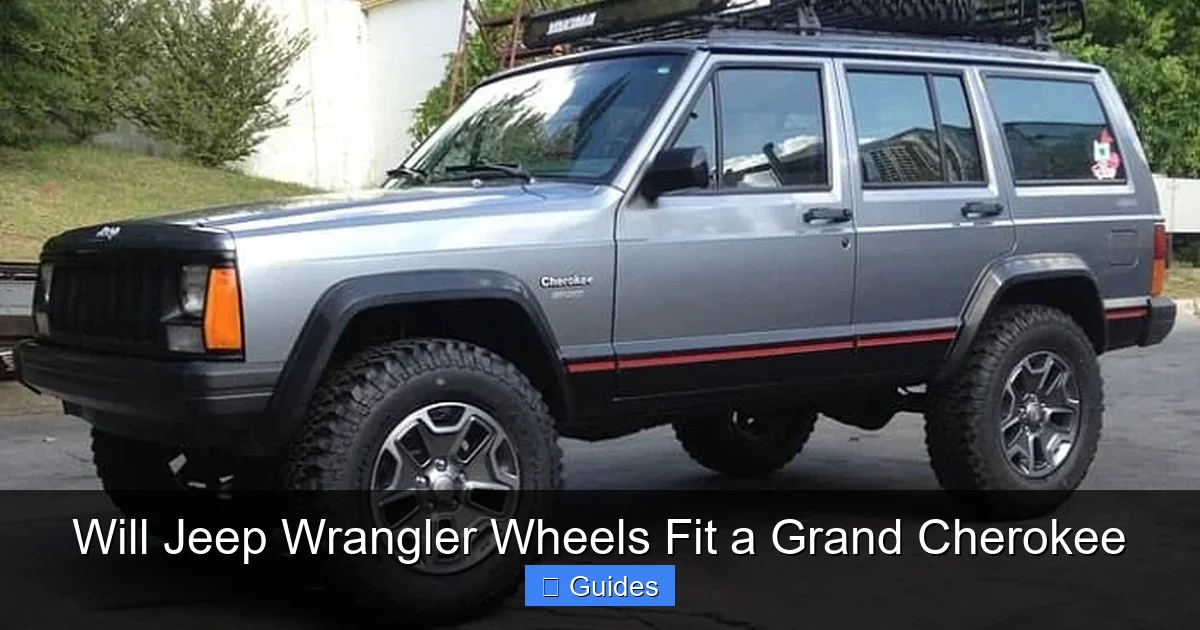
Visual guide about Will Jeep Wrangler Wheels Fit a Grand Cherokee
Image source: jeepkingdom.com
Before we dive into the specifics of Wrangler-to-Grand Cherokee wheel swaps, let’s cover the fundamentals of wheel compatibility. Think of it like fitting a key into a lock—if even one part is off, the whole thing fails. Wheels are no different. Several critical measurements must align perfectly for a safe and functional fit.
The most important factors include:
– **Bolt Pattern (PCD):** This is the number of lug nuts and the diameter of the circle they form. For example, a 5×5″ pattern means five lug nuts spaced evenly around a 5-inch diameter circle.
– **Offset:** This measures how far the wheel’s mounting surface is from the centerline. A positive offset means the mounting surface is toward the front (outside) of the wheel; negative means it’s toward the back (inside).
– **Center Bore:** The hole in the center of the wheel that fits over the vehicle’s hub. It must match the hub diameter to ensure the wheel is centered properly.
– **Backspacing:** The distance from the wheel’s mounting surface to the inner edge. This affects how the wheel sits inside the fender.
– **Wheel Diameter and Width:** These determine tire size options and clearance within the wheel well.
If any of these specs are mismatched, you could face issues like vibration, poor handling, tire rubbing, or even catastrophic failure. So, while it’s tempting to assume “Jeep = Jeep,” the reality is more nuanced. Let’s look at how Wrangler and Grand Cherokee wheels compare.
Bolt Pattern: The First Hurdle

Visual guide about Will Jeep Wrangler Wheels Fit a Grand Cherokee
Image source: m.media-amazon.com
Let’s start with the most obvious compatibility check: the bolt pattern. This is often the first thing people look at, and for good reason—it’s a dealbreaker if it doesn’t match.
Wrangler vs. Grand Cherokee Bolt Patterns
Most modern Jeep Wranglers (JK and JL generations, 2007–present) and Grand Cherokees (WK2 and newer, 2011–present) share a **5×5-inch (5x127mm) bolt pattern**. That’s five lug nuts arranged in a 5-inch diameter circle. This similarity is why so many people assume the wheels are interchangeable—and in many cases, they are.
For example:
– A 2020 Jeep Wrangler JL with 17×8 wheels (5×5″ bolt pattern)
– A 2018 Jeep Grand Cherokee WK2 with 18×8 wheels (also 5×5″)
Both have the same bolt pattern, so in theory, the wheels could bolt on. But—and this is a big but—bolt pattern alone isn’t enough. You still need to check the other specs.
Older Models: A Word of Caution
Not all Jeeps are created equal. Older Wranglers (YJ and TJ models, pre-2007) and early Grand Cherokees (ZJ and WJ, 1993–2010) had different bolt patterns:
– **Wrangler YJ (1987–1995):** 5×4.5″ (5×114.3mm)
– **Wrangler TJ (1997–2006):** 5×4.5″
– **Grand Cherokee ZJ (1993–1998):** 5×4.5″
– **Grand Cherokee WJ (1999–2004):** 5×4.5″
– **Grand Cherokee WK (2005–2010):** 5×5″
So, if you’re trying to put 1995 Wrangler YJ wheels on a 2008 Grand Cherokee WK, you’re out of luck—the bolt patterns don’t match. But if you’re swapping between a 2003 Wrangler TJ and a 2003 Grand Cherokee WJ, you’re in the clear.
Always double-check your vehicle’s model year and bolt pattern before assuming compatibility. A quick search on the manufacturer’s website or a trusted parts database can save you a lot of hassle.
Offset and Backspacing: The Hidden Challenges
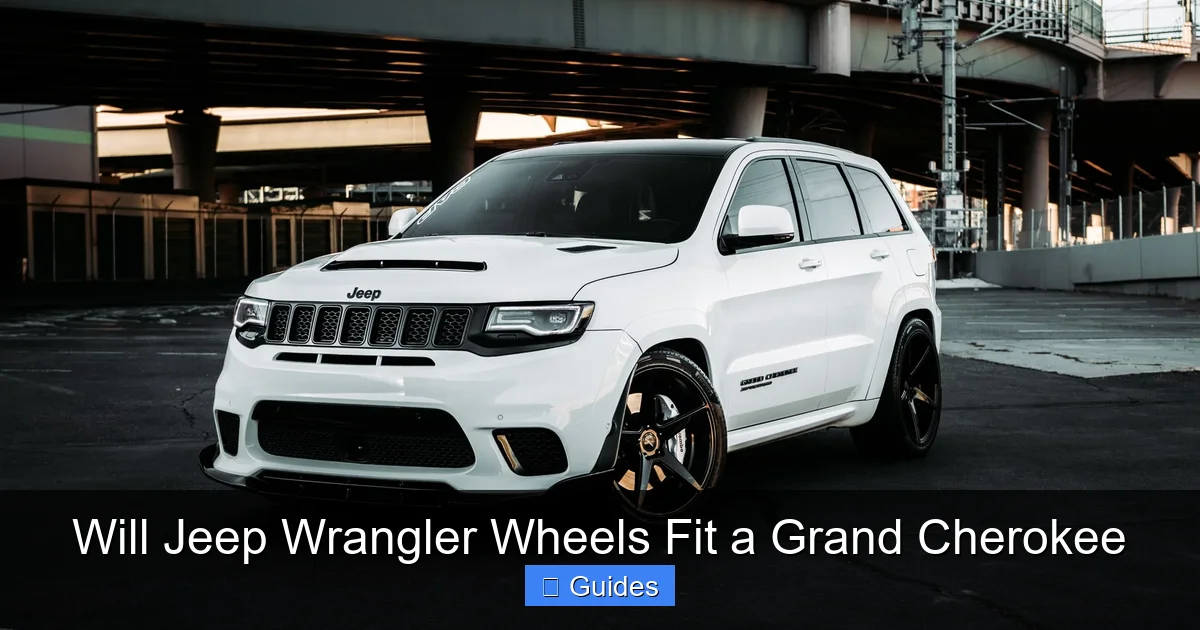
Visual guide about Will Jeep Wrangler Wheels Fit a Grand Cherokee
Image source: survivaltechshop.com
Even if the bolt pattern matches, offset and backspacing can make or break your wheel swap. These measurements determine how the wheel sits in relation to your suspension, fenders, and tires.
What Is Offset?
Offset is measured in millimeters and tells you how far the wheel’s mounting surface is from its centerline. There are three types:
– **Positive Offset:** The mounting surface is toward the front (outside) of the wheel. Common on most modern SUVs and trucks.
– **Zero Offset:** The mounting surface is exactly in the center.
– **Negative Offset:** The mounting surface is toward the back (inside) of the wheel. Often found on off-road or lifted vehicles.
Wranglers, especially when lifted or modified, often run wheels with **negative or low positive offset** to increase track width and improve stability on trails. Grand Cherokees, being more street-oriented SUVs, typically use wheels with **higher positive offset** for better on-road handling and reduced stress on suspension components.
Why Offset Matters for Fitment
If you install Wrangler wheels with a much lower (or negative) offset on a Grand Cherokee, several issues can arise:
– **Tire Rubbing:** The tire may hit the inner fender or suspension components during turns or over bumps.
– **Steering Issues:** Excessive scrub radius can make the vehicle pull to one side or feel unstable.
– **Increased Stress:** The wheel bearings and suspension joints may wear out faster due to added leverage.
For example, a Wrangler wheel with a +10mm offset might stick out too far on a Grand Cherokee designed for +35mm wheels. That extra 25mm of outward push can cause serious rubbing, especially with wider tires.
Backspacing: The Other Side of the Coin
Backspacing is closely related to offset. It’s the distance from the wheel’s mounting surface to the inner edge (the side that faces the brake caliper). A higher backspacing means the wheel sits more inward; lower backspacing pushes it outward.
Wrangler wheels often have **lower backspacing** (around 4.5 to 5 inches) to accommodate larger tires and aggressive tread patterns. Grand Cherokee wheels typically have **higher backspacing** (5.5 to 6 inches) for better clearance and on-road comfort.
If you swap in Wrangler wheels with lower backspacing, your tires may protrude beyond the fenders—not just a cosmetic issue, but a potential legal one in some states. Plus, you might need to trim fender liners or add wheel spacers to prevent rubbing.
Real-World Example
Let’s say you have a 2015 Grand Cherokee with stock 18×8 wheels (+35mm offset, 5.5″ backspacing). You find a set of 17×8 Wrangler JK wheels with +10mm offset and 4.75″ backspacing.
– The bolt pattern matches (5×5″).
– The center bore is close (71.4mm vs. 71.5mm—more on that soon).
– But the offset is 25mm less, and backspacing is 0.75″ less.
Result? The wheels will stick out about an inch further on each side. With stock tires, you might get away with it. But if you’re running wider or taller tires (common on Wranglers), you’ll likely experience rubbing on the front fenders during full turns or over bumps.
Center Bore: The Forgotten Factor
You might think the center bore is a minor detail—after all, it’s just a hole, right? Wrong. This small measurement can cause big problems if ignored.
Hub-Centric vs. Lug-Centric Wheels
Wheels are designed to be **hub-centric**, meaning the center bore matches the vehicle’s hub diameter. This ensures the wheel is perfectly centered by the hub, not just the lug nuts. When the center bore is too large, the wheel relies on the lug nuts to center it—this is called **lug-centric**, and it’s less stable.
Over time, lug-centric fitment can lead to:
– Vibration at highway speeds
– Uneven tire wear
– Premature lug nut wear
Wrangler vs. Grand Cherokee Center Bore
Here’s where things get tricky:
– **Jeep Wrangler (JK/JL):** 71.4mm center bore
– **Jeep Grand Cherokee (WK2 and newer):** 71.5mm center bore
Wait—only 0.1mm difference? That seems tiny. And it is. In theory, a 71.4mm wheel should fit a 71.5mm hub with a tiny bit of play. But in practice, that 0.1mm can cause the wheel to wobble or not seat properly.
The solution? **Hub-centric rings**. These are thin plastic or metal rings that fill the gap between the wheel’s center bore and the hub. They’re cheap (usually under $20 for a set) and easy to install. Just make sure you get the right size: 71.4mm inner diameter (to fit the wheel) and 71.5mm outer diameter (to fit the hub).
Without these rings, you risk vibration, especially at higher speeds. And if you’re running larger tires or driving off-road, that vibration can worsen over time.
Older Models and Aftermarket Wheels
Older Wranglers and Grand Cherokees may have different center bores. For example:
– Wrangler TJ: 71.4mm
– Grand Cherokee WJ: 71.5mm
– Some aftermarket wheels: 72mm or larger
Always measure or check the specs before buying. If the center bore is significantly larger than your hub, hub-centric rings are a must. If it’s smaller, the wheel won’t fit at all—no amount of forcing will help.
Tire Size and Clearance: The Final Piece
Even if the wheels bolt on and sit correctly, the tires matter just as much. Wranglers are built for off-roading, so they often run larger, more aggressive tires. Grand Cherokees are more road-focused, with tighter wheel wells and less clearance.
Stock vs. Aftermarket Tires
A stock Wrangler might run 255/70R17 tires (about 31.1 inches tall), while a stock Grand Cherokee might use 265/60R18 tires (about 31.5 inches tall). At first glance, they’re similar in size. But the difference comes in width and sidewall profile.
Wrangler tires often have:
– Wider treads (for better traction)
– Taller sidewalls (for flex and shock absorption)
– More aggressive tread patterns (lugs and voids)
These features can cause rubbing on a Grand Cherokee, especially in the front wheel wells during turns or when the suspension compresses.
Clearance Issues to Watch For
When installing Wrangler wheels and tires on a Grand Cherokee, check these areas for clearance:
– **Front Fender Liners:** The most common rubbing spot. Turning the wheel fully can cause the tire to hit the liner.
– **Suspension Components:** Control arms, sway bars, and brake lines may interfere with wider wheels or tires.
– **Rear Wheel Wells:** Less common, but possible with very wide or tall tires.
– **Steering Linkage:** On lifted or modified vehicles, the tire might hit the tie rod or steering knuckle.
Solutions for Clearance Problems
If you encounter rubbing, you have a few options:
1. **Trim the Fender Liners:** Use a heat gun and utility knife to carefully remove excess material. This is common and usually safe if done properly.
2. **Install a Lift Kit:** A 1.5″ to 2″ lift can provide extra clearance, but it affects ride quality and may require longer shocks.
3. **Use Smaller Tires:** Stick to tire sizes that are known to fit your Grand Cherokee model. For example, 265/65R17 or 275/60R18 are often safe.
4. **Add Wheel Spacers:** These push the wheel outward, improving clearance on the inside but increasing stress on suspension components. Use them cautiously and only with hub-centric designs.
Real-World Example
Let’s say you install 17×8 Wrangler wheels with 285/70R17 tires (about 32.7 inches tall) on a stock Grand Cherokee. That’s a full inch taller than stock and significantly wider.
Result? You’ll likely experience:
– Rubbing on the front fender liners during turns
– Possible contact with the lower control arm
– Reduced turning radius
– Increased strain on CV joints (if 4WD)
To fix this, you might need to:
– Trim the fender liners
– Install a 2″ lift
– Use wheel spacers (1.5″ recommended)
– Re-gear the differentials (for optimal performance)
It’s doable, but it’s not a simple bolt-on. And it’s definitely not recommended for daily drivers or highway use without careful planning.
Model-Specific Considerations
Not all Wranglers and Grand Cherokees are the same. Compatibility can vary significantly between generations, trims, and drivetrains.
Wrangler Generations
– **YJ (1987–1995):** 5×4.5″ bolt pattern, 71.4mm center bore. Not compatible with most Grand Cherokees.
– **TJ (1997–2006):** 5×4.5″ bolt pattern. Compatible with ZJ and WJ Grand Cherokees.
– **JK (2007–2018):** 5×5″ bolt pattern, 71.4mm center bore. Compatible with WK2 Grand Cherokees (with hub rings).
– **JL (2018–present):** 5×5″ bolt pattern, 71.4mm center bore. Same as JK.
Grand Cherokee Generations
– **ZJ (1993–1998):** 5×4.5″ bolt pattern. Compatible with YJ and TJ Wranglers.
– **WJ (1999–2004):** 5×4.5″ bolt pattern. Compatible with TJ Wranglers.
– **WK (2005–2010):** 5×5″ bolt pattern. Compatible with JK Wranglers (with hub rings).
– **WK2 (2011–2023):** 5×5″ bolt pattern, 71.5mm center bore. Compatible with JK/JL Wranglers (with hub rings).
– **WL (2022–present):** 5×5″ bolt pattern, 71.5mm center bore. Same as WK2.
Trim and Drivetrain Differences
Higher trims (like the Grand Cherokee SRT or Trackhawk) may have wider wheels, larger brakes, or different suspension setups that affect clearance. Similarly, 4WD Wranglers often have different axle widths and suspension geometry than 2WD Grand Cherokees.
Always check your specific vehicle’s specs. Don’t assume that because it’s a “Jeep Grand Cherokee” it’s the same as your neighbor’s.
Safety and Legal Considerations
Swapping wheels isn’t just about fit—it’s about safety. Incorrect wheel installation can lead to:
– Wheel detachment
– Loss of control
– Brake failure
– Accidents
Legal Requirements
In many states, wheels must:
– Not extend beyond the fenders
– Not interfere with steering or suspension
– Be properly secured with the correct lug nuts
Modifications like lifts or spacers may require inspections or affect insurance coverage. Always check local laws before making changes.
Professional Installation
If you’re unsure about fitment, take your wheels to a trusted mechanic or tire shop. They can test-fit the wheels, check for clearance, and ensure everything is safe and legal.
Conclusion
So, will Jeep Wrangler wheels fit a Grand Cherokee? The answer is: **it depends**. With the right combination of bolt pattern, offset, center bore, and tire size, many Wrangler wheels can be installed on a Grand Cherokee—especially between newer models (JK/JL Wranglers and WK2/WL Grand Cherokees).
But it’s not a guaranteed fit. You must check every spec, consider clearance issues, and be prepared to make modifications like trimming fenders, adding hub rings, or using spacers. And always prioritize safety over style.
If done correctly, a Wrangler wheel swap can give your Grand Cherokee a more rugged, off-road-ready look. But if done incorrectly, it can lead to costly repairs or dangerous driving conditions.
When in doubt, consult a professional. Your safety—and your vehicle’s performance—are worth the extra effort.
Frequently Asked Questions
Can I put 2018 Wrangler JL wheels on a 2015 Grand Cherokee?
Yes, in most cases. Both have a 5×5″ bolt pattern and similar center bores (71.4mm vs. 71.5mm). Use hub-centric rings to ensure proper alignment and check for tire clearance.
Will 1995 Wrangler YJ wheels fit a 2003 Grand Cherokee WJ?
Yes, both have a 5×4.5″ bolt pattern. However, check offset and tire size, as older wheels may have different specs that affect fitment.
Do I need wheel spacers to fit Wrangler wheels on a Grand Cherokee?
Not always, but they can help if the offset is too aggressive. Spacers improve clearance but increase stress on suspension components—use them cautiously.
Can I use Wrangler wheels with larger tires on my Grand Cherokee?
Possibly, but you may need to trim fender liners, install a lift, or use spacers. Larger tires can cause rubbing and affect handling.
Are hub-centric rings necessary when swapping wheels?
Yes, if the center bore doesn’t match exactly. They ensure the wheel is centered by the hub, reducing vibration and improving safety.
Will Wrangler wheels affect my Grand Cherokee’s speedometer?
Only if the overall tire diameter changes significantly. A difference of more than 3% can cause inaccurate speed readings—use a tire size calculator to check.

At CarLegit, we believe information should be clear, factual, and genuinely helpful. That’s why every guide, review, and update on our website is created with care, research, and a strong focus on user experience.