
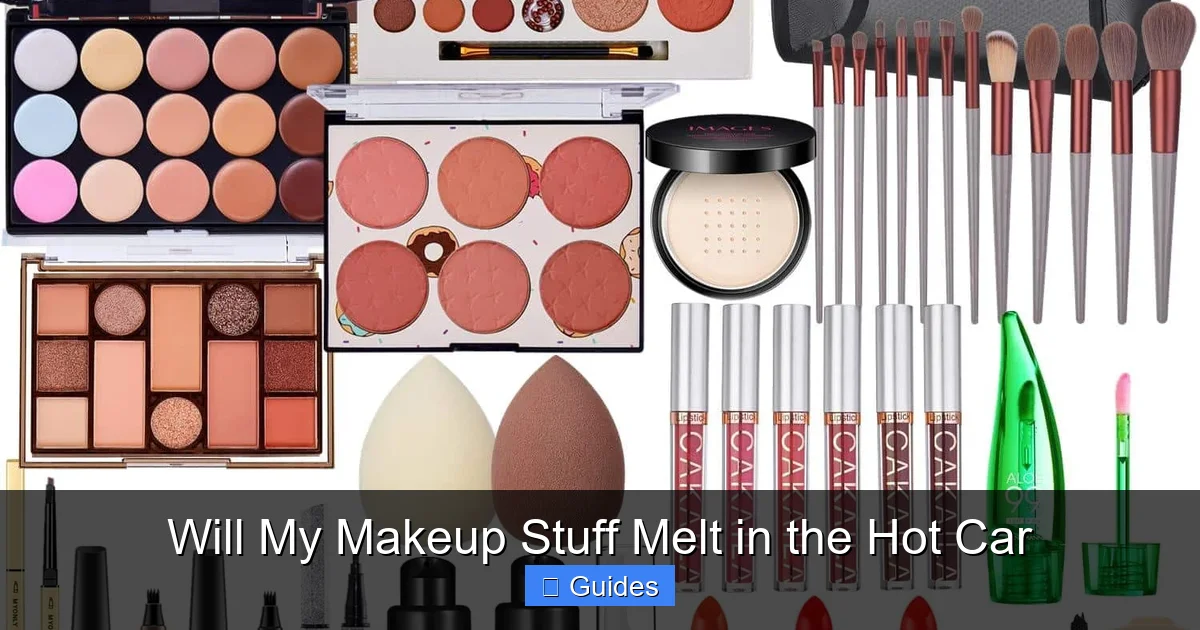
Yes, your makeup can melt in a hot car—especially during summer months. Heat can ruin formulas, change textures, and even breed bacteria, making products unsafe to use.
This is a comprehensive guide about Will My Makeup Stuff Melt In The Hot Car.
In This Article
- 1 Key Takeaways
- 2 Will My Makeup Stuff Melt in the Hot Car?
- 3 Why Heat Is the Enemy of Makeup
- 4 Which Makeup Products Are Most at Risk?
- 5 How Long Does It Take for Makeup to Melt in a Car?
- 6 Signs Your Makeup Has Been Heat-Damaged
- 7 How to Protect Your Makeup from Heat
- 8 What to Do If Your Makeup Melts
- 9 FAQs
- 9.1 Can makeup go bad from heat even if it doesn’t melt?
- 9.2 Is it safe to use makeup that’s been in a hot car?
- 9.3 How hot does it have to be for makeup to melt?
- 9.4 Can I put my makeup in the fridge to cool it down?
- 9.5 Are powder products safe in the heat?
- 9.6 What’s the best way to travel with makeup in summer?
- 10 Final Thoughts
- 11 Frequently Asked Questions
Key Takeaways
- Heat melts wax-based products: Items like lipsticks, eyeliners, and cream blushes are most vulnerable to high temperatures.
- Oils separate and spoil: Foundations, moisturizers, and serums with oil bases can degrade and grow harmful bacteria when overheated.
- Packaging warps and leaks: Plastic containers may deform, causing messy spills and contamination.
- Never leave makeup in direct sunlight: Even short exposure on a hot day can cause irreversible damage.
- Cool storage is key: Store makeup in a cool, dry place—never in your car glove box or trunk.
- Check expiration dates after heat exposure: Heat accelerates spoilage, so toss anything that looks, smells, or feels off.
- Use insulated bags for transport: A small cooler or thermal makeup bag helps protect products during travel.
[FEATURED_IMAGE_PLACEHOLDER]
Will My Makeup Stuff Melt in the Hot Car?
We’ve all been there—running errands on a scorching summer day, only to realize we left our favorite lipstick or foundation in the car. The moment you open the door, a wave of heat hits you like a sauna blast. Your first thought? “Oh no… did my makeup melt?”
It’s a valid concern. Cars can get dangerously hot, even when it’s only 75°F (24°C) outside. On an 80°F (27°C) day, the interior of a parked car can soar to over 110°F (43°C) within an hour. On hotter days, temperatures inside can exceed 140°F (60°C)—hot enough to cook an egg on the dashboard. And that kind of heat? It’s a beauty disaster waiting to happen.
Makeup isn’t built to withstand extreme temperatures. Most cosmetics are formulated to stay stable at room temperature, typically between 68°F and 77°F (20°C–25°C). Once you go beyond that, ingredients start to break down. Waxes melt, oils separate, and emulsions fall apart. Worse, bacteria can multiply rapidly in warm, moist environments—especially in products that have been compromised by heat.
So, the short answer is yes: your makeup stuff can and likely will melt in a hot car if left inside for too long. But not all products are equally at risk. Some are more resilient, while others are practically guaranteed to turn into a gooey mess. The good news? With a little awareness and smart habits, you can protect your beauty investments and keep your makeup safe, even during the dog days of summer.
Why Heat Is the Enemy of Makeup
To understand why heat ruins makeup, it helps to know a little about how cosmetics are made. Most makeup products are emulsions—mixtures of water, oils, waxes, pigments, and preservatives. These ingredients are carefully balanced to create a smooth, stable texture that applies easily and lasts throughout the day. But heat disrupts that balance.
When exposed to high temperatures, the components of makeup begin to separate. Waxes soften and melt, oils liquefy, and water-based formulas can evaporate or grow bacteria. The result? A product that’s no longer safe or effective to use.
Let’s break it down by ingredient:
Waxes and Oils
Products like lipsticks, eyeliners, and cream blushes rely heavily on waxes (like beeswax or carnauba) and oils (like jojoba or castor oil) to hold their shape and glide on smoothly. These ingredients have low melting points—some as low as 100°F (38°C). Once the temperature inside your car climbs past that threshold, these products start to soften. A lipstick might bend or break, a kohl pencil could snap, and cream blush might ooze out of its compact.
Emulsions and Water-Based Formulas
Foundations, concealers, and tinted moisturizers are often water-in-oil or oil-in-water emulsions. Heat can break these emulsions, causing the oil and water to separate. You might notice your foundation looking streaky or grainy, or your concealer separating into layers. Once that happens, it’s nearly impossible to re-mix the product back to its original state.
Preservatives and Bacteria
Heat doesn’t just change the texture of makeup—it can also make it unsafe. Preservatives in cosmetics are designed to prevent bacterial growth, but they’re only effective within a certain temperature range. When makeup gets too hot, preservatives can degrade, allowing bacteria, mold, and yeast to thrive. This is especially dangerous in products that go near your eyes or mouth, like mascara or lip gloss.
Packaging Problems
Even if the formula survives, the packaging might not. Plastic compacts can warp or crack under heat, leading to leaks and contamination. Metal pans in palettes can warp, making it hard to use brushes. And if a product expands due to heat, it can push against the lid and burst open—creating a sticky, unsanitary mess.
Which Makeup Products Are Most at Risk?
Not all makeup is created equal when it comes to heat resistance. Some products are more vulnerable than others, depending on their ingredients and formulation. Here’s a breakdown of the most heat-sensitive items in your beauty bag.
Lipsticks and Lip Glosses
Lip products are among the most likely to melt in a hot car. Most lipsticks contain waxes and oils that soften at relatively low temperatures. A classic bullet lipstick might start to bend at 90°F (32°C), and fully melt around 110°F (43°C). Lip glosses, especially those in squeeze tubes or pots, are even more prone to leakage and separation.
Real-life example: Imagine leaving your favorite red lipstick in the cup holder during a 20-minute grocery run on a 90°F day. When you return, the lipstick is leaning to one side, the tip is smushed, and there’s a greasy smear on the cap. That’s heat damage.
Cream Blush and Bronzer
Cream-based cheek products are formulated with oils and silicones that give them a smooth, blendable texture. But these same ingredients make them heat-sensitive. On a hot day, cream blush can melt into a puddle inside its compact, making it unusable. Bronzers in cream form face the same risk.
Eyeliners and Eyebrow Pencils
Both pencil and liquid eyeliners can suffer in the heat. Pencil liners, especially those made with wax, may soften and break. Liquid liners with water-based formulas can dry out or separate, leading to clumping or uneven application. Eyebrow pencils and pomades can also melt, making them difficult to control.
Mascara
Mascara is tricky. While the tube itself is usually sealed, the formula inside can dry out or grow bacteria if exposed to heat. Warming mascara can cause the polymers to break down, leading to flaking, clumping, or a grainy texture. Plus, if the tube warms up and then cools rapidly, air can get trapped inside, introducing moisture and bacteria.
Foundation and Concealer
Liquid and cream foundations are emulsions that can separate when heated. You might notice your foundation looks watery or oily, or that the color has changed. Concealers, especially those in pots or sticks, can melt and lose their coverage. Mineral powders are generally safer, but even they can clump if moisture gets in due to temperature changes.
Setting Sprays and Toners
These water-based products are less likely to melt, but they’re not immune. Heat can cause alcohol-based sprays to evaporate faster, changing the formula. Toners with active ingredients like AHAs or BHAs may degrade, reducing their effectiveness.
Makeup Palettes
Eyeshadows and blushes in palettes are usually powder-based, which makes them more heat-resistant than creams. However, extreme heat can still cause issues. Pigments may shift, pans can warp, and binding agents can break down, leading to fallout or crumbling. Plus, if the palette is made of plastic, it might warp or crack.
How Long Does It Take for Makeup to Melt in a Car?
You might be thinking, “I only left it for 10 minutes—how bad could it be?” The truth is, even short exposure can cause damage, especially during peak summer heat.
Studies show that the temperature inside a parked car can rise by 20°F (11°C) in just 10 minutes. On a 90°F day, that means the interior hits 110°F within the first 10 minutes—hot enough to start melting wax-based products. After 30 minutes, temperatures can exceed 120°F (49°C), and after an hour, they can reach 140°F (60°C) or higher.
So, how long does it take for makeup to melt? It depends on the product and the conditions:
- Lipstick: Can start softening in as little as 10–15 minutes on a hot day.
- Cream blush: May begin to melt within 20–30 minutes.
- Foundation: Can separate after 30–45 minutes of heat exposure.
- Mascara: May dry out or grow bacteria after 1–2 hours in high heat.
Even if the product doesn’t fully melt, repeated exposure to heat—like leaving your makeup in the car every day during your commute—can cause cumulative damage. Over time, this can shorten the shelf life of your products and make them less effective.
Signs Your Makeup Has Been Heat-Damaged
How can you tell if your makeup has been ruined by heat? Look for these telltale signs:
Texture Changes
If your lipstick feels soft or mushy, your cream blush is oozing, or your foundation looks separated, it’s likely been exposed to heat. Powders may feel gritty or clumpy.
Color Shifts
Heat can cause pigments to migrate or oxidize, changing the color of your makeup. A foundation might look darker or orange, or a lipstick could appear streaky or uneven.
Unusual Smells
Rancid oils or bacterial growth can give makeup a sour, musty, or chemical-like odor. If your product smells off, it’s time to toss it.
Leaking or Warped Packaging
Cracked compacts, bulging tubes, or leaking bottles are clear signs of heat damage. Even if the formula looks okay, compromised packaging can introduce bacteria.
Difficulty Applying
If your makeup doesn’t glide on smoothly, clumps, or flakes, it may have been damaged by heat. This is especially common with foundations and concealers.
Visible Separation
Watery layers in liquid products or oily residue on powders indicate that the emulsion has broken.
If you notice any of these signs, it’s best to err on the side of caution and replace the product. Using damaged makeup can lead to skin irritation, breakouts, or infections—especially around sensitive areas like the eyes and lips.
How to Protect Your Makeup from Heat
The best way to protect your makeup is simple: don’t leave it in the car. But we know life happens. Here are practical tips to keep your beauty products safe, even when you’re on the go.
Never Store Makeup in the Car
This might seem obvious, but it’s worth repeating: your car is not a makeup storage unit. Avoid leaving products in the glove box, center console, or trunk—even for short periods. These areas can get extremely hot and are often exposed to direct sunlight.
Use a Thermal Makeup Bag
Invest in an insulated makeup bag or small cooler designed for cosmetics. These bags use thermal lining to keep products cool, even in hot environments. Some even come with ice packs for extra protection. They’re perfect for road trips, beach days, or long commutes.
Keep Products in the Shade
If you must leave makeup in the car temporarily, place it in the coolest, shadiest spot possible—like under the seat or in a covered compartment. Avoid the dashboard, cup holders, or door pockets, which absorb heat quickly.
Limit Sun Exposure
Sunlight is a major contributor to heat buildup. Park in the shade whenever possible, or use a sunshade on your windshield to reduce interior temperatures.
Check Products After Heat Exposure
If you suspect your makeup has been in a hot car, inspect it carefully before use. Look for changes in texture, color, or smell. When in doubt, throw it out.
Store at Home Properly
At home, keep makeup in a cool, dry place away from windows, radiators, or humid bathrooms. A bedroom drawer or closet is ideal. Avoid storing products near heating vents or in direct sunlight.
Rotate Your Collection
Use older products first and avoid buying in bulk during summer months. This reduces the risk of having large quantities of makeup exposed to heat.
Consider Heat-Resistant Alternatives
Some brands offer heat-resistant formulas, especially for lip products. Look for labels that mention “smudge-proof,” “transfer-resistant,” or “long-wear.” These are often more stable in high temperatures.
What to Do If Your Makeup Melts
So, you open your bag and find a melted lipstick or a puddle of foundation. Is it salvageable? In some cases, yes—but it depends on the product and the extent of the damage.
Lipstick
If your lipstick has melted but hasn’t been contaminated, you can sometimes re-solidify it. Let it cool in the refrigerator for a few hours, then gently reshape it with a clean spatula. However, if it’s cracked, oily, or smells off, it’s best to replace it.
Cream Products
Cream blush or bronzer that has melted may not return to its original texture. You can try chilling it to firm it up, but if it’s separated or grainy, it’s likely unusable.
Foundation and Concealer
If your foundation has separated, try shaking it vigorously or using a makeup mixer. If it doesn’t blend smoothly or changes color, it’s time to replace it. Never try to “fix” a contaminated product.
Powders
Powder products are more forgiving. If an eyeshadow or blush has cracked, you can often repair it by spraying it with a bit of rubbing alcohol, letting it dry, and pressing it back into the pan. But if it’s clumpy or discolored, it’s safer to discard it.
When to Toss It
If your makeup shows signs of bacterial growth (like mold, strange odors, or discoloration), throw it away immediately. Using contaminated products can lead to infections, especially around the eyes and mouth.
FAQs
Can makeup go bad from heat even if it doesn’t melt?
Yes. Even if your makeup doesn’t visibly melt, heat can degrade ingredients, reduce shelf life, and promote bacterial growth. Always check for changes in texture, smell, or color after heat exposure.
Is it safe to use makeup that’s been in a hot car?
It depends. If the product looks, smells, and feels normal, it may still be safe. But if it’s melted, separated, or smells off, it’s best to replace it to avoid skin irritation or infection.
How hot does it have to be for makeup to melt?
Most wax-based products start to soften around 90°F (32°C) and melt fully at 110°F (43°C) or higher. Car interiors can reach these temperatures quickly, even on mild days.
Can I put my makeup in the fridge to cool it down?
Yes, but only for short periods. Avoid storing makeup in the fridge long-term, as moisture and temperature fluctuations can damage formulas and packaging.
Are powder products safe in the heat?
Powders are more heat-resistant than creams or liquids, but extreme heat can still cause clumping, cracking, or pigment shifts. Store them in a cool, dry place.
What’s the best way to travel with makeup in summer?
Use an insulated makeup bag with a cooling pack, keep it in the shade, and avoid leaving it in the car. Pack only what you need for the day to minimize risk.
Final Thoughts
Leaving your makeup in a hot car might seem harmless, but the risks are real. Heat can melt, separate, and spoil your favorite products, turning them into unusable—or even unsafe—messes. From lipsticks to foundations, nearly every type of makeup is vulnerable to high temperatures, especially during summer.
The good news? A few simple habits can go a long way in protecting your beauty investments. Never store makeup in the car, use thermal bags for transport, and always check products after heat exposure. When in doubt, throw it out—your skin will thank you.
Remember, makeup is meant to enhance your natural beauty, not compromise your health. By understanding how heat affects cosmetics and taking steps to prevent damage, you can keep your collection fresh, safe, and ready to use—no matter how hot it gets outside.
Frequently Asked Questions
What is Will My Makeup Stuff Melt In The Hot Car?
Will My Makeup Stuff Melt In The Hot Car is an important topic with many practical applications.

At CarLegit, we believe information should be clear, factual, and genuinely helpful. That’s why every guide, review, and update on our website is created with care, research, and a strong focus on user experience.